
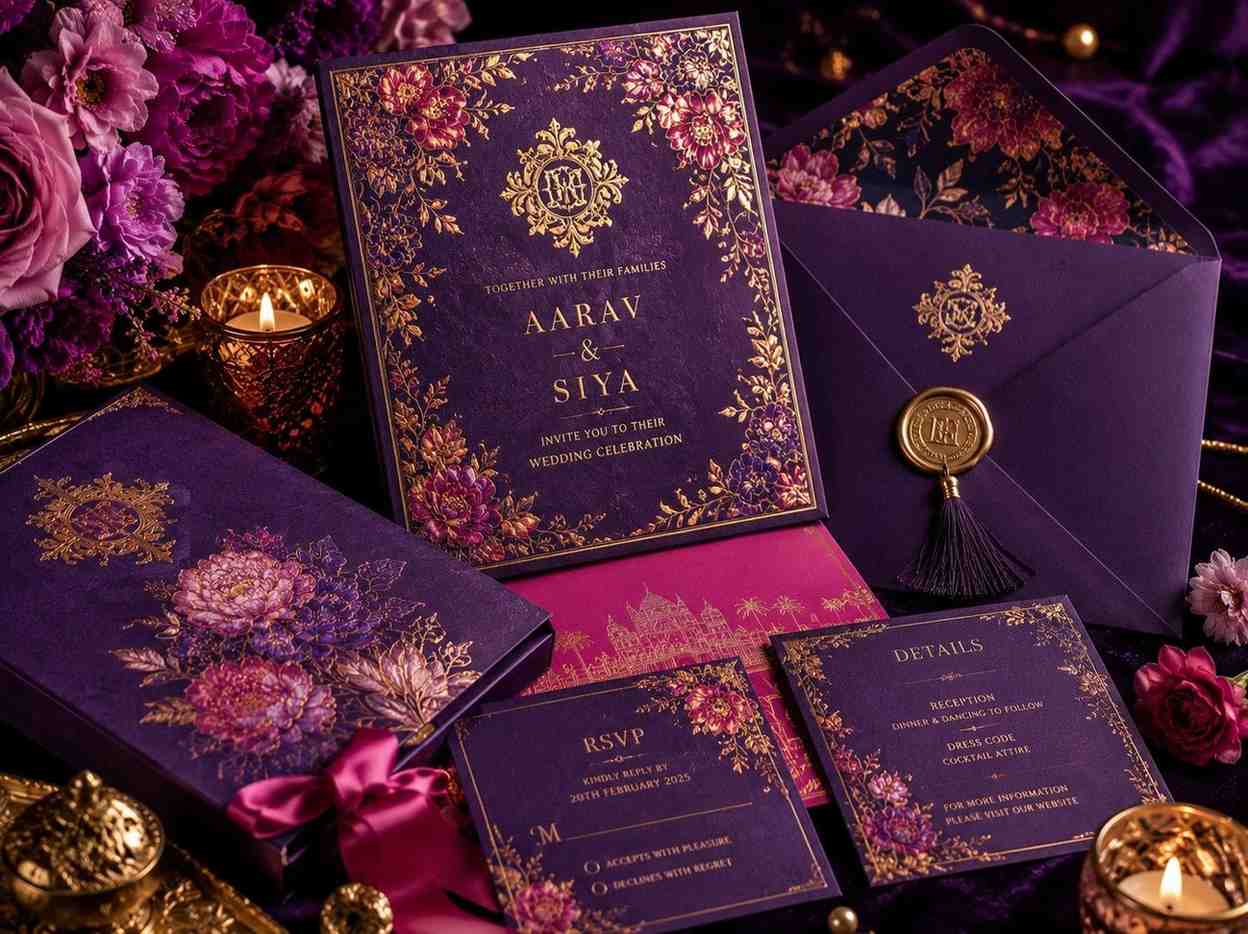
Explore All Invitation & Stationery
Discover elegant wedding invitations, personalised stationery, event invites and creative paper details for weddings, parties, corporate events and special celebrations in Chennai.
Invite With Style,
Celebrate with Happiffie
From elegant wedding invitations and personalised stationery to creative event invites and celebration paper goods, Happiffie helps you discover invitation and stationery services that bring your event's theme, personality and special moments to life.
- Elegant Invitation DiscoveryExplore beautiful invitation designs suited to every occasion
- Personalised GiftingDiscover customised designs that reflect your event and style
- Creative Event DetailsFind stationery ideas that add a polished touch to your celebration
Popular Invitation & Stationery
 Engagement
 Mehendi
 Sangeet
 Haldi
Haldi Wedding
 Reception
 Pre Wedding Shoot
 Save The Date Shoot
 Ring Ceremony
 Destination Wedding
 Aviratham (Engagement)
 Guru Pooja
 Kashi Yatra
 Oonjal Ceremony
 Muhurtham
 Vidaai
 Post Wedding Shoot
 Anniversary Celebration
 Vow Renewal
 Honeymoon Celebration
 Bridal Shower
 Bachelor Party
 Bachelorette Party
 Cocktail Party
 House Warming
 Griha Pravesh
 Satyanarayan Puja
 Naming Ceremony
 Thread Ceremony
 Upanayanam
- 400+Curated Events
- 6Event Universes
- 1000+Verified Vendors
- 70+Locations
- 24/7Customer Support


Not sure which packages fits your celebration?
Let Hiya & Hanu help you find the perfect match!
Explore Celebration Packages- AI-Powered MatchingSmart suggestions for you
- Budget OptimizerGet the best experiences in your budget
- End-to-End SupportWe are with you at every step
Serving Celebrations across 75+ locations in India
Popular Printed Invitations and Stationery Designs for Celebrations
◆An invitation is the first physical expression of a celebration. Before guests arrive at a venue, meet the hosts or experience the décor, they encounter the invitation. Its paper, typography, artwork and presentation can therefore establish an early impression of the occasion.
Mohali hosts a wide range of weddings, engagements, birthdays, anniversaries, family functions and professional gatherings. Each celebration has its own personality, guest profile and communication needs. Popular printed invitations and stationery designs can be customised to reflect these differences while maintaining a polished appearance.
Printed stationery offers something that digital communication cannot fully reproduce. The texture of the card, weight of the paper and presentation of the envelope create a tangible experience.
A successful design must also remain practical. Guests should quickly understand the date, time, venue and other essential information without having to search through decorative elements.
Why Printed Invitations Continue to Matter
Digital invitations are convenient, but physical stationery remains important for many celebrations.
A printed card can feel more personal when presented to family members, elders and close guests. It can also become a keepsake after the event, particularly for weddings and milestone occasions.
The physical qualities of an invitation contribute to this experience. Paper texture, colour, printing quality and finishing can all influence how the card feels.
Printed invitations are especially relevant for occasions where hosts follow traditional invitation customs.
At the same time, physical stationery does not have to look old-fashioned. Contemporary layouts, refined typography and restrained artwork can create a modern presentation.
Wedding Invitations for Mohali Celebrations
Wedding invitations often form the centre of the stationery collection.
Couples can create a main invitation alongside function cards, RSVP cards, information inserts and matching envelopes.
Multi-function weddings may require separate details for engagement ceremonies, mehndi, haldi, sangeet, wedding rituals and receptions. A coordinated stationery system keeps these pieces visually connected.
Personalisation can include the couple's initials, photographs, custom illustrations or meaningful motifs.
The design should reflect the couple's preferences while maintaining enough space for practical event information.
Contemporary Punjabi Wedding Stationery
Mohali weddings may incorporate Punjabi cultural influences alongside modern celebration styles.
Traditional patterns, floral motifs, ornamental borders and ceremonial symbols can be introduced through a contemporary design language.
Typography can balance these decorative elements. A modern font combination may provide a cleaner appearance, while selected decorative lettering can highlight names or important headings.
Colour selection can also establish the mood. Rich tones can create a festive impression, while softer palettes may suit intimate celebrations.
Cultural references are most effective when integrated thoughtfully rather than applied excessively.
Engagement Invitation Designs
Engagement celebrations often allow greater freedom in stationery design.
Couples can use photographs, initials, meaningful dates or custom artwork to create an invitation that feels personal.
A printed invitation can communicate the formal details, while a QR code may direct guests to an online RSVP form or venue map.
For couples planning several related celebrations, selected visual elements can continue from the engagement invitation into the wedding stationery.
This creates a connected appearance without requiring identical designs for every occasion.
Birthday Invitation Designs
Birthday stationery can be adapted for different ages and personalities.
Children's invitations can feature playful illustrations, colourful themes and imaginative artwork. Teenagers may prefer contemporary graphics, photographs or personalised typography.
Adult milestone birthdays can use elegant layouts, sophisticated photographs and restrained decorative details.
Custom designs can reflect hobbies, favourite colours, interests or celebration themes.
Printed cards can be distributed to close family members while digital communication can supplement the wider guest list where appropriate.
Anniversary Invitations
Anniversary stationery offers an opportunity for meaningful personalisation.
Couples can incorporate a significant photograph, important date, family name or short message.
For major milestones, an elegant printed card can create a formal and celebratory impression. A simpler design may suit a smaller family gathering.
Photographs can become the visual focus, allowing the stationery to communicate emotional significance without excessive decoration.
Matching envelopes and supporting cards can complete the presentation.
Family and Traditional Functions
Printed invitations remain highly relevant for family and cultural occasions.
Naming ceremonies, housewarming functions, religious gatherings, family reunions and milestone celebrations can all benefit from custom stationery.
Traditional motifs can introduce cultural context, while contemporary typography can keep the design easy to read.
The wording should suit the occasion. Formal language may be appropriate for religious functions, while warmer and more conversational wording can work for informal family gatherings.
Customisation allows the stationery to reflect both family traditions and individual preferences.
Corporate Invitation Stationery
Printed stationery can also support professional events in Mohali.
Business dinners, conferences, networking gatherings, product launches, annual functions and executive occasions may require physical invitations for selected guests.
Corporate stationery should communicate information clearly. Event name, date, time, venue and registration details need a strong visual hierarchy.
Company colours can be incorporated subtly without allowing branding to dominate the design.
A refined printed card can create a formal impression for executives, partners and important clients.
Choosing a Stationery Design Style
There is no single design style that works for every celebration.
Minimalist stationery can provide a contemporary appearance. Heritage-inspired designs may suit traditional weddings and cultural functions.
Floral artwork can create a softer impression, while geometric patterns can give the stationery a more structured character.
Photography-led designs can work well for anniversaries and engagements. Illustrated concepts can add personality to birthdays.
The right choice depends on the occasion, guest profile and preferences of the host.
Typography and Layout
Typography determines how guests experience the information.
A decorative typeface may work well for names, while a simpler font can improve the readability of dates and venue information.
Spacing is equally important. Crowding too much information onto one card can reduce clarity.
A well-designed invitation creates a visual hierarchy so guests can immediately identify the most important details.
The layout should also account for the physical dimensions of the card. Text that looks balanced digitally may require adjustment when printed.
Selecting the Right Paper
Paper has a major influence on the tactile experience.
Smooth card stock can suit contemporary designs, while textured materials may complement traditional or artistic artwork.
Heavier card can create a substantial feel for formal weddings. Natural or recycled paper may suit hosts seeking a more understated appearance.
The best paper depends on the design, printing process, quantity and budget.
A thoughtfully selected standard material can often produce an excellent result when paired with strong artwork and typography.
Printing Methods and Finishing
Printing techniques can add character to stationery.
Digital printing is useful for detailed artwork, photographs and smaller quantities. Foiling can highlight names, initials or selected details.
Embossing can create raised texture, while debossing produces an impressed effect.
Letterpress-inspired techniques can provide a classic appearance for formal stationery.
Hosts should select finishing according to the design concept. One distinctive treatment can often have more impact than several competing effects.
Envelope Design
The envelope forms part of the invitation presentation.
Matching colours, liners, patterns and seals can extend the visual identity from the card to the outer package.
A wedding invitation may use an ornamental envelope detail, while a contemporary corporate invitation may benefit from a clean and understated approach.
Address information should remain clear and legible.
Decorative elements should support the presentation without interfering with delivery.
Creating a Complete Stationery Suite
Larger celebrations may require several coordinated printed pieces.
A wedding can include a main invitation, separate function cards, RSVP cards, accommodation inserts and thank-you notes.
Using a consistent design language helps these pieces feel like one collection.
Colours, typography and motifs can remain connected while each card has its own purpose.
Smaller events may need only one invitation and an envelope.
The stationery package should always reflect the amount of information guests actually need.
Personalisation That Adds Meaning
Custom stationery becomes more valuable when personal details have a genuine connection to the occasion.
A wedding couple might use a custom monogram or illustrated venue. A birthday host can incorporate a favourite hobby or photograph.
An anniversary invitation may feature an important date or family image.
A religious function can include a culturally meaningful motif.
Personalisation should be selective. A few relevant details can create greater impact than filling the card with decorative elements.
Matching Stationery with Event Décor
The invitation can introduce the visual direction for the celebration.
Colours used on the card can later appear in flowers, table settings, stage styling and welcome arrangements.
A wedding motif can be repeated on menus, table cards and gift tags. Birthday artwork can influence cake styling, balloons and return gifts.
Corporate stationery can establish graphic elements later used across badges, menus and event materials.
This creates visual continuity without requiring every element to look identical.
RSVP Cards and Digital Connections
Printed stationery can also connect guests with digital services.
An RSVP card can provide a traditional response method. Alternatively, a QR code can direct guests to an online form.
Digital responses can simplify attendance management for larger celebrations.
Hosts can use the information to support catering, seating and venue planning.
The instructions should be straightforward, with a clear response deadline and contact information where necessary.
Destination and Outstation Guests
Mohali celebrations may include guests travelling from Chandigarh, Panchkula, Delhi, Ludhiana, Amritsar and other locations.
Printed invitation suites can provide essential venue and schedule information, while QR codes can direct guests to digital maps or travel details.
For destination weddings, additional information about accommodation and transportation can be provided through a connected digital page.
This allows the physical invitation to remain elegant without becoming overloaded with practical details.
Sustainable Printed Stationery
Printed invitations can be produced more responsibly through careful planning.
Hosts can consider recycled or responsibly sourced paper and print only the required quantity.
Digital communication can supplement physical invitations for guests who do not require printed cards.
A hybrid approach can therefore preserve the traditional value of stationery while reducing unnecessary paper consumption.
Sustainability does not require sacrificing design quality. Thoughtful material choices can complement contemporary stationery beautifully.
Managing the Invitation Budget
Printed stationery can be tailored to different budgets.
Costs depend on paper, card dimensions, quantity, printing technique, artwork complexity, envelopes and finishing.
Hosts can prioritise the elements that have the greatest visual impact. Quality paper and strong typography may provide greater value than several expensive decorative treatments.
Printing a carefully calculated quantity can also reduce waste and expenditure.
A well-designed invitation does not need to be expensive to feel special.
Selecting the Right Designer
A suitable stationery professional should understand both design and production.
Hosts should review previous work, paper samples, printing capabilities, finishing options and expected timelines.
For weddings, experience with multi-function stationery can be particularly valuable.
For cultural functions, familiarity with traditional design references can help create a more appropriate result.
It is also important to communicate the guest list, budget and preferred distribution method before the design is finalised.
Preparing Content Before Printing
All invitation information should be confirmed before production.
Names, dates, timings, venue details, RSVP instructions and contact information need careful checking.
For weddings, each ceremony should be confirmed before individual function cards are printed.
Photographs and artwork should also be approved before final production.
A detailed proofing stage can prevent expensive reprinting and ensure guests receive accurate information.
Creating a Lasting Keepsake
Printed invitations can become part of a family's collection of memories.
Wedding cards, anniversary invitations and important family stationery are often retained because they represent significant moments.
Quality paper, meaningful artwork and personal details can increase this keepsake value.
The invitation should therefore be designed for both immediate communication and long-term emotional significance.
A Thoughtful Beginning to the Celebration
Popular printed invitations and stationery designs in Mohali give hosts an opportunity to introduce their celebrations with personality and polish.
From contemporary Punjabi wedding cards and elegant engagement invitations to creative birthday stationery, anniversary cards and professional corporate invitations, every design can be tailored around the occasion.
Paper, typography, artwork, envelopes and finishing all contribute to the final experience.
When these elements are carefully coordinated, the invitation becomes more than a practical announcement. It becomes a physical expression of the celebration and a meaningful first impression for every guest.
Frequently Asked Questions
1. What are popular printed invitations and stationery designs?
They are contemporary and traditional physical invitation formats customised for weddings, birthdays, engagements, anniversaries, family functions and other occasions.
2. Can Mohali wedding invitations include Punjabi design influences?
Yes. Punjabi-inspired patterns, floral artwork, ornamental details and culturally relevant motifs can be incorporated into modern stationery.
3. Can printed wedding invitations include multiple functions?
Yes. Separate cards or inserts can provide information about engagement ceremonies, mehndi, haldi, sangeet, wedding rituals and receptions.
4. Which paper is suitable for printed invitations?
Smooth, textured and heavyweight card stocks can all work well. The choice depends on the design, printing method and desired presentation.
5. Can printed stationery include QR codes?
Yes. QR codes can direct guests to RSVP forms, venue maps, travel information or digital event schedules.
6. Can birthday stationery be fully customised?
Yes. Birthday invitations can incorporate photographs, illustrations, themes, colours, hobbies and personalised messages.
7. Can printed invitations be used for corporate occasions?
Yes. Conferences, business dinners, networking events, launches and executive gatherings can all use professional printed invitations.
8. How can invitation designs coordinate with event décor?
Colours, motifs, typography and artwork from the stationery can be repeated subtly across flowers, stage décor, menus, table cards and welcome arrangements.
9. How can printed stationery remain environmentally conscious?
Hosts can select responsible paper, control printing quantities and use digital communication for guests who do not require physical invitations.
10. How early should printed stationery be ordered?
It is best to finalise stationery well before the event to allow time for content checks, proofing, printing, finishing and delivery.