
Sacred Pots for Your Telugu Wedding
Religious cermony in Kolkata
Traditional Telugu Wedding Pots: Complete Guide for Kolkata Couples
Traditional Telugu Wedding Pots hold a sacred place at the heart of every Telugu marriage ceremony, symbolising prosperity, fertility, and divine blessings for the couple beginning their new life together. In Kolkata, where Telugu-speaking families and Bengali-Telugu intercultural weddings are increasingly common, sourcing and styling these ritual vessels requires both cultural authenticity and local logistical know-how. From the gleaming brass pots for Telugu wedding Kashi Yatra processions to the elaborately adorned kalasha pot ceremony setup at the mandap, every vessel carries a specific ritual purpose. Happiffie connects you with trusted vendors and decorators across Kolkata who understand the nuances of South Indian wedding rituals in Kolkata, ensuring your pots arrive blessed, decorated, and ceremony-ready.
Quick Answer
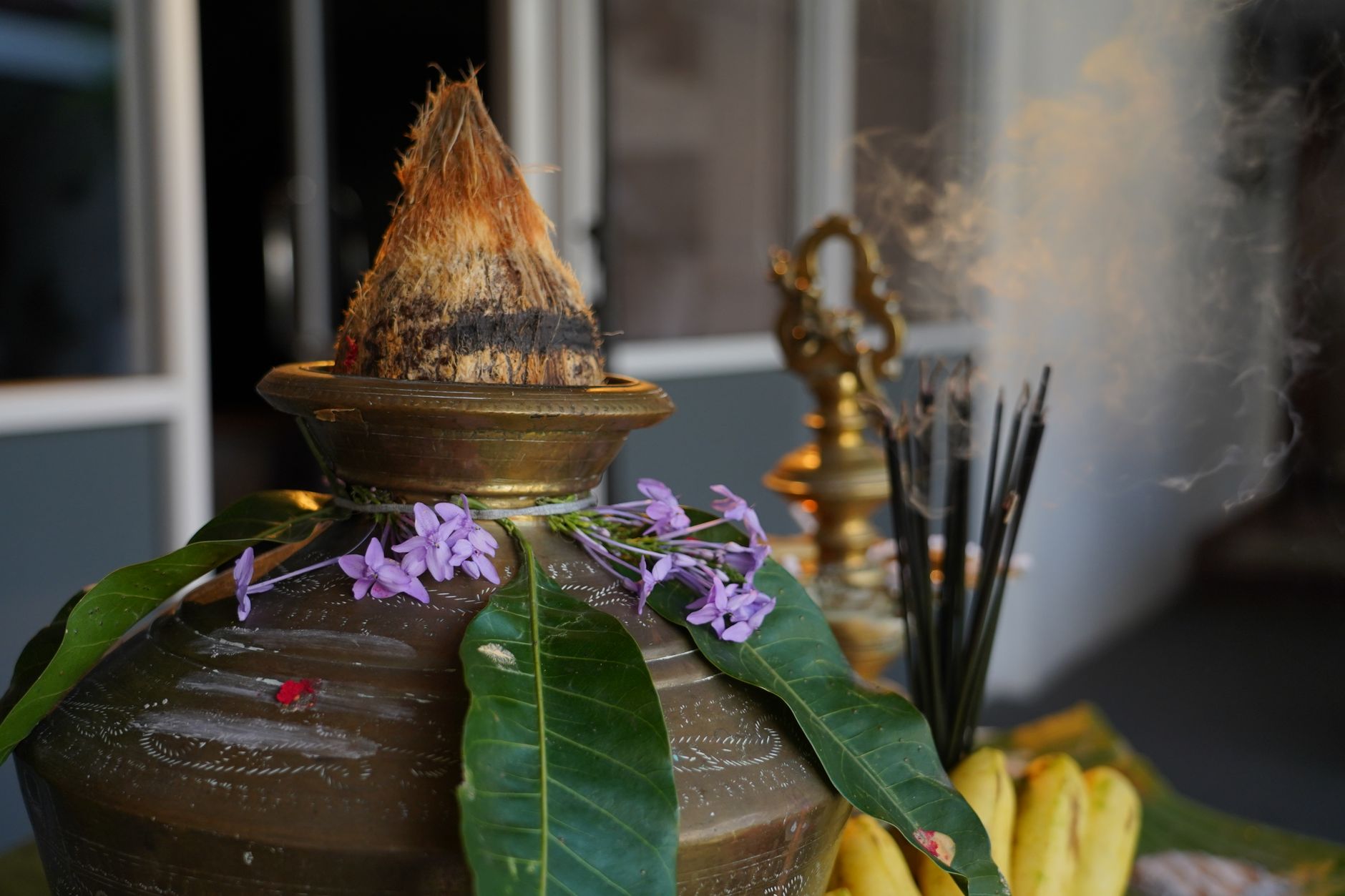
Traditional Telugu Wedding Pots, known as kalashas, are sacred brass or copper vessels filled with water, mango leaves, and a coconut placed atop. They represent the divine presence of deities during rituals like Saptapadi, Kashi Yatra, and Vratham. In Kolkata, these pots are sourced from specialist South Indian pooja stores or hired through wedding decorators who offer complete Telugu kalasha decoration packages for the mandap and ceremony area.
What Are Traditional Telugu Wedding Pots and Why Do They Matter?
Traditional Telugu Wedding Pots, called kalashas, are among the most spiritually significant elements of a Telugu marriage ceremony. Each pot is typically made from brass or copper, filled with holy water or raw rice, topped with mango leaves arranged in a circular pattern, and crowned with a whole coconut. This combination is believed to invite the presence of Goddess Lakshmi and Lord Vishnu into the wedding space, bestowing prosperity and longevity on the newlyweds. During rituals such as the Vratham (pre-wedding ceremony for the groom), the Kashi Yatra procession, and the Saptapadi (seven sacred steps), specific pots are placed at designated points around the mandap. Telugu kalasha decoration is never purely aesthetic — the number of pots, their material, and their precise positioning are all governed by Vedic tradition. For families celebrating in Kolkata, finding priests and decorators who respect these specifications alongside the city's logistical context is essential for a ceremony that is both authentic and seamless.
South Indian Wedding Rituals in Kolkata: Setting the Right Context
Kolkata has a vibrant Telugu-speaking community concentrated in areas like Tollygunge, Gariahat, and parts of South Kolkata, alongside growing numbers of Bengali-Telugu intercultural weddings in neighbourhoods such as Salt Lake and New Town. Organising South Indian wedding rituals in Kolkata means navigating a city where most decorators and pandit services are primarily Bengali or North Indian in orientation. Specialist vendors who stock brass pots for Telugu wedding ceremonies — including the larger Purna Kalasha used at the mandap entrance and the smaller individual pots placed at each ritual station — are available but require advance booking, often six to eight weeks before the wedding date. Wedding pooja items Kolkata suppliers, particularly those in Burrabazar and the Esplanade area, often stock Telugu-specific ritual goods including turmeric-coated pots, coconut shells, and sacred thread for tying the kalasha. Confirming stock and customisation options early avoids last-minute compromises on authenticity.
How Much Does a Telugu Kalasha Decoration Package Cost in Kolkata?
Pricing for Telugu kalasha decoration in Kolkata varies based on material, quantity, and whether you are renting or purchasing outright. A basic set of six to eight brass pots for Telugu wedding rituals, dressed with mango leaves, flowers, and a coconut, typically costs between INR 3,000 and INR 7,000 when hired through a decorator. Full mandap packages including Purna Kalasha entry columns, individual ceremony pots, and floral accents range from INR 12,000 to INR 35,000 depending on the scale of the wedding. Purchasing the pots outright from a Burrabazar or Gariahat pooja store costs INR 800 to INR 3,500 per pot depending on size and brass purity. For a Bengali Telugu intercultural wedding where both traditions need representation, budget an additional INR 5,000 to INR 10,000 for dual-tradition ceremonial vessel setups. Wedding pooja items Kolkata packages sometimes bundle kalasha pots with agni kund, haldi vessels, and mangalsutra trays for a combined saving of 15 to 20 percent compared to individual purchases.
What Should You Check Before Booking a Kalasha Pot Ceremony Setup?
Before confirming a vendor for your kalasha pot ceremony setup, verify that they have prior experience with specifically Telugu wedding sequences, not just generic South Indian ceremonies. Ask to see photographs of previous Telugu kalasha decoration work and confirm they understand the difference between Purna Kalasha (the main auspicious pot at the entrance) and the smaller Graha Kalasha vessels placed during Navagraha rituals. Check whether the decorator can coordinate with your Telugu priest to ensure pot positioning matches the pandit's ritual sequence — misplaced pots can disrupt the muhurtam timing. For Traditional Telugu Wedding Pots hired rather than purchased, inspect the brass quality: thin, lightweight pots can tarnish or deform under the heat of diyas placed nearby. Finally, confirm delivery timelines against your Kolkata mandap booking, especially if your venue is in peripheral areas like Rajarhat or Howrah, where traffic logistics add lead time.
How Do Traditional Telugu Wedding Pots Differ Across Regional Telugu Sub-traditions?
Traditional Telugu Wedding Pots are not uniform across all Telugu communities. Andhra and Telangana families follow distinct sub-traditions that affect the size, number, and decoration of kalashas used. Andhra Kamma and Reddy wedding ceremonies often use a larger central Purna Kalasha flanked by two smaller Graha Kalashas, while Telangana Velama and Mudiraj traditions may incorporate seven or nine pots arranged in a semicircle around the sacred fire. In Kolkata, where Telugu communities include migrants from both states, clarifying your family's specific tradition with your pandit before ordering Telugu wedding ritual vessels is critical — ordering the wrong number or configuration can require last-minute changes that are difficult to source locally. Reputable vendors stocking brass pots for Telugu wedding ceremonies in Kolkata's South Indian community hubs will typically ask which tradition you follow before recommending a package. This level of specificity ensures your kalasha pot ceremony setup honours your exact lineage and ritual protocol.
Telugu Wedding Pot Options: Materials and Setup Types Compared
Expert Recommendation
Best for Intimate Home Ceremonies
Best for Large Banquet Hall Weddings
Best for Bengali Telugu Intercultural Weddings
Best for Budget-Conscious Families
Best for Destination-Style Kolkata Weddings
Best for Eco-Conscious Couples
How to Choose the Right Option
✅ Pre-booking Checklist
- Confirm with your Telugu pandit the exact number, size, and arrangement of kalashas required for your specific sub-tradition
- Verify vendor experience with Traditional Telugu Wedding Pots, not just generic South Indian or North Indian puja items
- Book pooja item vendors in Kolkata at least six to eight weeks before the wedding date to secure correct stock
- Inspect pot material quality in person or request photos — check for brass thickness and finish consistency
- Coordinate decorator delivery timing with your Kolkata mandap booking, factoring in traffic for distant venues like Rajarhat or Howrah
- Confirm fresh flower availability at Mullick Ghat or local Gariahat suppliers for ceremony-morning kalasha dressing
- For Bengali Telugu intercultural weddings, brief both the Telugu and Bengali priests together on shared space and timing
- Keep one spare dressed kalasha on standby for unexpected breakage or ritual requirement changes on the wedding day
🎯 Selection Criteria
- Vendor's demonstrable experience with Telugu-specific ritual vessel configurations, not just general South Indian weddings
- Material authenticity — brass or copper preferred over painted resin or thin-gauge alloys
- Decorator's ability to coordinate with your pandit on pot positioning aligned to muhurtam sequence
- Proximity of vendor to your Kolkata venue to minimise delivery risk for fragile items
- Flexibility to customise flower decoration based on your family's regional Telugu tradition
💰 Cost / Quality Factors
- Brass purity directly affects both ritual validity and pot longevity — thicker gauge brass costs more but resists denting and heat
- Fresh flower decoration adds INR 500 to INR 2,000 per session but significantly elevates visual and aromatic impact
- Hiring versus purchasing depends on whether you want a keepsake; purchase makes financial sense for families with future sibling weddings
- Venue location in Kolkata affects delivery cost — peripheral areas like Rajarhat may add INR 500 to INR 1,500 in logistics fees
- Bundle packages from wedding pooja items Kolkata suppliers typically offer 15-20 percent savings over individual item sourcing
- Reputation of decorator on platforms like Happiffie provides social proof without relying on unverifiable review counts
⚠️ Common Mistakes to Avoid
- Ordering the wrong number of pots without consulting the pandit, which can delay ritual sequences during the muhurtam
- Booking a decorator unfamiliar with Telugu sub-traditions who defaults to Tamil or generic South Indian arrangements
- Leaving kalasha sourcing until the week before the wedding, when Kolkata suppliers may have limited Telugu-specific stock
- Using decorative resin or plastic pots as substitutes, which are not considered ritually valid by Vedic pandits
- Forgetting to account for transport fragility — brass pots wrapped incorrectly crack or dent during Kolkata's pothole-heavy road conditions
- Neglecting to coordinate flower freshness timing, resulting in wilted garlands on pots by the time the ceremony begins mid-afternoon
People Also Ask
What is the significance of the coconut placed on top of Telugu wedding pots?
Where can I buy or hire brass pots for a Telugu wedding in Kolkata?
How many pots are needed for a typical Telugu wedding ceremony?
Can I use clay pots instead of brass for a Telugu wedding?
How early should I arrange wedding pooja items in Kolkata for a Telugu ceremony?
Is it common to have a Bengali Telugu intercultural wedding in Kolkata, and how are the pots handled?
What flowers are traditionally used to decorate kalasha pots for a Telugu wedding?
Do I need a Telugu priest specifically, or can any South Indian priest handle the kalasha pot ceremony setup?
Related Experiences on Happiffie
Pelli Butta Decoration for Your Telugu Wedding
Authentic Telugu Pellibutta Sets in Kolkata
Telugu Wedding Coconut Rituals, Udaipur
Beautiful Cradle Setups for Your Baby's Big Day
Authentic South Indian Wedding Decor
Sacred Kobbari Bunda for Your Wedding
Elegant Bridal Car Decor for Your Church Wedding
Frequently Asked Questions
What exactly are Traditional Telugu Wedding Pots used for during the ceremony?
Are there Telugu wedding pot vendors specifically serving Kolkata's South Indian community?
How do I keep Traditional Telugu Wedding Pots from tarnishing before the ceremony?
Can a Telugu kalasha decoration be combined with Bengali wedding decor elements in Kolkata?
What is the difference between a Purna Kalasha and a Graha Kalasha in a Telugu wedding?
Is it mandatory to perform a puja on the kalasha pots before the wedding ceremony begins?
How far in advance should I contact Happiffie for Traditional Telugu Wedding Pots in Kolkata?
What budget should I set aside for a complete Telugu wedding pot and pooja items package in Kolkata?
Key Takeaways
- Traditional Telugu Wedding Pots, or kalashas, are sacred ritual vessels central to Telugu marriage ceremonies including Vratham, Kashi Yatra, and Saptapadi.
- Brass and copper are the preferred materials; the number and arrangement of pots varies by Andhra versus Telangana sub-tradition and must be confirmed with your pandit.
- In Kolkata, specialist vendors for brass pots for Telugu wedding rituals are found in Burrabazar, Gariahat, and Tollygunge — book six to eight weeks in advance.
- Hired decorated kalasha packages range from INR 3,000 to INR 35,000 in Kolkata depending on scale, while outright purchase costs INR 800 to INR 3,500 per pot.
- Bengali Telugu intercultural weddings in Kolkata require a dual-tradition coordinator to manage both kalasha and shankha-sindoor ritual elements without scheduling conflicts.
- Fresh flowers from Mullick Ghat flower market make cost-effective, authentic decoration for Traditional Telugu Wedding Pots even for morning ceremonies.
- Happiffie connects Kolkata couples with vetted vendors experienced in South Indian wedding rituals in Kolkata, reducing sourcing risk and cultural missteps.
Find Trusted Telugu Wedding Pot Vendors in Kolkata
Happiffie connects you with experienced decorators and pooja item suppliers who understand Telugu ritual traditions — so every kalasha is ceremony-ready on your special day.
Explore Vendors Now
Are you a Vendor? Grow Your Business with Happiffie!
- High intent verified leads
- Reverse auction opportunities
- AI business tools & insights
- Dedicated vendor dashboard
- Grow your business, your way
It's free & takes less than 2 minutes!