
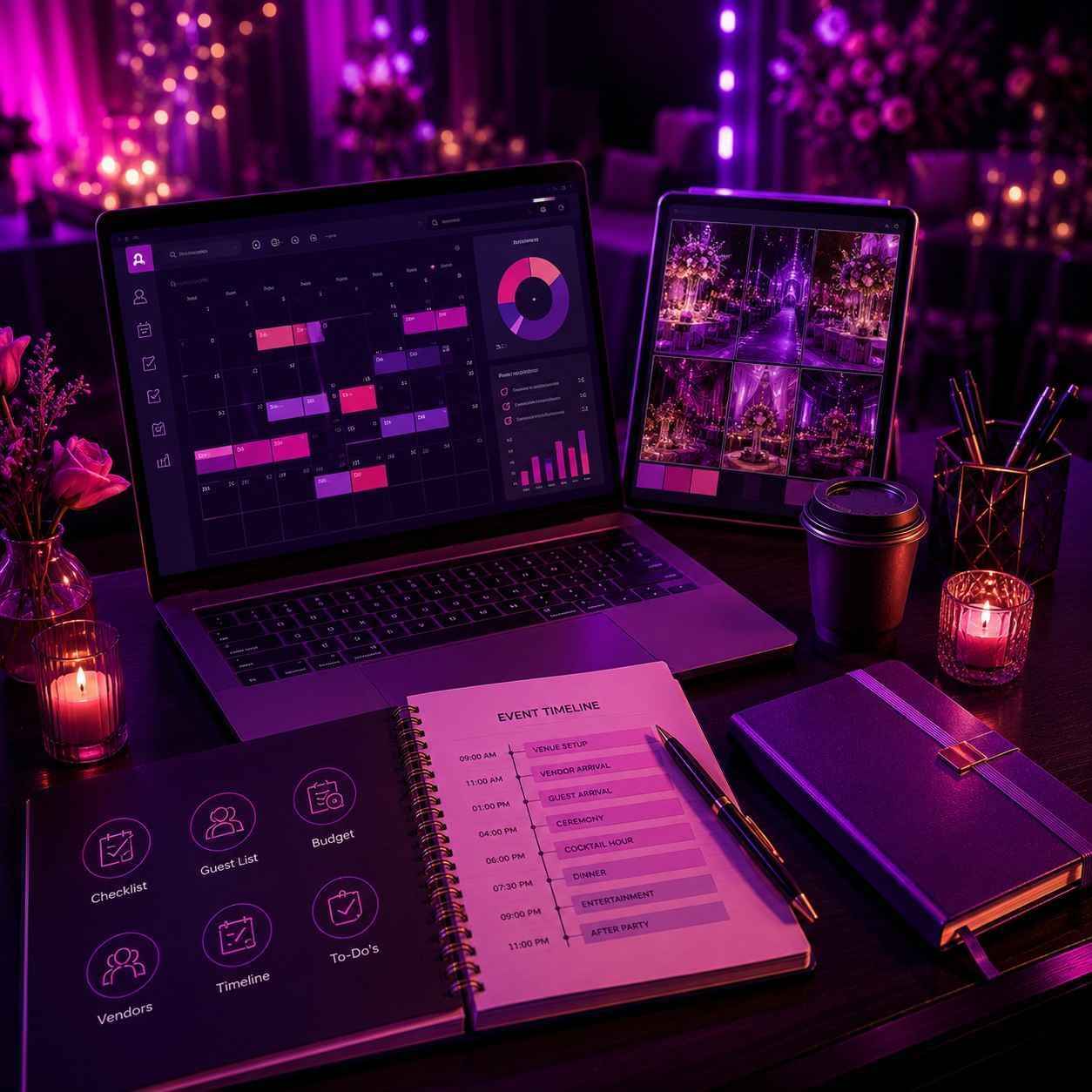
Explore All Planning Tools
Plan your wedding, party or special event with useful tools and resources that make organising every detail easier and more efficient.
Plan Better,
Celebrate with Happiffie
From organising your event details to managing budgets, guests, schedules and essential checklists, Happiffie brings useful planning tools together to make every celebration easier to plan and manage.
- Smart Planning ToolsOrganise important event details with easy-to-use planning tools
- Plan Your BudgetKeep track of event expenses and make informed planning decisions
- Ready-to-Use ChecklistsStay organised with practical checklists for every stage of your event
Planning Tools & Resources
 Engagement
 Mehendi
 Sangeet
 Haldi
Haldi Wedding
 Reception
 Pre Wedding Shoot
 Save The Date Shoot
 Ring Ceremony
 Destination Wedding
 Aviratham (Engagement)
 Guru Pooja
 Kashi Yatra
 Oonjal Ceremony
 Muhurtham
 Vidaai
 Post Wedding Shoot
 Anniversary Celebration
 Vow Renewal
 Honeymoon Celebration
 Bridal Shower
 Bachelor Party
 Bachelorette Party
 Cocktail Party
 House Warming
 Griha Pravesh
 Satyanarayan Puja
 Naming Ceremony
 Thread Ceremony
 Upanayanam
- 400+Curated Events
- 6Event Universes
- 1000+Verified Vendors
- 70+Locations
- 24/7Customer Support


Not sure which packages fits your celebration?
Let Hiya & Hanu help you find the perfect match!
Explore Celebration Packages- AI-Powered MatchingSmart suggestions for you
- Budget OptimizerGet the best experiences in your budget
- End-to-End SupportWe are with you at every step
Serving Celebrations across 75+ locations in India
Complete Planning and Management Toolkit for Well Organised Celebrations
◆Successful celebrations depend on thoughtful preparation long before guests arrive. Weddings, birthdays, corporate functions and private parties can involve numerous suppliers, financial decisions, schedules and responsibilities. Managing these elements separately can make preparation unnecessarily demanding.
A complete planning and management toolkit provides a structured framework for bringing these requirements together. It helps organisers understand what needs to happen, who is responsible, when decisions are due and how different arrangements connect.
In Kerala, this approach can be particularly valuable because celebrations often combine traditional ceremonies with contemporary services. Weddings may involve several functions, while destination occasions can add accommodation and transportation requirements. Corporate gatherings may require detailed schedules, technical arrangements and professional hospitality.
The right toolkit does not need to make planning complicated. Its purpose is to create visibility, reduce avoidable confusion and give organisers a dependable reference throughout the preparation journey.
Understanding a Celebration Management Toolkit
A celebration management toolkit is essentially a collection of practical resources that support preparation and execution. It may include task management, calendars, supplier records, budget tracking, guest information, venue details and event schedules.
Each resource addresses a different aspect of preparation. Together, they create a broader management system.
For example, a task record can show what needs to be completed, while a calendar identifies when it should happen. A supplier record keeps service information accessible, while a budget tracker provides financial visibility.
This connected approach is useful because celebration decisions rarely exist independently. Changing the guest count may affect catering, seating and accommodation. Altering a venue may influence décor, transport and technical arrangements.
A structured management system makes these relationships easier to recognise before they become problems.
Managing Wedding Preparation From Start to Finish
Weddings are among the most detailed celebrations to organise. Depending on the format, preparations may involve engagement functions, pre-wedding events, ceremonies, receptions and family gatherings.
A complete planning and management toolkit can divide these arrangements into separate stages. Early preparation can focus on venues and major suppliers, while later stages address menus, décor, guest communication and final schedules.
Supplier management is especially important. Photographers, caterers, decorators, entertainment providers, makeup artists, transport teams and hospitality staff may all have different commitments.
Recording their requirements alongside the wider wedding schedule can make coordination easier.
Traditional ceremonies also require careful consideration. Rituals may follow specific sequences and timings, while modern services need to operate around them. A well-structured management framework can accommodate both without treating either as an afterthought.
Planning Birthday Celebrations
Birthday celebrations range from intimate family gatherings to elaborate milestone parties. The planning requirements therefore depend heavily on the guest profile and desired format.
Children's birthdays may involve entertainers, games, themed décor, cakes, catering and return gifts. Adult celebrations may focus more on dining, music, photography and venue styling.
A management toolkit allows hosts to adapt their preparation accordingly. Tasks can be arranged according to deadlines, while suppliers can be associated with the services they provide.
Activity scheduling can be particularly helpful for children's parties. Games, entertainment, food service and cake cutting should fit naturally into the available time.
Milestone birthdays may require additional arrangements such as speeches, performances or surprise elements. Recording these details beforehand helps the programme remain organised without making the celebration feel overly structured.
Supporting Corporate Functions
Corporate occasions require a different management approach because professionalism and timing are often critical. Conferences, award ceremonies, product launches, team celebrations and office functions can involve several groups of attendees.
A complete planning and management toolkit can support venue preparation, registration, seating, catering, technical facilities and programme scheduling.
Speakers and presentations may have fixed time allocations, making schedule control particularly important. Catering and entertainment also need to fit around the formal programme.
Attendee information can be managed alongside operational requirements. Dietary preferences, accessibility needs and special guest arrangements can therefore be considered before the function.
For smaller office gatherings, the management structure can remain straightforward. The objective is to maintain clarity without creating unnecessary administration.
Building a Central Task Management System
Tasks form the foundation of most celebration preparation. Some require decisions from the host, while others can be delegated to family members, planners or suppliers.
A central task system provides a clear view of these responsibilities. It can distinguish between completed arrangements, pending decisions and items awaiting confirmation.
This becomes increasingly useful as the celebration date approaches. Numerous smaller tasks often emerge during the final weeks, and relying on memory alone can make them difficult to track.
Responsibility allocation also reduces assumptions. If someone agrees to arrange transportation or confirm a menu, recording that responsibility creates a clearer understanding of ownership.
The system should remain simple enough to update regularly. A management tool only becomes useful when information remains current.
Maintaining Supplier and Service Information
Supplier relationships can involve several conversations before an arrangement is finalised. Important details may otherwise become scattered across calls, messages and emails.
A central supplier record can contain contact details, services, agreed requirements, appointments and payment stages.
For example, a decorator may require venue access at a particular time, while the caterer needs a separate preparation window. Photography may require specific periods for portraits or family sessions.
Recording these requirements together allows organisers to identify potential conflicts earlier.
Supplier information should also distinguish between confirmed arrangements and pending decisions. This small organisational practice can prevent assumptions and make follow-up conversations more precise.
Managing the Celebration Budget
Financial management should be integrated into preparation from the beginning. Celebration expenses can cover venue hire, catering, décor, photography, entertainment, transport, accommodation and specialist services.
A budget management resource can record projected costs alongside confirmed commitments. This gives hosts a clearer understanding of how much has already been allocated.
Payment tracking is equally important. Advances, instalments and final balances can be recorded against individual suppliers.
When several family members contribute towards expenses, a central record can also reduce uncertainty. Everyone involved can understand which payments have been completed and which remain outstanding.
Budget management does not have to limit creativity. Instead, it helps organisers direct spending towards the elements that matter most to the occasion.
Creating a Detailed Celebration Schedule
A celebration schedule connects individual tasks to the final programme. It should cover both preparation milestones and the actual event-day sequence.
Early deadlines may include venue bookings, major supplier confirmations and accommodation. Later stages can address guest numbers, menus, seating, décor details and technical requirements.
Event-day schedules require even greater precision. Supplier arrival, setup, guest entry, ceremonies, meals, performances and photography may all need to fit within a defined period.
A complete planning and management toolkit can help organisers view these activities together rather than as isolated appointments.
The schedule should still allow reasonable flexibility. Unexpected delays can happen, particularly when several suppliers are involved. Building contingency time into the programme creates room to respond without disrupting the entire occasion.
Organising Guest Information
Guest management extends well beyond maintaining an invitation list. Attendance confirmations, dietary requirements, accommodation, transportation and seating may all require attention.
A structured guest record allows information to be updated as responses arrive. This becomes particularly valuable when attendance changes close to the celebration date.
Destination occasions in Kerala may require additional hospitality planning. Guests travelling from different cities may need accommodation details, transport arrangements and location guidance.
Older guests, children and visitors with accessibility requirements may also need additional consideration.
Organising these details early allows venues and suppliers to prepare appropriately. It can also improve the guest experience by reducing uncertainty when people arrive.
Managing Venue Requirements
The venue provides the physical foundation for the celebration. Its capacity, layout, facilities and access conditions can influence almost every other arrangement.
Indoor venues may require attention to seating plans, air conditioning, audio equipment, lighting and room configuration.
Outdoor celebrations can involve additional requirements such as weather contingencies, power supply, flooring, temporary structures and alternative spaces.
Kerala offers a wide range of celebration settings, including banquet halls, resorts, gardens, waterfront properties and heritage venues. Each type can create different management considerations.
Recording venue requirements alongside supplier information helps organisers understand what needs to happen before installation and service begins.
Coordinating Décor and Styling
Décor often involves several connected decisions. Colour palettes, flowers, furniture, lighting, stage arrangements and table styling may need to work together.
A management toolkit can record design preferences alongside supplier responsibilities. This helps prevent different teams from working from conflicting information.
For weddings, décor may also change between ceremonies. A daytime ritual could require a different arrangement from an evening reception.
Birthday celebrations may involve themed installations, while corporate functions may require a more restrained professional setting.
Good organisation allows creative choices to remain flexible while ensuring suppliers have accurate information.
Managing Catering and Hospitality
Food and beverage arrangements depend heavily on guest numbers, event timings and venue facilities. Catering therefore needs to be integrated into the wider celebration schedule.
Menu decisions should be recorded alongside dietary requirements and expected attendance. Final quantities can then be confirmed closer to the event date.
Traditional Kerala celebrations may involve regional menus and ceremonial dining customs, while contemporary functions may use buffet, plated or live-service formats.
Hospitality also includes water stations, guest seating, service flow and meal timing. These details can influence how comfortably guests experience the celebration.
A management framework ensures that catering is considered alongside rather than separately from other guest-facing arrangements.
Integrating Entertainment and Technical Services
Entertainment often forms an important part of celebrations. DJs, live bands, performers, speakers and activity providers may each require different setup conditions.
Technical services can include sound, lighting, displays and other event infrastructure. Their installation schedules should align with venue access and supplier arrival times.
A complete management system can record these requirements and place them within the overall timeline.
This is particularly important for corporate functions, where presentations and speeches may depend on reliable technical arrangements.
For weddings and private parties, entertainment should complement the programme rather than interrupt important ceremonial or dining moments.
Digital Tools for Better Management
Digital resources can make information easier to share and update. Shared documents can allow family members, planners and authorised suppliers to access current information.
Calendars can manage appointments and deadlines, while task-management platforms can assign responsibilities.
Budget records can provide an updated view of spending, and guest databases can support attendance management.
However, organisers should avoid using too many disconnected systems. When information is spread across multiple applications, it can become difficult to determine which version is current.
A smaller number of consistently maintained resources is generally easier to manage.
Handling Multi-Day Celebrations
Some celebrations extend across several days, especially weddings and destination functions. These occasions require an organisational framework that connects separate programmes.
Each day may have different venues, suppliers, guest groups and schedules. Accommodation and transportation can also become continuous considerations.
A management toolkit can provide an overall master schedule while maintaining individual timelines for each function.
This allows organisers to see the complete celebration without mixing the details of different occasions.
Multi-day planning also benefits from clear handover information. If different family members or professional teams oversee separate functions, each person should understand what has already been completed and what remains pending.
Preparing for Contingencies
Good management includes preparing for reasonable uncertainties. Weather changes, supplier delays, guest adjustments and venue restrictions can affect arrangements.
The objective is not to anticipate every possible problem. Instead, organisers should identify changes that could significantly affect the celebration.
Outdoor functions may require an alternative indoor space. Transportation plans may benefit from backup contacts. Supplier information should remain readily accessible if schedules change.
Contingency planning provides flexibility while keeping the main celebration plan intact.
Making the Final Review Effective
The final review is an important stage of celebration management. By this point, major bookings should ideally be confirmed and attention can shift towards operational details.
Supplier arrival times, final guest numbers, menus, seating, payments, venue access and programme timings can be reviewed together.
A central management toolkit makes this review easier because information does not need to be gathered from multiple sources.
The final review should identify genuine gaps rather than create new unnecessary tasks. Its purpose is to give the organiser confidence that the essential arrangements are ready.
Choosing the Right Toolkit for the Occasion
Different celebrations require different levels of management. A small birthday gathering may only need a basic schedule, guest list, supplier record and budget.
A large wedding may require detailed ceremony timelines, accommodation information, transport planning and extensive supplier coordination.
Corporate functions may need stronger programme and attendee management, while private parties may benefit from a simpler hospitality-focused structure.
The best toolkit is therefore not necessarily the one with the most features. It is the one that fits the celebration, remains easy to maintain and provides useful information when decisions need to be made.
Creating a More Relaxed Celebration Experience
Effective management ultimately gives hosts more freedom to enjoy their own celebration. When information is organised and responsibilities are clear, fewer details compete for attention.
Family members can contribute confidently because their responsibilities are visible. Suppliers can work from clearer instructions. Hosts can focus on welcoming guests and enjoying meaningful moments.
This does not mean every detail must be controlled. Good organisation creates a dependable foundation while leaving space for spontaneity.
For celebrations across Kerala, that balance can be particularly valuable. Traditional customs, modern services and personal preferences can coexist when the underlying preparation is carefully structured.
Bringing the Complete Management Framework Together
A complete planning and management toolkit connects the major parts of celebration preparation. Tasks, suppliers, budgets, guests, venues, schedules and contingency arrangements can all be viewed as parts of one larger process.
For Kerala weddings, birthdays, corporate functions and private parties, this structure can reduce avoidable confusion and support better decisions.
The strongest management approach remains practical. It should make information easier to access, responsibilities easier to understand and deadlines easier to follow.
With the right framework, organisers can approach preparation with greater confidence. Instead of becoming overwhelmed by individual details, they can see the celebration as a coordinated journey from the first decision to the final guest farewell.
Frequently Asked Questions
1. What is a complete planning and management toolkit?
It is a collection of resources used to manage celebration tasks, suppliers, budgets, guests, schedules, venues and other preparation requirements within a structured framework.
2. Who can use a celebration management toolkit?
Families, individual hosts, professional planners, corporate organisers and venue teams can all use one. The level of detail can be adjusted according to the celebration.
3. Is a management toolkit useful for Kerala weddings?
Yes. It can help organise ceremonies, venues, suppliers, catering, décor, photography, accommodation, transportation and event-day schedules.
4. Can the toolkit support birthday parties?
Yes. It can manage guest information, entertainment, cake arrangements, decoration, catering, activities, suppliers and final confirmations.
5. How does a toolkit help manage event budgets?
It allows organisers to record estimated expenses, confirmed costs, supplier payments and outstanding balances, providing greater visibility over financial commitments.
6. Can multiple people use the same planning system?
Yes. Shared digital documents and task systems can allow family members, planners and authorised team members to work from the same current information.
7. Should supplier information be included?
Absolutely. Contact details, services, requirements, appointment times, payment stages and pending decisions are useful information to maintain centrally.
8. Can it help with outdoor celebrations?
Yes. Organisers can record weather contingencies, power requirements, temporary structures, alternative spaces and supplier access arrangements.
9. When should a management toolkit be created?
It is best to establish the framework when major celebration planning begins. Early organisation makes later supplier, budget and guest decisions easier to manage.
10. What is the main advantage of using a complete toolkit?
Its main advantage is visibility. Hosts can understand what has been completed, what remains pending, who is responsible and when important actions need to happen.