
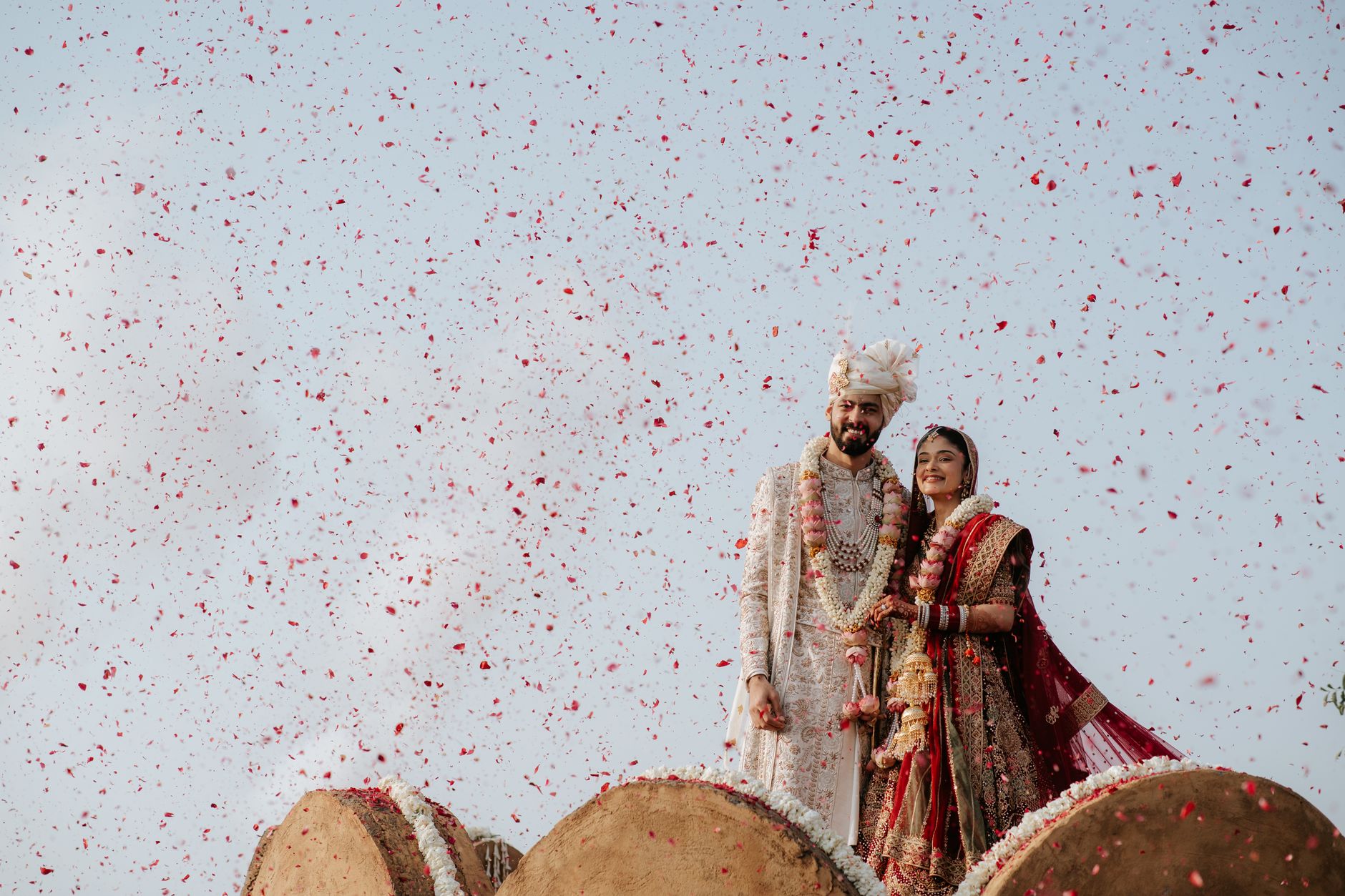
Authentic South Indian Wedding Decor, Jaipur
Decor in Jaipur
South Indian Ceremony Decor in Jaipur: Complete Guide
South Indian Ceremony Decor brings together vivid temple-inspired aesthetics, fragrant marigold and jasmine garlands, and intricate Kolam rangoli patterns — all of which can be beautifully staged inside Jaipur's heritage havelis, luxury banquet halls, and garden venues. Jaipur's floriculture supply chain, including wholesale flower markets near Badi Chaupar, makes sourcing fresh flowers affordable and abundant. Whether you are planning a Tamil wedding decoration with traditional Kanchipuram silk backdrops or a Kerala-style ceremony with lush banana leaf and mango leaf torana, Jaipur's event decorators have expanded their repertoire to deliver these culturally precise setups. Happiffie helps you discover, compare, and book verified decor specialists who understand the rituals and visual grammar of South Indian celebrations.
Quick Answer
South Indian Ceremony Decor refers to the traditional decorative elements used in weddings and rituals from Tamil Nadu, Kerala, Andhra Pradesh, Karnataka, and Telangana. It includes South Indian floral mandaps, Kolam rangoli at the entrance, banana leaf and mango leaf toranas, Kanchipuram silk drapes, brass lamps (kuthu vilakku), and abundant marigold and jasmine garlands. In Jaipur, specialist decorators recreate these authentic setups inside heritage halls and banquet venues, typically priced between ₹80,000 and ₹6,00,000 depending on scale.
What Makes South Indian Ceremony Decor Distinct from North Indian Styles?
South Indian Ceremony Decor is rooted in temple architecture and agrarian ritual traditions that differ significantly from North Indian wedding aesthetics. Where North Indian decor leans on heavy draping, chandeliers, and mogra strings, South Indian setups prioritise symmetry, sacred geometry, and natural materials. A South Indian floral mandap is typically built on a raised wooden platform, flanked by brass kuthu vilakku lamps and crowned with a canopy of fresh banana leaves and mango leaf torana — all carrying ritual significance, not just visual appeal. Tamil wedding decoration, for instance, is incomplete without the Marapachi bommai dolls placed at the mandap entrance and the Oonjal swing draped in fresh jasmine. Traditional Kolam rangoli setup at the main threshold is considered auspicious and is drawn by hand using rice flour, often in elaborate lotus and peacock motifs. Kanchipuram silk backdrop decor, featuring woven gold-zari fabric panels, replaces the sequined curtains common in Punjabi or Rajasthani setups. Jaipur decorators trained in South Indian styles source authentic materials — including coconut palm fronds and tender banana stems — from suppliers in Chennai and Bengaluru to maintain cultural accuracy.
Core Elements Every South Indian Ceremony Decor Package Should Include
A well-planned South Indian Ceremony Decor package in Jaipur typically covers seven foundational elements. First, the South Indian floral mandap — a four-pillared structure in teak or bamboo wrapped in fresh flowers, banana leaves, and silk. Second, the mango leaf and banana leaf torana hung across doorways and stage arches; this element appears in virtually every South Indian ritual from Namakaranam to weddings. Third, traditional Kolam rangoli setup at the venue entrance, ideally executed the morning of the event using fresh white rice flour with colour borders. Fourth, brass and bronze lamp arrangements — pairs of kuthu vilakku placed symmetrically around the mandap and aisle. Fifth, marigold and jasmine garlands strung across pillars, ceiling joists, and table edges; jasmine (mallige) holds particular significance in Karnataka and Tamil Nadu ceremonies. Sixth, a Kanchipuram silk backdrop decor panel behind the couple's seating, often in temple red, peacock green, or turmeric yellow. Seventh, vessel and fruit arrangements — stacked coconuts, plantains, and kalash pots that anchor each corner of the mandap. When reviewing vendor quotes, confirm each of these seven elements is itemised and not bundled vaguely under a single line item.
How Much Does South Indian Ceremony Decor Cost in Jaipur?
Wedding decor budget in Jaipur for South Indian setups varies by guest count, venue type, and material quality. For an intimate gathering of 50-100 guests in a boutique haveli, a South Indian Ceremony Decor package typically starts at ₹80,000 to ₹1,20,000, covering a basic floral mandap, entrance torana, and lamp arrangements. Mid-range packages for 200-400 guests — the most common bracket for South Indian Tamil weddings held in Jaipur — are priced between ₹1,80,000 and ₹3,50,000, and include a Kanchipuram silk backdrop decor panel, traditional Kolam rangoli setup, full aisle dressing, and stage florals. Premium or destination-style setups for 500+ guests in a heritage fort or five-star banquet, featuring real jasmine curtains, custom mandap structures, and elaborate Kolam art, can reach ₹4,50,000 to ₹6,00,000 or more. Seasonal pricing applies: November through February is peak wedding season in Jaipur, and flower costs for marigold and jasmine garlands rise by 20-35% during this period. Booking at least three months in advance locks in current rates and ensures flower availability.
Choosing the Right Venue in Jaipur for a South Indian Wedding Setup
Rajasthani venue transformation for South Indian aesthetics works best in spaces with high ceilings, stone columns, or open courtyards — all abundant in Jaipur. Heritage properties near Civil Lines, Amer Road, and the Old City area provide natural stone arches that complement a South Indian floral mandap without structural intervention. Banquet halls in Vaishali Nagar and Malviya Nagar offer climate-controlled interiors suitable for extended rituals, important given that South Indian ceremonies like Muhurtham, Oonjal, and Kashi Yatra can run four to six hours. Outdoor garden venues in Jagatpura and Mansarovar work well for morning ceremonies, as traditional Kolam rangoli setup requires daylight and an even surface. When shortlisting a venue, confirm that the flooring allows chalk or rice flour Kolam drawing without damage penalties. Also check that the kitchen or prep area can handle banana leaf serving setups if you plan a traditional sadya or South Indian meal as part of the event. Happiffie's venue-and-decor bundling feature lets you filter venues that have hosted prior South Indian events, reducing co-ordination friction significantly.
What Are the Most Common Mistakes When Booking South Indian Ceremony Decor in Jaipur?
The single most frequent mistake is hiring a generalist decor vendor who treats South Indian Ceremony Decor as interchangeable with North Indian or destination styles. A decorator unfamiliar with Tamil wedding decoration may substitute plastic banana leaves for real ones, use synthetic jasmine in garlands, or skip the Kolam rangoli entirely — each of which dilutes ritual authenticity. Second, many couples underestimate lead time: sourcing genuine Kanchipuram silk backdrop decor fabric or hand-knotted jasmine strings requires 6-8 weeks of advance planning when working outside Tamil Nadu or Karnataka. Third, skipping a site visit before the event often leads to mandap placement errors — a South Indian floral mandap must face the correct cardinal direction (typically east), and many Jaipur banquet halls are not oriented with this in mind. Fourth, not clarifying dismantling and cleanup terms in the contract can result in surprise charges, especially when real banana leaves and flower waste require separate disposal. Fifth, ignoring backup flower sourcing for peak season events is risky: marigold and jasmine garlands are perishable, and a supplier shortfall 24 hours before the wedding is extremely difficult to resolve without a pre-arranged alternative vendor.
South Indian Ceremony Decor Setup Types: Comparison for Jaipur Weddings
Expert Recommendation
Best for Intimate Celebrations (Under 100 Guests)
Best for Destination Weddings with Pan-India Guest Lists
Best for Large Traditional Ceremonies (500+ Guests)
Best for Budget-Conscious Couples
Best for Traditional Tamil or Telugu Rituals
Best for Modern Couples Seeking a Contemporary South Indian Look
How to Choose the Right Option
✅ Pre-booking Checklist
- Confirm the vendor has executed South Indian Ceremony Decor for at least 10 prior events — request a photo portfolio.
- Get an itemised quote listing every element: mandap, torana, Kolam, lamps, garlands, and backdrop separately.
- Visit the venue with the decorator to confirm mandap orientation (ideally east-facing) and Kolam flooring suitability.
- Clarify flower sourcing: ask whether jasmine and marigold are fresh or cold-stored, and who supplies if a batch fails.
- Confirm setup and dismantling timelines with the venue, especially if banana leaves and organic waste require special disposal.
- Check seasonal pricing: book and deposit before peak season (October-February) to lock in current flower rates.
- Ask for a day-of coordinator from the decor team who understands South Indian ritual sequencing.
- Request a test Kolam drawing or fabric swatch before the event if you are using premium materials.
🎯 Selection Criteria
- Cultural expertise: the decorator must understand region-specific differences between Tamil, Kerala, Andhra, and Karnataka styles.
- Material authenticity: real banana leaves, genuine jasmine, and hand-knotted garlands rather than synthetic alternatives.
- Vendor network: ability to source Kanchipuram silk backdrop fabric and specialty items from South Indian markets.
- Portfolio depth: documented experience with South Indian floral mandap builds at Jaipur venues specifically.
- Transparent pricing: no hidden charges for setup, dismantling, or generator requirements for lamp-heavy setups.
- Contingency planning: a clear policy for flower shortage, weather disruption, or last-minute ritual changes.
💰 Cost / Quality Factors
- Guest count directly drives mandap size, garland quantity, and overall material cost — always quote per actual headcount.
- Fresh versus artificial flowers: fresh jasmine and marigolds increase cost but are ritually preferred and photographically superior.
- Venue type affects logistics: heritage forts may restrict drilling or ceiling rigging, limiting certain mandap structures.
- Seasonal demand inflates wedding decor budget Jaipur by 20-35% between November and February — plan accordingly.
- Add-ons like Oonjal swings, Kolam art corridors, and multi-gate torana installations significantly increase final invoices.
- Travel and accommodation for South Indian specialist artists, if flown in from Chennai or Bengaluru, adds to total project cost.
⚠️ Common Mistakes to Avoid
- Hiring a generalist decorator without verified South Indian Ceremony Decor experience — leads to culturally inaccurate setups.
- Underestimating lead time for sourcing authentic materials like Kanchipuram silk and hand-tied jasmine garlands.
- Skipping a pre-event site inspection, which can result in incorrect mandap placement or Kolam surface incompatibility.
- Not specifying in the contract whether flowers are fresh or preserved — a common source of post-event disputes.
- Overlooking ritual space requirements: South Indian ceremonies need specific zones for the Oonjal, Nalangu, and fire ritual (homam).
- Ignoring dismantling clauses: banana leaf and organic waste disposal is a real logistical and cost factor at Jaipur venues.
People Also Ask
Can Jaipur-based decorators create authentic South Indian Ceremony Decor?
What flowers are traditionally used in South Indian wedding decoration?
How early should I book South Indian Ceremony Decor in Jaipur?
What is a traditional Kolam rangoli setup and is it part of every South Indian wedding?
What is the difference between a South Indian floral mandap and a North Indian one?
Can I combine South Indian decor with a Rajasthani heritage venue backdrop?
What budget should I set aside for a 300-guest South Indian wedding in Jaipur?
Is banana leaf and mango leaf torana available in Jaipur for event decoration?
Related Experiences on Happiffie
Aarthi Plate Decoration for Your Tamil Wedding
Shelter Your Celebrations in Vizag
South Indian Bridal Jewellery in Jodhpur
Alappuzha Wedding Decor Made Easy
Elevate Your Corporate Event in Kodaikanal
All Wedding & Event Services
Frequently Asked Questions
Are there dedicated South Indian Ceremony Decor specialists available in Jaipur?
What is the typical setup time for a full South Indian floral mandap in a Jaipur banquet hall?
Can a traditional Kolam rangoli setup be done outdoors at a Jaipur garden venue?
How do I ensure my South Indian Ceremony Decor uses fresh jasmine and not artificial alternatives?
Is Kanchipuram silk backdrop decor available from Jaipur decorators, or does it need to be brought from Tamil Nadu?
What is the best Jaipur locality to find wedding decor vendors experienced in South Indian setups?
Does South Indian Ceremony Decor work inside air-conditioned banquet halls, or is it better outdoors?
Key Takeaways
- South Indian Ceremony Decor in Jaipur is fully achievable with specialist vendors who source authentic materials from South Indian supply networks.
- Core elements include a South Indian floral mandap, banana leaf and mango leaf torana, traditional Kolam rangoli setup, brass lamps, and marigold and jasmine garlands.
- Budgets range from ₹80,000 for intimate setups to over ₹6,00,000 for large heritage-venue celebrations, with seasonal pricing variations of 20-35%.
- Jaipur's heritage havelis and stone-column venues in Civil Lines, Amer Road, and Bani Park are particularly well-suited to South Indian floral mandap aesthetics.
- Tamil wedding decoration differs from Telugu or Kerala styles in specific ritual props — confirm your decorator understands your regional tradition.
- Book three to four months in advance to secure specialist decorators, lock in flower prices, and allow time for Kanchipuram silk backdrop sourcing.
- Avoid generalist vendors: cultural accuracy in South Indian Ceremony Decor is non-negotiable for ritual integrity and meaningful event photography.
- Happiffie's marketplace lets you compare verified South Indian decor specialists in Jaipur, review their portfolios, and request itemised quotes in one place.
Book South Indian Ceremony Decor in Jaipur on Happiffie
Browse verified specialists, compare itemised quotes, and secure your South Indian floral mandap, Kolam, and silk backdrop — all in one place.
Explore Decor Vendors
Are you a Vendor? Grow Your Business with Happiffie!
- High intent verified leads
- Reverse auction opportunities
- AI business tools & insights
- Dedicated vendor dashboard
- Grow your business, your way
It's free & takes less than 2 minutes!