
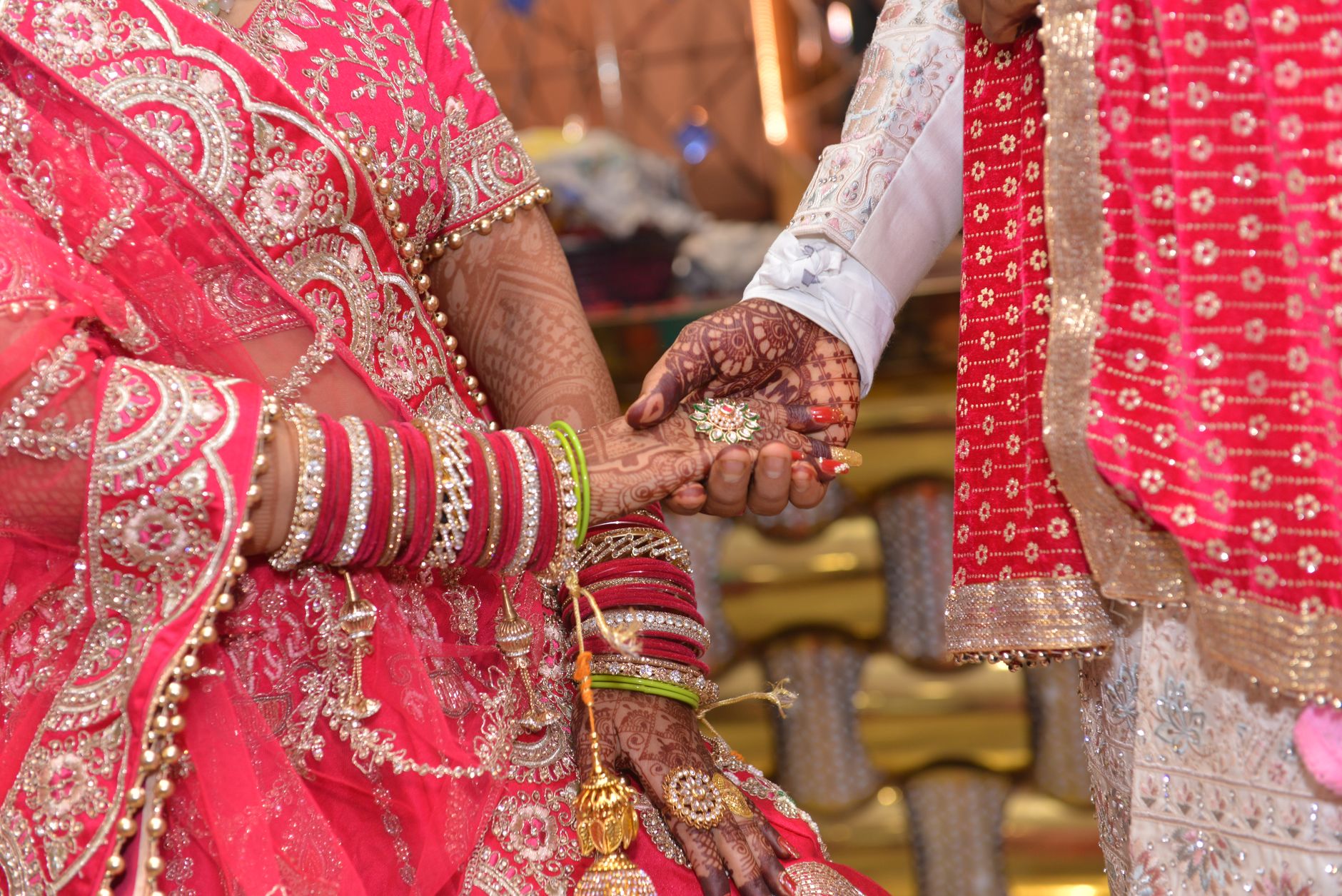
Where Two Traditions Become One
Planners in Hyderabad
Multi-Heritage Marriage Coordination in Hyderabad
Hyderabad's cosmopolitan fabric — where Telugu, Urdu, Marwari, and South Indian communities have coexisted for centuries — makes it one of India's most naturally suited cities for Multi-Heritage Marriage Coordination. When two families arrive with different rituals, languages, and expectations, a specialist planner bridges those worlds without erasing either. From cross-cultural wedding coordination across Banjara Hills mandaps and Jubilee Hills banquet halls to interfaith wedding planning that respects both the nikaah and the saptapadi, Happiffie connects you with vetted Hyderabad planners who treat every tradition as equally sacred. Proper wedding ritual sequencing and thoughtful guest experience management turn complexity into an unforgettable celebration.
Quick Answer
Multi-Heritage Marriage Coordination is the professional planning of weddings that involve two or more distinct cultural, religious, or regional traditions. In Hyderabad, specialist planners design unified event timelines, manage separate sets of priests or officiants, coordinate bilingual communication, and curate menus and décor that honour both families — ensuring every guest feels included regardless of their background.
What Makes Multi-Heritage Marriage Coordination Different from Standard Wedding Planning?
Standard wedding planning assumes a single ritual script — one set of customs, one language, one cuisine palette. Multi-Heritage Marriage Coordination, by contrast, requires the planner to deeply research two or more distinct ceremonial frameworks before a single venue walkthrough happens. In Hyderabad, this often means harmonising a Hindu Telugu nischitartham with a Christian ring ceremony, or weaving a Sindhi lagan into the same weekend as a Hyderabadi Muslim walima. The planner must negotiate diplomatically between two families who may never have attended each other's religious events, build a master timeline that gives each tradition adequate time without fatiguing guests, and brief every vendor — caterer, florist, photographer, MC — on the sensitivities involved. Multicultural ceremony management goes well beyond logistics; it is cultural diplomacy with a clipboard. Planners experienced in dual-tradition wedding planning also anticipate flashpoints — seating arrangements, dress codes, dietary restrictions — and resolve them weeks before the wedding day, not on the morning of the baraat.
Hyderabad's Cultural Landscape and Why It Shapes Every Celebration
Few Indian cities offer the layered heritage that Hyderabad does. The old city's Charminar quarter carries centuries of Nizami tradition, while HITEC City and Gachibowli host a globally mobile professional class whose weddings frequently blend South Indian, North Indian, and even Western elements. Banjara Hills and Jubilee Hills are home to some of the finest Hyderabad luxury wedding venues — sprawling banquet halls, heritage havelis, and five-star hotel ballrooms — all of which require careful logistical planning when two ritual teams need simultaneous access. Secunderabad's cantonment-era churches and the pristine mosques of Tolichowki add further variety. A planner practised in cross-cultural wedding coordination understands that a venue suitable for a large Telugu Brahmin wedding may need significant infrastructure changes — additional sound systems for bilingual speeches, a secondary mandap space, or a separate halal kitchen line — to serve a blended celebration. Knowing Hyderabad's vendor ecosystem deeply means faster problem-solving and better negotiated rates.
How Does Wedding Ritual Sequencing Work Across Two Traditions?
Wedding ritual sequencing is the backbone of any multi-heritage event. A skilled coordinator begins by mapping every ceremony — mehendi, haldi, engagement, nikah, saptapadi, reception — onto a master calendar, then identifies overlaps, conflicts, and fatigue points. In practice, a Hyderabad multi-heritage wedding spanning three days might open with a joint mehendi evening that draws from both Rajasthani and Telugu motifs, continue with separate religious ceremonies on day two (each allocated its full prescribed duration), and conclude with a shared reception featuring a bilingual MC, a fusion menu of biryani and dal baati churma, and a stage backdrop that incorporates both families' symbolic colours. Interfaith wedding planning requires that each officiant — pandit, maulvi, pastor, or granthi — receives a detailed brief confirming their time slot, audio-visual requirements, and the presence of any ritual props they need. Nothing derails a ceremony faster than a microphone that arrives 20 minutes late for a qawwali recitation or a sacred fire that was not pre-approved by the venue.
What Does Multi-Heritage Marriage Coordination Cost in Hyderabad?
Pricing for Multi-Heritage Marriage Coordination in Hyderabad varies with the complexity of traditions involved, guest count, and the planner's experience tier. Entry-level coordination for a two-tradition wedding with up to 300 guests typically starts around INR 1.5–2.5 lakh for full-service planning. Mid-range packages covering dual-tradition wedding planning with dedicated on-ground teams, vendor management, and a day-of coordinator run between INR 3–6 lakh for 300–700 guests. Premium planners handling three or more cultural streams, destination pre-wedding functions, and bilingual MC services at Hyderabad luxury wedding venues can charge INR 8–15 lakh or more. These fees generally exclude vendor costs such as catering, florals, and photography. Couples should budget an additional 10–15% contingency specifically for multi-heritage events, because last-minute ritual requirements — an extra set of puja samagri, a specific fabric for a phera dupatta — are common. Guest experience management is a line item worth paying for: a confused guest who cannot follow the ceremony is a detail a good planner prevents.
How Do You Choose the Right Planner for a Multi-Heritage Wedding in Hyderabad?
Selecting the right coordinator for Multi-Heritage Marriage Coordination begins with verifying lived experience — not just claimed familiarity — with both cultures in your wedding. Ask for a portfolio of at least two or three completed multi-tradition weddings, and request references from both sets of families, not just the couple. The planner should demonstrate fluency in wedding ritual sequencing and show you a sample master timeline from a previous event. Confirm that they have established relationships with officiants from multiple religious communities in Hyderabad, since last-minute priest sourcing is a red flag. Evaluate their approach to cross-cultural wedding coordination: do they propose a single blended ceremony, or do they respect the integrity of each tradition separately? Strong planners also excel at guest experience management — they brief ushers, publish multilingual ceremony programmes, and design seating that encourages cross-family interaction. Finally, check contract clarity around scope: a multi-heritage brief that is not written down in detail often leads to mismatched expectations on the wedding day.
Multi-Heritage Marriage Coordination: Setup Types Compared for Hyderabad Weddings
Expert Recommendation
Best for Intimate Multi-Heritage Celebrations (Under 150 Guests)
Best for Large Guest Counts (500+ Guests)
Best for Destination Pre-Wedding Functions
Best for Budget-Conscious Couples
Best for Three or More Cultural Traditions
Best for NRI or Inter-Continental Couples
How to Choose the Right Option
✅ Pre-booking Checklist
- Confirm the planner has direct experience coordinating both specific traditions in your wedding — not just general multicultural events
- Request a sample master timeline from a previous multi-heritage wedding of similar scale and complexity
- Verify the planner has established contacts for officiants from both religious communities in Hyderabad
- Confirm the venue can support separate ritual spaces, dual catering lines, and required audio-visual setups simultaneously
- Clarify contract scope in writing: which functions, traditions, and vendor categories are covered and which are excluded
- Allocate a 10–15% contingency budget specifically for last-minute ritual requirements or vendor upgrades
- Ensure the planner can provide or source bilingual MC services and multilingual ceremony programmes
- Introduce the planner to key family members from both sides at least 6 months before the wedding to build trust early
🎯 Selection Criteria
- Verified portfolio with multi-tradition weddings similar to yours — same cultures, comparable guest count
- Diplomatic communication style that positions the planner as neutral between both families
- Deep knowledge of wedding ritual sequencing for both specific religious or cultural frameworks
- Strong vendor network in Hyderabad spanning caterers, florists, officiants, and AV teams familiar with diverse events
- Transparent, itemised pricing with clear definitions of what is and is not included in the fee
- Availability for regular progress calls and on-site walkthroughs in the three months before the wedding
💰 Cost / Quality Factors
- Number of distinct traditions: each additional cultural stream adds 20–30% to coordination complexity and cost
- Guest count and number of functions: larger events and more functions require bigger on-ground teams
- Venue type: a single all-inclusive property is easier to coordinate than multiple locations across Hyderabad
- Planner's experience tier: senior coordinators charge more but reduce last-minute crisis risk substantially
- Extent of bilingual requirements: translated programmes, bilingual MC services, and multilingual signage add to scope
- Season and date: peak wedding season (November–March) commands higher vendor premiums across all categories
⚠️ Common Mistakes to Avoid
- Booking a planner based on aesthetic portfolio alone without checking their actual multi-tradition coordination experience
- Assuming the venue's in-house team can manage cross-cultural wedding coordination without specialist briefing
- Leaving wedding ritual sequencing undiscussed with officiants until the week before the wedding
- Neglecting guest experience management — failing to provide ceremony programmes or clear signage for guests unfamiliar with one tradition
- Splitting coordination duties between two separate planners — one per family — which creates conflicting timelines and communication chaos
- Underestimating dietary complexity: not pre-confirming halal, vegetarian, or allergen-specific catering infrastructure with the venue
People Also Ask
Can a single wedding planner handle both Hindu and Muslim ceremonies in Hyderabad?
How far in advance should I book a multi-heritage wedding planner in Hyderabad?
What is the typical guest count for multi-heritage weddings in Hyderabad?
Do multi-heritage wedding coordinators also manage pre-wedding functions?
How do planners handle dietary requirements at a multi-heritage wedding?
Is it possible to have a single ceremony that combines both traditions rather than two separate ones?
What languages are typically used in bilingual wedding programmes in Hyderabad?
Can Happiffie help me find planners specifically experienced in South Indian and North Indian wedding combinations?
Related Experiences on Happiffie
Stress-Free Guest Travel for Your Big Day
Two Cultures, One Perfect Wedding
Celebrate Under the Stars in Bengaluru
Make Every Ritual Meaningful
Unforgettable Wedding Dining in Hyderabad
Flawless VIP Hospitality in Delhi
Frequently Asked Questions
What exactly does a Multi-Heritage Marriage Coordination planner do in Hyderabad?
Which Hyderabad neighbourhoods are most popular for multi-heritage weddings?
Can interfaith wedding planning include both a pandit and a qazi at the same event?
How do planners manage conflicting family expectations in a dual-tradition wedding?
Is multicultural ceremony management more expensive than planning a standard single-tradition wedding?
What should the ceremony programme booklet include for a multi-heritage wedding?
How does Happiffie help couples find multi-heritage wedding planners in Hyderabad?
Can cross-cultural wedding coordination also cover destination pre-wedding events outside Hyderabad?
Key Takeaways
- Multi-Heritage Marriage Coordination in Hyderabad requires planners with verified, tradition-specific experience — not just general event management skills.
- Hyderabad's diverse cultural landscape — Telugu, Nizami, Marwari, South Indian, and NRI communities — makes it one of India's best cities for blended celebrations.
- Wedding ritual sequencing is the most technically demanding element; a detailed master timeline agreed upon by both officiants is non-negotiable.
- Full-service multi-heritage coordination costs between INR 1.5 lakh and INR 15 lakh depending on guest count, number of traditions, and planner tier.
- Interfaith wedding planning success depends on the coordinator's diplomatic neutrality and their ability to earn the trust of both families independently.
- Guest experience management — multilingual programmes, clear signage, bilingual MC services — determines whether guests feel included or confused.
- Book your specialist planner 10–12 months ahead; the best multi-heritage coordinators in Hyderabad are typically fully booked for peak season well in advance.
- Happiffie pre-screens and lists Hyderabad planners by specialisation, making it faster to shortlist coordinators with genuine cross-cultural wedding coordination expertise.
Find Your Multi-Heritage Wedding Specialist in Hyderabad
Happiffie connects you with pre-screened planners experienced in interfaith, multicultural, and dual-tradition weddings across Hyderabad. Share your brief and receive matched proposals.
Explore Planners Now
Are you a Vendor? Grow Your Business with Happiffie!
- High intent verified leads
- Reverse auction opportunities
- AI business tools & insights
- Dedicated vendor dashboard
- Grow your business, your way
It's free & takes less than 2 minutes!