
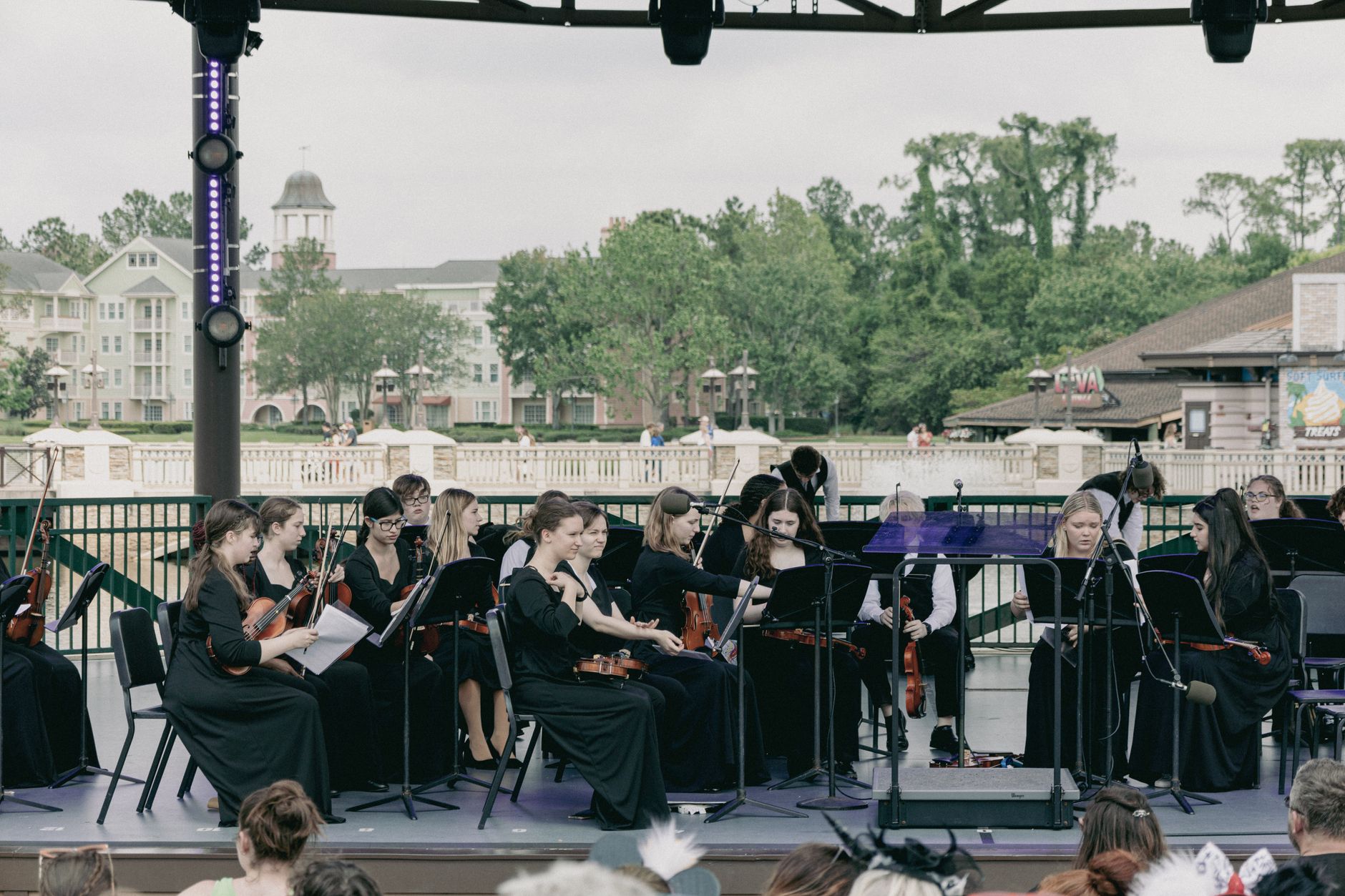
Flawless Classical Audio for Island Events
Audio & Lighting in Havelock-island
Classical Music Sound Engineer in Havelock Island
Havelock Island's breathtaking beach venues and open-air mandaps create a magical setting for classical performances, but the ocean breeze and ambient surf demand a specialist. A skilled Classical Music Sound Engineer understands that a sitar, sarod, tabla, or violin cannot be treated like amplified pop instruments — every overtone must breathe naturally through the PA without colouring the timbre. Whether you are planning a sunrise sangeet with Hindustani vocals or a sunset beach wedding ceremony accompanied by a string quartet, professional Indian classical concert sound setup and expert outdoor event acoustics on Havelock Island are what separate a memorable performance from a muddy, frustrating one. Happiffie connects you with vetted audio professionals who combine technical mastery with genuine love for classical music.
Quick Answer
A Classical Music Sound Engineer is an audio professional who specialises in capturing and amplifying acoustic instruments — such as sitar, violin, tabla, flute, and classical vocals — with minimal colouration and maximum clarity. Unlike a standard DJ or live-band technician, this specialist uses high-sensitivity condenser microphones, gentle EQ curves, and low-latency monitor systems to preserve the natural resonance of classical music in challenging environments like Havelock Island's open-air beach venues.
Why Does Havelock Island Need a Specialist Classical Music Sound Engineer?
Havelock Island's iconic venues — the white-sand stretches of Radhanagar Beach, beachfront resort lawns, and open jungle clearings — are stunning but acoustically unforgiving. Wind, wave noise, and the absence of reflective walls mean that a live classical music audio technician must work far harder than a technician in a Mumbai banquet hall. High-frequency sibilance from a flute or bansuri gets swallowed by ocean wind, while low-frequency tabla bols can bloom into mud without careful subwoofer management. A Classical Music Sound Engineer brings specialised mic placement techniques — often positioning small-diaphragm condensers inches from the instrument body — along with real-time acoustic monitoring. The result is that wedding guests seated 30 metres away on bamboo chairs hear every meend and gamak as if they were in the front row of a Saptak festival concert. Outdoor event acoustics on Havelock Island also demand weather-resistant rigging and rapid redeployment plans if afternoon rains arrive, making experience in island environments non-negotiable.
What Equipment Does Acoustic Instrument Sound Mixing Require on Havelock Island?
Acoustic instrument sound mixing for classical performances is equipment-intensive in ways that surprise many couples. A full Hindustani vocal-and-tabla duo typically needs four to six dedicated microphone channels, each with individually tuned parametric EQ to remove feedback frequencies while retaining harmonic richness. String ensembles add complexity: a four-piece string quartet may require eight channels when each instrument is close-miked plus a pair of room condensers for natural ambience. On Havelock Island, all equipment must be transported by ferry from Port Blair, so a professional Classical Music Sound Engineer plans logistics weeks in advance, factoring in saltwater exposure, humidity above 80 percent, and limited local equipment rental. Line arrays are preferred over traditional column speakers because they throw sound farther with lower SPL at the source, protecting delicate acoustic instrument tones. A quality digital mixing console with onboard processing replaces racks of outboard gear, reducing the freight footprint significantly. Generators with clean power conditioning are mandatory because island supply fluctuations corrupt sensitive preamps and can introduce hum into condenser microphone circuits.
How Much Does a Classical Music Sound Engineer Cost in Havelock Island?
Pricing for a Classical Music Sound Engineer on Havelock Island typically ranges from INR 40,000 to INR 1,50,000 per event, depending on scale, duration, and equipment freight costs. A compact two-hour sangeet with a classical vocal duo and tabla falls at the lower end — roughly INR 40,000 to INR 60,000 — covering the engineer, a basic PA, and microphones. A full-day destination wedding sound system package including orchestral sound reinforcement specialist services, multiple session changeovers, and line-array speaker deployment can reach INR 1,00,000 to INR 1,50,000 or more. Ferry logistics and inter-island transport add INR 8,000 to INR 20,000 to most packages. Accommodation for the engineer — typically two to three nights at a Havelock Island resort or guesthouse — adds further to costs, usually INR 2,000 to INR 5,000 per night. Couples who bundle beach wedding audio setup with lighting through a single vendor on Happiffie often save 15 to 20 percent compared with booking separately. Always request an itemised quote that breaks out equipment, labour, transport, and accommodation.
Indian Classical Concert Sound Setup: Hindustani vs Carnatic Considerations
Indian classical concert sound setup differs significantly between Hindustani and Carnatic traditions, and a competent Classical Music Sound Engineer must be fluent in both. Hindustani performances often feature longer alap sections with extreme dynamic range — whisper-quiet to full-throated — demanding a sound engineer who rides the fader with sensitivity rather than relying on heavy compression. Carnatic concerts, especially those featuring mridangam, violin, and a lead vocalist, require a brighter mix with more presence in the 3 kHz to 6 kHz range to honour the tradition's rhythmic clarity. In both traditions, a live classical music audio technician avoids artificial reverb on stage monitors, because classical musicians use the natural acoustic environment as a reference. On Havelock Island beach stages, a subtle ambience plugin on the front-of-house mix can compensate for the open-air setting without making the performance sound like a Bollywood production. Couples planning a classical music event should brief the engineer on the gharana or school of music to ensure the mix philosophy matches the artistic intent.
How Do You Choose the Right Orchestral Sound Reinforcement Specialist for Your Havelock Island Event?
Selecting the right orchestral sound reinforcement specialist begins with verifying that the professional has direct experience with classical acoustic instruments rather than a general live-events background. Ask to review recordings from previous classical concerts they have mixed — specifically, request raw audience recordings, not studio post-productions. On Havelock Island, logistical experience is equally critical: the engineer should have personally navigated ferry cargo procedures and know which equipment cases are saltwater-safe. A strong Classical Music Sound Engineer will conduct a site survey before the event, even if that means an additional ferry crossing, to measure ambient noise levels, identify feedback risks, and plan speaker placement relative to prevailing wind direction. Confirm that their equipment inventory includes dedicated instrument-grade condenser microphones, a professional digital console, and redundant backup units for critical components. Discuss the outdoor event acoustics on Havelock Island explicitly, and ask how they have handled sudden rain or generator failure in past island events. Finally, ensure the contract specifies rehearsal sound-check time — classical musicians require unhurried sound checks, often 60 to 90 minutes longer than a pop band.
Classical Music Sound Engineer Setup Options for Havelock Island Events
Expert Recommendation
Best for intimate beach ceremonies (up to 50 guests)
Best for mid-size sangeet celebrations (50–150 guests)
Best for large destination weddings (150–300 guests)
Best for budget-conscious couples
Best for traditional Hindustani or Carnatic concerts
Best for multi-day island wedding events
How to Choose the Right Option
✅ Pre-booking Checklist
- Confirm the engineer has documented experience with acoustic instruments, not just amplified live bands
- Request audio recordings from at least two previous classical music events they have engineered
- Verify ferry cargo slots and inter-island logistics are confirmed in writing
- Ensure the contract includes a minimum 90-minute sound check window for classical musicians
- Ask for an itemised quote separating equipment, engineer fees, freight, and accommodation
- Discuss rain and generator contingency plans specific to Havelock Island conditions
- Confirm availability of backup microphones, amplifiers, and a spare digital mixing console
- Check whether the engineer is familiar with both Hindustani and Carnatic mixing approaches
🎯 Selection Criteria
- Proven hands-on experience with classical acoustic instruments such as sitar, tabla, violin, and flute
- Prior work in open-air or beach settings demonstrating outdoor event acoustics competence
- Quality of equipment — instrument-grade condenser microphones and professional digital console
- Logistical reliability — demonstrated ability to manage island ferry transport without equipment loss
- Communication style — ability to collaborate with classical musicians sensitively during sound checks
- References from Indian classical music events, cultural festivals, or destination weddings
💰 Cost / Quality Factors
- Number of microphone channels required directly impacts equipment freight weight and cost
- Distance from Port Blair and ferry schedule constraints affect total logistics spend
- Duration of the event — multi-session all-day coverage costs more than a single two-hour set
- Engineer's level of specialisation in classical music commands a premium over general technicians
- Season affects pricing — peak October-to-March demand raises rates for island event production services
- Bundling audio with lighting under one vendor reduces overall cost and coordination complexity
⚠️ Common Mistakes to Avoid
- Hiring a DJ or pop-band technician assuming they can handle delicate acoustic instrument sound mixing
- Underestimating freight logistics — booking equipment without confirming ferry cargo availability
- Allocating insufficient sound-check time, leaving classical musicians unable to adjust monitor levels
- Ignoring weather contingency — no rain canopy plan for equipment can destroy an entire performance
- Selecting the cheapest quote without verifying classical music experience or equipment quality
- Failing to discuss the specific musical tradition — Hindustani versus Carnatic — with the engineer before the event
People Also Ask
What makes a Classical Music Sound Engineer different from a regular event sound technician?
Can I get a Classical Music Sound Engineer to travel to Havelock Island for my wedding?
What microphones are best for acoustic instrument sound mixing on a beach?
How far in advance should I book a Classical Music Sound Engineer for a Havelock Island destination wedding?
Is live classical music audio difficult to manage at an open-air beach venue?
What is the typical cost of Indian classical concert sound setup in Havelock Island?
Do I need a separate sound engineer for Hindustani and Carnatic performances at the same wedding?
What backup plans should a Classical Music Sound Engineer have for island events?
Related Experiences on Happiffie
Rock the Night in Udaipur
Live Acoustic Music for Jaipur Weddings
Expert Concert Sound for Raipur Events
Crystal-Clear Sound for Every Celebration
Shop, Celebrate & Glamourise Your Wedding
Premium Outdoor Seating for Delhi Events
Crystal-Clear Sound for Every Event
Lucknow's Best Hybrid Events
Frequently Asked Questions
How do I find a qualified Classical Music Sound Engineer for my Havelock Island wedding on Happiffie?
Will a Classical Music Sound Engineer also handle the Havelock Island venue's background music between sets?
What is the best time of year to host a classical music event at Havelock Island?
Do Classical Music Sound Engineers in Havelock Island provide their own generator?
Can orchestral sound reinforcement be done on a floating or over-water stage at Havelock Island?
Is it possible to live-stream a classical concert from Havelock Island using the same audio setup?
How many microphone channels does a typical Hindustani classical vocal performance require?
What should I include in the contract with a Classical Music Sound Engineer for a Havelock Island event?
Key Takeaways
- A Classical Music Sound Engineer is a specialist role distinct from a general live-events technician, requiring deep knowledge of acoustic instruments and their tonal properties.
- Havelock Island's open-air beach venues present unique acoustic challenges — wind, wave noise, and humidity — that demand an engineer experienced in outdoor event acoustics.
- Costs range from INR 40,000 to INR 1,50,000 per event, with ferry freight and accommodation adding INR 10,000 to INR 25,000 on top.
- Indian classical concert sound setup differs between Hindustani and Carnatic traditions; confirm your engineer's fluency in the specific style before booking.
- Book 8 to 12 weeks in advance during peak season to secure ferry cargo slots and accommodation.
- Bundling a destination wedding sound system with lighting through a single Happiffie vendor saves 15 to 20 percent on total production costs.
- Always insist on backup equipment — spare microphones, amplifier, and console — as standard contract terms for island events.
- A minimum 90-minute sound check is essential for classical musicians to calibrate monitor levels and ensure performance comfort.
Book Your Classical Music Sound Engineer on Happiffie
Connect with verified audio specialists who understand island logistics, classical acoustics, and the artistry your Havelock Island event deserves.
Find Audio Experts
Are you a Vendor? Grow Your Business with Happiffie!
- High intent verified leads
- Reverse auction opportunities
- AI business tools & insights
- Dedicated vendor dashboard
- Grow your business, your way
It's free & takes less than 2 minutes!