
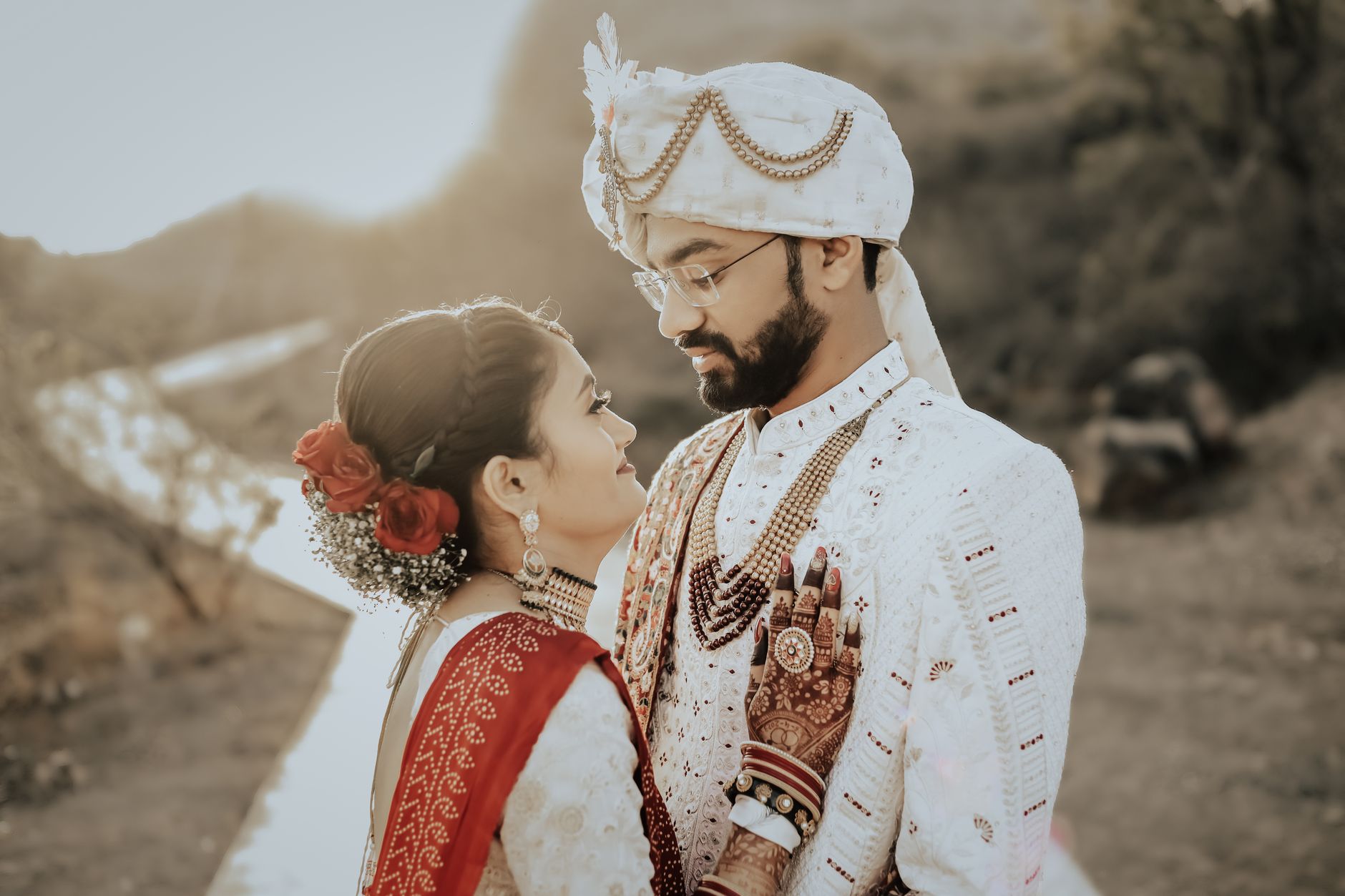
Honour Every Fold of Tradition
Religious cermony in Haridwar
Marwari Pagdi Ceremony Items for Haridwar Weddings
In the sacred ghats of Haridwar, where the Ganga bears witness to every vow, the pagdi holds a place of honour unlike any other wedding ritual. Marwari Pagdi Ceremony Items are far more than fabric and thread — they represent lineage, blessing, and the formal crowning of a groom into family leadership. From the auspicious Rajasthani safa tying ritual conducted by the maternal uncle to the jewelled kalgi pinned with family pride, each element carries centuries of meaning. Whether your celebrations are hosted in a river-view dharamshala banquet or a heritage haveli near Har Ki Pauri, sourcing the right pagdi rasm essentials ensures the ceremony unfolds with dignity, colour, and devotion.
Quick Answer
Marwari Pagdi Ceremony Items are the ritual objects used during the turban-tying rite in a Marwari Hindu wedding. The core set includes a silk or cotton safa (turban fabric), a kalgi (ornamental aigrette), a sehra (floral or pearl face veil), mauli (sacred thread), roli, akshat, and sometimes a ceremonial sword. In Haridwar, these items are typically procured locally or brought from Rajasthan and arranged before the maternal uncle (mama) begins the tying ritual.
What Are Marwari Pagdi Ceremony Items and Why Do They Matter?
Marwari Pagdi Ceremony Items form the ritual centrepiece of a Marwari groom's pre-wedding rites, traditionally performed the morning of or the day before the wedding. The pagdi — a long cloth measuring anywhere from 7 to 20 metres depending on the style — is tied by the maternal uncle as a symbol of the family's blessing and the groom's new social standing. Beyond the fabric itself, the complete set of pagdi rasm essentials includes the kalgi (a jewelled brooch or aigrette, often passed down as a family heirloom), the sehra (a decorative veil of flowers, pearls, or gold strings that hangs over the groom's face), mauli (a red-yellow sacred thread tied first for auspiciousness), roli and akshat for the puja that precedes the tying, and sometimes a small ceremonial sword or kirpan symbolising valour. In Haridwar, where Marwari families from Rajasthan frequently choose the holy city for weddings due to its spiritual significance on the banks of the Ganga, these items take on heightened religious importance. Priests at prominent temples near Har Ki Pauri often recommend performing a short Ganesh puja over the turban fabric before the ceremony begins, adding a layer of sanctity unique to Haridwar wedding rituals.
The Complete Checklist of Items Needed for the Pagdi Rasm
Understanding the full inventory of pagdi rasm essentials prevents last-minute scrambles on the wedding morning. The safa fabric is the foundation — silk in deep saffron, royal red, or ivory is most traditional, while heavier Banarasi or Rajasthani Jodhpuri fabrics give a regal drape. The kalgi should be selected based on whether it will be a family heirloom or newly purchased; gold-plated versions with kundan or meenakari work range from INR 2,000 to INR 25,000 in Haridwar's jewellery market near the railway road. The sehra is typically ordered from a specialist florist or artificial jewellery vendor at least one week in advance. Mauli, roli, akshat, kumkum, and a small puja thali complete the ritual paraphernalia. Marwari wedding turban accessories such as a decorative pin, turban clip, or embroidered band are optional but add a polished visual finish for photographs. Families practising Haridwar wedding rituals often include a small Ganga jal sprinkle over the safa before tying as a local custom that blesses the garment with holy water.
How Much Do Marwari Pagdi Ceremony Items Cost in Haridwar?
Costs for Marwari Pagdi Ceremony Items vary widely depending on fabric quality, jewellery choice, and whether items are sourced locally or brought from Jodhpur or Jaipur. A mid-range silk safa typically costs INR 800 to INR 3,000 per piece from Haridwar's cloth market near Upper Road or Motichur. The kalgi is the highest variable cost — simple brass pieces start at INR 500, while ornate kundan sets reach INR 20,000 or more. A fresh-flower sehra costs INR 600 to INR 2,000 from a local florist, while an artificial pearl or golden sehra ranges from INR 1,500 to INR 6,000. Puja essentials (roli, akshat, mauli, kumkum, incense) together cost under INR 500 from any shop near Har Ki Pauri. Families planning a traditional Rajasthani groom trousseau alongside the pagdi items — including sherwani, mojri, and jewellery — should budget an additional INR 30,000 to INR 1,50,000 depending on the scale and family customs. Booking items early, especially during peak winter wedding season (November to February), helps avoid inflated prices.
Sourcing Authentic Items: Local Haridwar Markets vs. Bringing from Rajasthan
One of the most practical decisions families face is whether to source Marwari Pagdi Ceremony Items locally in Haridwar or transport them from their home city in Rajasthan. Haridwar's markets, particularly around Jwalapur Road, Railway Road, and the bazaars near Mansa Devi temple, carry a reasonable selection of safa fabrics, basic kalgis, and puja materials. However, for very specific Jodhpuri-style safa cuts or heirloom-quality Marwari wedding turban accessories, families often prefer to bring items from Jodhpur or Bikaner artisans who specialise in bridal turbans. A hybrid approach works well: purchase puja essentials and the sehra locally to keep logistics simple, and bring the safa and kalgi from a trusted home-city vendor. Vendors near Har Ki Pauri and Bara Bazaar also stock basic Rajasthani safa tying ritual kits for out-of-town families who need a quick, complete set. Religious ceremony decor Haridwar suppliers near prominent dharamshalas often rent or sell ceremonial trays and decorative items useful for the pagdi rasm setup.
What Common Mistakes Should Families Avoid When Planning the Pagdi Rasm?
Many families underestimate the preparation required for Marwari Pagdi Ceremony Items and end up with rushed, incomplete setups on the ceremony morning. The single most common error is assuming the mama (maternal uncle) will bring everything — in practice, the groom's family typically arranges all materials. Another frequent oversight is forgetting the puja thali essentials like supari, laung, and elaichi that accompany the tying ceremony in many Marwari shaadi customs. Selecting safa fabric that is too thin or too short is a visible problem; insist on at least 9 metres for a full, layered Marwari style. Families opting for fresh-flower sehras should confirm their florist's delivery time aligns with the ritual hour, as flowers wilt quickly in Haridwar's summer heat. Not consulting the family's kulguru or purohit about the auspicious muhurat for the pagdi rasm is another misstep — Haridwar wedding rituals are deeply time-sensitive. Finally, ignoring photography lighting for the turban ceremony means missing one of the most visually striking moments of the entire Marwari shaadi customs celebration.
Marwari Pagdi Ceremony Items: Setup Types Compared
Expert Recommendation
Best for Intimate Family Celebrations
Best for Grand Destination Weddings
Best for Budget-Conscious Families
Best for Deeply Traditional Marwari Customs
Best for Modern Marwari Couples
Best for Out-of-Town Families with Limited Logistics
How to Choose the Right Option
✅ Pre-booking Checklist
- Confirm the muhurat timing for the pagdi rasm with your family purohit at least two weeks before the wedding
- Measure and order the correct safa length (minimum 9 metres for a full Marwari style) well in advance
- Source or confirm the kalgi — check if a family heirloom is available before purchasing a new one
- Book the sehra order (fresh flower or artificial) at least one week ahead and confirm delivery time
- Assemble the puja thali with mauli, roli, akshat, kumkum, supari, laung, elaichi, and Ganga jal
- Brief the mama on the tying sequence and ensure he arrives at least 30 minutes before the ceremony
- Coordinate with your photographer to set up lighting for the turban-tying moment
- Store safa fabric away from moisture and sunlight until the ceremony morning
🎯 Selection Criteria
- Fabric quality and colour that matches the family's traditional palette and the groom's sherwani
- Kalgi design that suits the formality of the event — minimal for modern couples, ornate for grand weddings
- Sehra type aligned with the season — fresh flowers for cooler months, artificial for summer heat in Haridwar
- Availability of a trusted local vendor who understands pagdi rasm essentials in full
- Consistency with the family's Marwari shaadi customs and any regional sub-community practices
- Budget allocation that accounts for both the pagdi items and the broader traditional Rajasthani groom trousseau
💰 Cost / Quality Factors
- Fabric grade (cotton vs. silk vs. Banarasi) significantly impacts both cost and visual outcome
- Kalgi craftsmanship — handmade kundan pieces cost more but photograph and last far better than pressed metal
- Seasonality affects fresh-flower sehra pricing; expect 20–30% higher prices during peak wedding months
- Distance from sourcing city — Rajasthani artisan items shipped to Haridwar add courier and handling costs
- Customisation requirements, such as family monogram embroidery or specific fold style, increase turnaround time and price
- Rental vs. purchase — some Haridwar vendors near dharamshalas offer kalgi rental for a fraction of the purchase price
⚠️ Common Mistakes to Avoid
- Assuming the mama will bring all the Marwari Pagdi Ceremony Items — always confirm responsibilities in advance
- Ordering a safa that is too short or too thin, resulting in a loose, undignified fold on the wedding day
- Overlooking puja materials like supari and laung that are integral to the religious ceremony
- Scheduling the fresh-flower sehra delivery without accounting for Haridwar's afternoon heat, which wilts flowers quickly
- Skipping the Ganesh puja over the safa — a step that many Haridwar priests consider essential for auspiciousness
- Leaving all purchases to arrival day — Haridwar's market availability is limited during peak season and items sell out fast
People Also Ask
What fabric is traditionally used for the safa in a Marwari pagdi ceremony?
Who ties the pagdi in a Marwari wedding?
Can I find Marwari pagdi ceremony items in Haridwar's local markets?
How early should I order the sehra for the pagdi rasm?
What is the typical cost of a complete pagdi rasm setup in Haridwar?
Is a Ganesh puja performed before the pagdi tying in Haridwar?
What is the difference between a kalgi and a sehra?
Do Marwari families bring pagdi items from Rajasthan or buy locally in Haridwar?
Related Experiences on Happiffie
Royal Safa Rentals for Your Big Day
Royal Turbans for Kovalam Weddings
Shop, Celebrate & Glamourise Your Wedding
Unwind Before Your Big Day in Udaipur
Celebrate the Dulha in Grand Style
Sacred Blooms for Your Manali Ceremony
Authentic Marwari Shaadi Supplies in Kochi
Frequently Asked Questions
What exactly are Marwari Pagdi Ceremony Items?
Where can I buy Marwari Pagdi Ceremony Items in Haridwar?
How long should the safa fabric be for a Marwari pagdi?
Is a priest needed for the pagdi rasm in Haridwar?
What colours are considered auspicious for the Marwari safa?
Can the kalgi be rented instead of purchased in Haridwar?
How does the pagdi ceremony fit into the broader Marwari shaadi customs timeline?
Should I include the pagdi items as part of the traditional Rajasthani groom trousseau?
Key Takeaways
- Marwari Pagdi Ceremony Items include the safa fabric, kalgi, sehra, and puja essentials — each element carries distinct ritual significance in a Marwari wedding.
- In Haridwar, the ceremony gains additional religious weight with the option of a Ganesh puja over the turban cloth and a Ganga jal blessing, unique to Haridwar wedding rituals.
- Costs range from INR 3,000 for a basic setup to INR 30,000 or more for premium silk, heirloom kalgi, and custom sehra combinations.
- Haridwar's local markets near Railway Road and Bara Bazaar supply most essentials, but specialist items like Jodhpuri-cut safas are best sourced from Rajasthan.
- The mama's role as the pagdi tier is central — briefing him on timing and sequence is as important as sourcing the items themselves.
- A hybrid sourcing strategy — bringing the safa and kalgi from Rajasthan while buying the sehra and puja items locally — offers the best balance of authenticity and convenience.
- Booking all Marwari Pagdi Ceremony Items at least two to three weeks before the wedding is strongly advised during Haridwar's busy winter wedding season.
Plan Your Marwari Pagdi Ceremony with Happiffie
Connect with trusted vendors in Haridwar for authentic pagdi rasm essentials, Rajasthani safa tying ritual arrangements, and complete wedding support — all in one place.
Explore Happiffie Now
Are you a Vendor? Grow Your Business with Happiffie!
- High intent verified leads
- Reverse auction opportunities
- AI business tools & insights
- Dedicated vendor dashboard
- Grow your business, your way
It's free & takes less than 2 minutes!