
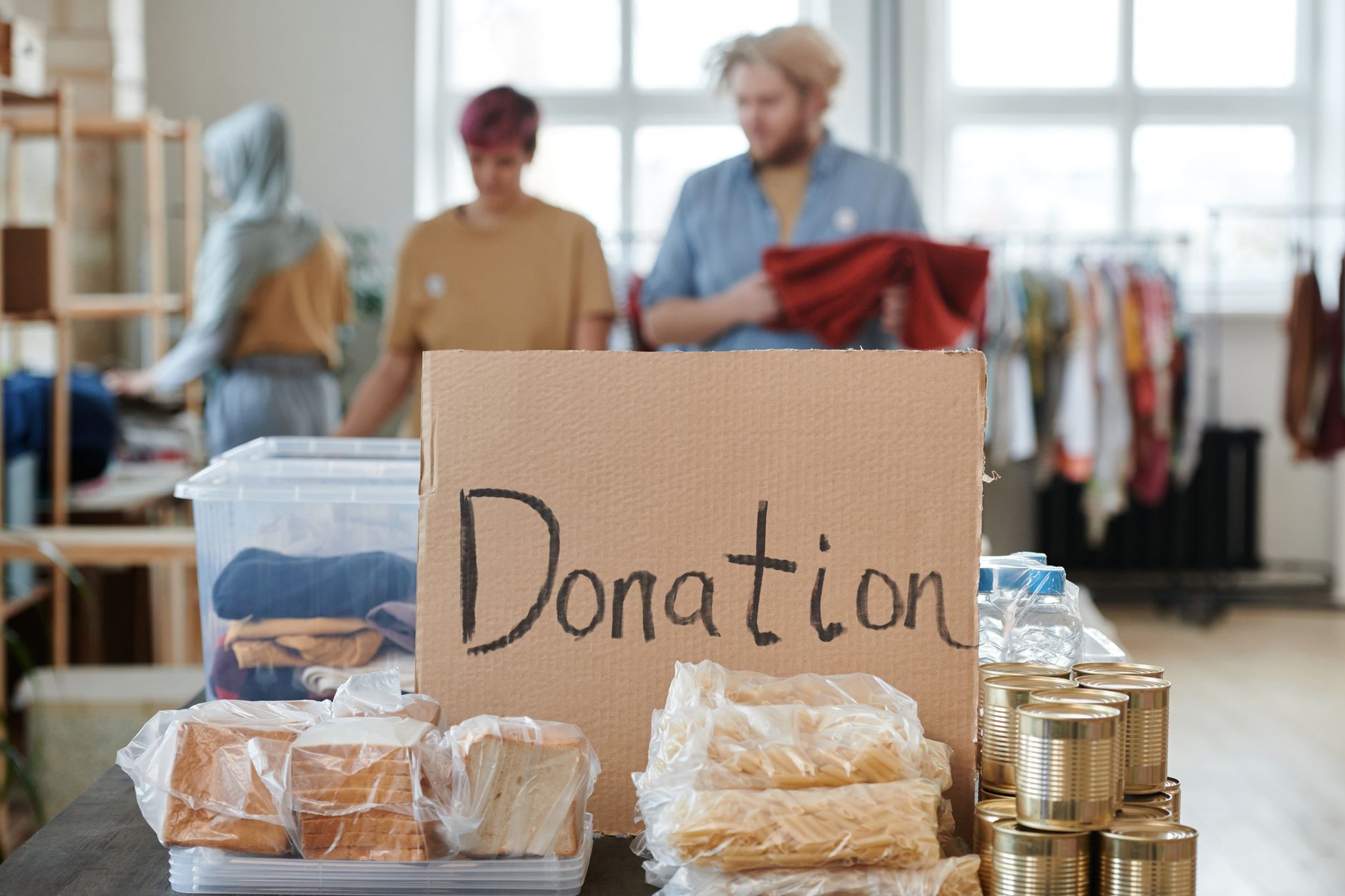
Feed More, Waste Less at Your Wedding
Food & Beverages in Gurugram
Responsible Food Redistribution for Gurugram Weddings
Every grand wedding in Gurugram — from glittering banquet halls in Cyber City to sprawling lawns in Sohna Road — produces far more food than guests can finish. Responsible food redistribution is the practice of systematically channelling that surplus, still-safe food to shelters, community kitchens, and NGOs instead of letting it end up in landfills. By combining a wedding food donation program with your catering brief, you turn an inevitable logistical reality into an act of generosity. Sustainable wedding planning in Gurugram is no longer a niche idea; it is a growing expectation among socially aware families who want their celebration to leave a positive mark on the city.
Quick Answer
Responsible food redistribution at a Gurugram wedding means working with your caterer and an NGO partner to collect, safely pack, and deliver surplus cooked food to shelters or community kitchens on the same night as your event. It reduces food waste, supports the underprivileged, and qualifies as a form of CSR giving — all without adding significant cost or complexity to your celebration.
What Is Responsible Food Redistribution and Why Does It Matter for Gurugram Events?
Responsible food redistribution is the organised process of collecting safe, unconsumed food from an event and delivering it to verified recipient organisations — such as night shelters in Dundahera, orphanages near Palam Vihar, or community kitchens serving daily-wage workers in Manesar — before it spoils. At a typical Gurugram wedding catering 500 to 1,000 guests, caterers routinely prepare 20 to 30 percent extra food as a buffer. Without a redistribution plan, that surplus enters municipal waste streams, contributing to methane emissions and wasted agricultural resources. Surplus food management at events directly addresses this gap. NGOs operating in Gurugram, Delhi NCR have reported collecting hundreds of kilograms of hot food from a single wedding when a coordinated plan is in place. For families hosting celebrations in venues along Golf Course Road or Udyog Vihar, partnering with a redistribution service is now a practical, replicable option — not an ambitious experiment. It also aligns with the broader push for zero waste event catering that Gurugram's sustainability-conscious host families increasingly request.
How Does a Wedding Food Donation Program Work in Practice?
A wedding food donation program typically begins three to four weeks before your event. You, your caterer, and an NGO partner agree on the menu items eligible for redistribution — generally dry or semi-dry dishes like dal, rice, roti, sabzi, and sweets that travel and store safely. Wet gravies with cream or mayonnaise are usually excluded for food-safety reasons. On the wedding night, a dedicated volunteer team or NGO staff arrives with insulated food-grade containers at a pre-decided time, usually within 30 to 45 minutes of the dinner service closing. They collect, weigh, and document the surplus before transporting it to the recipient site. Leftover food rescue service providers in Gurugram often use temperature-logged vehicles to maintain the food at safe serving temperatures during transit. Your caterer coordinates the packaging; the NGO handles logistics. The entire operation, when planned well, adds no disruption to the event itself. Many families in DLF Phase 1 and Sector 56 have reported that their guests were moved when they learned food was being redistributed on the spot.
Event Food Waste Reduction: Real Numbers and What to Expect
Event food waste reduction at a 600-guest wedding in Gurugram can realistically divert 80 to 150 kg of cooked food from landfill in a single night, depending on menu complexity and service style. Buffet formats generate more recoverable surplus than plated service because portions are self-selected and serving trays often remain partially full. Live counters — popular at Gurugram receptions — create moderate recoverable surplus since food is prepared in small batches. The financial impact is equally notable: when your caterer knows surplus will be redistributed rather than discarded, portion planning becomes more precise, reducing over-preparation waste by an estimated 10 to 15 percent, which can translate to a cost saving of INR 15,000 to INR 40,000 on a mid-range catering contract. Responsible food redistribution therefore creates a double dividend — social good and budget efficiency — making it one of the most practical elements of green wedding Gurugram planning. Some venue operators in Sushant Lok and Sector 29 have begun including redistribution coordination as a standard add-on service.
Choosing the Right NGO Food Pickup Partnership for Your Gurugram Wedding
An NGO food pickup partnership is the operational backbone of any redistribution plan. When evaluating partners for your Gurugram event, check for FSSAI-aligned food safety protocols, insulated transport capacity, and a documented track record of same-night collections. Ask the NGO how many events they have serviced in the past six months and which neighbourhoods they serve — a shelter in Sector 10 Gurugram may have different logistical needs than a community kitchen near Kherki Daula. Confirm that they provide a post-event redistribution certificate, which is useful for families seeking CSR documentation or personal records. Budget for a nominal coordination fee of INR 2,000 to INR 8,000 depending on scale; some NGOs operate on a purely voluntary basis for weddings above a certain guest count. Sustainable wedding planning professionals on Happiffie can help you identify verified NGO partners who operate specifically in Gurugram and adjoining areas. Ensure your caterer signs a coordination agreement with the NGO at least two weeks before the event to avoid last-minute confusion.
How Much Does Responsible Food Redistribution Cost for a Gurugram Wedding?
Responsible food redistribution is one of the most cost-effective ethical additions to a Gurugram wedding budget. The primary costs are packaging materials (food-grade foil containers, insulated bags) ranging from INR 1,500 to INR 5,000 depending on volume, and the NGO coordination fee mentioned above. Some caterers in Gurugram who have built an NGO food pickup partnership into their service model absorb the packaging cost entirely. Leftover food rescue service providers may charge a flat fee of INR 3,000 to INR 10,000 for a full-night operation at a large venue. There is no additional cost for the food itself — it was already purchased. Compared to the INR 8 lakh to INR 25 lakh typically spent on catering at a Gurugram wedding, the redistribution add-on represents less than one percent of the catering budget. Zero waste event catering packages offered by progressive caterers in Cyber Hub and Sector 44 sometimes bundle redistribution logistics at no extra charge as a market differentiator. Always get a written breakdown so costs are transparent before you sign.
Responsible Food Redistribution Approaches: Comparing Your Options for a Gurugram Wedding
Expert Recommendation
Best for intimate celebrations (under 150 guests)
Best for large shaadi receptions (500+ guests)
Best for destination farmhouse weddings
Best for budget-conscious families
Best for sustainability-focused modern couples
Best for traditional multi-day celebrations
How to Choose the Right Option
✅ Pre-booking Checklist
- Confirm your caterer is willing to coordinate with an external NGO or redistribution service at least four weeks before the event
- Shortlist two to three verified NGO partners operating in Gurugram and check their food-safety transport capacity
- Agree on a list of redistribution-eligible dishes with both your caterer and the NGO — get it in writing
- Arrange food-grade insulated containers and foil trays in quantities matching expected surplus volume
- Set a fixed collection time window with the NGO, typically 30 to 45 minutes after dinner service closes
- Obtain written venue permission for NGO access to kitchen or service loading area on the wedding night
- Request a post-event redistribution summary document from your NGO partner for your records
- Brief at least one family member or wedding coordinator to liaise with the NGO team on the event night
🎯 Selection Criteria
- NGO's food-safety compliance: FSSAI-aligned protocols and temperature-controlled transport are non-negotiable
- Geographic coverage: ensure the NGO serves recipient sites within 45 to 60 minutes of your Gurugram venue
- Track record: ask for references from at least two recent Gurugram wedding redistributions
- Coordination flexibility: the partner must be able to adapt collection timing if the event runs late
- Documentation quality: a good partner provides itemised weight records and recipient confirmation
- Caterer compatibility: your redistribution partner must have a working relationship with your caterer type
💰 Cost / Quality Factors
- Packaging material costs (INR 1,500 to INR 5,000) scale with guest count and menu variety
- NGO coordination fee varies from zero to INR 10,000 based on scale and organisation model
- Buffet vs. plated service: buffet generates more recoverable surplus and is easier to redistribute
- Menu complexity: elaborate multi-cuisine menus increase both surplus volume and sorting effort
- Venue location: distant farmhouse venues incur higher NGO transport costs
- Lead time: longer planning time reduces last-minute logistics costs and errors
⚠️ Common Mistakes to Avoid
- Waiting until the week before the wedding to contact NGOs — most need two to four weeks to allocate resources
- Assuming the caterer will handle everything without a written agreement covering redistribution responsibilities
- Including cream-heavy or raw-ingredient dishes in the redistribution list without NGO approval
- Failing to get venue permission for NGO access, leading to last-minute refusal at the gate
- Not assigning a dedicated family or coordinator contact for the NGO team on the event night
- Skipping documentation — without a redistribution record, you lose the goodwill and CSR value of the effort
People Also Ask
Can I set up responsible food redistribution for a wedding at a banquet hall in Gurugram?
Which types of wedding food are safe to redistribute?
How early should I plan a wedding food donation program before my event?
Does responsible food redistribution slow down the wedding catering service?
Is there a certificate or documentation I receive after food redistribution at my Gurugram wedding?
What is the difference between surplus food management at events and general food waste reduction?
Can destination wedding setups in Gurugram's farmhouses also use leftover food rescue services?
Does event food waste reduction affect my overall catering budget positively?
Related Experiences on Happiffie
Give Back, Waste Nothing in Pushkar
Zero Waste Events in Chennai
Feed Someone, Waste Nothing
Jaipur Fusion Weddings Done Right
Farm Fresh Feasts for Pushkar Events
Don't Waste — Donate & Celebrate
Frequently Asked Questions
Is responsible food redistribution legally regulated in Gurugram or Haryana?
How much surplus food is typically generated at a 700-guest wedding in Gurugram?
Can responsible food redistribution be included in my wedding catering contract?
What happens if the NGO does not show up on the wedding night?
Are there Gurugram-specific NGOs that specialise in wedding food donation programs?
Does choosing responsible food redistribution affect my wedding's overall carbon footprint?
Can a wedding food donation program be set up for a pre-wedding function like a sangeet or mehendi?
How do I explain responsible food redistribution to my traditional family who may be unfamiliar with the concept?
Key Takeaways
- Responsible food redistribution diverts 80 to 150 kg of surplus cooked food per large Gurugram wedding to shelters and community kitchens on the same night.
- A wedding food donation program costs less than one percent of a typical Gurugram catering budget, usually INR 3,000 to INR 15,000 total.
- Surplus food management at events requires a three-party agreement between the family, caterer, and NGO partner — with planning starting at least four weeks before the event.
- Buffet-style receptions generate the most recoverable surplus and are the easiest format for a leftover food rescue service to operate in.
- Green wedding Gurugram trends show that redistribution is increasingly expected by socially aware families and is being offered as a standard add-on by progressive caterers.
- Documentation from the NGO — including weight of food and recipient confirmation — is useful for personal CSR records and can be shared as part of a couple's wedding narrative.
- Zero waste event catering packages that bundle reduction and redistribution are emerging in Gurugram for couples with catering budgets above INR 12 lakh.
Make Your Gurugram Wedding a Force for Good
Connect with Happiffie-verified caterers and NGO partners who specialise in responsible food redistribution — plan your sustainable celebration today.
Start Planning Now
Are you a Vendor? Grow Your Business with Happiffie!
- High intent verified leads
- Reverse auction opportunities
- AI business tools & insights
- Dedicated vendor dashboard
- Grow your business, your way
It's free & takes less than 2 minutes!