
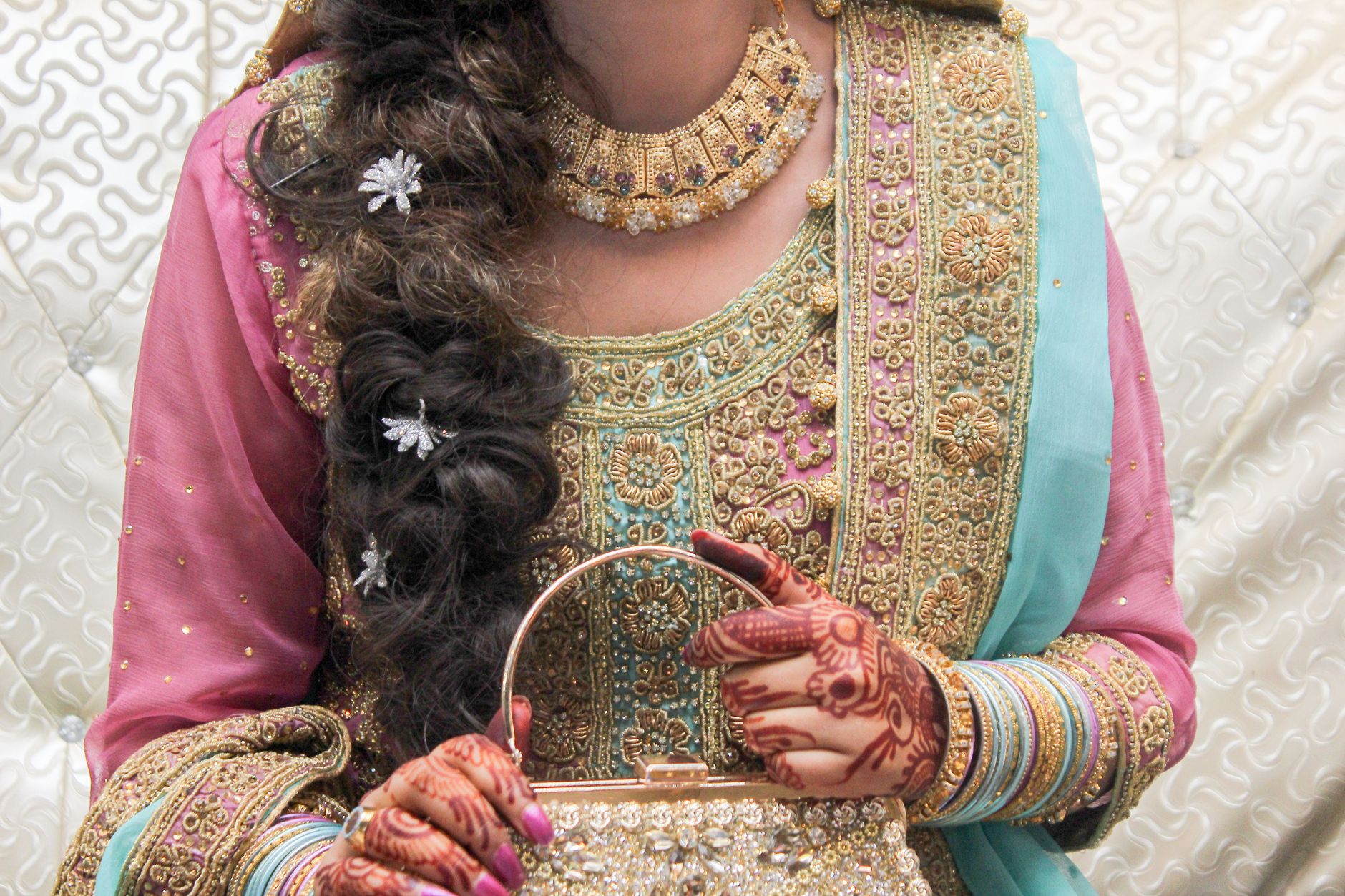
Bridal Hair Jewellery Gurugram
Jewellery in Gurugram
Bridal Hair Jewellery in Gurugram: Complete Guide
Bridal Hair Jewellery is the crowning detail that transforms a bride's look from beautiful to breathtaking. In Gurugram — a city where lavish banquet hall weddings in Sectors 29 and 49 sit alongside intimate farmhouse ceremonies in Sohna Road — the demand for exquisite, personalised hair adornments has grown sharply. From a delicate bridal maang tikka studded with uncut diamonds to an elaborate jhoomar for bride draped across one side of the parting, every piece tells a story. Whether you are planning a 50-guest roka or a 700-guest shaadi at a DLF five-star venue, the right hair accessories for bride complete your bridal jewellery set and tie your entire look together.
Quick Answer
Bridal Hair Jewellery refers to ornamental pieces worn in or on the hair by a bride on her wedding day. Common styles include the maang tikka (central parting pendant), jhoomar (side-sweep ornament), passa (temple pin), mathapatti (full-forehead band), and floral gajra. In Gurugram, pieces range from ₹800 for simple gold-plated tikkas to ₹2,50,000-plus for polki or kundan sets, depending on metal, stone quality, and craftsmanship.
What Styles of Bridal Hair Jewellery Suit Gurugram Brides?
Gurugram brides represent a wonderfully diverse mix of communities — Punjabi, Haryanvi, Rajasthani, Marwari, South Indian, and cosmopolitan destination-wedding couples. This diversity directly shapes which bridal hair jewellery style is the right fit. A Punjabi bride from Palam Vihar often favours a heavy kundan or polki bridal maang tikka paired with a passa for wedding that sweeps behind the ear, creating a regal silhouette. Rajasthani brides lean toward a full mathapatti — a cascading chain that crosses the entire forehead — while South Indian brides frequently layer South Indian bridal hair accessories such as rakhdi pins and side-veni chains into elaborate temple-gold arrangements. Contemporary brides opting for designer lehengas at Golf Course Road venues increasingly choose minimalist rose-gold or diamond-studded hair accessories for bride that complement rather than compete with statement neckpieces. Understanding your community's tradition, your lehenga colour palette, and your venue's lighting — warm chandeliers versus cool LEDs — helps you choose bridal hair jewellery that photographs brilliantly and feels comfortable across a five-to-eight-hour ceremony.
How Much Does Bridal Hair Jewellery Cost in Gurugram?
Pricing for bridal hair jewellery in Gurugram spans a very wide range, and understanding what drives cost helps you budget wisely. Entry-level gold-plated brass or copper maang tikkas start around ₹800–₹3,000 and work well for mehendi or haldi functions. Mid-range silver or gold-filled pieces with semi-precious stones — amethyst, pearls, turquoise — fall between ₹5,000 and ₹25,000 and are popular for cocktail nights. Fine jewellery — 22-karat gold jhoomar for bride with uncut diamonds, polki, or natural emeralds — begins at ₹40,000 and can easily reach ₹2,50,000 or more for museum-quality heirloom pieces. Passa for wedding in kundan or meenakari work typically sits in the ₹8,000–₹60,000 range depending on stone density. Renting is a smart option many Gurugram brides use: designer rental platforms offer premium bridal maang tikka and jhoomar sets for ₹3,000–₹15,000 for a two-to-three-day period, a practical route when your bridal jewellery set budget is already stretched. Always clarify whether pricing includes cleaning, packaging, and return insurance when renting.
Choosing the Right Bridal Maang Tikka for Your Face Shape
A bridal maang tikka is often the first hair ornament a bride selects, and it anchors the entire jewellery composition. Round-faced brides benefit from elongated drop-style tikkas — a teardrop or inverted cone pendant that adds vertical dimension. Heart-shaped faces suit a wider, floral-cluster tikka that balances the narrower chin. Oval faces are the most versatile and carry both classic round and modern geometric tikkas with ease. Square-jawed brides look stunning in curved maang tikkas with intricate filigree work that softens angular features. Beyond face shape, hair texture matters too: brides with thick, voluminous hair can carry a heavier tikka without it sliding, while brides with fine hair should opt for lightweight designs with a broader headband hook for security. Coordinate your bridal maang tikka metal tone with your primary bridal jewellery set — if your necklace is yellow gold, a mixed-metal or white-gold tikka can look jarring in photographs taken under Gurugram ballroom lighting.
What Is a Jhoomar and When Should a Bride Wear One?
A jhoomar for bride is a side-sweep ornament, traditionally Punjabi and Mughal in origin, that attaches near the centre parting and cascades elegantly over one side of the head — typically the left side in North Indian customs. It is one of the most photographed pieces of bridal hair jewellery because it frames the profile beautifully, especially in candid shots and reels captured at venue corridors or garden settings. In Gurugram's grand banquet-hall weddings — think Sector 15 or MG Road event spaces — a full jhoomar in polki and pearls creates an undeniably dramatic effect. Brides opting for a half-and-half saree or lehenga-saree combination during the vidaai ceremony find a jhoomar pairs naturally with the dupatta draped over one shoulder, complementing bridal lehenga dupatta draping styles like the pallo drape. A simpler, smaller jhoomar also works for cocktail functions where a full passa for wedding might feel overdone. If you are wearing both a jhoomar and a maang tikka, ensure they share the same metal family and stone palette to maintain visual cohesion.
How Do You Coordinate Bridal Hair Jewellery With Your Overall Bridal Look?
The most elegant bridal looks in Gurugram share one quality: intentional coordination. Bridal hair jewellery should create a visual dialogue with your neckpiece, earrings, and lehenga — not fight for attention. A layered choker-plus-rani-haar bridal jewellery set calls for restrained hair accessories for bride — a single refined maang tikka or delicate floral pins rather than a heavy mathapatti. Conversely, a minimal contemporary necklace worn with a sleek bun gives you creative freedom to invest in a statement jhoomar for bride or passa for wedding as the hero piece. Coordinate with your wedding makeup artist Gurugram professionals recommend: the right makeup tone — warm peach versus cool rose — should align with your metal choices. Gold and polki flatter warm-undertone brides; platinum, diamonds, and white kundan suit cool undertones. Also consider hairstyle: South Indian bridal hair accessories like rakhdi pins are designed for open or loosely braided hair, while a jhoomar works best with a low bun or waterfall braid. Schedule a trial session that includes your hair jewellery so your stylist can pin, balance, and photograph each piece before the wedding day.
Bridal Hair Jewellery Styles Compared: Which Is Right for You?
Expert Recommendation
Best for intimate Gurugram celebrations (under 100 guests)
Best for grand ballroom weddings (300+ guests)
Best for budget-conscious brides
Best for destination or outdoor farmhouse weddings
Best for traditional North Indian brides
Best for contemporary or fusion brides
How to Choose the Right Option
✅ Pre-booking Checklist
- Confirm your hairstyle (bun, braid, open) before selecting hair jewellery, as each style requires different attachment mechanisms
- Book a trial session with your hairstylist at least 4–6 weeks before the wedding, wearing the actual bridal hair jewellery pieces
- Align metal tones across all pieces — maang tikka, jhoomar, passa — with your primary bridal jewellery set
- If renting, check the rental platform's return timeline, damage policy, and whether the pieces are available on your specific wedding date
- For custom orders, place the order at least 8–10 weeks in advance, especially for polki or kundan work
- Photograph all pieces in the venue's lighting conditions (or similar) during the trial to catch any mismatch early
- Pack all hair jewellery in individual pouches to avoid tangling or scratching during transit to the venue
🎯 Selection Criteria
- Community and regional tradition: ensure the style aligns with your ceremony's cultural expectations
- Weight and wearability: heavier pieces require the right hairstyle foundation for all-day comfort
- Metal and stone compatibility with your bridal jewellery set and lehenga palette
- Photographer and videographer brief: understand which pieces photograph best in your venue's lighting
- Budget allocation: decide whether buying, renting, or borrowing makes the most financial sense for each piece
💰 Cost / Quality Factors
- Metal purity (gold-plated versus solid gold versus silver) dramatically affects both price and durability
- Stone type (kundan, polki, diamonds, semi-precious) is the single largest price driver for bridal hair jewellery
- Craftsmanship origin: handcrafted Jaipur or Hyderabad pieces command a premium but offer superior detail
- Weight distribution: pieces with a wider base hook distribute weight better and stay secure longer
- Rental condition: inspect rented pieces in daylight for stone loss, tarnish, or bent wires before accepting
⚠️ Common Mistakes to Avoid
- Buying hair jewellery before finalising your lehenga, necklace, and hairstyle — which causes mismatched aesthetics
- Skipping the trial session and discovering pinning or weight issues on the wedding morning itself
- Choosing oversized, heavy pieces without testing them on your actual hair type and density
- Ignoring coordination with bridal lehenga dupatta draping style, which affects how side ornaments like jhoomars hang
- Booking rental pieces at the last minute during peak season (November–February) when popular designs are unavailable
- Over-layering multiple statement pieces — maang tikka, mathapatti, passa, and jhoomar — simultaneously, which overwhelms the face in photographs
People Also Ask
What is the difference between a maang tikka and a jhoomar?
Can I rent bridal hair jewellery in Gurugram instead of buying?
How many pieces of hair jewellery should a bride wear?
What bridal hair jewellery works best for a destination wedding in Gurugram?
What is a passa and is it suitable for non-Punjabi brides?
How do South Indian bridal hair accessories differ from North Indian styles?
How early should I shop for bridal hair jewellery in Gurugram?
How do I ensure my bridal hair jewellery stays in place all day?
Related Experiences on Happiffie
Royal Bridal Looks in Pushkar
Shine Bright on Your Reception Night
Bridal Lehenga Draping in Indore
Bridal Beauty in the Hills
Rent Bridal Jewellery in Mussoorie
South Indian Bridal Blouse in Manali
Frequently Asked Questions
What is the most popular bridal hair jewellery style at Gurugram weddings?
Where can I find bridal hair jewellery options in Gurugram?
Is a passa for wedding only for Punjabi brides?
How do I coordinate bridal hair jewellery with my lehenga dupatta draping style?
Can bridal hair jewellery be worn at the mehendi or haldi ceremony?
How do I care for my bridal hair jewellery after the wedding?
Do wedding makeup artists in Gurugram assist with placing bridal hair jewellery?
What hair accessories for bride work best under Gurugram's outdoor or rooftop venue lighting?
Key Takeaways
- Bridal hair jewellery in Gurugram ranges from ₹800 for gold-plated tikkas to ₹2,50,000-plus for polki or diamond jhoomar sets, giving brides every budget tier to work with.
- The four core styles — bridal maang tikka, jhoomar for bride, passa for wedding, and mathapatti — each suit different face shapes, hairstyles, and ceremony scales.
- Renting premium bridal hair jewellery at ₹3,000–₹15,000 per rental period is a practical strategy that frees budget for the core bridal jewellery set.
- South Indian bridal hair accessories like rakhdi pins and veni chains are distinct in design and application, requiring open or braided hair and temple-gold coordination.
- Always schedule a hair jewellery trial session at least four to six weeks before the wedding to confirm security, weight, and visual harmony.
- Coordinate metal tone and stone palette across all bridal hair jewellery pieces and your neckpiece to ensure photographic cohesion — especially important under Gurugram ballroom lighting.
- Peak wedding season (November to February and April to May) sees high rental demand; book or order custom pieces at least eight to ten weeks ahead.
Find Your Perfect Bridal Hair Jewellery in Gurugram
Browse verified vendors, compare rental and purchase options, and book with confidence on Happiffie — your trusted wedding marketplace.
Explore Jewellery Vendors
Are you a Vendor? Grow Your Business with Happiffie!
- High intent verified leads
- Reverse auction opportunities
- AI business tools & insights
- Dedicated vendor dashboard
- Grow your business, your way
It's free & takes less than 2 minutes!