
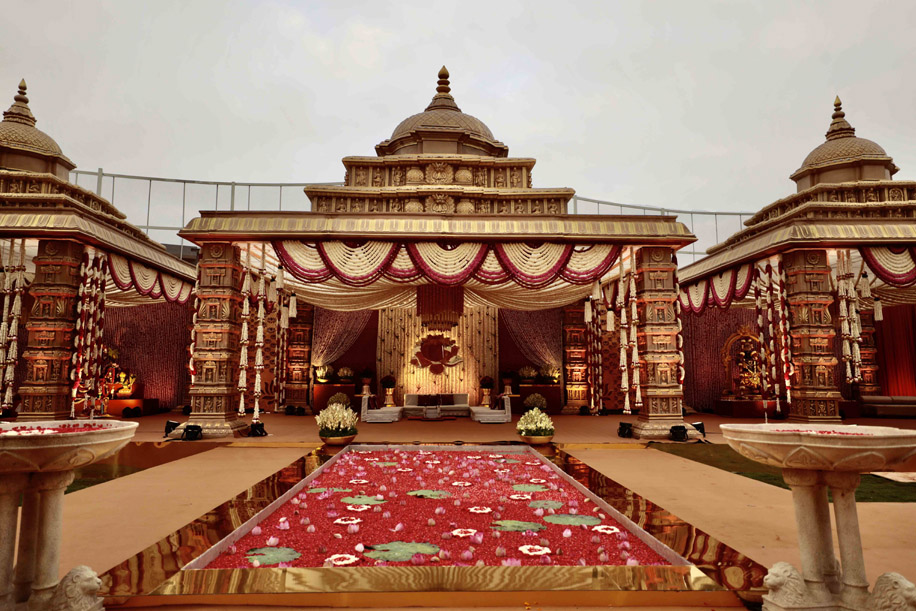
Sacred Decor for Temple Celebrations
Decor in Goa
Traditional Temple Celebration Decor in Goa
Goa's unique blend of coastal serenity and deeply rooted Hindu traditions makes it one of India's most enchanting destinations for a Traditional Temple Celebration Decor experience. Whether you are hosting an intimate family puja at a centuries-old Goa temple or a grand Hindu Temple Wedding Decoration affair in a heritage sabha griha, the right decor transforms a sacred space into something truly divine. From marigold-draped pillars and jasmine-laced mandap columns to intricately woven banana-leaf backdrops, temple decor in Goa draws heavily from South Indian Wedding Decor Goa aesthetics while embracing Konkani cultural nuances. Working with experienced decorators who understand the ritual significance of each floral placement ensures that Festive Flower Arrangements remain auspicious and architecturally harmonious with the temple's existing sacred motifs. On Happiffie, you can compare verified Goa-based decor vendors, check transparent INR pricing, and book with confidence.
Quick Answer
Traditional Temple Celebration Decor refers to the ritualistic and aesthetic decoration of temple spaces for weddings, pujas, and religious ceremonies. It typically includes marigold and jasmine garlands, banana leaves, mango torana, oil lamps, and sacred mandap structures. In Goa, this style blends Konkani Hindu traditions with South Indian floral craftsmanship, usually costing between ₹40,000 and ₹3,50,000 depending on venue size, flower varieties, and ceremony complexity.
What Makes Traditional Temple Celebration Decor in Goa Unique?
Goa is rarely the first city that comes to mind when people think of Hindu temple weddings, yet it hosts dozens of ancient temples — from the Shri Mangeshi Temple in Ponda to the Shri Shantadurga Temple in Kavlem — that serve as breathtaking backdrops for sacred ceremonies. Traditional Temple Celebration Decor in this state is shaped by the Gaud Saraswat Brahmin (GSB) community's customs, which place enormous importance on floral purity, ritual symmetry, and auspicious colour palettes of saffron, turmeric yellow, and vermillion red. Unlike ballroom or resort decor, temple decor must work within the architectural language of the space — arched doorways, carved stone pillars, brass lamp holders, and open courtyards — without overpowering or disrespecting the deity's sanctum. Decorators in Goa who specialise in Hindu Temple Wedding Decoration understand that every element carries ritual intent. The placement of a banana stem versus a coconut frond, the height of a lamp stand relative to the main deity, the exact number of mango leaves in a torana — all of these details matter deeply to the priests and families involved. South Indian Wedding Decor Goa influences are especially prominent in coastal taluka weddings, where families with Tamil or Tulu heritage often blend Kerala-style lotus arrangements with Konkani tuberose strings. The result is a layered, fragrant, visually cohesive celebration space that feels both devotionally correct and visually magnificent. Festive Flower Arrangements here are never purely ornamental; they are offerings in floral form, carefully chosen to honour tradition while creating a warm, welcoming atmosphere for guests arriving from across India and abroad.
Key Elements of a Sacred Mandap Decoration and Temple Setup
The centrepiece of any Traditional Temple Celebration Decor is the mandap — the ceremonial canopy under which the couple takes their vows or the family performs key rituals. A Sacred Mandap Decoration in Goa typically features four banana-stem pillars draped in fresh tuberose and chrysanthemum strings, a canopy woven from mango leaves and marigold chains, and a floor-level altar dressed with kolam patterns and brass diyas. The choice of flowers is never arbitrary. Marigolds (genda phool) are the backbone of any Temple Ceremony Floral Setup because they are considered pure, long-lasting, and vibrantly auspicious. Jasmine (mogra) strings add fragrance and feminine grace, while lotus blooms are placed near deity representations as direct offerings. Red roses, though popular in contemporary wedding decor, are used sparingly in temple settings because their Western associations can feel contextually mismatched unless the family specifically requests a hybrid look. Beyond the mandap, the approach pathway — or dwara — is typically adorned with hanging coconut-leaf toran, banana-bunch pillars, and small oil-lamp rows. Pooja Venue Styling extends to the seating area for the pandit, the fire pit surround (havan kund), and the guest seating perimeter. In open-air Goa temple courtyards, decor professionals also account for sea-breeze conditions, which can dislodge lighter floral strings, making robust wire-and-thread binding essential. Eco-Friendly Wedding Decor choices — such as clay lamp holders, jute runners, and fully biodegradable floral bases — are growing rapidly popular among Goa couples who want their ceremony to leave no environmental footprint in the coastal ecosystem.
How Much Does Traditional Temple Celebration Decor Cost in Goa?
Budget is one of the most searched aspects of Traditional Temple Celebration Decor, and Goa pricing varies significantly based on four variables: the size of the temple courtyard or sabha griha, the types of flowers chosen, the complexity of the mandap structure, and the duration of the event. For a modest family puja or naming ceremony with a basic Temple Ceremony Floral Setup — marigold strings, a small banana-pillar mandap, and entrance torana — you can expect to spend between ₹40,000 and ₹80,000. A mid-range Hindu Temple Wedding Decoration package covering the full mandap, aisle decor, entrance arch, and bridal seating typically ranges from ₹1,20,000 to ₹2,00,000. Premium packages that incorporate imported orchids, rose petal carpets, elaborate Sacred Mandap Decoration with multiple layers, and a dedicated floral team on standby throughout the day can cost between ₹2,50,000 and ₹3,50,000 or more. Flowers sourced locally in Goa — particularly tuberose, chrysanthemum, and marigolds from the Mapusa market — cost considerably less than imported blooms. Families planning a Beachside Temple Wedding Goa ceremony near coastal venues like Calangute or Candolim should also factor in logistical surcharges (typically 10–15%) for transporting delicate floral arrangements in Goa's humid, salt-air conditions. Pooja Venue Styling for a smaller ceremony at a private residence adjacent to a family temple falls in the ₹25,000–₹60,000 range and is a popular choice for Konkani families celebrating Satyanarayan pujas, griha pravesh ceremonies, or upanayana rituals. Always confirm whether the quoted package includes cleanup, as post-ceremony floral removal from temple premises carries separate charges at some venues.
Choosing the Right Decor Style: Konkani, South Indian, or Fusion?
One of the most common planning dilemmas for Goa wedding families is deciding which decor tradition to follow. The state has a diverse Hindu population — Gaud Saraswat Brahmins, Kudumbis, Navayats, and families with Tamil or Kannada roots all celebrate within Goa's temples, and each community brings distinct aesthetic preferences. Pure Konkani-style Traditional Temple Celebration Decor emphasises subtlety: cream and yellow tones, tuberose, and clean geometric arrangements that complement Goa's Portuguese-influenced stonework. South Indian Wedding Decor Goa, by contrast, is bolder — cascading mango-leaf festoons, vibrant kanakambara (crossandra) garlands, and large rose-and-banana-stem pillars that create a lush, immersive visual environment. Fusion styles are increasingly popular among NRI families and destination wedding couples, blending the ritualistic precision of South Indian mandap architecture with Goa's love for open spaces, natural light, and floral minimalism. A Sacred Mandap Decoration that uses a copper-pipe frame wrapped in lush greenery and dotted with marigold clusters, for example, respects traditional symbolism while achieving a contemporary aesthetic. Eco-Friendly Wedding Decor is a natural fit for fusion-style ceremonies, as it replaces synthetic elements with bamboo frames, dried flower accents, and potted plants that guests can take home as prasad gifts. When briefing your decor vendor on Happiffie, be specific about your community's ritual requirements — especially regarding the direction the mandap faces, the number of diyas placed near the deity, and whether dried flowers are permitted — as these details affect the final layout significantly. A good Pooja Venue Styling professional will always consult with the family's priest before finalising the decor plan.
How to Book Traditional Temple Celebration Decor Through Happiffie in Goa?
Booking Traditional Temple Celebration Decor through Happiffie is designed to be transparent, simple, and stress-free for Indian families navigating a complex vendor landscape. Begin by entering your event date, temple location, and approximate guest count on the Happiffie platform. The system surfaces verified Goa-based decor vendors who have experience with Hindu temple ceremonies, allowing you to filter by budget range, decor style (Konkani, South Indian, fusion, or Eco-Friendly Wedding Decor), and availability. Each vendor profile on Happiffie includes a curated portfolio of past Temple Ceremony Floral Setup work, transparent INR pricing tiers, and customer feedback from real Indian families — no fabricated review counts. Once you shortlist two or three vendors, you can request a complimentary consultation call where the decorator discusses your specific community traditions, temple layout constraints, and floral preferences. For a Beachside Temple Wedding Goa celebration, inform the vendor during consultation so they can plan for coastal humidity, wind conditions, and any sand-proximity factors that may affect floral freshness. Most Goa decor vendors on Happiffie require a 30–40% advance booking deposit, with the balance due on the event day. Always request a written service agreement that specifies the exact elements included — mandap structure, number of flower strings, entrance arch, aisle decor, and cleanup — to avoid last-minute misunderstandings. Happiffie's in-app messaging feature also allows you to share reference images from past Hindu Temple Wedding Decoration setups you admire, making it easier for your chosen vendor to align with your vision from day one.
Traditional Temple Celebration Decor Setup Types: A Comparison for Goa Families
Expert Recommendation
Best for Intimate Family Pujas (Up to 50 Guests)
Best for Traditional Temple Weddings (100–300 Guests)
Best for Destination Couples and NRI Families
Best for Budget-Conscious Families
Best for South Indian Heritage Ceremonies
Best for Large Grand Weddings (300+ Guests)
How to Choose the Right Option
✅ Pre-booking Checklist
- Confirm your temple or venue's specific decor rules and restrictions with the temple management committee at least 8 weeks before the event
- Consult your family priest on mandap direction, flower types, and materials allowed near the sanctum before briefing any decor vendor
- Request a site visit from your shortlisted decor vendor to assess the temple courtyard size, pillar positions, and natural lighting conditions
- Ask for a detailed written quote specifying flower types, quantities, mandap structure dimensions, and whether cleanup is included
- Confirm fresh flower delivery timing — ideally 4–6 hours before the ceremony — to maintain bloom freshness in Goa's coastal humidity
- Inquire about same-day top-up floral support if the ceremony runs long or flowers wilt in the heat
- Review past work portfolios specifically for temple ceremony projects, not just general wedding decor
- Secure a signed service agreement with advance deposit receipt before considering the booking confirmed
🎯 Selection Criteria
- Vendor must have demonstrable experience with Hindu temple ceremonies and knowledge of ritual decor placement
- Ability to source fresh, locally available flowers from Goa markets to ensure freshness and reduce costs
- Capacity to work within temple management guidelines and restricted areas near the main deity
- Transparent INR pricing with itemised quotes covering all decor elements from mandap to aisle to cleanup
- Availability of an on-site floral team throughout the ceremony duration for maintenance and adjustments
- Portfolio evidence of working across multiple decor styles — Konkani, South Indian, fusion, and eco-friendly setups
💰 Cost / Quality Factors
- Flower type and origin: local marigolds and tuberose cost significantly less than imported orchids or anthuriums
- Venue size: larger temple courtyards require more materials, more artisans, and longer setup times — all adding to cost
- Ceremony duration: day-long weddings require fresh flower top-ups that increase the overall budget by 10–20%
- Coastal conditions: Goa's humidity and sea-breeze require more robust binding techniques, adding to skilled labour costs
- Decor complexity: a single-layer basic mandap costs a fraction of a multi-tier Sacred Mandap Decoration with custom framing
- Seasonality: peak season (November–February) commands premium pricing; booking off-peak saves 15–25%
⚠️ Common Mistakes to Avoid
- Booking a general wedding decor vendor without verifying temple ceremony experience — ritual placement errors can cause family disputes
- Not accounting for Goa's high humidity when ordering delicate flowers like roses or imported orchids that wilt quickly
- Skipping the priest consultation before finalising the decor plan, leading to last-minute mandatory changes on the event day
- Failing to confirm temple management rules regarding candles, oil lamps, or open flames within the decorated space
- Overlooking post-ceremony cleanup arrangements, which can result in additional charges or damaged relations with the temple trust
- Choosing decor purely for Instagram aesthetics without ensuring it respects the community's specific ritual traditions and colour codes
People Also Ask
What flowers are traditionally used in temple celebration decor in Goa?
How early should I book a temple decor vendor in Goa?
Can I have a Traditional Temple Celebration Decor setup at a private villa or resort in Goa?
What is the difference between a Konkani and South Indian temple decoration style?
Is eco-friendly decor possible for a temple ceremony in Goa?
How much does a basic mandap decoration cost in Goa?
What are common mistakes families make when booking temple decor in Goa?
Can non-Goan families book temple celebration decor vendors in Goa?
Do temple decor vendors in Goa handle cleanup after the ceremony?
Which Goa neighbourhoods or areas are popular for temple weddings?
What is a Pooja Venue Styling service and how is it different from general wedding decor?
Are there decor packages specifically for smaller ceremonies like naming ceremonies or upanayanas in Goa?
Related Experiences on Happiffie
Authentic Malayalam Wedding Decor in Hyderabad
Telugu Addutera Ceremonies, Beautifully Done
Sacred Event Decoration Specialists
Dream Coastal Weddings in Goa
Floral Baskets for Your Church Wedding
Green Vibes, Golden Shores
Frequently Asked Questions
What exactly does Traditional Temple Celebration Decor include in Goa?
Which temples in Goa are most popular for traditional decorated ceremonies?
Do decor vendors on Happiffie in Goa have experience with GSB community rituals?
Can I combine Traditional Temple Celebration Decor with a beach reception setup in Goa?
What is the best season to plan a temple wedding in Goa?
How do I ensure my temple decor is ritually correct and not just visually appealing?
Is it possible to get a Traditional Temple Celebration Decor setup done in under ₹1 lakh in Goa?
Do Goa decor vendors provide a site visit before the event day?
What eco-friendly alternatives are available for temple decor in Goa?
How many hours does it take to set up a full temple decor in Goa?
What payment terms are standard for Goa temple decor vendors on Happiffie?
Can Happiffie help me find a decor vendor for a temple ceremony outside Panaji in Goa?
Key Takeaways
- Traditional Temple Celebration Decor in Goa blends Konkani Hindu customs with South Indian floral traditions, creating a uniquely layered sacred aesthetic.
- Pricing ranges from ₹40,000 for basic puja setups to ₹3,50,000 or more for premium full-venue Hindu Temple Wedding Decoration packages.
- Locally sourced flowers — marigolds, tuberose, and chrysanthemums from Mapusa market — keep costs lower and ensure freshness in coastal conditions.
- Always consult your family's priest before finalising any decor plan to ensure ritual correctness in mandap orientation and flower selection.
- Eco-Friendly Wedding Decor using bamboo, clay, and biodegradable materials is a growing and environmentally responsible choice for Goa temple ceremonies.
- Ponda taluka — home to Shri Mangeshi and Shri Shantadurga temples — is the most popular zone in Goa for traditional temple weddings.
- Happiffie allows families to compare verified decor vendors with transparent INR pricing, past temple ceremony portfolios, and in-app consultation options.
- Book at least 3–4 months in advance for peak season (November–February) to secure experienced temple decor professionals in Goa.
Plan Your Perfect Temple Celebration in Goa
Browse verified Traditional Temple Celebration Decor vendors on Happiffie — transparent pricing, real portfolios, and effortless booking all in one place.
Explore Decor Vendors
Are you a Vendor? Grow Your Business with Happiffie!
- High intent verified leads
- Reverse auction opportunities
- AI business tools & insights
- Dedicated vendor dashboard
- Grow your business, your way
It's free & takes less than 2 minutes!