
+91-8681086818
Sacred Coconut Rituals in Goa

Sacred Coconut Rituals in Goa

Religious cermony in Goa

Sacred Kobbari Bunda Ritual Arrangements in Goa

Goa is not only a destination for sun-soaked beaches and vibrant nightlife — it is increasingly a cherished setting for deeply spiritual South Indian and Telugu wedding ceremonies. Sacred Kobbari Bunda Ritual Arrangements bring the timeless tradition of the auspicious coconut ceremony to life, blending divine symbolism with festive colour at every step of the celebration. Whether your family is hosting an intimate pooja at a villa in Assagao or a grand South Indian ceremony venue in Goa like a heritage resort in Anjuna, getting the ritual setup right matters deeply. From the coconut breaking ceremony setup to the precise placement of mango leaves, flowers, and sacred lamps, every detail is guided by tradition. Happiffie connects you with experienced local vendors who understand Goa wedding religious rituals inside and out, ensuring your ceremony is as spiritually meaningful as it is visually beautiful.

Quick Answer

Sacred Kobbari Bunda Ritual Arrangements refer to the organised setup of the traditional Hindu coconut-breaking ceremony, commonly performed at Telugu and South Indian weddings. The arrangement includes a consecrated coconut, banana leaves, kumkum, turmeric, flowers, an oil lamp, and a qualified pandit who guides the ritual. In Goa, these setups are available for beach resorts, heritage villas, and banquet halls, typically ranging from ₹8,000 to ₹40,000 depending on scale and samagri included.

What Exactly Are Sacred Kobbari Bunda Ritual Arrangements?

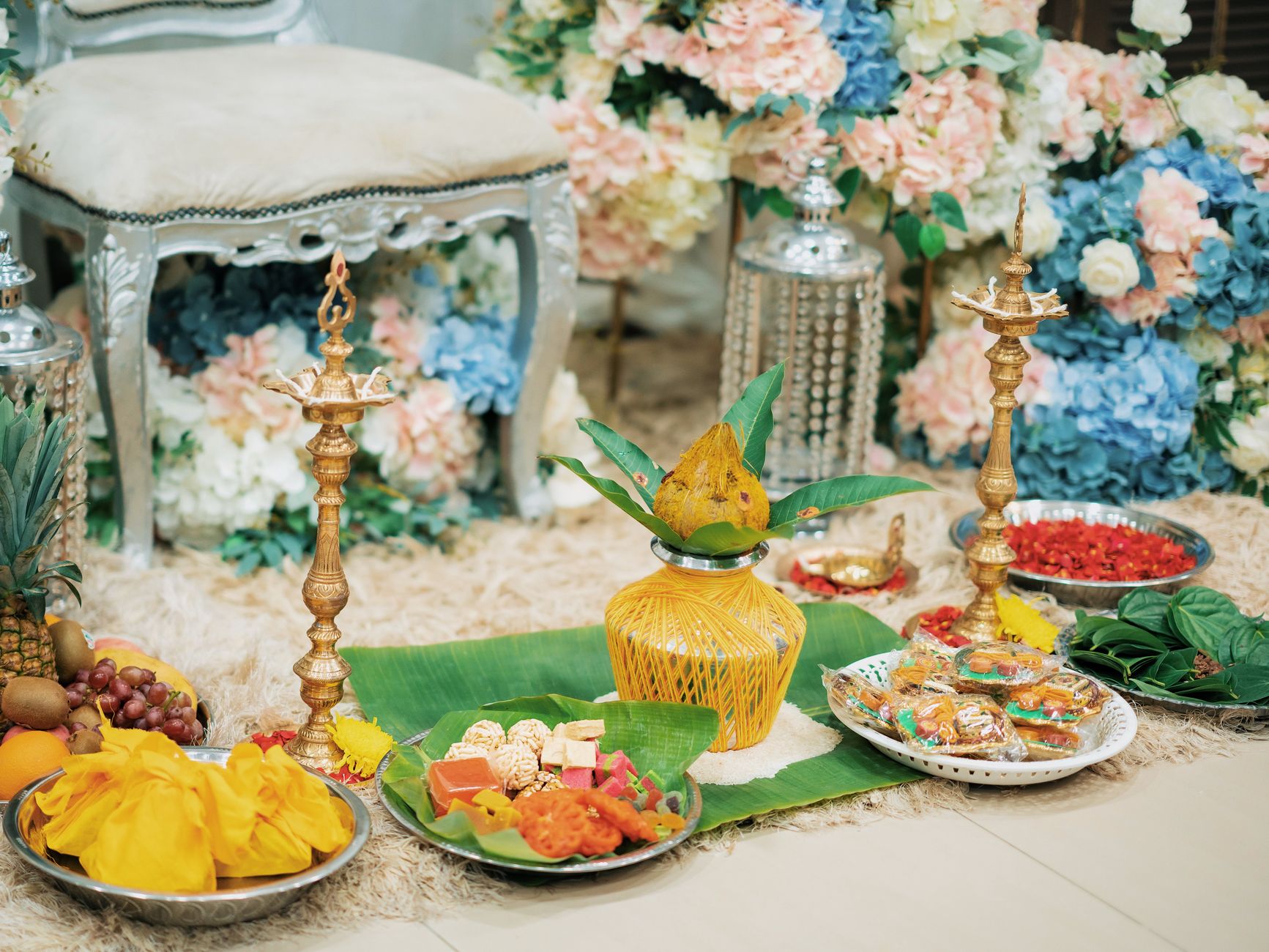
Sacred Kobbari Bunda Ritual Arrangements are the complete ceremonial setups required to perform the auspicious Kobbari Bunda — literally meaning coconut head in Telugu — ritual during Hindu weddings and religious ceremonies. The coconut holds profound significance in Vedic tradition, symbolising prosperity, purity, and the presence of the divine. When the coconut is broken during a wedding, it is believed to ward off the evil eye, invite blessings from Lord Ganesha, and mark an auspicious beginning to the couple's journey together. A well-planned arrangement covers everything: a decorated puja platform or mandap, a fresh coconut wrapped in red cloth or turmeric paste, banana leaves, betel leaves, flowers like marigold and rose, a brass lamp or diyas, kumkum, sandal paste, coconut oil, and a trained pandit to chant the appropriate mantras. For families arranging these ceremonies in Goa — whether at a beachside resort in Candolim or a private villa in Siolim — sourcing authentic puja samagri and a knowledgeable purohit can be challenging without local guidance. Happiffie's curated vendor network takes the guesswork out of planning, connecting you with specialists who bring authentic Kobbari Bunda puja decor and ritual expertise directly to your chosen Goa venue.

Why Goa Is a Surprisingly Perfect Backdrop for This Sacred Ritual

Goa has quietly evolved into one of India's most sought-after destinations for South Indian and Telugu destination weddings, and the demand for Sacred Kobbari Bunda Ritual Arrangements has grown dramatically alongside it. The state's rich blend of natural beauty — lush greenery, golden beaches, and Portuguese-heritage architecture — creates an extraordinarily photogenic backdrop for traditional ceremonies. Imagine the Kobbari Bunda puja decor set against the blue waters of the Arabian Sea at a resort in Varca, or inside a mandap decorated with jasmine garlands at a heritage property in Fontainhas, Panaji. Goa wedding religious rituals benefit from the state's established event infrastructure. Venues like five-star beach resorts in Cavelossim, sprawling lawns in Saligao, and boutique hotels in Vagator are increasingly experienced in accommodating South Indian ceremony requirements. Many have dedicated spaces for outdoor and indoor mandap setups, have empanelled local pandits who specialise in Telugu and Kannada rituals, and are familiar with the puja samagri logistics. For families travelling from Hyderabad, Bengaluru, or Chennai, Goa offers the best of both worlds — a scenic destination wedding and the comfort of culturally authentic ceremony management. Happiffie's local vendor partners understand both the devotional and logistical aspects of setting up a beachside Hindu wedding ceremony with full ritual integrity.

How Much Do Sacred Kobbari Bunda Ritual Arrangements Cost in Goa?

Budgeting correctly for Sacred Kobbari Bunda Ritual Arrangements in Goa helps families plan without last-minute surprises. Costs vary based on the scale of the ceremony, the number of guests witnessing the ritual, the extent of decor, and whether you need a pandit and puja samagri package as a bundled service or separate components. For a simple, intimate setup — ideal for a close family of 20-40 guests at a villa or apartment in Arpora or Calangute — expect to spend between ₹8,000 and ₹15,000. This typically covers the coconut breaking ceremony setup with basic decor, a brass lamp, puja thali, and a pandit for one to two hours. A mid-range arrangement suited for 50-150 guests at a banquet hall or resort lawn, with elaborate Kobbari Bunda puja decor including flower rangoli, multiple diyas, decorative banana pillars, and a complete pandit and puja samagri package, ranges from ₹18,000 to ₹35,000. For grand South Indian ceremony venues in Goa hosting 200 or more guests, with premium floral setups, traditional coconut ritual decoration spread across a large mandap, live nadaswaram music, and multiple priests, costs can reach ₹40,000 to ₹80,000 or more. Always confirm whether the venue charges separately for mandap space and whether the pandit travel charges from Panaji or Margao are included in your quote.

Choosing the Right Vendor for Your Ceremony

Selecting the right vendor for your Sacred Kobbari Bunda Ritual Arrangements in Goa requires more than a quick online search. The ritual is deeply personal, culturally specific, and time-sensitive — a pandit unfamiliar with Telugu or Kannada traditions, or a decorator who uses synthetic flowers instead of fresh marigolds, can diminish the spiritual atmosphere of the ceremony. When evaluating vendors on Happiffie, look for professionals who specifically mention experience with traditional coconut ritual decoration and South Indian ceremony mandap setups. Ask to see photos of previous work — particularly how the puja platform, diyas, coconut, and flower arrangements were styled. Confirm that the vendor or pandit is familiar with the specific sub-ritual variations, such as whether the Kobbari Bunda is performed during the muhurtham, as part of the satyanarayan puja, or as a standalone blessing ceremony before the wedding. For Goa wedding religious rituals, also check that your chosen pandit can conduct the ceremony in the correct regional language and dialect. A Telugu family from Hyderabad and a Kannada family from Bengaluru may have different mantra traditions even for the same coconut ceremony. Vendors who offer end-to-end pandit and puja samagri packages save significant time and reduce coordination stress, especially for destination weddings where the family is managing multiple moving parts from another city.

What Should You Expect on the Day of the Sacred Kobbari Bunda Ritual?

Understanding the day-of timeline for Sacred Kobbari Bunda Ritual Arrangements ensures nothing is overlooked in the excitement of the wedding day. Typically, the pandit will arrive 60 to 90 minutes before the scheduled ritual time to set up the puja space, arrange the samagri, and prepare the sacred items in the correct order. The coconut breaking ceremony setup begins with the cleansing of the space using turmeric water and the drawing of a kolam or rangoli at the base of the mandap. The coconut is then placed on a bed of raw rice in a brass or copper vessel, surrounded by mango leaves and marigold flowers as part of the traditional coconut ritual decoration. The pandit lights the lamp, recites Ganesha vandana, and guides the bride's and groom's families through the offering sequence — kumkum, flowers, turmeric, and dakshina. At the auspicious muhurtham time, the male head of the family or the groom breaks the coconut with a firm downward strike. For a beachside Hindu wedding ceremony in Goa, this moment is often photographed extensively by the wedding team as it carries powerful visual and emotional impact. After the ritual, the coconut pieces are distributed as prasad among all guests. Cleanup is typically managed by the vendor team, but confirm this in your contract to avoid confusion. Having a dedicated coordinator on-site from Happiffie's partner network ensures smooth execution from setup to prasad distribution.

Comparing Sacred Kobbari Bunda Ritual Arrangement Setups in Goa

Option/Setup TypeAdvantagesLimitationsRecommended Use Case
Basic Puja Kit with PanditAffordable (₹8,000–₹15,000), quick setup, minimal logisticsLimited decor appeal, not suited for large guest countsIntimate family ceremonies at villas or apartments
Mid-Range Decorated MandapBalances aesthetics and ritual authenticity, suits 50–150 guestsRequires 90 min setup time, moderate coordination effortMid-scale wedding receptions or pre-wedding functions
Premium Full-Scale ArrangementGrand visual impact, multi-priest chanting, elevated stageHigher cost (₹40,000+), requires large venue spaceGrand destination weddings at Goa beach resorts
Bundled Multi-Ritual PackageCost savings, single vendor coordination, seamless flowScheduling tight if multiple rituals run back to backFamilies combining Kobbari Bunda with Ganesh puja or Haldi
Outdoor Beach/Lawn SetupScenic backdrop, excellent photography, open-air ambienceWeather-dependent, requires windproof and anchored elementsBeachside or garden weddings in Cavelossim or Vagator
Fusion Modern Mandap SetupContemporary look, Instagram-worthy, appeals to younger couplesMust ensure ritual essentials are not compromised for aestheticsUrban destination weddings blending tradition and modernity

Expert Recommendation

Best for Intimate Family Ceremonies

For a close family gathering of 15 to 40 guests at a villa in Assagao or Siolim, a simple coconut breaking ceremony setup with fresh flowers, a brass lamp, and a single pandit offers the most meaningful and personal experience without overwhelming the space.

Best for Grand Destination Weddings

Families hosting 200 or more guests at a South Indian ceremony venue in Goa should opt for a full mandap arrangement with elevated platforms, nadaswaram accompaniment, professional Kobbari Bunda puja decor, and multiple priests to ensure the ritual is visible and audible across the celebration space.

Best for Budget-Conscious Planners

A bundled pandit and puja samagri package that combines the Kobbari Bunda ceremony with the Ganesh puja or Satyanarayan puja is the most cost-effective choice, reducing vendor coordination fees and often negotiating a lower combined price for two or more rituals performed in sequence. Related: traditional coconut ritual decoration

Best for Beachside or Outdoor Settings

For couples dreaming of a beachside Hindu wedding ceremony in Goa, choose vendors who specialise in anchored outdoor mandap setups with windproof lamp holders and weather-resilient traditional coconut ritual decoration so the puja proceeds smoothly regardless of coastal breezes.

Best for Traditionalist Families

Families who want strict adherence to Telugu or Kannada Vedic protocols should specifically request a pandit trained in their regional tradition. Look for vendors who offer authentic Kobbari Bunda puja decor using brass vessels, natural fibres, and fresh organic flowers rather than artificial or synthetic alternatives.

Best for Modern Fusion Weddings

Couples blending South Indian traditions with a contemporary Goa wedding aesthetic can work with decorators to frame the Sacred Kobbari Bunda Ritual Arrangements within a modern floral arch or geometric mandap backdrop, preserving all ritual elements while creating a visually striking setup for photography.

How to Choose the Right Option

Pre-booking Checklist

  • Confirm the pandit's familiarity with your specific regional tradition — Telugu, Kannada, Tamil, or other South Indian ritual variations
  • Verify the venue's open-flame policy before booking indoor mandap setups with diyas or havan
  • Check whether the vendor's package includes all puja samagri or whether items need to be sourced separately
  • Confirm vendor arrival time is at least 90 minutes before the ceremony muhurtham
  • Ask the vendor for reference photos of previous Kobbari Bunda puja decor setups at similar venues
  • Confirm whether cleanup, prasad packaging, and post-ritual disposal of items are included in the package
  • Cross-check the muhurtham time with your jyotishi or family priest before locking the ceremony schedule
  • Ensure a point-of-contact coordinator is available on-site on the day of the ceremony

🎯 Selection Criteria

  • Vendor's proven experience with Sacred Kobbari Bunda Ritual Arrangements specifically, not just general puja services
  • Availability of a qualified pandit who speaks and chants in your family's regional language or dialect
  • Quality and freshness of puja samagri, particularly flowers, coconuts, and organic materials
  • Flexibility to customise the traditional coconut ritual decoration to match your wedding colour theme
  • Responsiveness and communication quality during the booking and planning process
  • Transparent, all-inclusive pricing with no hidden charges for travel, setup, or samagri

💰 Cost / Quality Factors

  • Guest count directly affects mandap size, decor quantity, and samagri volume — larger counts cost more
  • Venue type (beach, banquet hall, heritage villa) influences setup complexity and material choices
  • Peak wedding season in Goa (October to March) increases vendor pricing by 20–40% compared to off-season
  • Bundled packages for multiple rituals offer better value than booking each ceremony separately
  • Organic and brass ritual items cost more than synthetic alternatives but are preferred for traditional families
  • Pandit seniority and specialisation — a pandit trained specifically in Telugu Vedic rituals may charge a premium over a general puja priest

⚠️ Common Mistakes to Avoid

  • Booking a generic event decorator without confirming knowledge of Kobbari Bunda ritual requirements and samagri
  • Overlooking venue open-flame restrictions until the day of the ceremony, causing last-minute changes to diya arrangements
  • Delaying the booking beyond two months before the wedding, especially during Goa's peak tourist season
  • Assuming all South Indian ritual vendors in Goa are familiar with Telugu-specific mantra sequences — always verify
  • Ignoring the muhurtham timing when scheduling the ceremony, which can conflict with other wedding-day events
  • Not confirming whether the quoted price includes pandit travel, samagri, and post-ceremony cleanup

People Also Ask

What is the Kobbari Bunda ritual in a Telugu wedding?

The Kobbari Bunda ritual is a traditional Telugu Hindu ceremony in which a coconut is broken as an auspicious act symbolising the removal of obstacles and seeking blessings from Lord Ganesha. The word Kobbari Bunda means coconut head in Telugu. It is typically performed at the start of significant events such as weddings, griha pravesh ceremonies, or satyanarayan pujas. The ritual involves a decorated coconut, a brass lamp, flowers, turmeric, kumkum, and mantras chanted by a trained pandit.

How early should I book Sacred Kobbari Bunda Ritual Arrangements in Goa?

For destination weddings in Goa, it is advisable to book your Sacred Kobbari Bunda Ritual Arrangements at least two to three months in advance, especially if your wedding falls during peak season from October to March. Experienced pandits who specialise in Telugu rituals and vendors who provide authentic puja samagri packages get booked quickly during the wedding season. Booking early also gives you time to confirm venue logistics, mandap placement, and any special customisation requests for your ceremony decor.

Can the Kobbari Bunda ceremony be performed on a Goa beach?

Yes, the Kobbari Bunda ceremony can be beautifully conducted on a beach in Goa, though it requires some additional planning. You will need permission from the beach shack operator or resort managing the beach stretch. The puja platform must be stable on sand, so vendors typically bring weighted or anchored setups. Wind can affect diyas and flower arrangements, so sheltered spots or windscreen canopies are advisable. A beachside Hindu wedding ceremony with the sunset as a backdrop makes for an especially memorable and photogenic Kobbari Bunda moment.

What samagri items are included in a standard Kobbari Bunda puja package?

A standard Kobbari Bunda puja package typically includes one fresh whole coconut, banana leaves, mango leaves, a brass or copper kalash, kumkum, turmeric powder, sandalwood paste, camphor, incense sticks, a ghee lamp or diyas, marigold and rose flowers, betel leaves and betel nuts, raw rice, a puja thali, and red cloth. Premium packages also include flower rangoli, coconut ritual decoration items, and a decorative mandap backdrop. Pandit dakshina is usually charged separately or included in bundled packages.

Is a pandit needed specifically for the Kobbari Bunda ritual or can a family elder conduct it?

While some families choose to have a senior family elder guide the breaking of the coconut, a trained pandit is strongly recommended for a formal wedding ceremony. The pandit chants specific Vedic mantras, determines the auspicious muhurtham time, and ensures that all ritual steps are followed in the correct sequence. For destination weddings with guests from different backgrounds, having a pandit also helps explain the ritual's significance to attendees who may be unfamiliar with Telugu traditions. Happiffie's vendor partners can connect you with experienced pandits in Goa.

How long does the Kobbari Bunda ceremony typically take?

The Kobbari Bunda ceremony itself, from the opening Ganesha prayer to the breaking of the coconut and distribution of prasad, generally takes between 20 and 45 minutes. However, the full setup by the vendor team, including arranging the puja decor, lighting lamps, and preparing the samagri, typically takes 60 to 90 minutes before the ceremony begins. If the ritual is part of a larger wedding programme, coordinate with your wedding planner to allocate sufficient buffer time between events so the ceremony is not rushed.

What is the typical guest count for which Sacred Kobbari Bunda Ritual Arrangements are planned in Goa?

Sacred Kobbari Bunda Ritual Arrangements in Goa are planned for a wide range of guest counts. Intimate family ceremonies may have as few as 15 to 30 guests seated around the puja mandap. Mid-scale wedding ceremonies typically accommodate 50 to 150 guests, with a larger mandap and more elaborate decor. Grand destination weddings at Goa resorts may include 200 to 500 guests, with elevated stages, professional lighting, and multiple pandits. Vendors on Happiffie can tailor the setup and samagri quantity to match your specific guest count and venue dimensions.

Which Goa neighbourhoods or areas are most popular for South Indian wedding ceremonies?

In North Goa, areas like Vagator, Anjuna, Calangute, Candolim, and Arpora are popular for destination wedding resorts and villas that can host South Indian ceremony setups. In South Goa, Cavelossim, Benaulim, Varca, and Colva have several beachside resorts with large mandap-friendly lawns. The heritage neighbourhood of Fontainhas in Panaji also appeals to families looking for an intimate, cultural setting. Venues across these areas are familiar with accommodating traditional coconut ritual decoration and puja mandap requirements.

Can the Kobbari Bunda arrangement be combined with other South Indian wedding rituals?

Absolutely. Many families combine the Sacred Kobbari Bunda Ritual Arrangements with other South Indian pre-wedding or wedding-day rituals such as the Ganesh puja, Nalugu ceremony, Haldi, or Satyanarayan puja. Vendors who offer bundled pandit and puja samagri packages can typically manage multiple rituals in sequence, adjusting the mandap setup and samagri accordingly between ceremonies. This bundled approach is especially practical for destination weddings in Goa where families want to minimise coordination effort across multiple vendors.

Are there Goa vendors who can provide both the pandit and the decor for the Kobbari Bunda ceremony?

Yes, several experienced vendors in Goa offer end-to-end packages that include both the pandit services and the full Kobbari Bunda puja decor, including mandap styling, flower arrangements, traditional coconut ritual decoration items, and all required samagri. Booking a combined package through Happiffie ensures that the pandit and decorator are coordinated, reducing the risk of timing conflicts or missing samagri on the day of the ceremony.

What should I check about the venue before finalising Sacred Kobbari Bunda Ritual Arrangements?

Before confirming your venue for Sacred Kobbari Bunda Ritual Arrangements in Goa, verify whether the venue permits open-flame diyas or lamps indoors, as some air-conditioned banquet halls have restrictions. Check whether the venue has a designated outdoor space for the mandap if an open-air ceremony is preferred. Confirm access for vendors to set up at least 90 minutes before the ceremony. Also ask whether the venue charges a separate setup fee for religious ceremonies and whether they have experience hosting South Indian ceremony mandap setups or Goa wedding religious rituals.

How do I ensure the Kobbari Bunda puja decor matches our overall wedding theme?

To ensure the Kobbari Bunda puja decor aligns with your wedding theme, share your wedding colour palette, floral preferences, and any inspiration images with the decorator during the initial consultation. Most experienced vendors on Happiffie can customise the traditional coconut ritual decoration with specific flower varieties, fabric drapes, and lamp styles while maintaining the ritual's spiritual integrity. Avoid making changes that remove essential sacred items like the banana leaves, raw rice, or the brass lamp, as these carry ritual significance beyond mere aesthetics.

Related Experiences on Happiffie

Telugu Addutera Ceremonies, Beautifully Done

Plan a flawless Traditional Telugu Addutera Ceremony Setup in Pune. Find verified decorators, mandap artists &

Sacred Kobbari Bunda Rituals, Perfectly Arranged

Plan Traditional Telugu Kobbari Bunda Ritual Arrangements in Pune with authentic samagri, skilled pandits & de

Sacred Event Decoration Specialists

Find expert Traditional Spiritual & Sacred Event Decoration Experts in Chennai. Sacred temple decor, Hindu wed

Sacred Addutera Rituals, Perfected in Goa

Plan every Traditional Addutera Wedding Ceremony Essential in Goa — ritual supplies, decor, pandits & Konkani

All Wedding & Event Services

Caterers, photographers, makeup and more for your event.

Venues in Goa

Banquet halls, lawns and resorts to match your plans.

Frequently Asked Questions

What are Sacred Kobbari Bunda Ritual Arrangements and why are they important at a Telugu wedding in Goa?

Sacred Kobbari Bunda Ritual Arrangements are the complete setup of decor, samagri, and pandit services needed to perform the traditional Hindu coconut-breaking ceremony. At a Telugu wedding, the Kobbari Bunda ritual symbolises auspiciousness, the removal of obstacles, and blessings for the couple's new life. In Goa, these arrangements are tailored to suit various venue types — from beach resorts to heritage villas — while maintaining full ritual authenticity.

Which areas in Goa are best suited for a Sacred Kobbari Bunda Ritual Arrangements setup?

Venues in Vagator, Anjuna, Candolim, and Calangute in North Goa, as well as Cavelossim, Benaulim, and Varca in South Goa, are well-suited for Sacred Kobbari Bunda Ritual Arrangements. These areas have resorts and lawns experienced in accommodating traditional South Indian ceremony mandap setups and are accessible for vendor teams carrying puja samagri and decor. Heritage properties in Fontainhas, Panaji, are ideal for smaller, more intimate ceremonies.

Can I customise the Kobbari Bunda puja decor to match my wedding theme in Goa?

Yes, most experienced decorators on Happiffie can customise the Kobbari Bunda puja decor to complement your wedding colour palette using specific flower varieties, fabric drapes, and lamp styles. Essential ritual items such as the brass kalash, banana leaves, coconut, kumkum, and raw rice must always be retained for ritual validity. Decorative elements like the mandap backdrop, garland type, and rangoli pattern can be adapted to suit modern, traditional, or fusion aesthetics.

What is the approximate cost of a mid-range coconut breaking ceremony setup in Goa?

A mid-range coconut breaking ceremony setup in Goa, suitable for 50 to 150 guests, typically costs between ₹18,000 and ₹35,000. This includes a decorated mandap, fresh flower arrangements, a complete puja thali with samagri, diyas, banana pillars, a trained pandit for one to two hours, and basic post-ceremony cleanup. Prices may vary based on the venue's location in Goa, the season, and whether the package includes travel charges for the pandit.

How do I find a pandit in Goa who knows Telugu Kobbari Bunda rituals?

Finding a pandit in Goa who is trained in Telugu Vedic traditions requires searching specifically for vendors with South Indian or Telugu puja experience. Through Happiffie's vendor marketplace, you can filter by religious ceremony specialisation and read detailed service descriptions that indicate language and tradition expertise. Always ask the pandit directly whether they have conducted Telugu Kobbari Bunda rituals before and request to know which mantras they follow to ensure regional accuracy.

Is the Kobbari Bunda ritual only for weddings, or can it be done for other events in Goa?

The Kobbari Bunda ritual is performed at a wide range of auspicious events beyond weddings, including griha pravesh ceremonies, business inaugurations, baby naming ceremonies, and major festival pujas. Sacred Kobbari Bunda Ritual Arrangements can be organised in Goa for any of these events, scaled appropriately to the occasion's size and formality. Vendors on Happiffie offer flexible packages that cater to both small private ceremonies and larger public or corporate religious events.

What happens to the coconut after the Kobbari Bunda ceremony?

After the coconut is broken during the Sacred Kobbari Bunda Ritual Arrangements, the coconut water is collected in a vessel and offered to the deity or poured at the base of the puja platform as a sacred offering. The coconut flesh is then divided and distributed as prasad among all attending guests. Some families reserve a portion of the prasad for elderly relatives who could not attend. The distribution of prasad is considered an integral part of the ritual's completion and community blessing.

How many pandits are typically required for a large-scale Sacred Kobbari Bunda Ritual Arrangements in Goa?

For a large-scale Sacred Kobbari Bunda Ritual Arrangements at a destination wedding in Goa with 200 or more guests, two to three pandits are commonly used to ensure the chanting is audible, the ritual pace is maintained, and all attendees can follow the ceremony. One lead pandit conducts the primary ritual and mantra recitation, while assisting pandits manage samagri distribution, guest guidance, and the lamp-keeping duties. For intimate ceremonies of under 50 guests, a single qualified pandit is sufficient.

Do Goa resorts and venues provide any ritual items for the Kobbari Bunda ceremony?

Most Goa resorts and venues do not provide ritual-specific items like brass kalash, fresh coconuts, or puja samagri as part of their event packages. Some luxury hotels may have basic items available on request, but it is strongly advisable to work with a dedicated vendor through Happiffie who brings all required traditional coconut ritual decoration items and samagri. This ensures the ritual materials meet the correct religious standards rather than relying on generic hotel supplies.

What is the difference between the Kobbari Bunda puja decor for a beach wedding versus an indoor banquet hall in Goa?

For a beach wedding, the Kobbari Bunda puja decor uses windproof holders for lamps and diyas, anchored or weighted puja platforms to prevent shifting on sand, and weather-resilient floral arrangements. Indoor banquet hall setups allow for more elaborate fabric drapes, hanging floral installations, and a wider range of lighting options. Beach setups often have a more natural and organic aesthetic, while banquet setups can be more ornate. Both can achieve full ritual authenticity with the right vendor.

Can Sacred Kobbari Bunda Ritual Arrangements be planned as part of a full South Indian wedding package in Goa?

Yes, Sacred Kobbari Bunda Ritual Arrangements are often planned as one component of a full South Indian wedding package in Goa, alongside ceremonies like the Nalugu, Ganesh puja, Mangalasnanam, and the main wedding muhurtham. Vendors who specialise in Goa wedding religious rituals can manage the entire sequence, creating a coordinated flow of ceremonies throughout the wedding day or across multiple days. Happiffie helps families find full-service vendors who handle everything from the first puja to the final post-ceremony prasad distribution.

What documentation or permissions are needed for a religious ceremony at a Goa beach venue?

For a religious ceremony at a Goa beach venue, you typically need prior permission from the beach property manager or resort, especially if the ceremony involves open flames, loud music like nadaswaram, or large gatherings. Some public beaches require a permit from the local panchayat or Goa Coastal Zone Management Authority for structured setups. Your event vendor or the venue management team can guide you through the required approvals. Private beach resort lawns generally have fewer restrictions and can accommodate Sacred Kobbari Bunda Ritual Arrangements with minimal paperwork.

Key Takeaways

  • Sacred Kobbari Bunda Ritual Arrangements are complete ceremonial setups for the traditional Hindu coconut-breaking ritual, widely performed at Telugu and South Indian weddings in Goa.
  • Costs in Goa range from ₹8,000 for basic intimate setups to ₹80,000 or more for grand destination wedding arrangements at premium beach resorts.
  • Booking at least two to three months in advance is essential during Goa's peak wedding season from October to March.
  • Always verify the pandit's familiarity with your specific regional tradition — Telugu, Kannada, or Tamil — to ensure ritual accuracy.
  • Popular Goa venues for South Indian ceremony setups include resort lawns in Cavelossim, heritage villas in Assagao, and beachside properties in Candolim and Vagator.
  • Bundled pandit and puja samagri packages offer the best value and reduce coordination complexity for destination weddings.
  • Venues must be checked for open-flame permissions, mandap space availability, and prior experience with South Indian religious ceremonies before finalising bookings.
  • Happiffie connects families with vetted local vendors in Goa who specialise in authentic Kobbari Bunda puja decor and end-to-end ritual management.

Plan Your Sacred Kobbari Bunda Ritual in Goa

Connect with trusted local vendors on Happiffie for authentic puja setups, experienced pandits, and beautiful ritual decor tailored to your ceremony in Goa.

Explore Ritual Vendors