
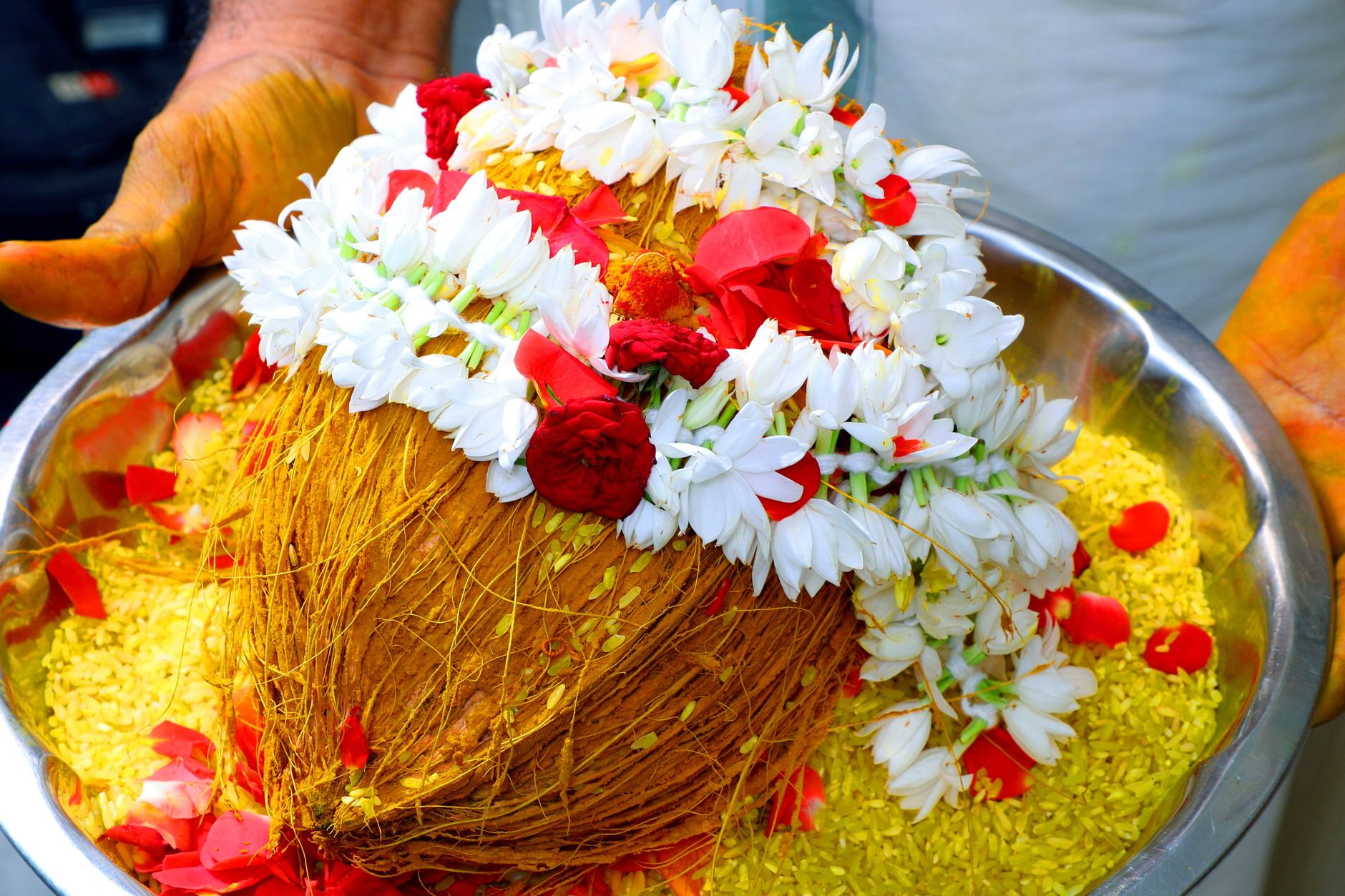
Authentic Tamil Seer Plates for Goa Weddings
Religious cermony in Goa
Heritage Tamil Seer Plate Presentation in Goa: Complete Guide
A Heritage Tamil Seer Plate Presentation is one of the most visually magnificent and emotionally resonant rituals in a Tamil wedding, and planning one in Goa — far from the traditional Tamil Nadu heartland — requires thoughtful preparation and reliable local support. Whether your family is hosting an intimate beach-side ceremony in Candolim or a grand celebration inside a heritage mansion in Panjim, the Tamil Seer Thattu arrangement forms the centrepiece of your gift exchange. Goa's growing community of South Indian ceremony decor Goa specialists can source authentic brass trays, silk fabrics, fruits, sweets, and traditional Seer items display materials to meet every standard. Understanding what this ritual involves, how to price it, and how to avoid common pitfalls will help your Goa celebration feel as rooted and joyful as any ceremony back home in Chennai or Coimbatore.
Quick Answer
A Heritage Tamil Seer Plate Presentation is a traditional Tamil wedding ritual in which the bride's family presents elaborately arranged trays — called Seer Varisai — filled with silk sarees, jewellery, fruits, sweets, cosmetics, and auspicious items to the groom's family. In Goa, this ceremony is typically conducted during the Nichayathartham (engagement) or on the wedding day itself, with tray counts ranging from 11 to 108 depending on family tradition and budget.
What Is a Heritage Tamil Seer Plate Presentation and Why Does It Matter?
The Heritage Tamil Seer Plate Presentation is a deeply symbolic exchange rooted in centuries of Tamil Brahmin, Mudaliar, Nadar, Naicker, and Chettiar community customs. The word 'Seer' means gifts or offerings, and 'Varisai' means arrangement in rows. Together, they represent the bride's family's love, respect, and readiness to welcome a new alliance. Each tray is stacked or arranged with specific items that hold cultural meaning — a silk Kanjivaram saree signifies prosperity, a coconut represents fertility and purity, and sweets like Mysore Pak and Adhirasam signal celebration and sweetness in the couple's future. In Goa, Tamil families who have relocated for work or business often organise this ceremony in hotel banquet halls, Portuguese-era heritage bungalows, or riverside resorts in Panaji and Margao. The challenge is sourcing the right items locally while maintaining the authentic look and feel of a traditional Seer items display. Many Goa-based event coordinators now specialise in Tamil wedding rituals in Goa and maintain supplier networks in Chennai and Bengaluru to ensure nothing is missing. The presentation itself is a public affair, often witnessed by both families and close friends. The trays are arranged in a specific order — typically starting with sarees, followed by jewellery items, then fruits, followed by sweets, cosmetics, and household essentials. A priest guides the ceremony, chanting Tamil verses while elders from both sides bless the trays. The number of trays — 11, 21, 51, or 101 — signals the family's means and generosity. Across Goa's Tamil diaspora, this ritual has become a proud statement of cultural identity, celebrated with the same vigour as it would be back in Tamil Nadu.
How to Plan a Tamil Seer Thattu Arrangement in Goa Step by Step
Planning a Tamil Seer Thattu arrangement in Goa involves logistics that extend well beyond simply buying gifts. Start by confirming the tray count with your family elders and priest at least three months before the wedding date. Once you know the quantity, work backwards to source trays, stands, fabric liners, and decorative accessories. Brass and silver trays are preferred for Heritage Tamil Seer Plate Presentation rituals, but high-quality copper-finished alternatives are also acceptable for budget-conscious families. Goa does not have a large Tamil retail corridor the way Chennai's Pondy Bazaar or Madurai's Main Road does, so you will need to either transport items from Tamil Nadu or engage a local South Indian ceremony decor Goa vendor who already maintains stock. Many vendors operating out of Margao and Vasco da Gama have established this as a niche service. Confirm sourcing at least six weeks in advance for sarees and jewellery items. For the physical setup, your venue matters enormously. Religious ceremony venues Goa that are Tamil-friendly — meaning they allow external priests, have a separate ritual space, and can accommodate large tray display rows — include select heritage bungalows in Siolim, resort conference wings in Cavelossim, and community halls run by Tamil Sangams in Panaji and Margao. Coordinate with your venue coordinator to allocate at least 400–600 square feet of floor space for a 21-tray Seer Varisai setup Goa. The tray display area should face east or north-east as per Vastu and Tamil ritual tradition. Finally, brief a professional photographer specifically on the importance of the traditional Seer items display so every tray is captured in detail — these images become heirlooms.
What Are the Typical Costs for a Heritage Tamil Seer Plate Presentation in Goa?
Budgeting for a Heritage Tamil Seer Plate Presentation in Goa depends on several variables: the number of trays, the quality of contents, whether you hire a professional decorator, and whether items are sourced locally or imported from Tamil Nadu. Here is a realistic breakdown to help Tamil families plan effectively. For a modest 11-tray Seer Varisai setup Goa, expect to spend between INR 40,000 and INR 75,000 on tray contents alone — covering two or three silk sarees, assorted fruits, sweets, cosmetics, and small household items. Add INR 8,000–INR 15,000 for brass or copper trays (if rented) and INR 10,000–INR 20,000 for decorative stands, flower arrangements, and fabric draping by a South Indian ceremony decor Goa specialist. A 21-tray ceremony, which is the most popular count among established Tamil families, typically runs between INR 1.2 lakh and INR 2.5 lakh for contents, with decoration adding another INR 25,000–INR 50,000. For grander 51-tray or 101-tray presentations, total budgets can reach INR 5 lakh to INR 12 lakh, especially when premium Kanjivaram sarees and gold-plated items are included. Transportation from Chennai or Coimbatore to Goa via cargo adds INR 5,000–INR 18,000 depending on volume and urgency. Many families plan Tamil wedding rituals in Goa months ahead and use train cargo to minimise this cost. Photography packages focused on traditional Seer items display documentation range from INR 15,000 for a half-day shoot to INR 40,000 for a full ritual-to-reception coverage plan. Always build a 10–15% contingency buffer into your budget for last-minute additions that elders may request on the day itself.
Choosing the Right Venue and Decorator for Your Seer Varisai Setup in Goa
The success of a Heritage Tamil Seer Plate Presentation is as much about environment as it is about the contents on the trays. Goa offers a surprisingly diverse set of religious ceremony venues Goa that can be adapted for Tamil rituals, but you must ask the right questions before booking. First, confirm that the venue permits an external Tamil priest (Vadhyar) and allows traditional fire rituals (homam) if your ceremony includes one. Many five-star hotel ballrooms in North Goa restrict open flames, so riverside resort venues in South Goa's Colva or Benaulim areas or private villa compounds near Panjim tend to be more flexible. Second, check that the floor is tiled or has a smooth surface — Seer trays arranged in rows need stable, flat ground, and carpeted floors can make brass stands wobble. For the Tamil wedding tray decoration itself, look for decorators who have specific experience with South Indian ritual aesthetics rather than generic wedding decorators. The traditional Seer items display calls for banana leaves at the base, mango-leaf torana (door garlands) framing the arrangement, and jasmine-string borders around each tray. Marigold and chrysanthemum combinations work beautifully in Goa's warm light and are readily available from the Mapusa flower market. Intercultural wedding customs Goa — particularly Tamil-Goan or Tamil-Konkani ceremonies — have become more common, and some decorators now blend Goan azulejos tile motifs with Tamil kolam patterns in the backdrop, creating a unique visual identity for the ceremony space. Ask for a portfolio before committing. Budget at least two hours for the decorator to complete the setup before guests arrive.
What Are the Most Common Mistakes Tamil Families Make When Organising Seer Varisai in Goa?
Even well-organised families stumble when coordinating a Heritage Tamil Seer Plate Presentation outside their home state. The most common mistake is underestimating sourcing lead times. Kanjivaram sarees in specific weights and border colours, traditional Seer items display accessories like silver lamps and thamboolam boxes, and specific sweets like Adhirasam or Kozhukattai are not readily available in Goa's retail markets. Families who begin sourcing fewer than four weeks before the event often end up with substitutes that visibly differ from family tradition. A second frequent error is skipping the priest consultation during the planning stage. Each Tamil sub-community — Brahmin, Mudaliar, Nadar — has slightly different protocols for the Tamil Seer Thattu arrangement, including which items must appear on the first tray, how the bride and groom's relatives are positioned, and what mantras accompany each tray's blessing. Confirming these details early prevents embarrassing corrections mid-ceremony. Third, many families neglect to brief their photographer and videographer on the ritual sequence. A Heritage Tamil Seer Plate Presentation moves quickly — trays are presented, blessed, and exchanged within 45–90 minutes — and a photographer unfamiliar with Tamil wedding rituals in Goa may miss key moments like the thamboolam exchange or the elder's blessing of the first tray. Fourth, booking a venue without verifying space dimensions is a costly mistake. A 51-tray Tamil wedding tray decoration display requires significant floor area, and some Goa venues that appear large on photos are actually divided by pillars or level changes that interrupt the visual flow. Always do a physical site visit or request a detailed floor plan before signing a venue contract. Intercultural wedding customs Goa settings may also require additional briefing for non-Tamil venue staff.
Heritage Tamil Seer Plate Presentation: Setup Options Compared
Expert Recommendation
Best for Intimate Family Gatherings (Under 50 Guests)
Best for Destination Tamil Weddings in Goa
Best for Grand Celebrations (100+ Guests)
Best for Budget-Conscious Families
Best for Intercultural Tamil-Goan Weddings
Best for Ultra-Traditional Ceremonies
How to Choose the Right Option
✅ Pre-booking Checklist
- Confirm tray count (11, 21, 51, or 101) with family elders and priest at least 3 months before the event
- Book a Tamil priest (Vadhyar) familiar with your community's specific Seer Varisai protocols and confirm their availability in Goa
- Identify and book a South Indian ceremony decor Goa specialist at least 8 weeks in advance, especially during peak season (Oct–Feb)
- Arrange sourcing of sarees, sweets, and ritual items from Tamil Nadu via cargo or trusted suppliers with 6-week lead time
- Visit the venue physically to verify floor area, lighting, flat surface, and permissions for external priests and fire rituals
- Brief your photographer and videographer on the ritual sequence, key moments, and the traditional Seer items display layout
- Prepare a written item checklist vetted by your priest to ensure no auspicious item is accidentally omitted
- Arrange thamboolam packets for all guests attending the Heritage Tamil Seer Plate Presentation
🎯 Selection Criteria
- Vendor familiarity with Tamil wedding tray decoration and sub-community specific requirements
- Sourcing network in Tamil Nadu for authentic sarees, brass trays, and ritual items
- Venue flexibility regarding external priests, fire rituals, and extended setup times
- Decorator's portfolio of completed Seer Varisai setup Goa or equivalent Tamil ceremonies
- Priest's specific knowledge of your family's sub-community tradition (Brahmin, Mudaliar, Nadar, etc.)
- Photographer's demonstrated experience with South Indian religious ceremony documentation
💰 Cost / Quality Factors
- Tray count directly determines base cost — each additional 10 trays adds approximately INR 40,000–INR 80,000 in item costs
- Saree quality (pure silk Kanjivaram vs. art silk) is the single biggest cost variable in any Heritage Tamil Seer Plate Presentation
- Transportation cost from Tamil Nadu to Goa ranges from INR 5,000 to INR 18,000 depending on volume and urgency
- Venue location in Goa affects logistics — South Goa venues offer more space flexibility while North Goa venues offer better aesthetics
- Decorator experience with Tamil ritual aesthetics significantly affects the visual quality of the traditional Seer items display
- Peak season (November to February) in Goa inflates both venue and vendor costs by 20–35% compared to off-season months
⚠️ Common Mistakes to Avoid
- Sourcing Seer tray contents in Goa at the last minute — specialty items like Adhirasam, thamboolam boxes, and specific silk weaves are not locally available
- Booking a generic wedding decorator unfamiliar with Tamil wedding tray decoration protocols — the result will lack authenticity
- Failing to verify venue permissions for an external Vadhyar and fire ritual before signing the contract
- Not briefing photographers on the Heritage Tamil Seer Plate Presentation sequence, leading to missed ritual moments
- Choosing a carpeted or uneven venue floor that destabilises tray stands during the traditional Seer items display
- Ignoring the 10–15% budget contingency — elder requests for additional items on the day are extremely common and should be anticipated
People Also Ask
What items are typically included in a Heritage Tamil Seer Plate Presentation?
How many trays are needed for a Tamil Seer Varisai ceremony?
Can I organise a Tamil Seer Plate ceremony in Goa if I am not based in Tamil Nadu?
Which areas in Goa are best suited for a Tamil religious wedding ceremony?
How far in advance should I book a South Indian decor specialist in Goa for a Seer Varisai ceremony?
What is the difference between Seer Varisai and a generic wedding gift exchange?
Are there Tamil priests available in Goa for Seer ceremonies?
What should the backdrop of a Heritage Tamil Seer Plate Presentation look like?
How long does a Tamil Seer Varisai ceremony typically last?
Can a Heritage Tamil Seer ceremony be combined with a Goan or Konkani tradition?
What is the etiquette for guests attending a Tamil Seer Plate ceremony?
How do I find reliable vendors in Goa for Tamil wedding tray decoration?
Related Experiences on Happiffie
Tamil Seer Plates Done Right in Pune
Seer Varisai Arrangements for Pune Weddings
Elevate Your Tamil Ring Ceremony
Aarthi & Thamboolam Plates Done Right
Pelli Butta Decor for Your Telugu Wedding
Stream Your Sacred Moments Live
Frequently Asked Questions
What is the Heritage Tamil Seer Plate Presentation and how is it different from other Indian gift rituals?
How do I find a Tamil-speaking Vadhyar (priest) for a Seer ceremony in Goa?
Which neighbourhoods in Goa are most convenient for Tamil wedding ceremonies?
Can I rent brass or silver Seer trays in Goa rather than buying them?
What is the ideal time of year to hold a Tamil Seer Varisai ceremony in Goa?
What floor space is needed for a 21-tray Seer Varisai setup in Goa?
Are Kanjivaram sarees available in Goa for the Seer plate ceremony?
What sweets must be included in a Tamil Seer Plate presentation?
Do Goa venues allow fire rituals (homam) during Tamil wedding ceremonies?
How should I dress when attending a Heritage Tamil Seer Plate Presentation in Goa?
Is a Heritage Tamil Seer Plate Presentation only for the wedding day, or can it be held at the engagement too?
Can Happiffie help me plan a Heritage Tamil Seer Plate Presentation in Goa?
Key Takeaways
- A Heritage Tamil Seer Plate Presentation is a formal, priest-led ritual exchange of elaborately arranged gift trays and is central to Tamil wedding customs regardless of the wedding location.
- Goa's Tamil diaspora community — concentrated in Panaji and Margao — supports a growing ecosystem of South Indian ceremony decor Goa vendors, Tamil priests, and event specialists.
- Tray counts of 11, 21, 51, and 101 are the most common choices; budgets range from INR 50,000 for a basic 11-tray ceremony to over INR 12 lakh for a premium 101-tray event.
- Sourcing authentic Kanjivaram sarees, brass trays, and ritual sweets from Tamil Nadu requires at least six weeks of lead time when planning a Seer Varisai setup Goa.
- Venue selection in Goa must account for floor area, ritual permissions for external priests and fire ceremonies, and flat surface requirements for stable tray displays.
- Intercultural Tamil-Goan weddings are increasingly popular, and experienced decorators can blend Tamil and Goan visual aesthetics for a unique Heritage Tamil Seer Plate Presentation.
- Briefing photographers on the ritual sequence, working with a Vadhyar from your specific sub-community, and building a 10–15% budget buffer are the three most impactful decisions for a successful ceremony.
Plan Your Heritage Tamil Seer Plate Presentation in Goa with Confidence
Connect with verified South Indian ceremony specialists, Tamil priests, and decor experts on Happiffie. Get custom quotes tailored to your tray count, guest list, and budget — all in one place.
Find Goa Vendors
Are you a Vendor? Grow Your Business with Happiffie!
- High intent verified leads
- Reverse auction opportunities
- AI business tools & insights
- Dedicated vendor dashboard
- Grow your business, your way
It's free & takes less than 2 minutes!