
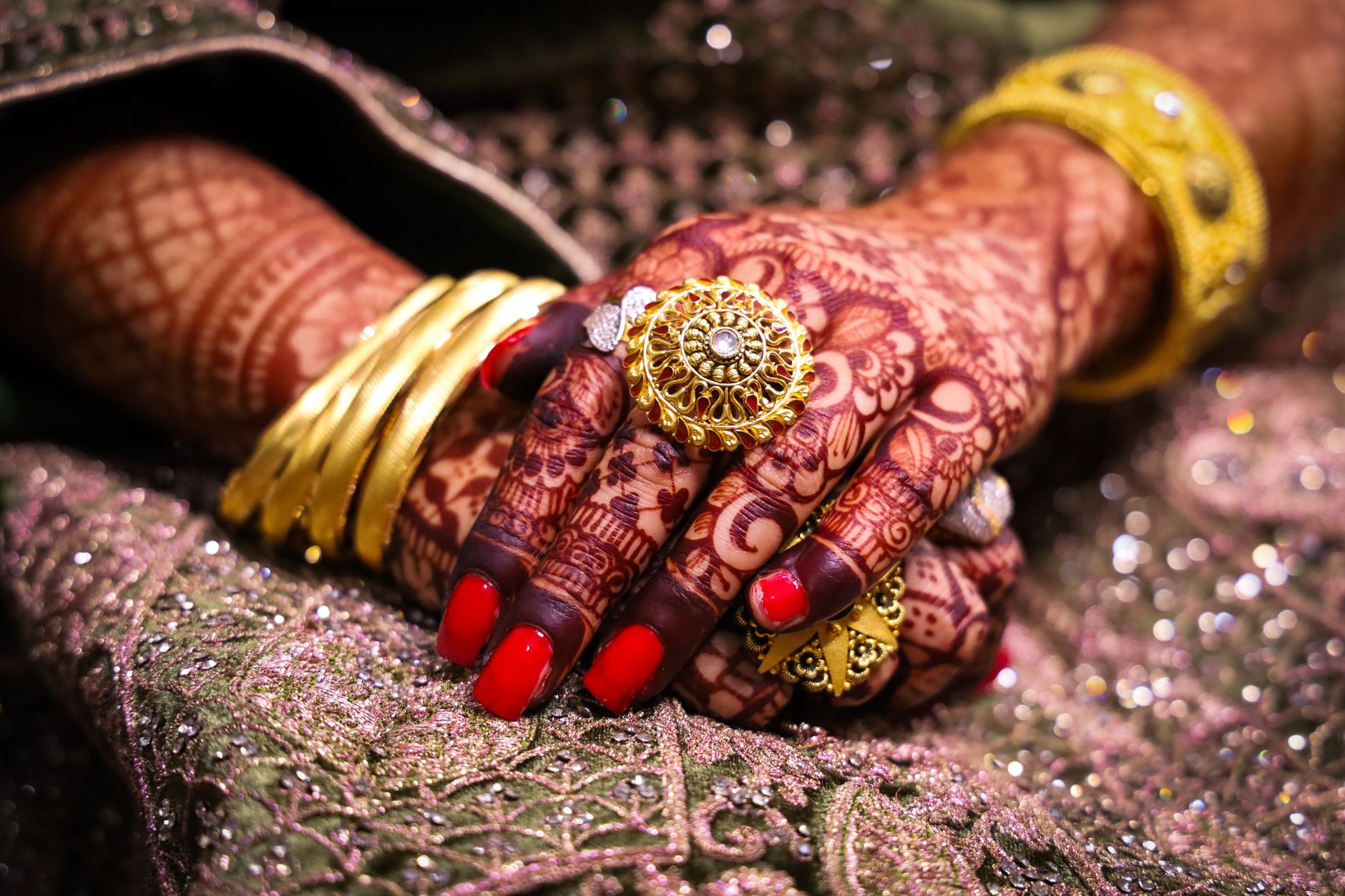
Bespoke Jewellery, Crafted for You
Jewellery in Goa
Custom Jewellery Design Specialists in Goa for Your Big Day
When your wedding jewellery needs to tell a story that is entirely your own, only Custom Jewellery Design Specialists can bring that vision to life. Goa's vibrant wedding scene — from intimate Panjim ceremonies to grand Calangute resort celebrations — calls for pieces that are as unique as the couple wearing them. Whether you are commissioning bespoke bridal jewellery design inspired by centuries-old Konkani motifs or seeking personalised wedding jewellery that blends Portuguese-influenced filigree with contemporary minimal gold, Goa's artisan community has the skill to deliver. Factor in your Goa wedding jewellery budget early, because hand-crafted, made-to-order pieces typically require four to twelve weeks of lead time and careful trousseau jewellery planning to cover every ceremony from the roce to the reception.
Quick Answer
Custom Jewellery Design Specialists in Goa are skilled artisans and studios that create one-of-a-kind jewellery pieces tailored to a client's exact specifications — metal choice, gemstone selection, motif, and finish. Unlike off-the-shelf jewellery, every piece is sketched, approved, and hand-fabricated or cast specifically for the buyer. In Goa, these specialists serve brides, grooms, and event clients looking for designs that reflect both Indian tradition and the region's distinctive coastal aesthetic.
What Makes Custom Jewellery Design Specialists in Goa Unique?
Goa occupies a singular place in India's jewellery landscape. The state's history as a Portuguese colony left behind a tradition of delicate filigree work — locally called 'filigrana' — that is woven into gold and silver with extraordinary patience. At the same time, generations of Konkani goldsmiths have preserved temple-jewellery techniques involving kundan setting and enamel work that trace their roots back to the Vijayanagara era. Custom Jewellery Design Specialists operating here draw from both streams, offering brides a genuinely hybrid aesthetic that you simply cannot find in a Mumbai showroom catalogue. Beyond heritage technique, Goa's geography shapes design sensibility. The sea, coconut groves, mangroves, and the warm laterite landscape all appear as motifs in locally crafted pieces — wave-edge bangles, palm-leaf ear cuffs, and shell-inspired pendants are recurring favourites for beach wedding bridal looks. A specialist studio will typically begin your journey with a mood-board consultation, often referencing old Goan family photographs or temple iconography before a single gram of gold is touched. For destination weddings — a category that has exploded in North Goa venues from Vagator to Morjim — handcrafted jewellery artisans add particular value because out-of-town brides rarely have a local family jeweller to rely upon. Goa-based specialists therefore offer end-to-end service: design, fabrication, quality check, and even minor on-site adjustments before the baraat or mandap sequence. This personalised attention, combined with the region's artisan heritage, is what sets Goa's jewellery ecosystem apart from a generic metro market.
How Does the Bespoke Bridal Jewellery Design Process Work?
Understanding the creation journey helps you set realistic timelines and budgets. The process followed by reputable Custom Jewellery Design Specialists typically unfolds in five stages, each requiring active client participation. Stage one is the brief and inspiration session — usually a two-hour meeting (in-studio in Panjim or Margao, or via video call for outstation clients) where you share reference images, family heirloom details, ceremony types, and the outfits each piece must complement. Specialists ask about metal preferences (22kt yellow gold, 18kt rose gold, sterling silver, or oxidised silver), stone choices, and whether the piece will be worn again post-wedding. Stage two involves the design sketch or 3D CAD rendering. Most modern studios produce a digital render so you can visualise the piece before any metal is poured. This is also the point where costs are firmed up. Bespoke bridal jewellery design charges in Goa typically range from making charges of eight to twenty percent on top of the current gold rate, depending on intricacy. Stage three is approval and advance payment — generally fifty percent of the total amount. Stage four is fabrication, which for an intricate necklace can take three to six weeks. Stage five is the final fitting and delivery, where adjustments to chain length, clasp type, or stone position are made. For trousseau jewellery planning that spans a full set — necklace, maang tikka, jhumkas, bangles, haath phool, and anklets — specialists recommend starting at least four months before the wedding date, especially for peak-season bookings between October and February. Made-to-order gold jewellery also carries a traceability advantage: you know the exact karat purity, the hallmark certification details, and the sourcing story of every stone. This transparency is increasingly important to modern couples who want ethical, conflict-free supply chains for their wedding pieces.
Why Choose Handcrafted Jewellery Artisans Over Readymade Options?
Walk into any mass-market jewellery chain and you will find polished displays of identically produced sets, priced conveniently but offering zero room for personal expression. Handcrafted jewellery artisans in Goa offer the opposite experience — slow, intentional creation that results in something genuinely irreplaceable. The practical benefits are significant. First, fit. A made-to-order gold jewellery set is sized to your neck circumference, ear lobe thickness, and wrist measurement. There is no pinching, no last-minute adjustments with pliers, and no nose-pin that sits slightly off-centre. Second, story. Each piece carries the narrative of its making — which craftsperson executed the granulation work, what family motif was incorporated, and what the occasion demanded. Third, resale and heirloom value. Well-crafted, hallmarked bespoke pieces typically hold value better than machine-stamped jewellery because the craftsmanship itself adds to the intrinsic metal worth. For Goa's destination wedding market specifically, personalised wedding jewellery doubles as a memorable souvenir of the wedding location. Couples often commission matching sets for the bride and a smaller complementary piece for the groom — a cufflink or brooch — that references a shared design motif, making the beach wedding bridal look cohesive across both partners. Cost is the most common concern. Yes, handcrafted pieces carry higher making charges. However, when you account for the fact that you will wear these pieces for decades — and potentially pass them to children — the per-wear cost calculation shifts dramatically in favour of bespoke. Custom Jewellery Design Specialists in Goa will often show you a detailed cost breakdown, allowing you to make an informed Goa wedding jewellery budget decision rather than a rushed showroom choice.
Personalised Wedding Jewellery Styles Popular in Goa
Goa weddings span a wide spectrum of cultural communities — Catholic, Hindu Konkani, GSB (Goud Saraswat Brahmin), and a growing cohort of pan-India and international destination couples — and each community brings distinct jewellery vocabulary that Custom Jewellery Design Specialists must master. For Hindu Konkani and GSB brides, the nath (nose ring) is indispensable, often featuring intricate granulation and pearl drops that reference traditional Goan temple jewellery. The thushi (short gold necklace) is a community staple, and bespoke versions now incorporate pavé diamond borders alongside the classic gold beads. Specialists experienced in this tradition can recreate grandmother's thushi in higher-karat gold while adding modern closures and ergonomic weight distribution. For Catholic Goan weddings — often held at whitewashed baroque churches in Old Goa or Velha Goa, followed by a reception at a riverside resort in Ribandar or a cliffside venue in Dona Paula — the jewellery aesthetic leans towards Portuguese filigree, seed-pearl chokers, and cross pendants crafted in rose gold. Handcrafted jewellery artisans with filigree expertise are rarer; identifying and booking them early is critical. Destination wedding couples from Delhi, Mumbai, or Bengaluru frequently request fusion pieces: a polki-and-diamond choker paired with a shoulder-duster gold ear chain, or a minimal gold cuff inspired by Goa's laterite stone textures. This is where the design flexibility of personalised wedding jewellery really shines — you are not limited by a catalogue. You bring a concept, and the specialist builds it. Heirloom jewellery restoration is another niche where Goa's artisans excel. Many families arriving for destination weddings carry antique pieces that need re-setting, resizing, or gold-plating restoration. Specialists who offer this service alongside new commissions provide a genuinely comprehensive jewellery solution for the entire wedding trousseau.
How Much Should You Budget for Custom Jewellery Design Specialists in Goa?
Setting a realistic Goa wedding jewellery budget is one of the most important pre-wedding planning tasks. Unlike catering or venue costs that are more formulaic, jewellery expenditure varies enormously based on metal weight, stone quality, and intricacy of design. As a general framework, a complete bespoke bridal jewellery design set in 22kt gold (necklace, earrings, maang tikka, bangles, and a nath) in Goa typically ranges from INR 2,50,000 to INR 12,00,000 or more depending on the gold rate at time of purchase, stone grading, and the studio's craftsmanship premium. Sterling silver and oxidised silver sets for bridesmaids or mehendi ceremonies are available from INR 8,000 to INR 60,000 per piece. Making charges — the artisan's fabrication fee — range from eight percent for simple cast pieces to twenty-two percent for hand-engraved or filigree work. This is distinct from stone costs, which are quoted separately. Always request a line-item quote that separates metal cost (at prevailing market rate), stone cost, and making charges. This protects you against post-fabrication price surprises. For trousseau jewellery planning that covers multiple ceremonies — haldi, mehendi, roce, engagement, wedding, and reception — experienced Custom Jewellery Design Specialists recommend allocating roughly forty to fifty percent of your total jewellery budget to the main wedding set and distributing the remainder across ceremony-specific pieces, some of which can be done in silver or gold-plated brass to manage spend. Payment structure at most Goa studios involves a fifty-percent advance at the time of design approval, with the balance due at delivery. Reputable specialists will provide a receipt with metal weight, hallmark number, stone details, and BIS certification reference. Always verify BIS 916 or BIS 750 hallmarking for gold pieces before final payment.
Custom vs. Readymade Wedding Jewellery Options in Goa: A Clear Comparison
Expert Recommendation
Best for intimate beachside ceremonies
Best for traditional Konkani or GSB weddings
Best for destination wedding couples on a defined budget
Best for Catholic Goan and Indo-Portuguese aesthetics
Best for couples with family heirlooms to restore or redesign
Best for large multi-day wedding trousseaus
How to Choose the Right Option
✅ Pre-booking Checklist
- Set your total Goa wedding jewellery budget before the first consultation and communicate it clearly
- Collect reference images, outfit swatches, and family heirloom photos at least a week before your first appointment
- Confirm the studio's BIS hallmarking process and request a sample certificate from a previous commission
- Ask for a written timeline covering design approval, fabrication start, and delivery date with penalties for delays
- Verify whether the specialist has prior experience with your wedding community's specific jewellery traditions
- Confirm payment terms — typically 50% advance at design approval, 50% at delivery — and get a written receipt
- Discuss post-delivery services: minor resizing, re-setting stones, and cleaning included or chargeable
- For remote clients, confirm insurance-covered courier terms and photograph all pieces before dispatch
🎯 Selection Criteria
- Portfolio depth: Has the specialist completed at least five to ten bespoke bridal commissions in your style or community tradition?
- In-house fabrication: Does the studio do its own goldsmithing or outsource to a third-party workshop?
- Certification standards: Does every piece come with BIS hallmark documentation and a detailed purchase receipt?
- Communication responsiveness: Are design revisions handled within a reasonable turnaround without extra charges for reasonable changes?
- Client references: Can the specialist provide contact details of two or three past clients for direct verification?
- Design flexibility: Can the artisan work across multiple styles — traditional, fusion, and minimal — or are they limited to one aesthetic?
💰 Cost / Quality Factors
- Gold rate fluctuation: Making charges are calculated on the prevailing gold rate at time of fabrication, so locking in early can save money during price spikes
- Stone quality grading: Diamond and coloured stone costs vary enormously by cut, clarity, and origin — always ask for grading details
- Design complexity: Filigree and kundan work carry higher making charges than cast or machine-finished designs
- Lead time premium: Rush commissions (under four weeks) often attract a surcharge of ten to twenty percent
- Studio overheads: Boutique studios in Panjim's heritage lanes may price differently from workshop-based artisans in Margao or Mapusa
- Heirloom jewellery restoration scope: Restoration work is priced separately from new commissions and depends on the condition and metal type of the original piece
⚠️ Common Mistakes to Avoid
- Starting too late: Commissioning a full bridal set less than six weeks before the wedding almost guarantees a rushed, lower-quality result
- Skipping the written quote: Verbal pricing agreements lead to disputes — always get a line-item written estimate before approving the design
- Ignoring weight distribution: Heavy necklaces or overly elaborate sets cause discomfort during long ceremonies — discuss wearability during the design session
- Choosing a studio solely on price: Unusually low making charges often signal compromised karat purity or outsourced, lower-quality fabrication
- Not accounting for outfit compatibility: Jewellery must complement fabric colour, neckline depth, and embroidery density — bring swatches to every consultation
- Overlooking post-wedding care instructions: High-quality bespoke pieces require specific cleaning, storage, and re-polishing routines to maintain their finish for decades
People Also Ask
How do I find trustworthy custom jewellery design specialists in Goa?
How early should I start commissioning bespoke bridal jewellery design in Goa?
What is the average cost of personalised wedding jewellery in Goa?
Can I get heirloom jewellery restoration done alongside a new commission in Goa?
What metal options are available with handcrafted jewellery artisans in Goa?
Are there specialists in Goa who make jewellery for Catholic Goan wedding traditions?
What is the difference between made-to-order gold jewellery and off-the-shelf jewellery?
How does trousseau jewellery planning work for a multi-day Goa wedding?
Can outstation brides commission custom jewellery from Goa remotely?
What certifications should I check when buying custom jewellery in Goa?
Is beach wedding bridal look jewellery different from temple or church ceremony jewellery?
Can I incorporate a family motif or coat of arms into a personalised wedding jewellery piece?
Related Experiences on Happiffie
Bloom Into Your Perfect Bridal Look
Regal Polki Jewellery for Your Big Day
Wear Your Name, Own Your Story
Custom Jewellery for Your Special Day
Perfect Bridal Looks for Your Dream Wedding
All Wedding & Event Services
Frequently Asked Questions
How many weeks before a Goa wedding should I book custom jewellery design specialists?
Do Goa-based jewellery specialists cater to both Hindu and Catholic wedding traditions?
Is it possible to get personalised wedding jewellery made in Goa if I am based in another city?
What is filigree jewellery and can I commission it as part of my Goa wedding set?
Can custom jewellery design specialists in Goa redesign or reuse gold from old jewellery?
How do I verify BIS hallmarking on a custom gold jewellery piece in Goa?
Are there custom jewellery specialists in Goa who work with diamonds and coloured gemstones?
What is the standard payment structure for a bespoke jewellery commission in Goa?
Can I get matching jewellery sets for the bride and bridesmaids from the same Goa specialist?
How should I care for my bespoke gold jewellery after the wedding?
Is made-to-order gold jewellery more expensive than readymade jewellery in Goa?
What questions should I ask during my first consultation with a Goa jewellery specialist?
Key Takeaways
- Custom Jewellery Design Specialists in Goa blend Konkani temple-jewellery heritage, Portuguese filigree tradition, and contemporary design — offering a creative range unavailable in standard chain showrooms.
- The bespoke commission process typically involves five stages: brief, sketch or CAD render, approval and advance, fabrication, and delivery — plan for a minimum of four to twelve weeks lead time.
- A complete bespoke bridal jewellery set in 22kt gold in Goa ranges from INR 2,50,000 to INR 12,00,000 depending on gold rate, stone quality, and craftsmanship complexity.
- Always verify BIS 916 hallmarking for 22kt gold pieces and request a line-item written receipt that separates metal cost, stone cost, and making charges.
- Trousseau jewellery planning across multiple ceremonies is most efficient when handled by a single specialist studio — it ensures design coherence and helps allocate budget intelligently across bespoke and semi-bespoke pieces.
- Handcrafted jewellery artisans in Goa also offer heirloom jewellery restoration, making them a full-service solution for families carrying antique pieces that need refurbishment alongside new commissions.
- Outstation destination wedding couples can commission personalised wedding jewellery remotely via virtual consultations, 3D CAD renders, and insured courier delivery to any Indian city.
- Booking Custom Jewellery Design Specialists five to six months ahead of a peak-season Goa wedding (October to February) is strongly recommended to secure skilled artisans and avoid rush surcharges.
Find Your Perfect Jewellery Specialist in Goa on Happiffie
Connect with verified Custom Jewellery Design Specialists in Goa — compare portfolios, get bespoke quotes, and book with confidence for your once-in-a-lifetime celebration.
Explore Jewellery Specialists
Are you a Vendor? Grow Your Business with Happiffie!
- High intent verified leads
- Reverse auction opportunities
- AI business tools & insights
- Dedicated vendor dashboard
- Grow your business, your way
It's free & takes less than 2 minutes!