
Tamil Kalyanam Ceremony Items — Gangtok
Religious cermony in Gangtok
Tamil Kalyanam Ceremony Items in Gangtok: Complete Guide
Organising a Tamil wedding in the misty hills of Gangtok is a beautifully unique undertaking — and getting every Tamil Kalyanam ceremony item right is what transforms a venue booking into a truly sacred celebration. From the maangalya dharanam thread to the panchapatra set and the kolam stencils, Tamil wedding ritual supplies carry centuries of Agamic tradition that cannot be improvised. Because Gangtok is a destination wedding in Gangtok hotspot rather than a Tamil-majority city, sourcing Kalyanam pooja items requires advance planning, trusted vendor networks, and a sharp checklist. Happiffie connects Tamil families with verified religious ceremony specialists across India who deliver to Sikkim, so your South Indian marriage ceremony essentials arrive on time, intact, and ritually accurate.
Quick Answer
Tamil Kalyanam Ceremony Items are the complete set of ritual objects required for a traditional Tamil Hindu wedding — including the maangalya sutra, panchapatra, arathi plates, maalai (garlands), kanyadaan vessels, silk vastram, kolam powder, and pooja samagri. For a destination Tamil wedding in Gangtok, these items are typically pre-sourced from Chennai, Coimbatore, or Bengaluru and shipped in advance, or procured through specialist vendors coordinated by a wedding planner.
What Are Tamil Kalyanam Ceremony Items and Why Does Every Detail Matter?
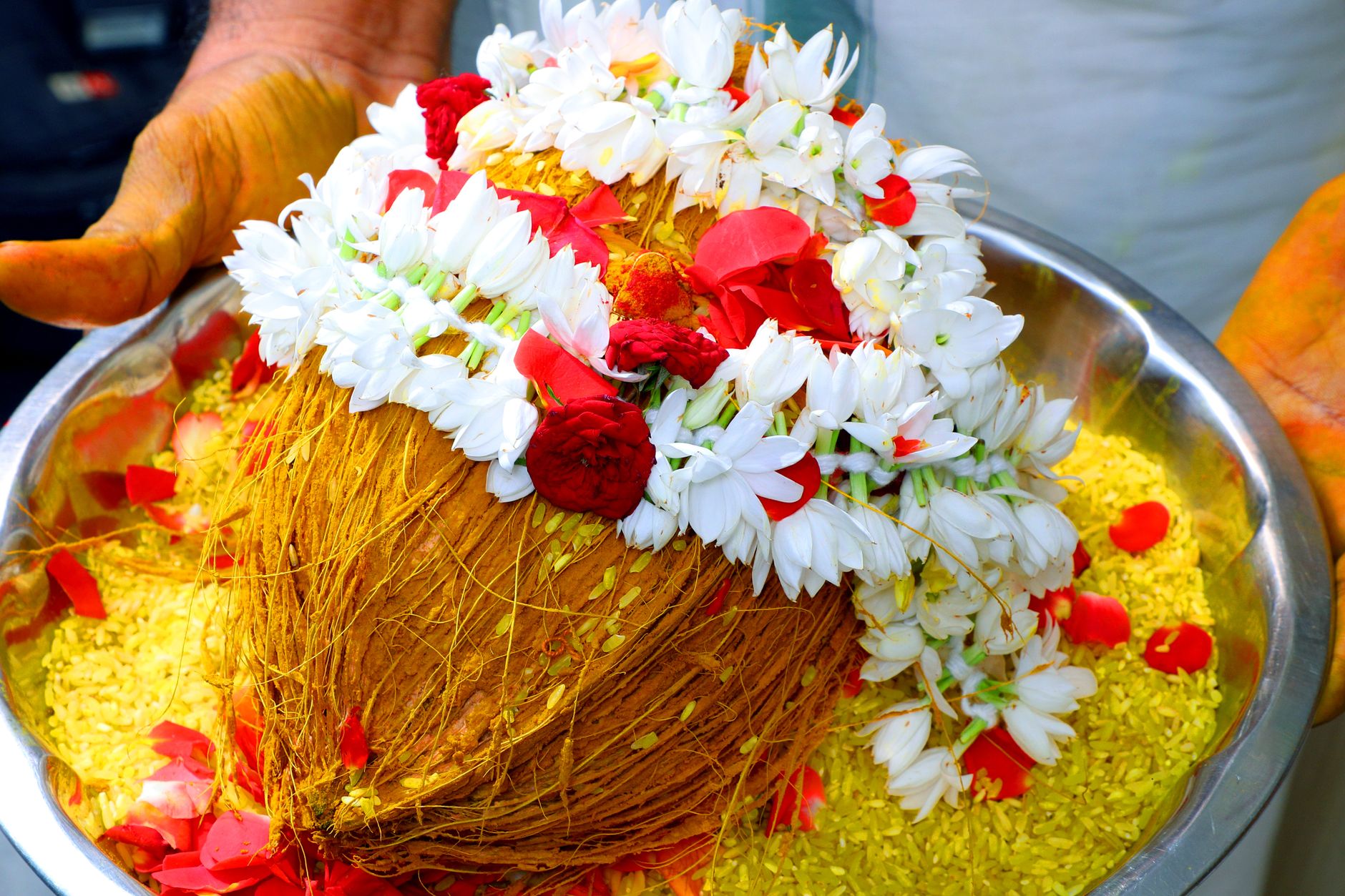
Tamil Kalyanam ceremony items are not decorative props — each object holds a specific place within Vedic and Agamic wedding rites. The maangalya sutra (sacred thread) is tied during the central maangalya dharanam ritual; the panchapatra and uddharani (small ladle) are used in every water-offering sequence; and the kanyadaan thali and coconuts mark the formal gifting of the bride. South Indian marriage ceremony essentials also include items less discussed in generic wedding guides: the koorai pattu (bridal silk saree offered by the groom's family), the oonjal (swing decorated with banana stems and jasmine), and specific types of mango leaves for the torana. Missing or substituting even one item can interrupt the priest's sequence and cause ceremony delays. When you are planning a destination wedding in Gangtok — where local markets stock Buddhist and Nepali ritual goods but almost no Tamil pooja samagri — this precision becomes logistically critical. Families should prepare item lists at least 45 days in advance and confirm with their purohit (priest) before placing orders.
Complete Category Breakdown of Kalyanam Pooja Items
Kalyanam pooja items fall into six functional categories, and understanding them prevents last-minute scrambles. First, Agni and homa supplies: samidha (specific wood sticks), ghee, camphor, and the homam kund or portable havan vessel — critical because most Gangtok venues cannot accommodate open fire without a fireproof base. Second, thread and fabric: maangalya thread (yellow-coated with turmeric and knotted three times), koorai saree, silk dhoti, and bride's silk blouse piece. Third, fruit and floral: banana bunches, coconuts (with their tuft intact), jasmine strands, kanakambara, and fresh mango leaves. Fourth, vessel and utensil set: panchapatra, uddharani, kindi (brass pouring vessel), and arathi lamps. Fifth, kolam and decor: rice-flour kolam powder, red and white natural dyes, and banana-stem pillars for the mandapam entrance. Sixth, Tamil Brahmin wedding accessories unique to specific sub-communities — Iyer versus Iyengar rites differ in tilak materials, thread colour, and the sequence of kaasi yatra. Confirm your sub-tradition with the purohit and cross-reference the list before shipping anything to Sikkim.
How Much Does Sourcing Tamil Wedding Ritual Supplies to Gangtok Cost?
Cost for Tamil wedding ritual supplies varies significantly based on quality, material, and logistics. A standard pooja samagri kit from a Chennai supplier — covering the homa, thali, and arathi items — ranges from INR 8,000 to INR 22,000 depending on the purity of brass used and whether items are machine-made or hand-crafted. Shipping to Gangtok (Sikkim) adds INR 1,200 to INR 3,500 via courier, and fragile items like brass lamps require bubble-wrap packing at an extra charge. Flowers are always sourced locally in Gangtok or the nearest Siliguri wholesale market; jasmine and marigold are available, but kanakambara may need advance ordering from a Siliguri florist. The koorai pattu silk saree is a separate budget item — expect INR 12,000 to INR 85,000 depending on Kanjivaram grade. As part of wedding budget planning India best practices, allocate 8–12% of your total wedding budget to ritual supplies and pooja logistics when holding a Tamil wedding outside Tamil Nadu. Hindu religious ceremony décor, including the oonjal and mandapam flowers, adds another INR 15,000 to INR 40,000 at a Gangtok venue.
Gangtok Venue Considerations for South Indian Marriage Ceremony Essentials
Gangtok's wedding venues — from boutique MG Marg hotels to hillside resorts in Tadong and Deorali — are architecturally suited for intimate gatherings of 50 to 250 guests. However, they are designed for Nepali, Bengali, and civil weddings, not Tamil Agamic ceremonies. This creates three practical challenges for South Indian marriage ceremony essentials. First, fire clearance: homam with open flame requires prior written permission from the venue manager and sometimes the local fire department. Carry a portable stainless-steel homam kund with a sealed base to contain ash. Second, mandapam setup: traditional four-pillar mandapams with banana stems need 12–15 feet of clearance height — verify ceiling height before booking. Third, priest logistics: Tamil purohits are rare in Gangtok; most families fly one in from Kolkata, Chennai, or Bengaluru, adding priest travel and accommodation to the budget. A destination wedding in Gangtok demands a dedicated logistics coordinator who understands both hill-station venue constraints and Tamil Brahmin wedding accessories protocol. Traditional wedding vendor sourcing through a platform like Happiffie ensures your purohit, decorator, and samagri supplier are all coordinated from one dashboard.
What Is the Best Way to Verify and Pack Tamil Kalyanam Ceremony Items Before Travel?
Packing Tamil Kalyanam ceremony items for a destination wedding is where many families lose critical objects to breakage or airline restrictions. Follow a three-step verification process. Step one — priest sign-off: share your master item list with the purohit at least 30 days before travel and get written confirmation of every item and quantity. Tamil Brahmin wedding accessories vary by gotra and agama, and a missed item list can require expensive last-minute couriers to Siliguri. Step two — category packing: pack brass and copper vessels wrapped in old silk sarees inside hard-shell suitcases; camphor and kumkum powders must be sealed in double zip-lock bags and declared at airport security. Step three — Gangtok backup sourcing: identify at least one Siliguri-based pooja supplier who can overnight common Kalyanam pooja items like coconuts, kamphor, and flowers in case of shortage. Hindu religious ceremony décor items like banana stems and fresh flowers should always be sourced on arrival — they cannot survive long transit. Maintaining a laminated checklist in the main ceremony bag ensures the purohit can do a 10-minute inventory check on arrival at the Gangtok venue.
Tamil Kalyanam Ceremony Items: Sourcing Options Compared
Expert Recommendation
Best for Intimate Hill-Top Celebrations (Under 60 Guests)
Best for Traditional Tamil Brahmin Families
Best for Large Gatherings (150–250 Guests)
Best for Budget-Conscious Families
Best for Modern Couples Wanting a Hybrid Ceremony
Best for Families Sourcing Everything Online
How to Choose the Right Option
✅ Pre-booking Checklist
- Get a written item list from your purohit specific to your sub-tradition (Iyer, Iyengar, or other) at least 45 days before the wedding
- Confirm ceiling height and fire clearance policy with the Gangtok venue before finalising mandapam and homam setup
- Book your Tamil purohit and arrange travel and accommodation at least 2–3 months in advance
- Place your pooja samagri order with a Chennai or Bengaluru supplier minimum 30 days before the event to allow transit buffer
- Identify a Siliguri backup supplier for perishables (flowers, coconuts, bananas) for day-of sourcing
- Assign one family member as the ceremony items custodian — give them the laminated master checklist
- Double-pack brass and copper items in hard-shell luggage wrapped in silk fabric; declare powders at airport security
- Confirm silk saree (koorai pattu) and groom's dhoti are included in the item list and checked before travel
🎯 Selection Criteria
- Vendor experience with Tamil-specific samagri, not just generic Hindu wedding supplies
- Ability to ship reliably to Sikkim with tracking and insurance
- Purohit familiarity with your specific Agama and gotra requirements
- Venue flexibility for open-flame rituals or availability of fireproof indoor alternatives
- Coordination between samagri supplier, florist, and ceremony decorator to avoid duplication or gaps
- Clear refund or replacement policy for damaged or incorrect items received
💰 Cost / Quality Factors
- Brass purity and craftsmanship: hand-cast vessels cost more but are ritually preferred and more durable
- Silk saree grade: Kanjivaram pure silk versus blended silk has a significant price difference (INR 12,000 to INR 85,000)
- Shipping distance and route risk: Gangtok's mountain access means monsoon delays and landslide-related disruptions
- Purohit specialisation: a purohit trained in Agamic ceremonies charges more but prevents ritual errors
- Floral freshness: locally sourced flowers in Siliguri or Gangtok cost less and stay fresh longer than transported flowers
- Rental versus purchase: renting vessels reduces upfront cost but requires logistics for return shipping after the event
⚠️ Common Mistakes to Avoid
- Ordering generic Hindu pooja kits without confirming Tamil-specific items with the purohit — many items will be wrong or missing
- Assuming Gangtok local markets will stock Tamil samagri — plan all sourcing before arriving in Sikkim
- Forgetting venue fire clearance for homam until the day of the ceremony, risking cancellation of the ritual
- Packing maangalya thread or camphor in checked baggage without sealing — customs or security may confiscate unsealed powders
- Booking a purohit too late (within one month) for peak season weddings — experienced Tamil priests get fully booked early
- Skipping the post-delivery checklist on arrival in Gangtok — verify every item 48 hours before the ceremony, not one hour before
People Also Ask
Can I find Tamil Kalyanam ceremony items in Gangtok local markets?
What is the maangalya dharanam and what items does it require?
How far in advance should I ship Tamil wedding ritual supplies to Gangtok?
Do Gangtok wedding venues allow homam or havan fire rituals?
What is the difference between Iyer and Iyengar Tamil Kalyanam ceremony items?
Is it possible to hire a Tamil purohit in Gangtok?
What flowers are available in Gangtok for a Tamil wedding garland?
How much does a full Tamil Kalyanam ceremony item checklist cost in total?
Related Experiences on Happiffie
Tamil Homam Supplies, Chandigarh
Tamil Kalyanam Pooja Kit in Jodhpur
South Indian Weddings, Captured in Jodhpur
Sacred Kasi Yatra Accessories for Brahmin Weddings
Wed Amid the Mussoorie Clouds
Sacred Journeys, Beautifully Adorned
Authentic South Indian Bridal Styling in Delhi
Frequently Asked Questions
What are the most commonly forgotten Tamil Kalyanam ceremony items for destination weddings?
Can Tamil Kalyanam ceremony items be rented instead of purchased in Gangtok?
Which courier services are reliable for shipping pooja items to Gangtok?
Do Tamil Kalyanam ceremony items include the oonjal swing, and how is it set up in Gangtok?
Is a separate customs or permit required to bring Tamil Kalyanam ceremony items into Sikkim?
How do I find a purohit who knows Tamil Kalyanam ceremony rituals in the Gangtok region?
What is the minimum number of guests for a full Tamil Kalyanam ceremony to be cost-effective in Gangtok?
Can Happiffie help source Tamil Kalyanam ceremony items and coordinate vendors for a Gangtok wedding?
Key Takeaways
- Tamil Kalyanam ceremony items are ritually specific and cannot be substituted with generic Hindu wedding supplies — always use a purohit-verified checklist.
- Gangtok has no dedicated Tamil samagri market; source from Chennai or Bengaluru online suppliers with a minimum 30-day lead time.
- Siliguri (3–4 hours from Gangtok) is the nearest backup market for fresh flowers and basic perishables.
- Homam and open-flame rituals require prior written permission from Gangtok venue management — arrange this at the time of venue booking.
- Tamil purohits must be flown in from Kolkata, Chennai, or Bengaluru; book 2–3 months in advance for peak season dates.
- Total ritual sourcing budget for a 100–150 guest Tamil wedding in Gangtok typically ranges from INR 35,000 to INR 1,20,000, excluding the silk saree.
- Iyer and Iyengar sub-traditions require different items and ceremony sequences — confirm your tradition before placing any order.
- Happiffie connects Tamil families with verified vendors who specialise in destination delivery of South Indian marriage ceremony essentials across India.
Plan Your Tamil Kalyanam in Gangtok — Stress-Free
Connect with verified vendors for Tamil wedding ritual supplies, purohit booking, and mandapam décor — all coordinated through Happiffie.
Find Vendors Now
Are you a Vendor? Grow Your Business with Happiffie!
- High intent verified leads
- Reverse auction opportunities
- AI business tools & insights
- Dedicated vendor dashboard
- Grow your business, your way
It's free & takes less than 2 minutes!