
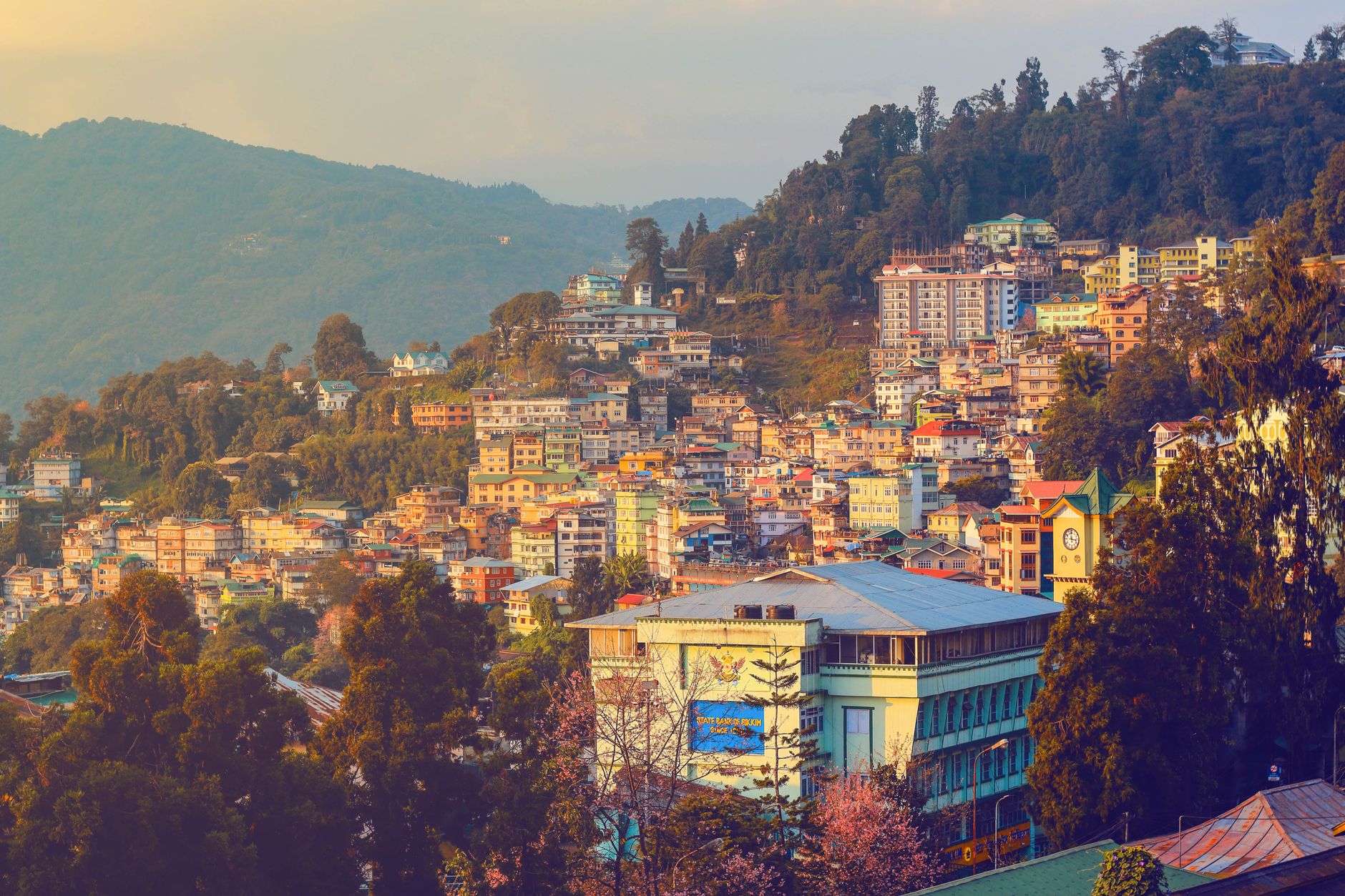
Medical Safety for Your Gangtok Celebration
Event Support in Gangtok
Destination Ambulance Support for Gangtok Events
Planning a wedding or large celebration in Gangtok means navigating winding Himalayan roads, dramatic altitude changes, and venues spread across remote ridgelines — making Destination Ambulance Support not just a luxury but a genuine necessity. From heritage bungalows in Tadong to resort lawns overlooking Kanchenjunga, every outdoor venue in Sikkim poses unique medical access challenges. Happiffie connects families across India with verified On-Site Emergency Medical Services teams trained in high-altitude event safety, ensuring that from mehendi morning to vidaai night, a fully equipped response unit is positioned within reach. Smart event emergency preparedness is what transforms a beautiful mountain celebration into a worry-free one.
Quick Answer
Destination Ambulance Support refers to a dedicated, event-specific ambulance and paramedic team stationed at or near a remote or destination wedding venue throughout the event. In Gangtok, where high-altitude terrain and narrow mountain roads can delay standard emergency response, this service ensures immediate medical attention for guests, bridal party, and staff — covering anything from altitude sickness to cardiac events, without waiting for city-based help.
Why Is Destination Ambulance Support Essential for Gangtok Weddings?
Gangtok sits at roughly 1,650 metres above sea level, and many popular wedding venues — resort properties near Rumtek, garden venues above Deorali, or heritage estates outside the main bazaar — sit even higher. Guests flying in from Delhi, Mumbai, or Chennai often arrive with zero acclimatisation time, making altitude sickness, breathlessness, and cardiac stress genuinely common during the first 24 to 48 hours. Standard government ambulances in Sikkim can face 30–60 minute response times on mountain roads, particularly at night or during monsoon when landslides affect NH10. Destination Ambulance Support eliminates that gap entirely by stationing a paramedic-staffed, equipment-loaded vehicle at your venue perimeter for the duration of the event. For large guest lists that include elderly relatives, guests with pre-existing conditions, or young children, this on-site presence is the single most impactful safety decision a couple can make. Mountain event first response is not comparable to city event medical cover — the terrain, the altitude, and the access roads demand a specialised, pre-positioned approach rather than a reactive call-and-wait model.
What Does an On-Site Emergency Medical Services Package Include?
A well-structured On-Site Emergency Medical Services package for a Gangtok destination wedding typically includes a fully equipped ambulance vehicle with oxygen cylinders, AED (automated external defibrillator), basic life support medications, stretcher, spine board, and IV fluid kits. The crew comprises at minimum one certified Emergency Medical Technician (EMT) and one trained paramedic, both briefed on the specific venue layout, nearest hospital — usually STNM Hospital in Gangtok town — and road route options. Many packages also include a pre-event medical briefing for guests on altitude symptoms, a triage tent or first-aid station set up within the venue, and 24-hour standby cover across multiple-day celebrations. Sikkim wedding medical planning at this level also factors in monsoon contingencies: alternate evacuation routes in case the primary road is blocked, coordination with local district health authorities, and a helicopter landing zone assessment for extreme emergencies. Couples should confirm that the service provider holds current vehicle permits for Sikkim's restricted roads and that the crew carries valid mountain rescue certifications.
How Much Does Wedding Venue Ambulance Standby Cost in Gangtok?
Pricing for Wedding Venue Ambulance Standby in Gangtok varies based on event duration, guest count, venue altitude, and the level of medical personnel deployed. For a standard one-day wedding with 100–200 guests at a mid-altitude venue, expect costs in the range of INR 18,000 to INR 35,000 for a basic ALS (Advanced Life Support) ambulance with a two-person crew. Multi-day packages covering sangeet, wedding ceremony, and reception across two or three days typically run between INR 45,000 and INR 90,000, depending on whether a dedicated on-site doctor is included. Venues above 2,500 metres, such as those near Tsomgo or upper Sikkim areas, attract a 20–30% premium due to vehicle modification requirements and specialised high-altitude crew certifications. Event emergency preparedness budgets for destination weddings in Gangtok increasingly allocate 3–5% of the total event budget to medical safety — a figure that professional planners and insurers now strongly recommend. Outdoor wedding risk management consultants note that the cost of not having cover — guest hospitalisation, reputation damage, legal liability — can far exceed the standby fee.
Comparing Destination Ambulance Support Options Available in Gangtok
Not all medical cover arrangements are equal, and understanding the difference between options is central to outdoor wedding risk management. Some families assume that a local hospital tie-up is sufficient, while others book a basic first-aid provider without realising they have no transport capability. Remote event medical backup from a dedicated provider differs significantly from relying on government emergency services or a walk-in clinic arrangement. Destination Ambulance Support from a specialist event medical company means the team is trained for crowd environments, accustomed to working beside caterers and DJ crews without disrupting ambience, and capable of making rapid triage decisions without requiring family coordination during a crisis. The comparison table below maps the core differences across common setup types families in Gangtok typically consider when planning event medical cover.
What Should You Check Before Booking Event Medical Cover for a Mountain Celebration?
Booking Destination Ambulance Support for a Gangtok event requires due diligence that differs from city event planning. First, verify that the ambulance holds a valid Sikkim state permit — interstate vehicles require special clearance and may be stopped at Rangpo or Melli checkposts. Second, confirm the crew's familiarity with high-altitude event safety protocols, specifically AMS (Acute Mountain Sickness) recognition and HACE or HAPE management. Third, ask whether the provider has worked at your specific venue before or has conducted a road-access reconnaissance — this is critical for venues off the main Gangtok–Singtam highway. Sikkim wedding medical planning also requires confirmation that the oxygen supply is sufficient for the guest count and altitude, not just a single cylinder meant for one patient. Finally, share your full event schedule — including travel convoy timings if guests are moving between venues — so the Remote Event Medical Backup team can reposition as needed. A provider who asks thorough questions about your event is almost always more reliable than one who quotes a flat rate without any site assessment.
Destination Ambulance Support Options for Gangtok Events: A Practical Comparison
Expert Recommendation
Best for Intimate Celebrations (Under 75 Guests)
Best for Large Multi-Day Destination Weddings (200+ Guests)
Best for Remote or High-Altitude Venues
Best for Budget-Conscious Families
Best for Elderly-Heavy Guest Lists
Best for Garden or Outdoor Resort Venues
How to Choose the Right Option
✅ Pre-booking Checklist
- Confirm ambulance vehicle holds valid Sikkim state road permit before signing the contract
- Verify crew certifications include altitude sickness management (AMS, HACE, HAPE protocols)
- Request a venue reconnaissance visit from the provider at least 3 weeks before the event
- Confirm oxygen supply volume is calculated for your guest count and venue altitude
- Share full event schedule including convoy routes if guests travel between multiple venues
- Establish a communication protocol between the medical crew and your event coordinator
- Identify and document the nearest hospital route and an alternate monsoon-season road
- Collect voluntary health information from elderly or medically at-risk guests in advance
🎯 Selection Criteria
- Provider's experience with Sikkim or high-altitude terrain specifically, not just city events
- Vehicle type and equipment level — ALS versus BLS — matched to your guest profile
- Crew-to-guest ratio and whether an on-site doctor is included or optional
- Responsiveness during the booking process — slow communication signals poor event-day reliability
- References or documentation from prior mountain or destination wedding deployments
- Transparent cancellation and weather-contingency policy given Sikkim's monsoon unpredictability
💰 Cost / Quality Factors
- Venue altitude directly increases crew certification requirements and equipment cost
- Event duration — multi-day cover commands significantly higher fees than single-day standby
- Guest count and demographic mix (elderly guests or young children increase risk exposure)
- Distance from the nearest ALS-capable hospital affects how advanced the on-site unit must be
- Monsoon or peak season demand reduces provider availability and may push prices upward
- Add-ons such as pre-event guest health briefings, triage tents, or medical documentation services
⚠️ Common Mistakes to Avoid
- Assuming a city-standard ambulance service can handle Gangtok's mountain roads and altitude demands
- Booking only a first-aid provider without any vehicle or transport capability on-site
- Leaving medical cover arrangements to the final two weeks before the event — permits and crew take time
- Failing to inform the medical crew about venue access restrictions or convoy timing changes
- Overlooking the need for an alternate road plan during monsoon season (June–September)
- Not sharing the event itinerary, guest count, or high-risk attendee information with the standby team
People Also Ask
Is Destination Ambulance Support mandatory for weddings in Gangtok?
How early before the event should I book a mountain event ambulance standby?
Can the ambulance reach remote venues near Rumtek or Tsomgo?
What medical emergencies are most common at Gangtok destination weddings?
Does Happiffie verify the credentials of ambulance service providers?
Should I also arrange a separate first-aid station inside the venue?
How does monsoon season affect ambulance response in Gangtok?
What is the nearest hospital to major wedding venues in Gangtok?
Related Experiences on Happiffie
Safe Celebrations in the Hills
Medical Safety for Every Event in Pune
Intimate Wedding Venues Raipur
Expert Event Medical Safety in Mumbai
Celebrate Above the Clouds in Delhi
Jaipur Fusion Weddings Done Right
Delhi Event Emergency Preparedness
Warm Winter Weddings in Mussoorie
Frequently Asked Questions
What exactly is Destination Ambulance Support and why is it different from calling 108?
Can I book Destination Ambulance Support for a one-day wedding in Gangtok through Happiffie?
Do ambulance providers on Happiffie have permits to enter restricted areas of Sikkim?
Is one ambulance enough for a wedding with 300 guests in Gangtok?
What altitude-specific equipment should the standby ambulance carry for a Gangtok event?
How does Happiffie help me compare Destination Ambulance Support providers in Gangtok?
What happens if the ambulance is needed during a road blockage in monsoon season?
Is Destination Ambulance Support covered under wedding insurance policies?
Key Takeaways
- Destination Ambulance Support is a pre-positioned, event-specific medical unit stationed at or near your Gangtok venue — fundamentally different from calling an ambulance in an emergency.
- Gangtok's high altitude, winding roads, and limited emergency response infrastructure make on-site medical cover essential, not optional, for destination weddings.
- ALS ambulances with altitude-trained paramedics are the recommended minimum for guest lists above 150 or events at venues above 2,000 metres.
- Sikkim state vehicle permits, crew altitude certifications, and venue reconnaissance are non-negotiable booking requirements — always verify these upfront.
- Costs for Wedding Venue Ambulance Standby in Gangtok range from INR 18,000 to INR 90,000+ depending on duration, altitude, and crew level.
- Monsoon season (June–September) demands additional contingency planning including alternate road routes and potentially a helicopter landing zone assessment.
- Combining an in-venue first-aid station with a parked ambulance represents best-practice event emergency preparedness for Gangtok celebrations.
- Happiffie's verified vendor network ensures every listed provider has submitted valid permits and certifications before serving couples through the platform.
Secure Medical Safety for Your Gangtok Celebration
Browse Happiffie's verified Destination Ambulance Support providers in Gangtok — compare packages, check credentials, and book with confidence for your mountain wedding.
Get Free Quotes
Are you a Vendor? Grow Your Business with Happiffie!
- High intent verified leads
- Reverse auction opportunities
- AI business tools & insights
- Dedicated vendor dashboard
- Grow your business, your way
It's free & takes less than 2 minutes!