
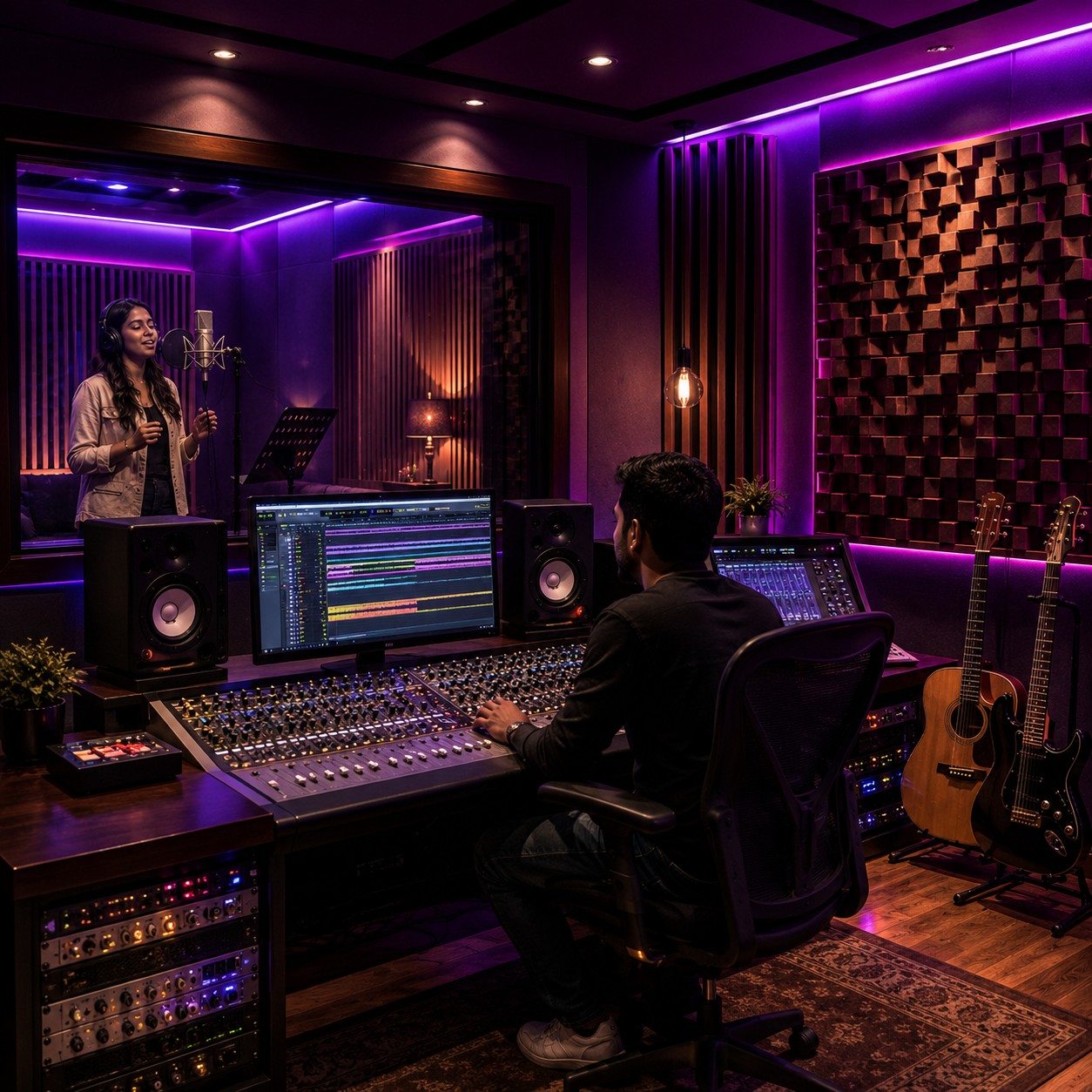
Music Production Studio Space
Professional music production studio spaces with sound booths, control rooms and audio facilities for album recording, production and creative sessions.
Explore Other Venue Types





Related Experiences




Popular Cities




Music Production Studio Spaces for Album Recording Sessions
◆A professional music production studio provides a controlled environment for recording, editing, mixing, arranging, and producing music. For artists working on an album, EP, single, soundtrack, commercial recording, or other audio project, the quality and suitability of the studio environment can have a significant impact on the recording workflow.
A dedicated music production studio may include a recording room, sound booth, control room, monitoring system, microphones, recording equipment, instruments, acoustic treatment, and digital audio workstations. The exact facilities vary between studios, so artists and production teams should review the available equipment, room dimensions, technical specifications, engineer support, booking periods, and studio policies before selecting a space.
For album sessions, the studio becomes more than a place to capture vocals or instruments. It can function as a creative workspace where artists, producers, musicians, engineers, and other collaborators work together throughout different stages of a recording project.
Professional Music Recording Studio Space
A suitable recording studio should provide an environment that supports focused creative work. Acoustic treatment, room design, equipment placement, monitoring, and technical infrastructure all contribute to the recording process.
Studios may offer different rooms for different purposes. A larger live room can accommodate instruments or ensembles, while a smaller booth may be better suited to vocals or isolated recording.
The appropriate studio depends on the project's requirements. A singer recording an acoustic EP may need a different environment from a full band producing a multi-instrument album.
Before booking, artists should consider the number of performers, instruments, recording method, expected session duration, and production requirements.
Sound Booth for Vocal Recording
A sound booth provides an isolated environment for recording vocals and other individual sound sources. The booth can help control unwanted reflections and external noise while giving the engineer greater control over the recorded signal.
For album sessions, vocal recording may involve multiple takes, harmonies, backing vocals, spoken sections, or other layered material.
A dedicated booth can also allow musicians to record while other production work continues in the studio.
The booth's size, acoustic characteristics, microphone selection, headphone monitoring, and ventilation should be considered before a recording session.
Control Room and Audio Monitoring
The control room is where recording engineers and producers monitor and manage the audio session. It may contain the digital audio workstation, mixing console, studio monitors, outboard equipment, and other production tools.
Accurate monitoring is particularly important during mixing because engineers need to hear balance, frequency response, dynamics, stereo imaging, and other characteristics of the recording.
A professionally treated control room can provide a more reliable environment for making production decisions.
Artists should confirm which software, interfaces, monitoring systems, consoles, and plugins are available if their project requires specific production tools.
Album Recording Sessions
Album production often involves multiple recording sessions spread across several days or weeks. A suitable studio should therefore support consistency across sessions.
Artists may record vocals, guitars, keyboards, drums, percussion, strings, or other instruments depending on the project.
Maintaining organized session files, microphone setups, track naming, takes, and backups can help ensure continuity throughout a longer album project.
For recurring sessions, artists may prefer to use the same studio so that the recording environment and technical setup remain consistent.
Music Production and Arrangement
A music production studio can also serve as a creative environment for arranging and developing songs. Producers and artists may work on instrumentation, structure, sound design, vocal arrangements, transitions, and other elements before final recording.
A studio with suitable instruments, MIDI equipment, keyboards, software instruments, and production tools can support this process.
The production workflow can vary significantly depending on the genre and artist. Some projects begin with fully developed compositions, while others evolve during studio sessions.
A flexible studio environment can accommodate both approaches.
Audio Recording Equipment
Recording equipment is an important consideration when selecting a studio. Depending on the facility, available equipment may include microphones, preamps, audio interfaces, mixing consoles, studio monitors, headphone systems, compressors, equalizers, and other processing equipment.
Different microphones and signal chains can produce different tonal characteristics. The appropriate equipment depends on the performer, instrument, room, genre, and desired sound.
Artists should discuss specific equipment requirements with the studio before booking if they need particular microphones, preamps, instruments, or outboard equipment.
Studio Acoustic Treatment
Acoustics influence both recording and monitoring. Recording rooms and control rooms require different acoustic considerations because the objectives are not always the same.
A recording room may be designed to provide a particular natural character, while a vocal booth may emphasize isolation and controlled reflections.
The control room generally requires accurate monitoring conditions so engineers can make reliable mixing decisions.
Professional acoustic treatment can help manage reflections, resonance, and unwanted room coloration.
For album projects, the acoustic character of the studio should match the sound the artist wants to achieve.
Music Studio for Vocal Sessions
Vocal recording is often one of the most important parts of an album project. A suitable vocal environment should provide isolation, appropriate acoustics, comfortable monitoring, and enough space for the performer.
The vocalist may need to record multiple takes and harmonies during a session. A comfortable booth and reliable headphone system can help maintain focus.
The engineer may also experiment with microphone placement and different signal chains to find an appropriate sound for the singer.
For vocal-heavy productions, the quality and suitability of the vocal recording space should be evaluated carefully before booking.
Instrument Recording Sessions
Different instruments have different recording requirements. Acoustic guitars, drums, piano, strings, brass, percussion, and amplified instruments may require different room sizes, microphone arrangements, and isolation strategies.
A larger studio live room can be useful for recording multiple musicians together, while isolated rooms can allow separate recording and greater control.
For bands, the studio should have sufficient space for musicians to perform comfortably while maintaining appropriate microphone placement.
The availability of instruments and amplifiers should also be confirmed in advance if the artist plans to use studio equipment.
Music Production Studio for Bands
Bands often require a studio that can accommodate multiple performers and instruments. A suitable facility may provide a live room, isolation areas, headphone monitoring, multiple microphone inputs, and sufficient control-room space.
Recording a band can involve capturing musicians simultaneously or recording individual parts separately.
The preferred approach depends on the band's musical style and production goals.
A well-organized studio setup can help reduce setup time between takes and maintain consistency throughout the recording session.
Mixing and Post-Production Facilities
Recording is only one stage of album production. Mixing brings individual tracks together to create a balanced final arrangement.
A professional control room can provide the monitoring environment and production tools required for mixing.
Engineers may work on volume balance, equalization, compression, effects, stereo positioning, automation, and other aspects of the mix.
Some studios also provide mastering facilities or work with external mastering engineers. Artists should clarify whether mixing and mastering are included in the studio package or booked separately.
Digital Audio Workstations
Modern music production often relies heavily on digital audio workstations. The DAW provides the environment for recording, editing, arranging, processing, and mixing audio.
Studios may use different DAW platforms and software configurations. Artists who have an established workflow should confirm compatibility before booking.
Project files may also need to be transferred between studios or production teams. Maintaining compatible file formats and organized session structures can simplify this process.
For long album projects, regular backups are especially important.
Studio Instruments and Backline
Some music studios provide instruments and backline equipment for recording sessions. Depending on the facility, this may include keyboards, drum kits, guitar amplifiers, bass equipment, microphones, stands, percussion instruments, and other studio resources.
Having suitable instruments available can reduce the need for artists to transport large equipment to the studio.
However, availability should always be confirmed before the session because studio inventories differ.
For specialized instruments, artists may prefer to bring their own equipment or arrange a rental in advance.
Producer and Audio Engineer Support
Some studios offer engineering or production support as part of the booking, while others provide the space and equipment separately.
An experienced recording engineer can help with microphone selection, signal routing, recording levels, session organization, and technical troubleshooting.
A producer may contribute to arrangement, performance direction, sound selection, and overall creative decisions.
Artists should determine whether they require studio-only access, an engineer, a producer, or a combination of services.
Music Studio for Independent Artists
Independent artists often need flexible studio arrangements that can accommodate different project sizes and budgets.
A studio may be suitable for a single vocal session, a multi-track production, or a complete album project.
Independent musicians can benefit from understanding exactly what is included in the booking, including studio access, engineering, equipment, software, setup time, breaks, file delivery, and additional charges.
Clear expectations can help prevent unexpected costs and scheduling issues.
Album Pre-Production Sessions
Pre-production can help artists prepare before entering the recording stage. This may include rehearsing arrangements, testing tempos, deciding instrumentation, preparing lyrics, organizing session files, and planning recording methods.
Some studios provide rehearsal or production spaces that can support this preparation.
Completing key creative decisions before formal recording begins can help make studio time more productive.
For larger album projects, pre-production can also help identify technical requirements before the main sessions begin.
Studio Session Scheduling
Album sessions require careful scheduling because recording can involve multiple musicians, engineers, producers, and studio resources.
A detailed schedule can identify which songs will be recorded, which performers are required, what equipment is needed, and how much studio time should be allocated.
Long sessions should include appropriate breaks to maintain performer concentration and vocal or instrumental performance quality.
For multi-day projects, consistent session timing can also help the production team maintain continuity.
Data Management and Recording Backups
Audio sessions generate large amounts of digital data. Album projects may include hundreds of tracks, takes, edits, stems, mixes, and production files.
Reliable file management and backups are therefore essential.
Recording teams should establish a process for saving sessions, maintaining backup copies, naming files, and transferring project data.
Artists should also clarify how final recordings and session files will be delivered after the studio booking.
Why Choose a Music Production Studio Space?
A professional music production studio provides a dedicated environment for recording, production, editing, mixing, and creative collaboration. With facilities such as sound booths, control rooms, recording rooms, audio equipment, acoustic treatment, monitoring systems, and production software, a suitable studio can support projects from individual recording sessions to complete album productions.
The right studio depends on the music genre, number of performers, recording requirements, desired acoustic character, equipment preferences, production workflow, and project schedule.
For artists recording an album, consistency and technical reliability can be especially valuable. A studio that meets the project's requirements can help the artist and production team focus on performance and creativity rather than adapting constantly to unsuitable facilities.
Whether the project involves vocals, instruments, a full band, electronic production, mixing, or multi-stage album development, a carefully selected music production studio can provide the environment needed for professional recording sessions.
Frequently Asked Questions
1. What is a music production studio space?
A music production studio space is a professional audio environment designed for recording, editing, arranging, mixing, and producing music. It may include recording rooms, sound booths, control rooms, equipment, and acoustic treatment.
2. What is a sound booth used for?
A sound booth provides an isolated and acoustically controlled environment commonly used for vocals and other individual recording sources that benefit from reduced external noise and controlled reflections.
3. Can a music studio be used for complete album sessions?
Yes. A suitable studio can support multiple album stages, including instrument recording, vocals, overdubs, editing, production, and mixing, depending on its facilities and technical capabilities.
4. Does a music production studio provide audio engineers?
Some studios provide engineers as part of their services, while others offer studio access and equipment separately. The availability of engineering and production support should be confirmed before booking.
5. What should artists check before booking a recording studio?
Artists should review the recording rooms, sound booth, control room, equipment, microphones, monitoring system, DAW compatibility, acoustic treatment, available instruments, engineering support, session hours, file management, and project requirements before confirming the studio.