
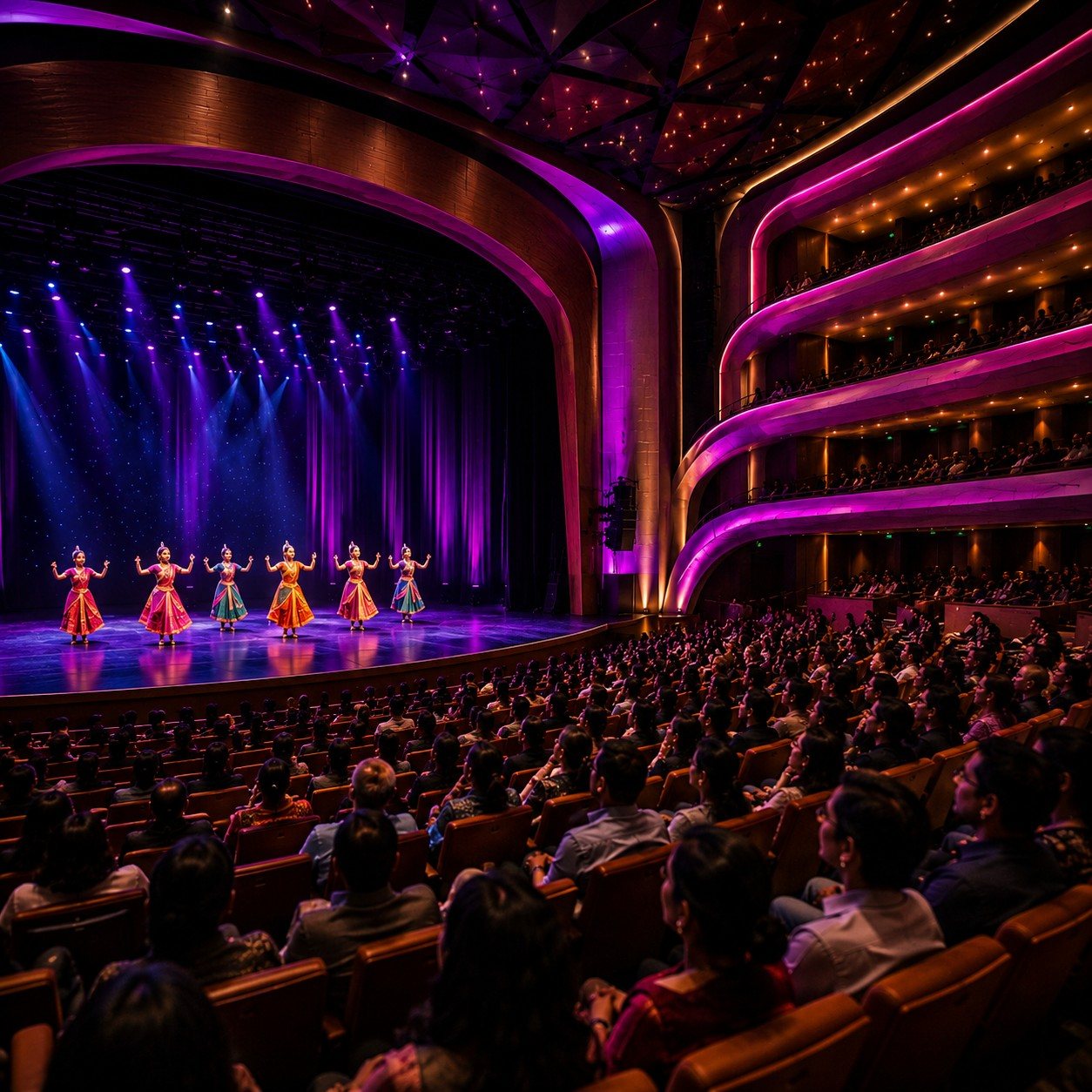
Performing Arts Center Show Space
Performing arts center show spaces provide auditoriums, professional stage facilities and audience seating for theatre performances, live shows and cultural events.
Explore Other Venue Types



Related Experiences


Popular Cities




Performing Arts Center Show Spaces for Theatre Performances
◆A performing arts center provides a purpose-built environment for presenting theatre, music, dance, cultural programs, live entertainment, educational performances, and other stage productions. Unlike general-purpose event halls, performing arts venues are designed around the relationship between performers, technical production teams, and audiences. A typical theatre environment combines an auditorium, stage, backstage areas, technical facilities, audience seating, and front-of-house spaces to support the complete performance experience.
A performing arts center show space can therefore provide a structured setting for productions that require controlled sightlines, stage access, audience circulation, sound management, lighting, backstage preparation, and professional performance infrastructure. Depending on the venue, facilities may include a proscenium stage, orchestra pit, fly system, lighting positions, audio systems, dressing rooms, green rooms, rehearsal areas, loading facilities, and technical control rooms. Actual facilities and capacities vary considerably between venues.
For theatre companies, cultural organizations, schools, colleges, production teams, corporate organizers, and independent performers, selecting an appropriate show space is an important part of planning a successful performance.
Auditorium for Theatre Performances
The auditorium is the principal audience area of a performing arts venue. It is designed to give spectators a clear relationship with the performance area while providing comfortable seating and organized circulation.
Traditional theatre auditoriums may use stalls, balconies, circles, boxes, or other seating configurations depending on the building. The layout can influence sightlines, audience capacity, atmosphere, and proximity to the stage.
For a theatre production, the auditorium should provide suitable viewing angles so that audience members can follow performers, scenery, movement, and stage effects. Seating design also needs to consider circulation, accessibility, comfort, and safe movement through aisles.
The number of seats should be considered alongside the expected audience rather than simply selecting the largest available venue. A smaller auditorium can sometimes create a more intimate relationship between performers and spectators, while a larger theatre can support major productions and larger audiences.
Professional Stage Facilities
The stage is the central working area for performers, but a professional theatre stage usually includes more than the visible performance surface. Depending on the venue, the stage environment may include wings, backstage areas, fly space, orchestra pits, technical positions, curtains, rigging systems, and scenery handling facilities.
Stage facilities can support different types of productions. Theatre performances may require scenery changes, entrances and exits, lighting transitions, microphones, props, stage furniture, or other technical elements.
The stage dimensions should be reviewed before booking because different productions require different amounts of performance and backstage space. Technical specifications can include stage width, depth, proscenium opening, grid height, loading access, and available rigging positions.
For example, a professional performing arts center may publish detailed stage plans and technical drawings so production teams can assess whether the space is suitable for their show.
Audience Seating and Sightlines
Audience seating is a fundamental part of the theatre experience. The seating arrangement needs to balance capacity with clear views, comfortable movement, accessibility, and appropriate audience circulation.
The relationship between seating rows and the stage affects what spectators can see. Professional auditorium planning considers sightlines, row spacing, aisles, accessibility, and the relationship between the audience and performance area.
Different performing arts centers may use fixed seating, tiered seating, balconies, retractable seating, or other configurations. Some venues may also offer different seating arrangements depending on the production.
When choosing a show space, organizers should review the seating plan rather than relying only on the total capacity. The number of seats, stage visibility, aisle configuration, accessibility provisions, and location of technical equipment can all influence the audience experience.
Theatre Stage for Drama Productions
Drama productions often require a stage that can accommodate actors, scenery, props, lighting, sound, and movement. A proscenium theatre can provide a traditional framed relationship between the audience and performance area.
Backstage wings allow performers and production teams to prepare outside the audience's direct view. These areas can also provide space for scenery, props, quick changes, and technical operations.
For larger productions, the stage may include rigging systems that allow curtains, scenery, lighting equipment, or other theatrical elements to be moved vertically. This can support faster scene changes and more complex productions.
Theatre companies should therefore review the venue's technical specifications before confirming a performance date.
Stage Lighting and Technical Infrastructure
Lighting helps define the performance environment and can be used for visibility, mood, scene changes, special effects, and theatrical composition.
Performing arts centers may provide dedicated lighting positions, lighting grids, control systems, follow spots, dimming infrastructure, or other technical facilities. Some professional venues publish detailed lighting plans for visiting production teams.
The requirements depend on the production. A small drama may require a relatively simple lighting arrangement, while a musical or large-scale dance performance may require more complex programming and equipment.
Before booking, the production team should confirm which lighting equipment is included and which additional equipment needs to be supplied or hired.
Theatre Audio and Acoustics
Sound quality is another major consideration when selecting a performing arts show space. Theatre audiences need to hear dialogue, music, sound effects, and announcements clearly.
Professional venues may incorporate acoustic treatments, stage shells, house speaker systems, sound control rooms, microphones, and other audio infrastructure. Some performing arts centers are specifically designed to accommodate different types of speech and musical performances.
The appropriate acoustic environment depends on the production. Spoken theatre requires clear dialogue, while concerts and musical theatre may have more complex audio requirements.
Production teams should review the venue's audio specifications and determine whether the existing system is appropriate for their show.
Backstage and Dressing Facilities
The audience sees only one part of a theatre production. Backstage facilities provide essential support for performers, stage managers, costume teams, and technical crews.
Depending on the venue, backstage facilities may include dressing rooms, green rooms, technician rooms, production offices, wings, storage areas, and access to loading platforms.
Dressing rooms provide performers with space to prepare before the show and make costume changes during the production. Green rooms can provide a waiting and relaxation area for performers between scenes or before the performance.
The availability and capacity of backstage facilities should be considered when planning productions with large casts or multiple performance teams.
Rehearsal and Preparation Spaces
Some performing arts centers offer rehearsal rooms, dance studios, meeting rooms, or other preparation spaces alongside the main auditorium.
These spaces can be useful for performers who need to rehearse before the show, conduct warm-ups, prepare costumes, or coordinate production activities.
A venue with dedicated rehearsal facilities can simplify production logistics because performers do not necessarily need to travel to a separate location immediately before the performance.
The availability of rehearsal space varies by venue, so it should be confirmed during the booking process.
Theatre Performances and Cultural Programs
Performing arts centers can accommodate a broad range of cultural performances. Theatre productions, classical music, dance, folk performances, recitals, storytelling, musical theatre, and community programs may all use appropriate auditorium and stage facilities.
For cultural organizations, the theatre can provide a formal environment where performers and audiences share a dedicated artistic experience.
The venue's stage dimensions, acoustics, backstage requirements, and seating arrangement should be matched to the specific performance type.
For productions involving traditional instruments, large ensembles, dance groups, or elaborate scenery, technical planning becomes particularly important.
Musical Theatre and Live Shows
Musical theatre combines acting, music, choreography, scenery, lighting, costumes, and technical production. A performing arts center can provide infrastructure for coordinating these elements.
A suitable venue may offer a stage large enough for ensemble movement, technical rigging, orchestra or band accommodation, audio facilities, and backstage support.
Some theatres also provide orchestra pits or adaptable stage configurations. One performing arts center, for example, documents an orchestra pit that can be converted into additional auditorium seating depending on the production configuration.
For musical productions, the production team should review the stage, sound, lighting, orchestra, backstage, and audience requirements together rather than evaluating each element independently.
Dance Performance Spaces
Dance performances require clear stage surfaces, sufficient movement space, appropriate lighting, and unobstructed audience views.
A performing arts center can provide a formal stage environment for classical dance, contemporary dance, cultural performances, choreography showcases, and professional productions.
The stage surface should be appropriate for the type of dance being presented, and the production team should confirm any venue-specific requirements concerning flooring, footwear, scenery, or stage preparation.
Backstage space can also be important for large dance groups that require coordinated entrances, exits, costume changes, and waiting areas.
School and College Theatre Performances
Educational institutions may use performing arts centers for annual productions, drama competitions, cultural programs, dance showcases, musical performances, and graduation-related presentations.
A professional auditorium can provide students with an experience that closely resembles a formal theatre production environment.
For school and college events, organizers should consider audience capacity, stage access, student supervision, rehearsal schedules, backstage requirements, technical support, and accessibility.
A venue with dedicated technical staff can also help educational production teams manage lighting, sound, stage changes, and performance timing.
Community and Cultural Events
Community organizations often require professional spaces for cultural programs, theatre festivals, music performances, and public showcases.
A performing arts center can provide a structured environment for these events while offering an appropriate auditorium for audience members.
For community productions, venue selection should consider ticketing, audience capacity, accessibility, parking, rehearsal time, technical requirements, and event staffing.
A clear production schedule can help coordinate rehearsals, technical setup, performer arrival, audience entry, and show times.
Front-of-House Facilities
The audience experience begins before the performance starts. Front-of-house areas may include the entrance, lobby, foyer, ticketing or box office, information points, restrooms, concessions, and audience circulation spaces.
The foyer and lobby provide areas where guests can wait before the auditorium opens or gather during an interval. Theatre terminology commonly distinguishes these public areas from the auditorium itself.
For larger performances, front-of-house planning can be important for managing ticket collection, audience entry, seating, late arrivals, refreshments, and event information.
A well-organized front-of-house experience complements the performance taking place on stage.
Theatre Ticketing and Audience Entry
Ticketing arrangements can vary depending on the performing arts center. Some venues provide an in-house box office, while others may allow the event organizer to manage ticketing through an external system.
Audience entry should be coordinated around the seating plan and auditorium capacity.
For larger shows, organizers may need staff to manage ticket checks, directions, seating assistance, accessibility requirements, and late arrivals.
The entry process should allow sufficient time for guests to reach their seats before the performance begins.
Stage Loading and Production Access
Large theatre productions may require scenery, instruments, costumes, technical equipment, and other materials to be transported into the venue.
A professional performing arts center may provide loading platforms, service entrances, or dedicated production access. Some venues publish detailed loading information as part of their technical specifications.
Production teams should review access dimensions and loading procedures before transporting large equipment.
Knowing the venue's load-in schedule and restrictions can help prevent delays during technical setup.
Theatre Production and Technical Coordination
A successful performance requires coordination between performers, stage managers, lighting technicians, audio teams, venue staff, and event organizers.
The technical team may need detailed information about the production's set, lighting cues, audio requirements, rigging, stage movements, and equipment.
A technical rehearsal or production meeting can help identify potential issues before the audience arrives.
Performing arts centers with dedicated technical staff can provide valuable support during setup and show operation, depending on the venue's service arrangements.
Accessibility and Audience Comfort
Accessibility should be considered when selecting a performing arts venue. Audience members may have different mobility, hearing, visual, or other access requirements.
Organizers should confirm accessible entrances, seating locations, restrooms, circulation routes, and any available assistance.
Audience comfort also depends on seating, temperature, acoustics, visibility, and convenient access to public facilities.
For a successful theatre performance, the venue should provide an environment where all intended audience members can participate comfortably.
Why Choose a Performing Arts Center Show Space?
A performing arts center show space provides a dedicated environment for theatre performances, live shows, cultural programs, dance productions, musical theatre, recitals, and other stage events.
The combination of auditorium seating, professional stage facilities, backstage areas, technical infrastructure, audience circulation, and production support can provide a more complete performance environment than a conventional function hall.
The right venue depends on the production's audience size, stage requirements, technical specifications, backstage needs, rehearsal schedule, accessibility, and budget.
For theatre companies, schools, colleges, cultural organizations, corporate performers, and independent production teams, choosing a purpose-built performing arts venue can help create a professional experience for both performers and audiences.
With careful planning around stage dimensions, seating, acoustics, lighting, backstage facilities, technical access, audience entry, and venue policies, a performing arts center can provide a strong setting for memorable theatre performances and live cultural experiences.
Frequently Asked Questions
1. What is a performing arts center show space?
A performing arts center show space is a purpose-built venue containing an auditorium and stage facilities for theatre, music, dance, cultural programs, live shows, and other performances.
2. What stage facilities can a performing arts center provide?
Depending on the venue, facilities may include a proscenium stage, wings, lighting systems, audio equipment, rigging or fly systems, orchestra pits, backstage areas, dressing rooms, loading facilities, and technical control rooms.
3. Can performing arts centers host theatre performances?
Yes. Performing arts centers are specifically designed to accommodate theatre productions and can also support dance, musical theatre, concerts, cultural performances, and other stage-based programs.
4. How important is auditorium seating when choosing a theatre venue?
Auditorium seating affects audience capacity, sightlines, comfort, accessibility, circulation, and the relationship between spectators and the stage. The seating plan should therefore be reviewed alongside the venue's total capacity.
5. What should be checked before booking a performing arts center?
Organizers should review stage dimensions, auditorium capacity, seating layout, acoustics, lighting and audio facilities, backstage areas, dressing rooms, rehearsal space, loading access, technical requirements, accessibility, event timings, and venue policies before confirming the show space.