
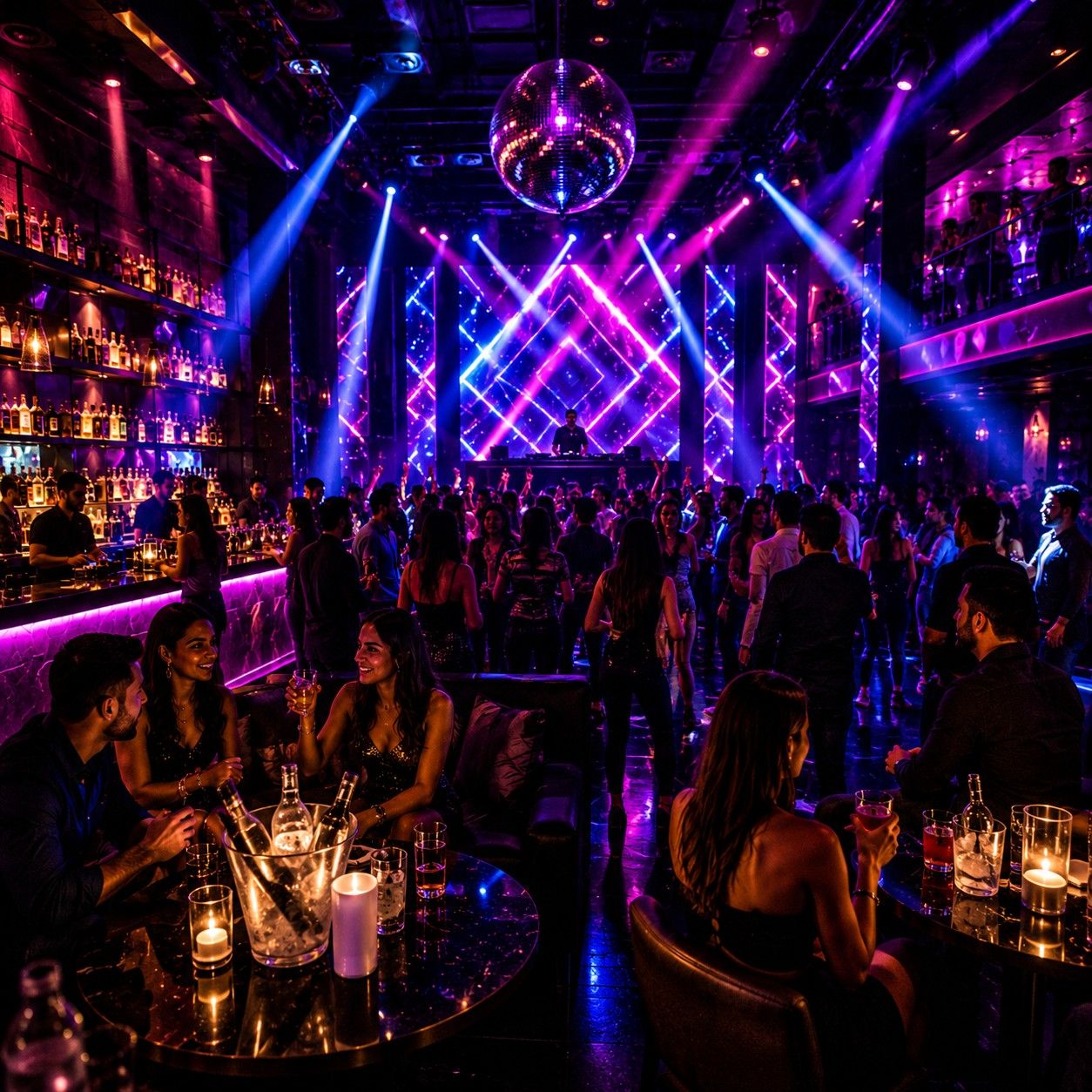
Nightlife Venue Booking
Book nightlife venues with dance floors, DJ booths and lounge settings for stylish late-evening celebrations, private parties and social gatherings.
Explore Other Venue Types
Related Experiences

Popular Cities
Nightlife Venue Booking for Late-Evening Celebrations & Parties
◆Late-evening celebrations require a venue that can support music, social interaction, dancing, comfortable seating, and an energetic atmosphere. A nightlife venue can provide a dedicated environment for private parties, milestone celebrations, social gatherings, corporate after-hours events, birthday celebrations, and other evening occasions.
Unlike traditional daytime event spaces, nightlife venues are generally designed around entertainment and social interaction. Dance floors, DJ booths, lounge seating, lighting, sound systems, bar or refreshment areas, and flexible layouts can contribute to the overall experience.
Nightlife venue booking allows organizers to select a space according to the expected guest count, event format, preferred atmosphere, entertainment requirements, location, operating hours, and venue policies. The exact facilities and permitted activities vary by venue, so organizers should confirm availability, timings, sound restrictions, food and beverage arrangements, age policies, and other applicable conditions before booking.
Dance Floor for Late-Evening Celebrations
A dance floor can become the central activity area during a late-evening celebration. It provides guests with a dedicated space for dancing, entertainment, and social interaction.
The size and layout of the dance floor should be appropriate for the expected number of guests. A small private party may require only a compact dance area, while a larger celebration may need a more spacious floor with clear sightlines toward the DJ or entertainment area.
The dance floor can also be positioned so that guests seated in lounge areas can still see and participate in the entertainment.
For milestone celebrations and private parties, the dance floor can become the focal point of the evening after dinner or other scheduled activities.
DJ Booth and Music Setup
Music is often one of the defining elements of a nightlife event. A venue with a dedicated DJ booth can provide an organized location for the DJ, music equipment, and associated technical systems.
The DJ area may include suitable connections for audio equipment, monitors, microphones, lighting controls, and other event technology depending on the venue.
Organizers should confirm whether the venue provides a DJ or whether an external DJ can be arranged. Equipment compatibility and technical requirements should also be discussed before the event.
A well-positioned DJ booth can help create a connection between the music, dance floor, and wider guest area.
Lounge Setting for Social Gatherings
Not every guest will want to dance throughout the evening. Lounge seating provides a comfortable environment where guests can relax, talk, and enjoy the atmosphere.
A nightlife venue may include sofas, lounge chairs, tables, high seating, or other arrangements depending on the property.
For private celebrations, lounge areas can be used for conversations between dance sessions. They can also provide space for guests who prefer a quieter environment.
The layout should create a balance between active entertainment areas and relaxed social spaces.
Private Party Venue
A nightlife venue can provide a dedicated environment for private celebrations where the host wants greater control over the guest experience.
Private events may include birthdays, anniversaries, reunions, milestone celebrations, social gatherings, or other special occasions.
The venue may offer different arrangements depending on the event, including private or semi-private spaces, reserved seating, dedicated entertainment areas, or customized décor.
Before confirming the booking, hosts should understand the venue's guest capacity, event duration, privacy arrangements, music policies, and any minimum booking requirements.
Birthday Celebrations at Nightlife Venues
Adult birthday celebrations can be well suited to nightlife venues because the space can support music, dancing, socializing, and late-evening entertainment.
The celebration can begin with guest arrival and lounge interaction before moving into music and dancing later in the evening.
Decorative elements such as birthday lettering, balloons, backdrops, table décor, or personalized displays may be incorporated where permitted by the venue.
The overall design should complement the existing atmosphere rather than interfere with the venue's lighting, sound, furniture, or operational areas.
Anniversary and Milestone Parties
Milestone celebrations often benefit from a venue that can accommodate both social interaction and entertainment. A nightlife setting can provide an energetic environment for anniversaries, achievement celebrations, reunions, and other important occasions.
The event can include speeches, photographs, dinner or refreshments, music, dancing, and other activities depending on the venue.
A dedicated lounge or reserved section can provide a central area for the group, while the dance floor remains available for entertainment.
For milestone events, personalized décor and audiovisual content can also be incorporated if approved by the venue.
Corporate After-Hours Events
Nightlife venues can provide an alternative setting for corporate social gatherings outside normal office hours. Companies may organize employee celebrations, networking events, team socials, client hospitality, or post-conference gatherings.
A lounge environment can support conversation and networking, while the dance floor and music area can provide a more relaxed social experience.
Corporate organizers should consider the expected guest profile and select a venue that matches the desired level of formality.
Branding, signage, presentations, or corporate décor may be incorporated where the venue permits such installations.
Guest Arrival and Reception
The arrival experience sets the tone for a late-evening celebration. A clear entrance process can help guests find the correct venue area and understand where to check in or gather.
Depending on the venue, organizers may arrange a guest list, reception desk, reserved entrance, or designated meeting point.
For larger private parties, guest coordination can help reduce confusion at the entrance.
The venue's security and access policies should be communicated to attendees in advance, particularly when identification or age verification requirements apply.
Lighting and Atmosphere
Lighting plays an important role in nightlife environments. Ambient lighting, accent lighting, dance-floor effects, and feature lighting can help establish the atmosphere of the event.
A venue may already have an integrated lighting system, or additional event lighting may be permitted depending on the property.
The lighting should complement the music and overall event design while maintaining appropriate visibility for guests and staff.
For private celebrations, lighting can also be coordinated with the event's branding, theme, or decorative elements where technically feasible.
Sound and Entertainment Requirements
A nightlife venue needs an appropriate sound environment for music and entertainment. The available audio system, speaker arrangement, microphone facilities, DJ connections, and sound limitations should be confirmed before booking.
Different venues may have different sound policies because of surrounding properties, operating hours, or local requirements.
Organizers should understand any restrictions on music volume, event timing, live entertainment, or external equipment.
For larger events, technical planning can help ensure that the entertainment system works effectively without disrupting other venue operations.
Social Seating and Guest Interaction
A successful nightlife event should provide opportunities for guests to interact beyond the dance floor.
Lounge seating, tables, standing areas, and bar or refreshment zones can create multiple social environments within the venue.
The layout should allow guests to move easily between seating, entertainment, and refreshment areas.
For corporate or networking gatherings, seating arrangements can be particularly important because guests may want to talk while still experiencing the energy of the venue.
Venue Décor for Nightlife Events
Nightlife venues often have their own interior design, lighting, furniture, and visual identity. Additional décor can be used to personalize the event when permitted.
Private parties may incorporate customized signage, birthday displays, balloons, floral arrangements, table décor, or branded elements.
The décor should be compatible with the venue's existing infrastructure. Items should not obstruct lighting equipment, sound systems, emergency exits, ventilation, or guest pathways.
For a more polished result, temporary décor can be coordinated with the venue's existing colors, materials, and lighting.
VIP and Reserved Areas
Some nightlife venues offer designated reserved or premium seating areas. These spaces can be useful for hosts who want a central gathering point for close friends, family members, executives, or special guests.
A reserved lounge area can provide a quieter place for conversations while remaining close to the main entertainment space.
The exact facilities and booking terms for reserved areas vary by venue. Organizers should confirm seating capacity, access conditions, timing, and any applicable requirements in advance.
Late-Evening Event Scheduling
Nightlife events often begin later than traditional celebrations. Scheduling should consider guest arrival times, entertainment start times, meal or refreshment breaks, and the venue's closing time.
A simple schedule can help the event progress naturally from arrival and social interaction to entertainment and dancing.
For private celebrations, the main entertainment can begin after most guests have arrived.
Organizers should also allow sufficient time for guest departure and transportation at the end of the event.
Food and Refreshment Arrangements
Food and refreshments can be an important part of a late-evening gathering. Depending on the venue, options may include seated dining, shared food service, snacks, refreshments, or other approved arrangements.
Hosts should confirm whether the venue provides its own food service and whether external catering is permitted.
The timing of food service should be coordinated with the entertainment schedule so that guests can enjoy refreshments without missing important parts of the event.
For guests with dietary requirements, the available options should be discussed with the venue in advance.
Venue Location and Transportation
The location of a nightlife venue can influence guest convenience, particularly for late-evening events.
Organizers should consider accessibility, parking, public transportation, taxi or ride-hailing availability, and safe departure arrangements.
For corporate or private events with many guests, transportation coordination may be useful.
Guests should receive clear information about the venue location, entrance, parking, and expected event timings before the celebration.
Safety and Venue Policies
Nightlife venues typically have specific policies concerning guest capacity, entry, identification, security, sound, operating hours, decorations, and permitted activities.
Organizers should review these policies before booking.
Guest capacity should not be exceeded, and emergency exits and designated access routes should remain clear.
Any temporary event installations should be approved by the venue and positioned appropriately.
For late-evening celebrations, organizers should also consider safe transportation and responsible guest departure arrangements.
Private and Semi-Private Nightlife Spaces
Some venues may provide fully private spaces, while others offer semi-private areas within a larger nightlife environment.
The choice depends on how much privacy and control the host wants over the event.
A private space can provide greater flexibility for music, décor, seating, and guest interaction, subject to venue policies. A semi-private area can allow guests to enjoy the broader atmosphere of the venue while maintaining a designated gathering area.
The expected guest count and event style should guide the selection.
Why Choose Nightlife Venue Booking?
Nightlife venue booking provides access to event spaces designed around music, dancing, social interaction, and late-evening entertainment. With features such as dance floors, DJ booths, lounge seating, lighting, sound systems, and designated gathering areas, these venues can support a wide range of private and social occasions.
They can be suitable for birthday celebrations, anniversaries, corporate after-hours gatherings, reunions, milestone events, networking occasions, and other late-evening celebrations.
The right venue depends on guest capacity, location, entertainment requirements, privacy, operating hours, food and refreshment arrangements, and venue policies.
With careful planning around guest arrival, music, lighting, seating, entertainment, transportation, and event timing, a nightlife venue can provide an energetic yet comfortable environment for an evening celebration.
Frequently Asked Questions
1. What is a nightlife venue for celebrations?
A nightlife venue is an evening-oriented event space that may provide features such as a dance floor, DJ booth, lounge seating, music systems, lighting, and social areas for private or group celebrations.
2. Can nightlife venues host private birthday parties?
Yes. Many nightlife venues can accommodate private or semi-private birthday celebrations, subject to guest capacity, age requirements, operating hours, food and beverage policies, and other venue conditions.
3. Do nightlife venues provide DJ booths and sound systems?
Many venues have dedicated DJ areas and sound systems, but the available equipment varies. Organizers should confirm DJ facilities, technical connections, equipment compatibility, and sound restrictions before booking.
4. Can a nightlife venue have both a dance floor and lounge seating?
Yes. Many nightlife spaces combine active entertainment areas with lounge or seated areas so guests can alternate between dancing, socializing, and relaxing.
5. What should I consider when booking a nightlife venue?
Consider guest capacity, location, operating hours, dance floor size, DJ and sound facilities, seating, privacy, food arrangements, venue policies, accessibility, parking, and transportation options for late-evening guests.