
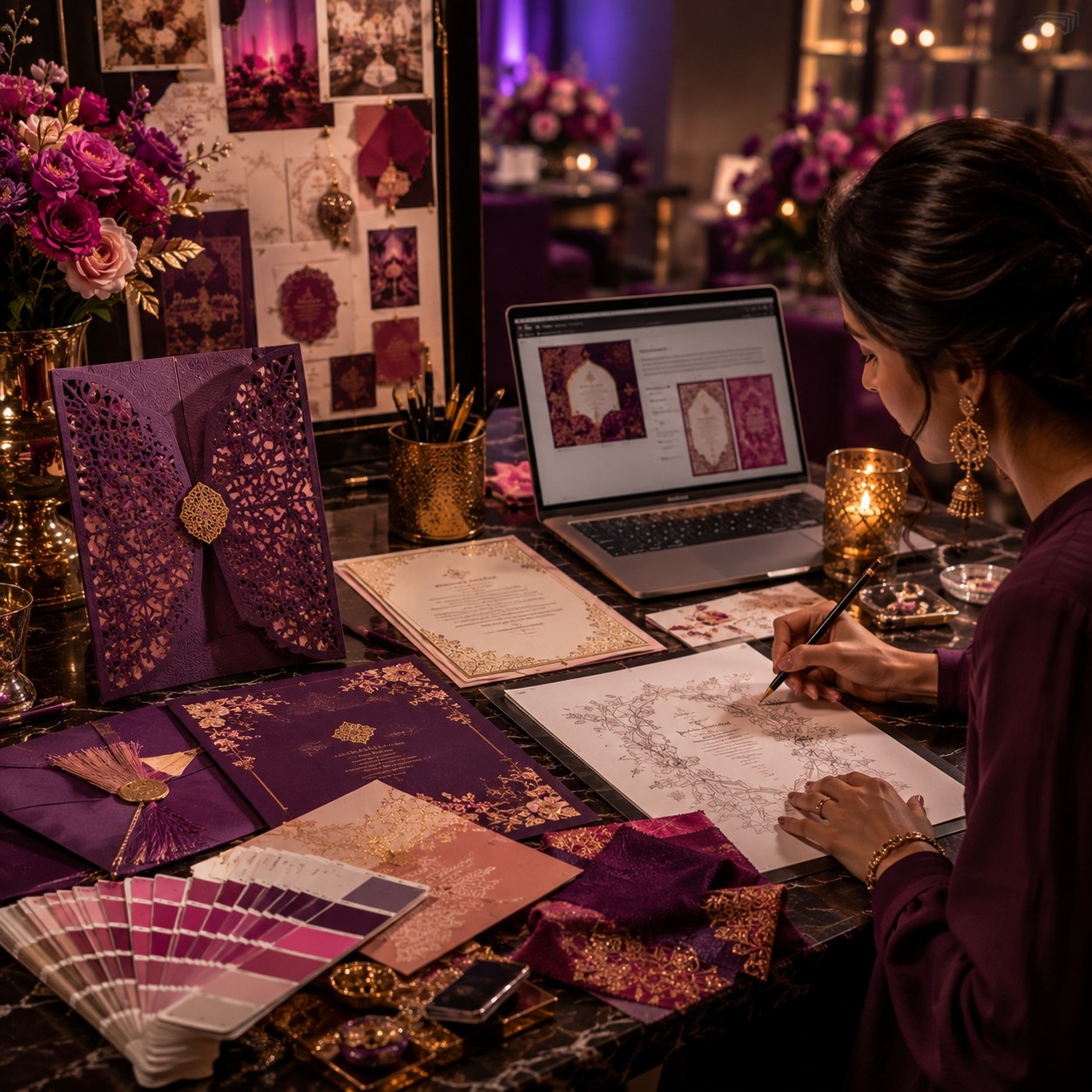
Wedding Card Designers
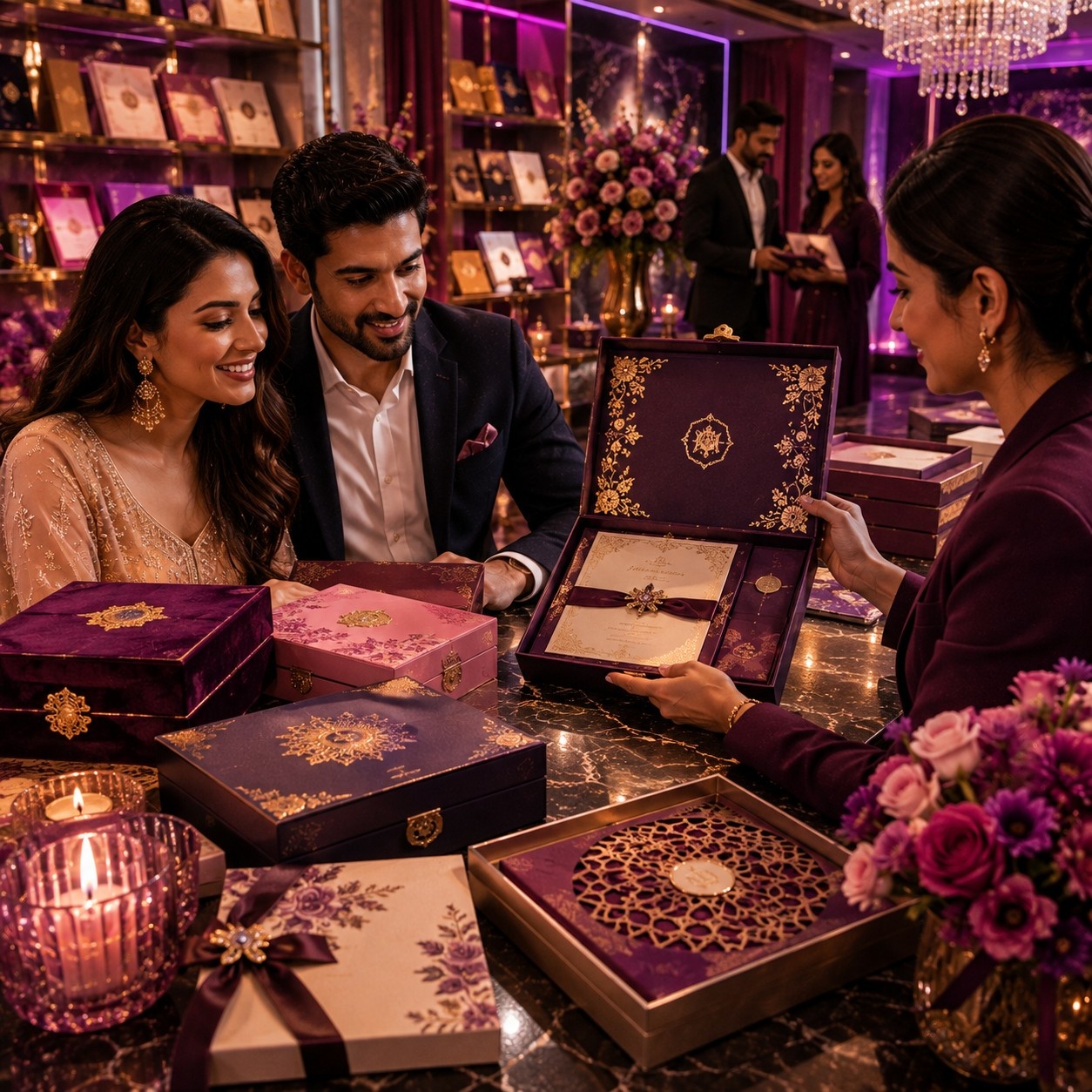
Wedding card designers create elegant custom invitations and printed stationery for Hindu weddings, receptions and engagements, reflecting your celebration style.
Explore Invitation & Stationery Experiences
Explore Other Experiences


Explore by Occasion
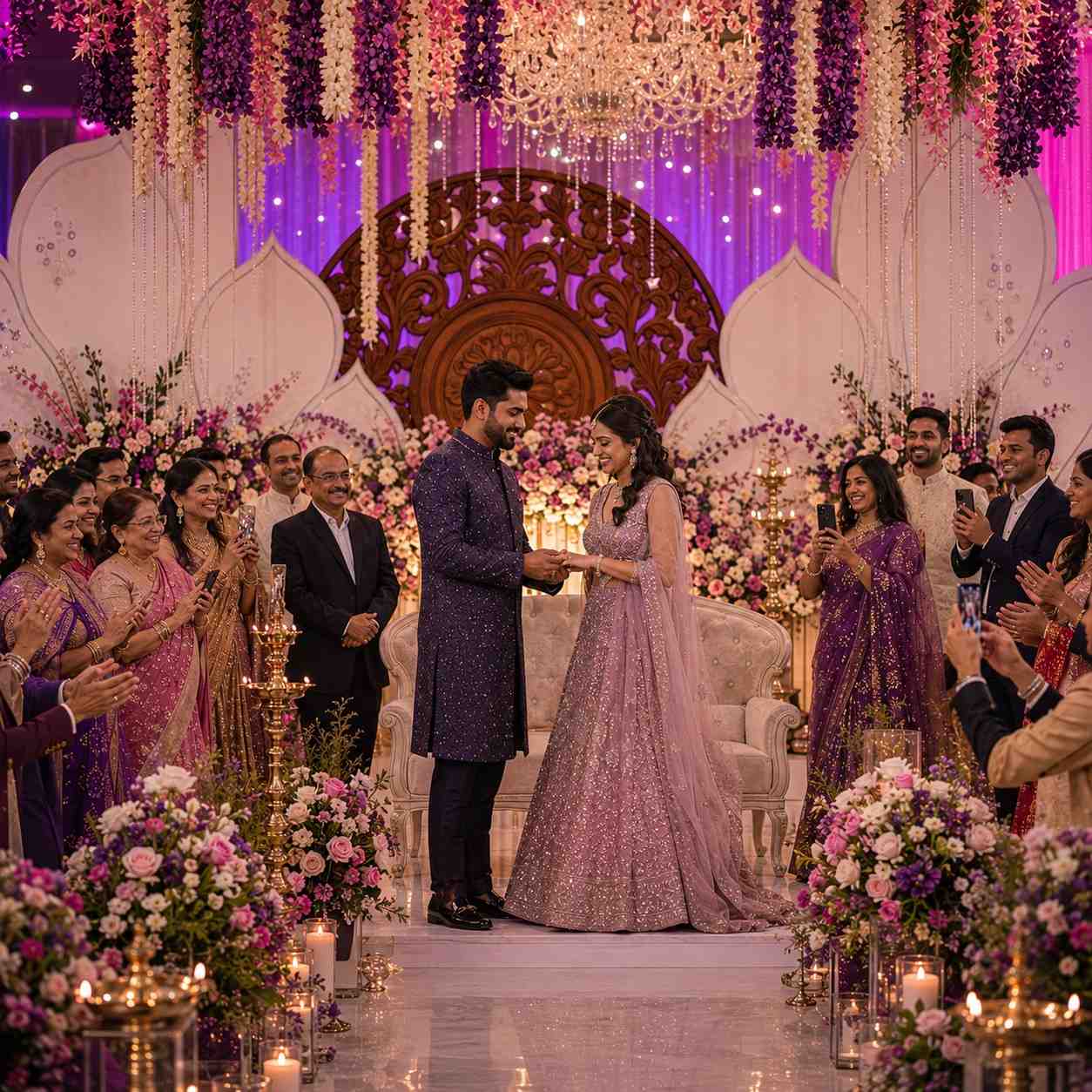

Wedding Card Designers for Custom Hindu Wedding, Reception & Engagement Invitations
◆Wedding invitations are much more than printed announcements. They introduce the celebration, communicate important details and give guests their first impression of the occasion. Professional wedding card designers combine creativity, printing expertise and cultural understanding to create invitations that feel personal and memorable.
From traditional Hindu wedding ceremonies to elegant receptions and intimate engagement celebrations, every event has its own character. A carefully designed invitation can reflect that character through colours, patterns, typography, illustrations and premium finishes. Custom wedding stationery also allows couples and families to present their event details in a polished and organised way.
The Role of Wedding Card Designers
Wedding card designers understand that an invitation needs to balance visual appeal with practical information. Names, dates, timings, venues and ceremony details must be presented clearly without compromising the overall design.
A professional designer begins by understanding the celebration, preferred style and cultural requirements. This helps establish the right visual direction before the card moves into production.
Designers can create everything from traditional printed invitations to contemporary stationery with modern layouts. Their expertise allows couples to explore different possibilities while maintaining consistency throughout the invitation suite.
Custom Wedding Invitations
Customisation is one of the most important benefits of working with professional wedding card designers. Instead of selecting a generic template, couples can create stationery that reflects their personality and celebration.
Custom wedding cards can include personalised names, monograms, illustrations, family details and meaningful motifs. Colour combinations can also be selected to complement the wedding décor.
For example, rich reds, maroons, golds and deep greens may complement a traditional celebration, while pastel shades and minimal typography can create a contemporary appearance.
Hindu Wedding Invitations
Hindu weddings often involve several ceremonies, making invitation design particularly important. A single wedding may include events such as haldi, mehndi, sangeet, wedding ceremonies and reception functions.
Hindu wedding invitations can incorporate traditional motifs, cultural artwork and symbolic elements while maintaining a refined presentation. Designers can organise multiple event details through inserts or carefully structured layouts.
Traditional patterns, floral elements, mandala-inspired artwork and heritage-inspired illustrations can add cultural character without making the invitation difficult to read.
Reception Invitation Designs
Reception celebrations often have a different visual identity from the main wedding ceremony. Couples may prefer a sophisticated, modern or glamorous invitation style for the reception.
Reception stationery can feature elegant typography, metallic accents, minimalist layouts or contemporary illustrations. The design can also coordinate with the reception décor, venue and overall event theme.
For larger celebrations, additional inserts can provide information about the venue, dress code, parking arrangements or other guest requirements.
Engagement Invitation Cards
Engagement celebrations are an opportunity to introduce the couple's journey before the wedding. The invitation can therefore have a lighter, romantic and contemporary feel.
Engagement invitation designs may feature floral illustrations, personalised monograms, photographs or elegant typography. The style can range from intimate and understated to luxurious and elaborate.
A carefully designed engagement invitation creates anticipation while providing guests with all the essential event information.
Traditional and Modern Design Styles
Wedding stationery is available in a wide variety of styles. Traditional designs remain popular because they celebrate cultural heritage and family traditions.
Modern designs, meanwhile, focus on clean layouts, sophisticated typography and restrained decoration. Some couples choose a combination of both approaches, creating invitations that preserve traditional elements while presenting them through a contemporary design.
The choice depends on the personality of the couple, the type of ceremony and the overall theme of the celebration.
Premium Paper and Printing
The quality of paper significantly influences the appearance and feel of an invitation. Thick cardstock, textured paper, handmade sheets and premium finishes can give wedding stationery a more luxurious character.
Different printing methods can also create distinct results. Digital printing works well for detailed designs and personalised content, while foil stamping can add metallic highlights. Embossing and debossing create tactile elements that make selected details stand out.
Special finishes should be chosen according to the design rather than added simply for decoration. A balanced combination creates an elegant and cohesive result.
Complete Wedding Stationery
Wedding card designers can also create coordinated stationery beyond the main invitation. This helps maintain a consistent visual identity throughout the event.
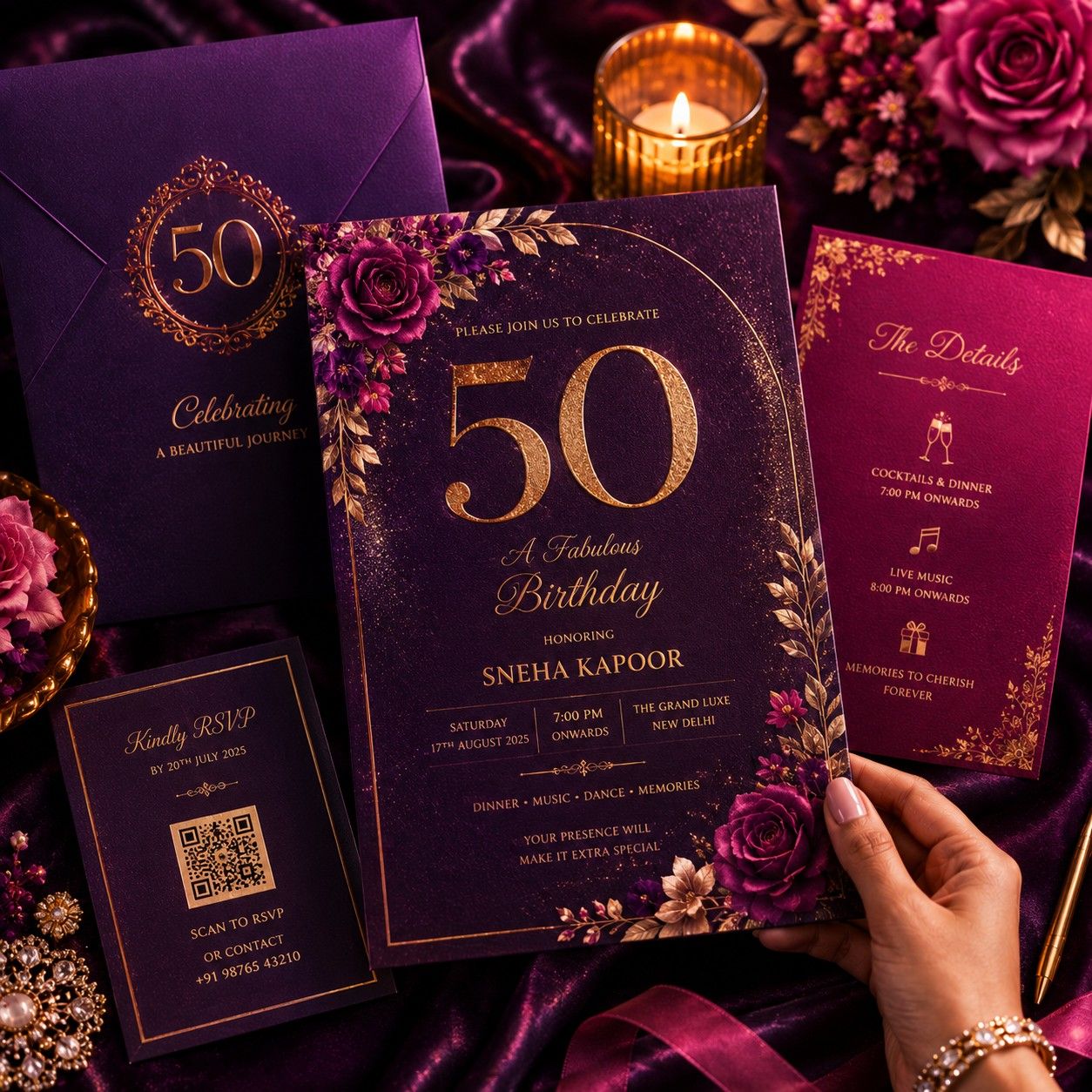
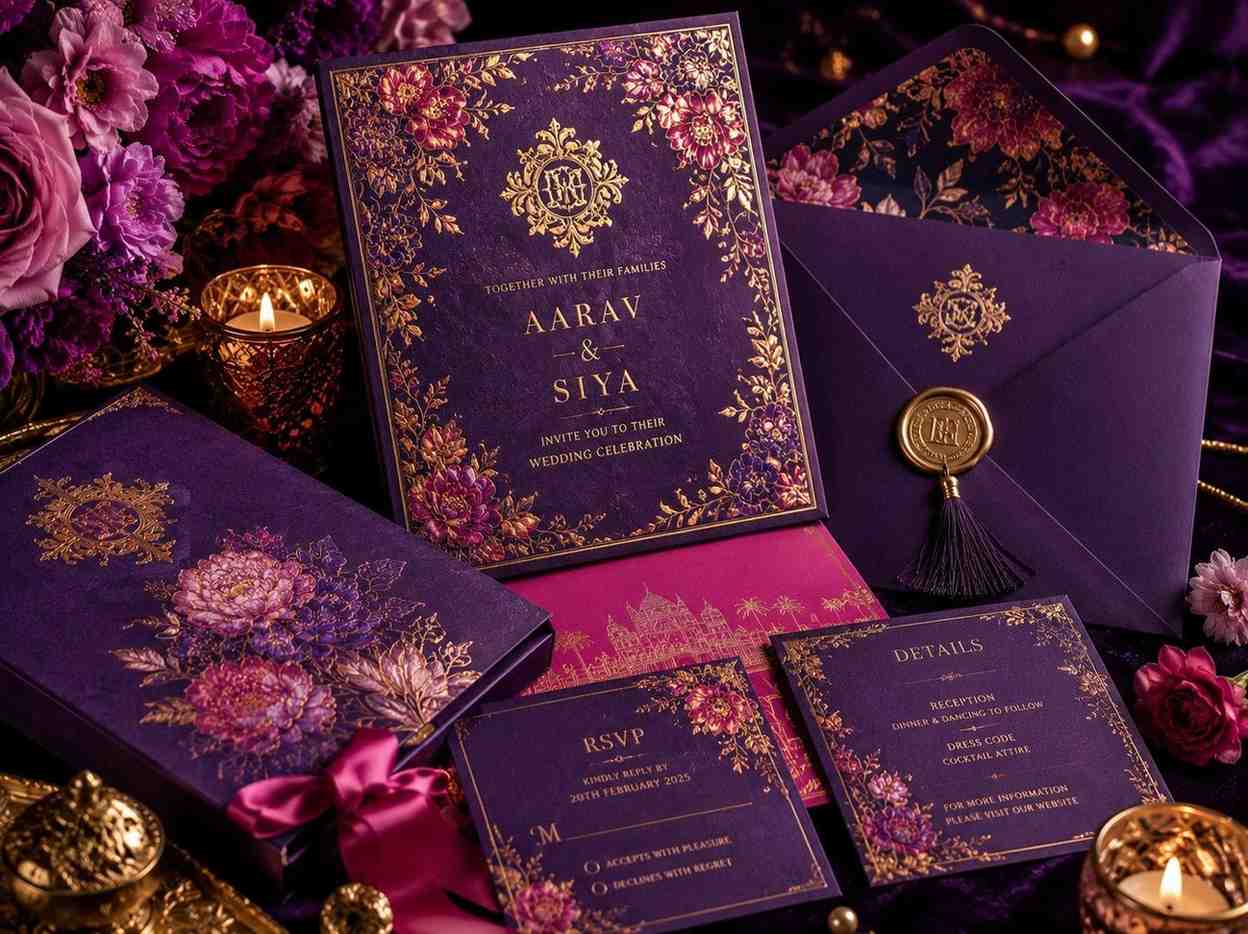
A stationery suite may include RSVP cards, information inserts, envelope designs, thank-you cards, programme cards and reception stationery. Matching elements create a polished presentation from the moment guests receive the invitation.
For destination weddings or multi-day celebrations, additional inserts can provide travel information, accommodation details and event schedules.
Personalised Cultural Details
Indian weddings often involve family traditions and cultural elements that make each celebration unique. Custom invitations provide an opportunity to incorporate these details thoughtfully.
Family names, traditional greetings, religious motifs and ceremony descriptions can be included according to the couple's preferences. Designers can also adapt artwork and layouts to reflect regional traditions.
The key is to ensure that cultural elements complement the design rather than overwhelming the invitation. Professional layout and spacing help maintain both readability and elegance.
Choosing the Right Design
Selecting an invitation design should begin with the overall event vision. Consider the venue, décor, colour palette, ceremony style and level of formality.
A grand traditional wedding may suit an ornate invitation, while a modern city reception may work better with a minimalist design. Engagement celebrations often allow greater freedom to experiment with colour and contemporary layouts.
It is also important to consider the guest list. Invitations for close family and formal events may require different levels of detail from those used for casual celebrations.
Importance of Proofing
Proofing is an essential part of the invitation process. Even a beautifully designed card can create problems if names, dates, times or venue information contain errors.
Before printing, all details should be checked carefully. This includes spelling, contact information, ceremony timings and addresses.
A final proof should be reviewed before production begins. Careful checking helps avoid costly reprints and ensures guests receive accurate information.
Packaging and Presentation
The invitation experience begins before the card is opened. Envelopes and packaging can therefore play an important role in creating a memorable presentation.
Custom envelopes, liners, ribbons, seals and decorative elements can complement the main invitation. For premium stationery, presentation boxes or layered packaging may also be considered.
The packaging should protect the invitation while reinforcing the visual identity established by the design.
Planning the Production Process
Custom stationery requires adequate planning, particularly when a large quantity is needed. The process generally includes design development, content confirmation, proofing, printing, finishing and packaging.
Starting early provides sufficient time for revisions and production. This is especially important for weddings with multiple functions or complex invitation sets.
Quantity should also be confirmed carefully. Ordering the correct number of invitations, along with a small number of spares, helps avoid unnecessary last-minute printing.
Sustainable Wedding Stationery
Sustainability is becoming increasingly relevant in modern wedding planning. Couples can explore recycled paper, responsibly sourced materials and environmentally conscious printing options.
Minimal packaging can also reduce unnecessary waste. Seed paper and other plantable stationery options provide another alternative for couples seeking a more sustainable invitation experience.
Eco-conscious choices do not necessarily mean sacrificing elegance. Thoughtful material selection can create beautiful stationery while reducing environmental impact.
Creating a Memorable First Impression
A wedding invitation is often the first physical representation of the celebration that guests receive. It therefore has the power to establish expectations and build excitement.
Professional wedding card designers bring together creative direction, cultural details and quality printing to create an invitation that feels connected to the event.
Whether the style is traditional, contemporary, luxurious or minimalist, the most successful invitations are those that feel authentic to the couple and the celebration.
A Personal Touch for Every Celebration
Every wedding, reception and engagement has its own story. Custom stationery provides an opportunity to communicate that story before the celebration begins.
Through thoughtful design, personalised details and carefully selected materials, invitations can become meaningful keepsakes rather than disposable pieces of paper.
Choosing experienced wedding card designers allows couples and families to turn their ideas into polished stationery that welcomes guests and creates anticipation for the occasion.
Frequently Asked Questions
1. What do wedding card designers offer?
Wedding card designers create customised invitation concepts, layouts and printed stationery based on the event style and requirements.
2. Can Hindu wedding invitations include multiple ceremonies?
Yes. Separate inserts or organised layouts can include details for mehndi, haldi, sangeet, wedding ceremonies and reception events.
3. Can wedding invitations be completely customised?
Yes. Names, colours, typography, illustrations, motifs, paper and finishing options can be customised.
4. What paper is best for premium wedding cards?
Thick cardstock, textured paper and speciality papers are popular choices for premium wedding stationery.
5. Can reception and engagement cards have different designs?
Yes. Each event can have its own design while maintaining selected elements of a coordinated stationery theme.
6. How early should wedding invitations be designed?
It is advisable to begin several weeks before printing, allowing sufficient time for design, revisions, proofing and production.
7. Can wedding card designers create matching envelopes?
Yes. Matching envelopes, liners, inserts and other stationery can be designed to complement the main invitation.
8. Are eco-friendly wedding cards available?
Yes. Recycled paper, sustainable materials, minimal packaging and plantable stationery are among the available options.
9. Can cultural motifs be included in the invitation?
Yes. Traditional motifs, patterns and personalised cultural details can be incorporated according to the celebration.
10. Why choose custom wedding stationery?
Custom stationery provides greater control over design, presentation and personalisation, helping the invitation reflect the character of the celebration.