
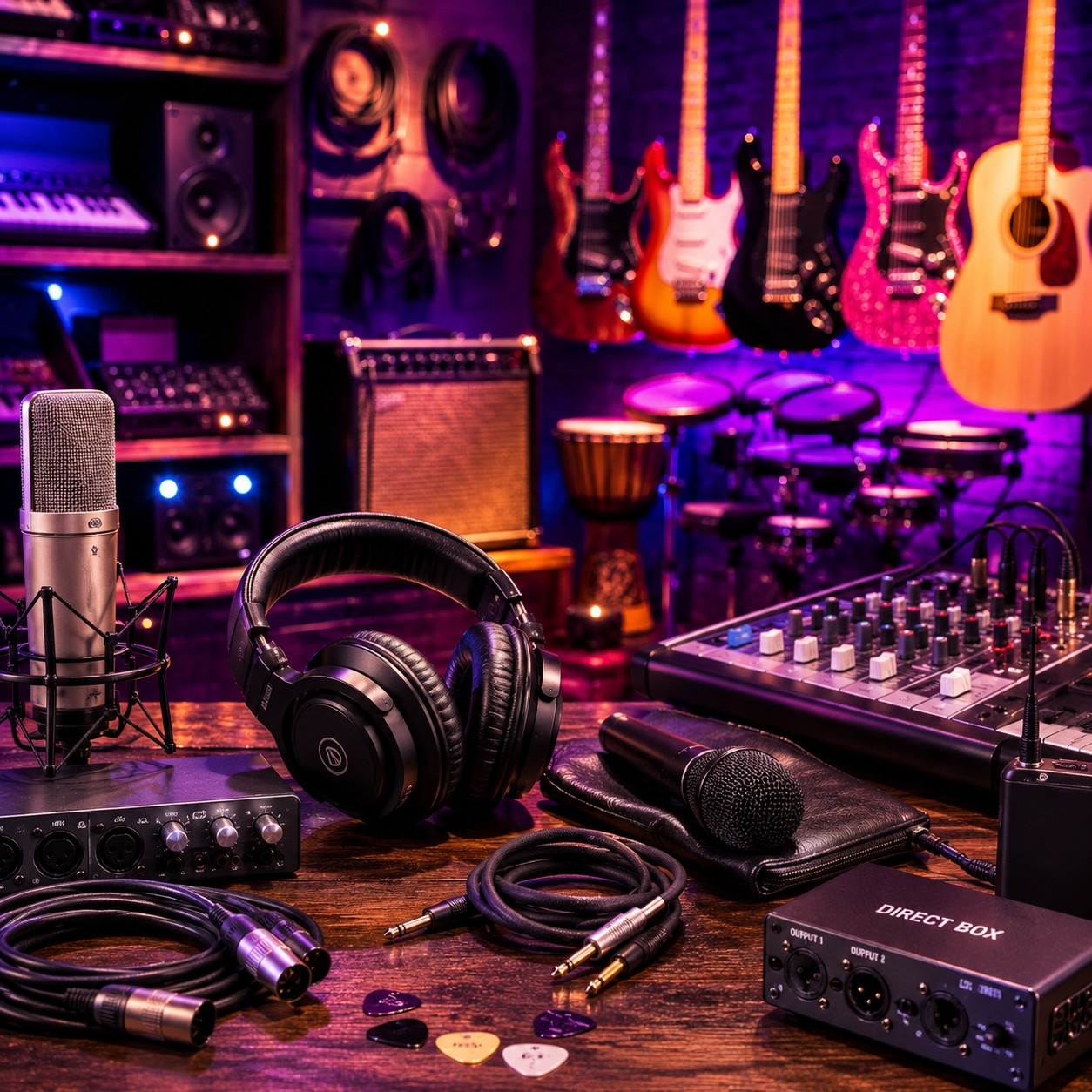
Musical Instrument Accessory Equipment Kits
Musical instrument accessory equipment kits provide microphones, stands and cables for bands, stage acts, live performances, rehearsals and studio use.
Explore Related Audio & Lighting Experiences

Explore Other Experiences











Explore by Occasion





Musical Instrument Accessory Equipment Kits
◆Musical instrument accessory equipment kits provide the supporting equipment needed to connect, position and operate instruments and audio systems. Microphones, stands and cables are essential components for many live music, stage and studio setups.
These accessories can support bands, solo performers, stage acts, rehearsals, cultural programmes, concerts and recording environments. A well-planned accessory kit can help performers and technicians organise microphones, instrument connections and equipment placement efficiently.
The exact equipment requirements depend on the number of performers, instruments, venue, sound system and intended use.
Musical Instrument Accessories
Musical instrument accessories provide practical support for musicians and audio setups.
They can include microphones, stands, cables, pedals, adapters and other supporting equipment.
The selection depends on the instruments and performance requirements.
Equipment Kits
Equipment kits can combine commonly required accessories into one rental package.
A kit can be prepared for a solo performer, band, stage programme or studio setup.
Grouping accessories can make event preparation and equipment management more convenient.
Microphone Rental
Microphone rental provides microphones for vocals, instruments, speeches and stage performances.
Different microphone types can be selected according to the sound source.
The microphones should be compatible with the available audio system.
Microphone Stands
Microphone stands provide stable positioning for microphones during performances and recording.
Floor stands, boom stands and other configurations can be selected according to the application.
Proper positioning can help performers maintain a consistent microphone distance.
Audio Cables
Audio cables connect microphones, instruments and other equipment to the sound system.
Different cable types and lengths may be required depending on the setup.
Cables should be checked for compatibility and condition before use.
Band Equipment Accessories
Bands may require multiple microphones, stands and cables for their instruments and vocals.
The accessory package can be planned around the band's complete setup.
Keeping a cable and accessory checklist can help reduce missing equipment during setup.
Stage Act Equipment
Stage acts can require microphones, stands and cables for performers and supporting equipment.
The setup can be adapted for singers, instrumentalists, presenters and mixed performances.
Stage layout should be considered when selecting cable lengths and stand positions.
Studio Equipment Accessories
Studio use can require microphones, microphone stands and audio cables for recording.
The accessories should be compatible with the studio's microphones, interfaces and other equipment.
Careful handling and storage can help protect the equipment.
Live Band Accessories
Live bands often require multiple accessory types across vocals and instruments.
Microphone stands can support singers and instrument microphones, while cables connect equipment to the audio system.
The exact quantity depends on the band's lineup.
Stage Microphone Rental
Stage microphone rental can support singers, presenters and performers.
Handheld microphones can be suitable for performers who need mobility.
Fixed microphone positions can use suitable stands where required.
Vocal Microphone Rental
Vocal microphones are designed for singers and spoken vocal performances.
A suitable microphone can be selected according to the performance and sound system.
Multiple vocal microphones may be required for bands and group performances.
Instrument Microphone Rental
Instrument microphones can be used to capture sound from acoustic instruments, amplifiers and percussion.
The microphone type should be selected according to the instrument and performance environment.
Placement can affect the resulting sound and should be tested during sound check.
Microphone Stand Rental
Microphone stand rental provides stable support for microphones without requiring permanent ownership.
Boom stands can provide additional positioning flexibility.
The stand should be suitable for the microphone and intended placement.
Boom Stand Rental
Boom stands allow microphones to be positioned away from the main stand base.
They can be useful for instruments, vocals and other stage applications.
The boom should be adjusted securely before use.
Straight Microphone Stands
Straight stands provide a simple vertical microphone support.
They can be useful for vocal microphones, announcements and fixed stage positions.
The stand height can be adjusted according to the performer.
Instrument Stands
Instrument stands provide a safe and convenient place to keep instruments between performances.
They can be used for guitars, keyboards and other suitable instruments.
The stand should be appropriate for the instrument being supported.
Guitar Stand Rental
Guitar stands provide temporary storage for acoustic and electric guitars.
They can be placed backstage or on suitable stage areas.
The stand should provide stable support and be positioned away from high-traffic areas.
Keyboard Stand Rental
Keyboard stands support keyboards at a suitable playing height.
They can be used during live performances, rehearsals and stage programmes.
The stand should be stable and suitable for the keyboard's size and weight.
Drum Accessories
Drum setups can require additional accessories such as microphone stands, cables and supporting hardware.
The accessory requirements depend on the drum configuration.
A complete equipment checklist can help ensure the setup is ready.
Instrument Cables
Instrument cables connect instruments such as electric guitars and keyboards to compatible audio equipment.
The required cable type depends on the instrument and connection system.
Cable length should be sufficient for the stage layout without creating unnecessary excess.
XLR Cable Rental
XLR cables are commonly used for connecting microphones and compatible audio equipment.
Different lengths can be selected according to stage and studio requirements.
Cables should be checked for secure connectors and proper operation.
Audio Cable Kits
Audio cable kits can include multiple cable types and lengths for a complete event setup.
A kit can be organised around the number of microphones and instruments.
Labelling cables can make setup and dismantling easier.
Cable Management
Cable management helps keep stage and studio areas organised.
Cables can be routed away from walkways and secured appropriately.
Good cable organisation can reduce trip hazards and simplify troubleshooting.
Stage Cable Kits
Stage cable kits provide cables required for microphones and instruments during live performances.
The kit can be sized according to the stage layout.
Extra suitable cables can be kept available for replacement or extension requirements.
Studio Cable Kits
Studio cable kits can provide the connections needed between microphones, instruments, interfaces and other equipment.
Different cable lengths can support different recording positions.
Proper storage can help prevent tangling and connector damage.
Band Microphone Kits
Band microphone kits can combine microphones and stands for vocals and instruments.
The number of microphones depends on the band's instrumentation.
Cables can be added to complete the connection between the microphones and mixing system.
Stage Accessory Kits
Stage accessory kits can combine microphones, stands, cables and other basic audio accessories.
The package can support temporary stage setups.
The kit can be adapted according to the programme requirements.
Live Performance Accessories
Live performances can require a range of accessories beyond the primary instruments.
Microphones, stands, cables and supporting equipment can help connect the performers to the sound system.
The accessories should be checked during setup and sound check.
Concert Accessories
Concerts may require larger quantities of microphones, stands and cables.
The accessory list can be planned according to the number of performers and instruments.
Large productions may require dedicated technical teams for equipment management.
Rehearsal Equipment Kits
Rehearsal kits can provide musicians with temporary access to essential accessories.
Microphones, stands and cables can support band practice sessions.
The kit can be scaled according to the rehearsal setup.
Music Program Accessories
Music programmes can use accessory kits for school, college, cultural and community performances.
The equipment can support both solo and group performances.
The kit should be selected according to the programme's instruments and stage layout.
Cultural Program Equipment
Cultural programmes may combine vocals, traditional instruments and modern instruments.
Microphone and cable requirements can vary according to the performance.
The accessory setup can be coordinated with the event's sound reinforcement system.
Wedding Music Accessories
Wedding performances can require microphones, stands and cables for live musicians.
The accessories can support acoustic performances, bands and ceremonial music.
The setup can be adjusted for different wedding venues and programme segments.
Party Music Accessories
Parties with live musicians can use accessory kits for vocals and instruments.
Compact kits may suit smaller performances.
Larger celebrations can require additional microphones and cables.
Corporate Event Audio Accessories
Corporate events can use microphones, stands and cables for presentations and entertainment.
The accessories can be integrated with the venue's sound system.
Equipment requirements depend on the number of presenters and performers.
Conference Microphone Accessories
Conferences may require microphones and stands for presenters and panel discussions.
Cables can connect microphones to the main audio system.
The arrangement should allow presenters to use the microphones comfortably.
Stage Presentation Accessories
Stage presentations can require microphones, stands and connection cables.
The equipment can support speeches, announcements and demonstrations.
A pre-event test can confirm that all connections work correctly.
Recording Microphone Accessories
Recording setups can require microphone stands, cables and compatible accessories.
The equipment should be suitable for the microphone and recording interface.
Positioning and cable routing can affect the practicality of the recording setup.
Vocal Performance Accessories
Vocal performances can use handheld or stand-mounted microphones.
Microphone stands can be useful for singers who need fixed positioning.
The microphone should be connected securely and checked before performance.
Instrument Recording Accessories
Instrument recording can require microphones positioned around acoustic instruments or amplifiers.
Suitable stands and cables provide the physical and electrical connections needed.
The exact setup depends on the instrument and recording method.
Studio Microphone Stands
Studio microphone stands provide stable positioning for recording microphones.
Heavy-duty or boom-style stands may be selected for particular recording arrangements.
The stand should be placed securely to avoid unwanted movement.
Studio Audio Cables
Studio audio cables connect microphones, instruments and recording equipment.
Cable selection depends on the connectors and equipment being used.
Proper cable storage can help maintain reliable connections.
Portable Microphone Kits
Portable microphone kits can provide a compact solution for temporary performances.
They can include microphones, stands and essential cables.
The kit can be useful for small events and mobile performers.
Event Audio Accessory Rental
Event audio accessory rental can provide supporting equipment for temporary sound systems.
The accessories can complement rented speakers, mixers and musical instruments.
The package can be selected according to the event's technical requirements.
Music Equipment Hire
Music equipment hire can provide individual accessories or complete accessory packages.
The rental period can be matched to rehearsals, performances or events.
Equipment availability should be confirmed according to the required dates.
Short-Term Accessory Rental
Short-term accessory rental can be useful for one-day performances and temporary programmes.
The equipment can be collected or delivered according to the rental arrangement.
All accessories should be checked before returning them.
Long-Term Accessory Rental
Longer rental periods can support extended productions, rehearsals or recurring performances.
The equipment requirements can be reviewed according to the duration.
Proper storage and handling remain important throughout the rental period.
Instrument Accessory Delivery
Rental services may provide delivery of accessory kits to event venues.
The delivery schedule should allow sufficient time for setup and testing.
A complete inventory can be checked upon arrival.
Accessory Equipment Setup
Equipment setup involves positioning microphones, stands and cables according to the stage or studio layout.
Connections should be checked before performers begin.
Cable routing should be organised to keep the working area clear.
Sound Check Accessories
Microphones and instrument connections should be tested during the sound check.
Stand positioning can be adjusted for performers.
Cable faults or connection issues can be identified before the programme starts.
Technical Support
Technical support can assist with accessory setup and basic troubleshooting.
This can be particularly useful for larger stage productions with multiple microphones and instruments.
The level of support depends on the rental package and event requirements.
Equipment Checklist
A checklist can include microphones, stands, cables, adapters and other required accessories.
The list should correspond to the number of performers and instruments.
Checking the inventory before and after the event can help prevent missing equipment.
Choosing an Accessory Equipment Kit
The right kit depends on the number of performers, instruments, venue, sound system and intended use.
Microphone quantity, stand types, cable lengths and connector compatibility should all be considered.
A detailed equipment list can help ensure that the complete setup is covered.
Conclusion
Musical instrument accessory equipment kits provide the essential supporting components needed for bands, stage acts, live performances, rehearsals and studio use. Microphones, stands and cables help connect, position and operate instruments and audio systems effectively.
From compact kits for solo performers to larger packages for bands, concerts and cultural programmes, accessories can be selected according to the performance requirements. Proper equipment planning, compatibility checks, cable management and pre-event testing can help create an organised and reliable music setup.
Frequently Asked Questions
1. What is included in a musical instrument accessory equipment kit?
Depending on the package, kits can include microphones, microphone stands, instrument stands, audio cables and other supporting accessories.
2. Can microphones be rented for live bands?
Yes. Microphones can be rented for vocals, instruments and other live band requirements.
3. Are microphone stands available for rental?
Yes. Straight stands, boom stands and other suitable microphone supports can be included depending on requirements.
4. What are audio cables used for?
Audio cables connect microphones, instruments and compatible audio equipment to the sound system or recording equipment.
5. Can accessory kits be used for stage performances?
Yes. Microphones, stands and cables are commonly used as supporting equipment for stage acts and live performances.
6. Are these kits suitable for studio use?
Yes. Suitable microphones, stands and cables can support recording setups when they are compatible with the studio equipment.
7. Can accessory kits be used for cultural programs?
Yes. The equipment can support vocals, traditional instruments and other musical performances in cultural programmes.
8. How many microphones does a band need?
The number depends on the band's lineup, instruments, vocals and sound reinforcement requirements.
9. Why is cable management important?
Organised cable routing can help keep the stage or studio clear, simplify setup and reduce potential trip hazards.
10. What should be checked before renting an accessory kit?
Check microphone types, stand requirements, cable lengths, connector compatibility, quantities, equipment condition, delivery and technical support.