
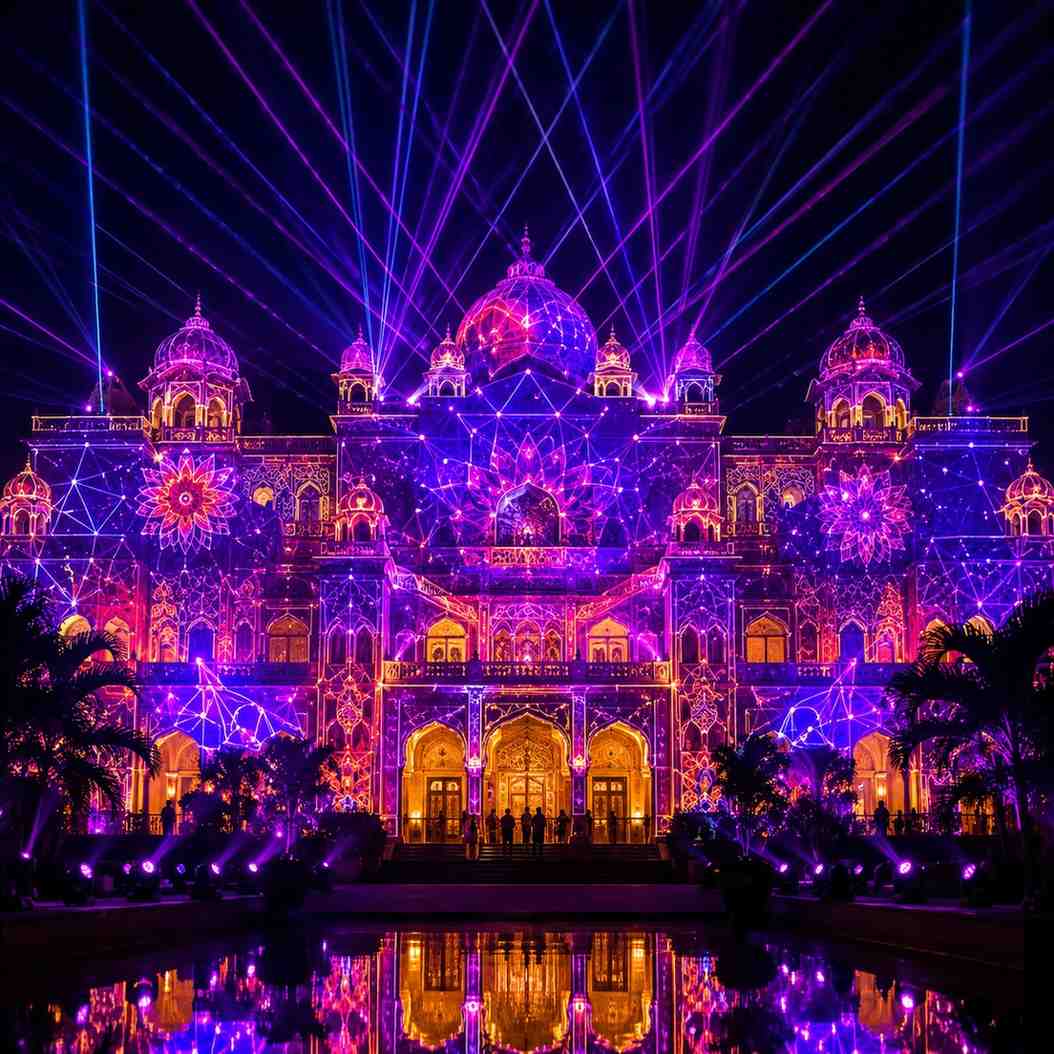
Laser Mapping
Transform buildings, stages, and event spaces with Laser Mapping & Architectural Visual Projection featuring immersive 3D visuals, animated graphics, synchronized effects, and projection experiences designed for weddings, festivals, concerts, brand launches, and large-scale celebrations.
Explore Related Audio & Lighting Experiences
Explore Other Experiences

Explore by Occasion
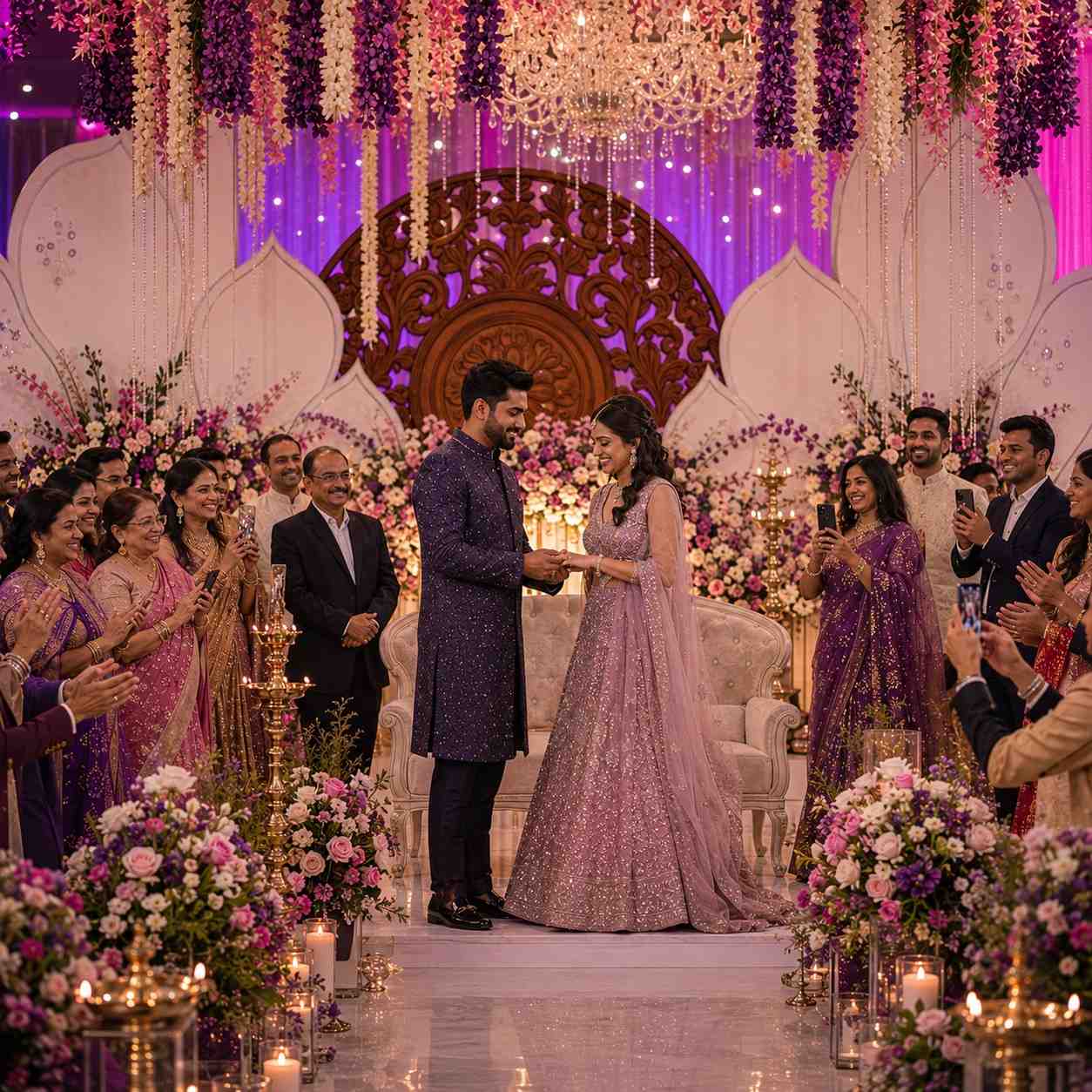
Laser Mapping Architectural Visual Projection Services - 3D Video Mapping, Building Projection - Festivals, Launches
◆Laser Mapping Architectural Visual Projection Services create immersive visual experiences by projecting animated graphics, 3D content, lighting effects, and digital storytelling onto buildings, structures, stages, monuments, and architectural surfaces. Combining creative design with advanced projection technology, these experiences can transform ordinary spaces into dynamic visual attractions for festivals, launches, weddings, concerts, cultural celebrations, corporate events, and large-scale public gatherings.
3D Video Mapping is a specialised visual technique that uses the shape, dimensions, and architectural features of a surface to create the illusion that buildings and structures are moving, transforming, expanding, collapsing, or changing appearance. Carefully aligned projection content interacts with windows, columns, arches, façades, and other structural elements to create immersive visual sequences.
Building Projection is particularly effective for large-scale celebrations because it can turn prominent architecture into a storytelling canvas. Historic buildings, hotels, convention centres, temples, monuments, commercial structures, and purpose-built event installations can become part of the entertainment experience.
Architectural Visual Projection can be used to introduce brands, celebrate milestones, tell cultural stories, reveal new products, or create dramatic event openings. Content can be designed around the identity, theme, location, and objectives of the celebration.
Festivals can use projection mapping to create spectacular evening experiences. Cultural motifs, animated artwork, traditional stories, festival symbols, music-synchronised visuals, and immersive animations can be projected onto buildings and public structures.
Product Launches can use architectural projection as a high-impact reveal technique. Product imagery, brand stories, animations, countdown sequences, logos, and launch messages can be incorporated into a coordinated visual show.
Corporate events can feature Building Projection for annual celebrations, conferences, award nights, brand anniversaries, leadership events, and milestone celebrations. Corporate branding can be integrated into the projection content without overwhelming the overall experience.
Wedding celebrations can incorporate architectural projection into reception entrances, sangeet stages, wedding venues, palace façades, heritage properties, and destination wedding settings. Couple names, monograms, photographs, animated patterns, romantic visuals, and customised stories can be displayed.
Destination weddings can benefit from projection mapping because historic venues, palaces, resorts, forts, and large façades can become dramatic backdrops for evening celebrations.
Concerts and music festivals can combine projection mapping with live performances. Visual content can be synchronised with music, lighting, stage effects, and performer movements to create a coordinated entertainment experience.
Cultural programs can use architectural projection to showcase heritage stories, historical narratives, traditional art, regional identities, and important cultural moments through animated visuals.
Heritage Projection Shows can carefully incorporate architectural details into the storytelling. Historic structures can become part of a visual narrative while respecting venue requirements and conservation guidelines.
Laser Mapping can complement video projection with beams, patterns, aerial effects, and lighting sequences. The exact combination depends on the venue, equipment, environmental conditions, and event requirements.
Large-scale projection requires high-brightness projectors suitable for the size, surface, ambient light, and viewing distance of the venue. Multiple projectors may be blended together to cover large façades or complex structures.
Projection alignment is a critical part of the process. Specialist teams map the building or surface and calibrate the projected content so that animations accurately follow architectural features.
3D content creation is another important component. Designers create animations specifically for the target structure rather than simply displaying standard video content on a flat screen.
Content can include architectural transformations, animated textures, particle effects, logo reveals, digital fireworks, abstract visuals, cultural artwork, product animations, storytelling sequences, and music-synchronised graphics.
Custom Visual Shows can be developed according to the event theme. A creative production team can plan the narrative, storyboard, animation style, soundtrack, transitions, and final projection sequence.
Brand Projection Experiences can incorporate logos, product imagery, brand colours, campaign messages, launch announcements, and visual identities.
Interactive Projection can add another layer of engagement where technology and venue conditions support audience interaction. Motion-responsive visuals, interactive surfaces, or triggered content can be incorporated into suitable installations.
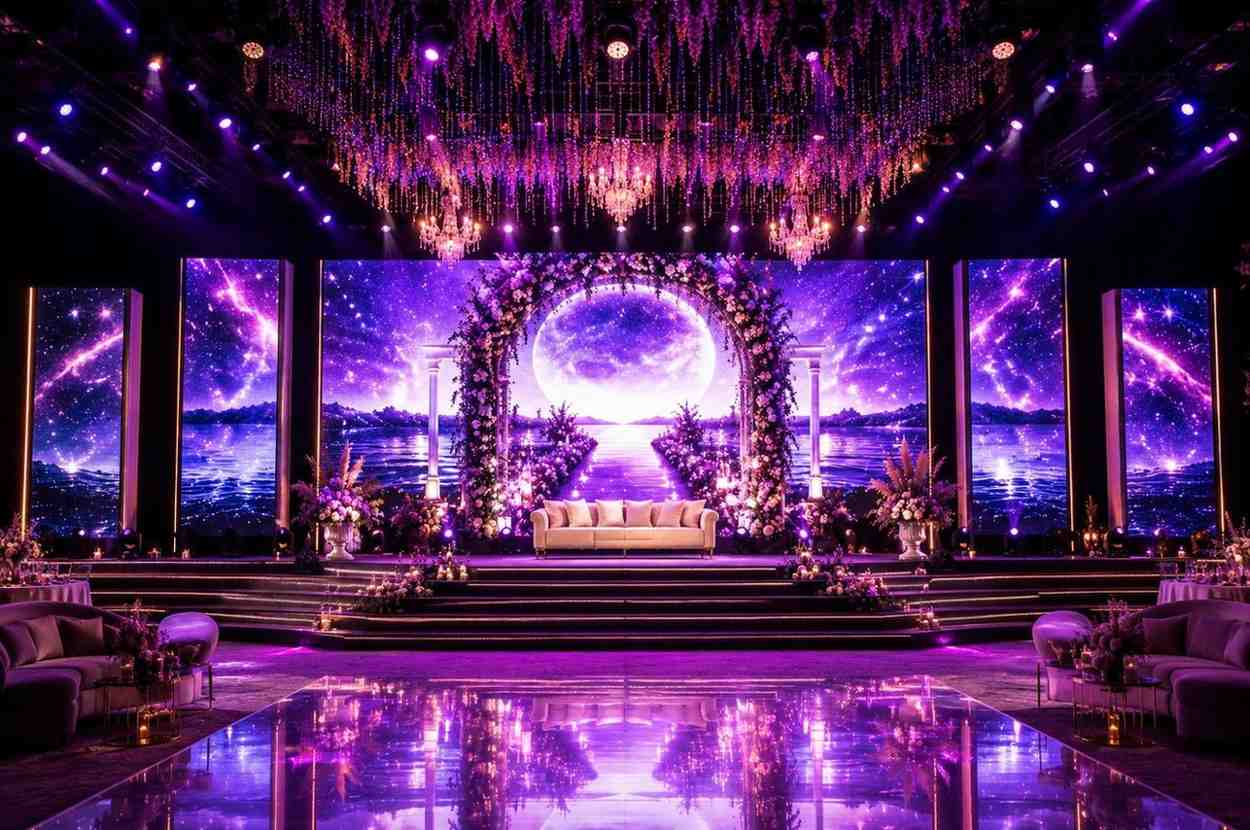
Projection mapping can also be used for stage design. Instead of relying entirely on physical scenery, digital content can transform a stage background throughout different segments of an event.
Architectural projection is particularly effective for opening and closing ceremonies. A countdown followed by a dramatic transformation sequence can create a memorable event moment.
Award ceremonies can use Building Projection or stage mapping to introduce nominees, winners, sponsors, milestones, and celebratory visuals.
Exhibitions and trade shows can use projection mapping to attract visitors to booths, product displays, installations, and architectural spaces.
Retail and brand activations can transform storefronts, façades, pop-up structures, and temporary installations into attention-grabbing visual experiences.
Public celebrations can use Building Projection for city festivals, national celebrations, cultural events, tourism campaigns, and community programs where permitted by local authorities and venue owners.
Lighting and projection design should consider the surrounding environment. Ambient light, nearby buildings, reflective surfaces, weather, viewing angles, and audience positioning can affect visual quality.
Outdoor projection requires careful planning for weather conditions, equipment protection, power supply, cable management, and technical safety.
Indoor installations require consideration of ceiling height, projection distance, room lighting, surface texture, audience movement, and equipment placement.
Power and infrastructure planning are essential for large-scale projection shows. Professional teams assess electrical capacity, backup power requirements, equipment locations, signal routing, and safety measures before installation.
Technical rehearsals allow teams to test projection alignment, content timing, brightness, sound synchronisation, equipment performance, and show cues before the audience arrives.
Onsite operators can manage the projection system during the event and respond to technical issues or changes in the show schedule.
Multiple projectors can be edge-blended to create a larger seamless image. This technique is useful for expansive façades and large architectural surfaces.
Projection surfaces influence the final visual quality. Light-coloured, relatively smooth surfaces generally provide clearer projection, while complex textures and highly reflective materials may require specialised planning.
Laser and projection equipment should be operated by trained professionals who understand applicable safety requirements, especially when lasers, elevated equipment, rigging, or large outdoor installations are involved.
Content rights and permissions should also be considered when using music, photographs, branded assets, artwork, historical imagery, or third-party visual content.
Venue permissions are particularly important for heritage buildings, public structures, commercial properties, and architectural landmarks. Organisers should obtain the required approvals before installation.
Budget planning should consider creative design, 3D mapping, animation production, equipment rental, projectors, media servers, technical crew, rigging, power, transport, setup, rehearsals, operation, and dismantling.
Large-scale projection shows generally require more advance preparation than standard event visuals because content must be designed and calibrated specifically for the target architecture.
For recurring festivals or annual celebrations, projection content can be developed as a reusable visual system with new sequences added for each edition.
Sustainable event production can be supported by using energy-efficient equipment, reusable infrastructure, digital content instead of physical scenery, and responsible transportation and power planning where practical.
Professional providers can manage the complete process from site survey and creative concept development to 3D mapping, content production, equipment setup, calibration, technical operation, live execution, and dismantling.
Event planners can coordinate projection mapping with stage design, Audio & Lighting, SFX, entertainment, branding, photography, videography, and overall event production.
In conclusion, Laser Mapping Architectural Visual Projection Services combine technology, architecture, storytelling, animation, and lighting to create extraordinary event environments. From 3D Video Mapping and Building Projection to festivals, product launches, weddings, concerts, cultural programs, corporate events, and public celebrations, architectural projection transforms physical spaces into immersive visual experiences.
FAQ Section
Q1: What are Laser Mapping Architectural Visual Projection Services?
These are specialised visual production services that use projection, laser effects, 3D animation, and architectural mapping to transform buildings, structures, stages, and surfaces into immersive visual displays.
Q2: What is 3D Video Mapping?
3D Video Mapping is a projection technique where specially created content is aligned with the shape and architectural features of a structure to create realistic visual transformations and effects.
Q3: Where can Building Projection be used?
Building Projection can be used on hotels, convention centres, heritage structures, commercial buildings, monuments, stage structures, event venues, and other suitable architectural surfaces.
Q4: Are projection mapping services suitable for festivals?
Yes. Festivals can use architectural projection for cultural storytelling, animated artwork, music-synchronised visuals, opening ceremonies, landmark displays, and immersive evening entertainment.
Q5: Can projection mapping be used for product launches?
Yes. Product Launches can incorporate countdowns, product animations, brand stories, logo reveals, promotional visuals, and dramatic launch sequences.
Q6: Can wedding venues use architectural projection?
Yes. Weddings can use projection mapping for palace façades, resort buildings, reception venues, sangeet stages, entrances, and customised couple-themed visual shows.
Q7: What equipment is required?
Depending on the project, equipment may include high-brightness projectors, media servers, lenses, playback systems, signal processors, rigging systems, lighting equipment, audio systems, and specialised laser equipment.
Q8: How is projection content created?
Creative teams typically conduct a site survey, study the architecture, create a digital map, develop storyboards and animations, produce the content, and calibrate it to the target structure before the live show.
Q9: Does the venue need special preparation?
Large installations may require suitable projection surfaces, power capacity, equipment locations, rigging points, access, cable routes, safety arrangements, and venue permissions.
Q10: How can Happiffie help arrange Architectural Visual Projection Services?
Happiffie helps event organisers, corporations, wedding planners, festival organisers, brands, and production teams discover experienced visual production professionals offering Laser Mapping, 3D Video Mapping, Building Projection, architectural projection shows, custom visual content, technical production, equipment setup, and complete projection mapping services.