
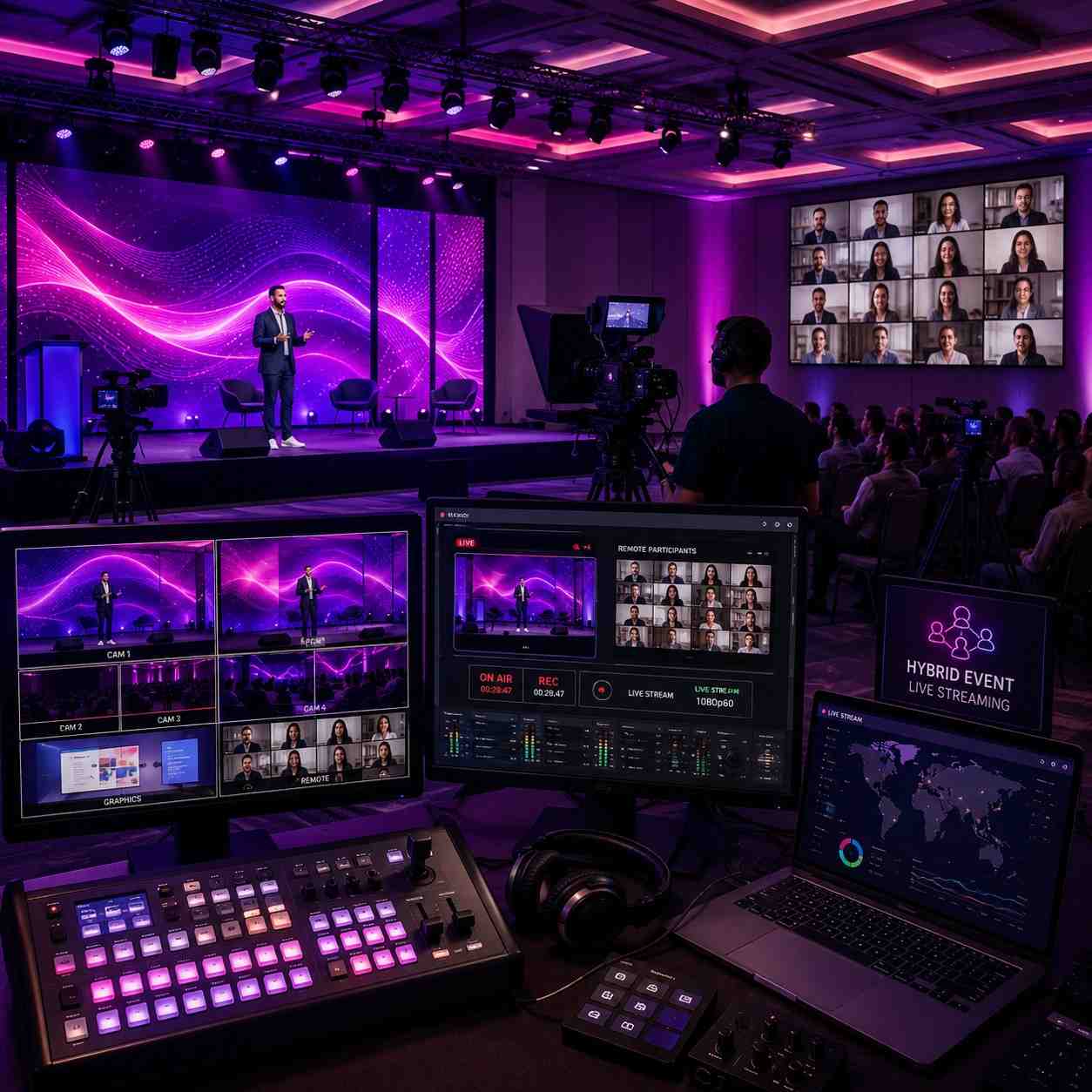
Hybrid Event Streaming Setup
Connect in-person and virtual audiences with Hybrid Function Broadcast Production Services featuring professional live streaming, multi-camera production, virtual event platforms, audience interaction, live switching, and integrated AV solutions for conferences, weddings, corporate events, launches, and celebrations.
Explore Related Audio & Lighting Experiences


Explore Other Experiences








Explore by Occasion
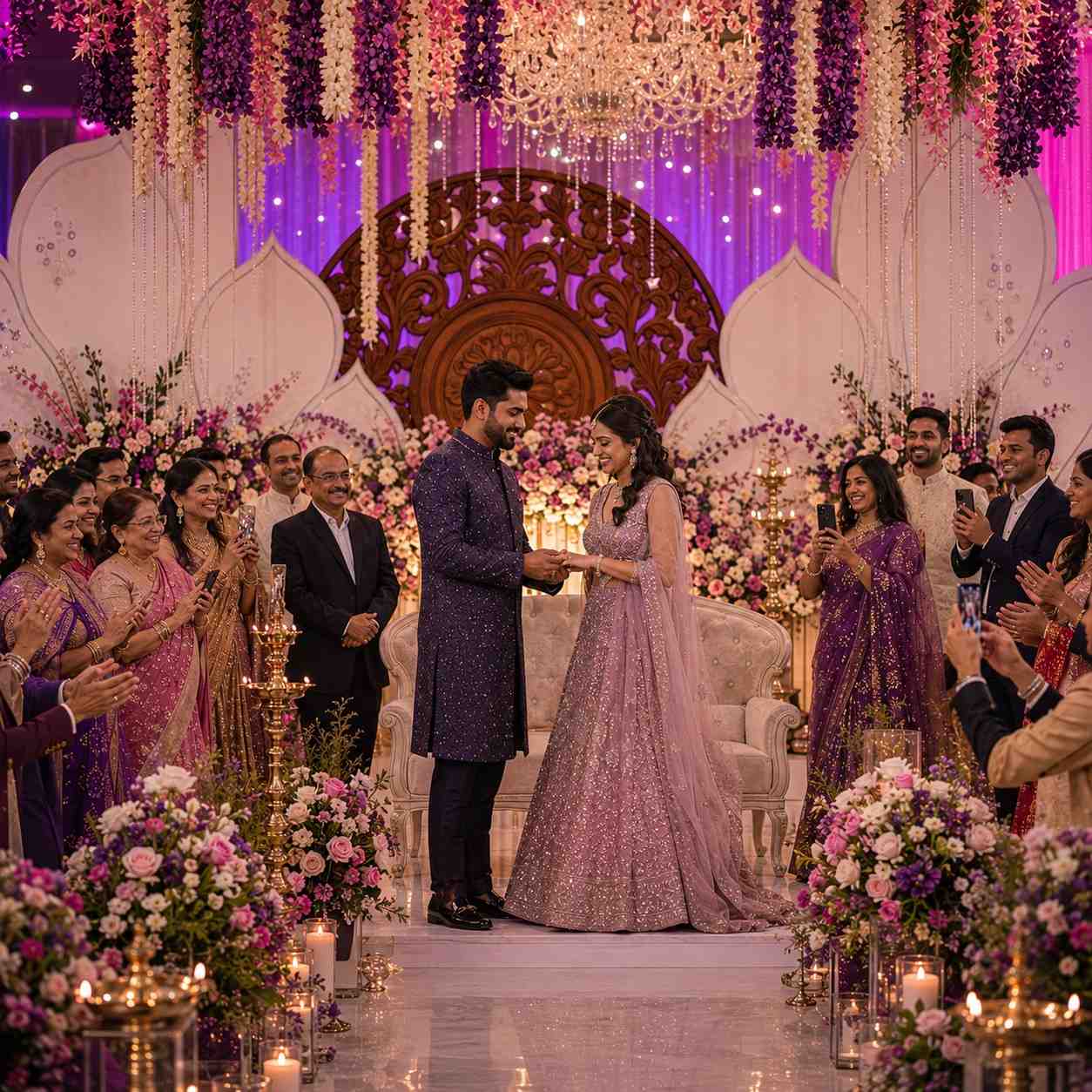




Hybrid Function Broadcast Production Services - Live Streaming, Video Switching - Conferences, Webinars, Seminars
◆Hybrid Function Broadcast Production Services combine in-person event production with professional online broadcasting, allowing physical and remote audiences to participate in the same event experience. From conferences and webinars to seminars, corporate meetings, product launches, award ceremonies, workshops, and hybrid celebrations, broadcast production connects venues, speakers, presenters, and remote participants through coordinated audio, video, streaming, and communication technology.
Hybrid Events are designed for audiences who cannot attend the physical venue. Participants can join remotely through supported streaming platforms while onsite guests experience the event directly. Professional production ensures both audiences can follow presentations, speeches, panel discussions, performances, and other program segments.
Live Streaming is a core component of hybrid event production. Professional cameras, audio systems, video encoders, streaming computers, internet connectivity, and production software work together to transmit the event to remote viewers in real time.
Video Switching allows production teams to move between multiple cameras, presentation feeds, pre-recorded videos, remote speakers, graphics, and other visual sources during a live broadcast. This creates a polished viewing experience instead of relying on a single static camera.
Conference Broadcast Production can support keynote sessions, panel discussions, presentations, workshops, breakout sessions, networking segments, and Q&A sessions. Multiple cameras and professional audio can help remote attendees experience the conference more effectively.
Webinar Production Services can provide cameras, microphones, presentation integration, screen sharing, live switching, graphics, recording, moderation, and streaming support for online-first or hybrid webinars.
Seminar Broadcast Services help extend educational and professional programs to participants outside the physical venue. Speakers can present onsite while remote attendees watch and participate through supported platforms.
Corporate Hybrid Events can connect employees, leadership teams, clients, partners, investors, and stakeholders across different locations. This is useful for annual meetings, town halls, training programs, conferences, award ceremonies, and corporate celebrations.
Hybrid Product Launches can combine a physical launch venue with online audiences. Product demonstrations, executive speeches, promotional videos, live camera feeds, graphics, and launch countdowns can be broadcast to remote viewers.
Hybrid Award Ceremonies can allow nominees, winners, employees, and guests to participate from different locations. Remote participants can be displayed on event screens while the ceremony is broadcast online.
Hybrid Wedding and Celebration Broadcasts can allow family members and friends who cannot attend the venue to watch important ceremonies, performances, receptions, and milestone moments remotely.
Multi-Camera Production can use multiple camera positions to capture speakers, presenters, audience reactions, stage performances, product demonstrations, and wide venue shots.
PTZ Cameras can be used for remotely controlled camera movement and are particularly useful for conferences, seminars, houses of worship, classrooms, and fixed-stage environments.
Professional Camera Crews can operate cinema, broadcast, or professional video cameras depending on the event's production requirements. Camera selection depends on lighting, venue size, movement, framing, and desired production quality.
Audio Production is equally important because remote viewers need clear speech and presentation audio. Audio mixers, microphones, wireless systems, audio processors, and monitoring equipment can be integrated into the broadcast workflow.
Wireless Microphones can support presenters, panelists, hosts, performers, and speakers while allowing freedom of movement around the venue.
Video Conferencing Integration allows remote speakers or panelists to join the physical event through supported online platforms. Their video and audio feeds can be routed to venue screens and the live broadcast.
Remote Speaker Management involves coordinating virtual presenters before and during the event. Technical teams can conduct connectivity checks, audio tests, camera checks, presentation rehearsals, and communication procedures.
Screen and LED Integration allows remote speakers, presentation slides, videos, graphics, and live camera feeds to be displayed for the onsite audience.
Graphics and Lower Thirds can display speaker names, designations, company information, session titles, event branding, sponsor messages, and other broadcast information.
Branded Broadcast Production can incorporate company logos, event themes, branded backgrounds, animated transitions, title cards, sponsor graphics, and customised visual packages.
Presentation Integration allows PowerPoint presentations, videos, screen shares, demonstrations, and other content sources to be included in the live broadcast.
Video Playback Systems can manage pre-recorded videos, promotional films, speaker introductions, sponsor messages, highlight reels, and other scheduled content.
Live Q&A Integration allows remote participants to submit questions through supported platforms while moderators or speakers address them during the physical event.
Audience Interaction can include polls, chat, reactions, digital questions, feedback forms, and other engagement tools depending on the streaming or event platform.
Hybrid Event Moderation helps coordinate communication between onsite speakers, remote participants, presenters, technical teams, and event hosts. A dedicated moderator can help maintain the flow of online participation.
Recording Services can capture the complete event for later viewing. Recordings can be edited into full-session videos, highlights, speaker clips, training content, social media reels, or internal communication assets.
Live Captioning and multilingual interpretation can be integrated where required, helping improve accessibility and reach for diverse audiences.
Streaming Platform Integration allows events to be delivered through suitable public or private platforms depending on audience access requirements. Organisers can use registration controls, password protection, private links, or other available access methods.
Private and Secure Broadcasts can be useful for internal corporate meetings, confidential training programs, investor communications, and restricted-access conferences. Appropriate security controls should be configured according to the selected platform.
Internet Connectivity is critical for live broadcasting. Professional teams may assess available bandwidth, upload speed, network stability, wired connections, Wi-Fi infrastructure, and backup connectivity before the event.
Backup Internet Systems can provide additional resilience for important broadcasts. Depending on the event, teams may use secondary connections or other redundancy measures.
Encoding and Streaming Systems convert production feeds into formats suitable for online distribution. Professional encoders can manage video quality, bitrate, resolution, and streaming output.
Production Control Rooms allow technical teams to manage cameras, audio, presentations, graphics, playback, streaming, recording, and communication from a central location.
Intercom Systems help camera operators, directors, stage managers, audio engineers, and other production staff communicate during live broadcasts.
Technical Rehearsals are essential for hybrid productions. Teams can test camera positions, audio levels, presentation feeds, remote speakers, streaming connections, graphics, playback, recording, and backup systems before the event.
Onsite Broadcast Operators can manage live switching, camera feeds, audio mixing, presentation integration, streaming, recording, and technical troubleshooting throughout the event.
Remote Production Support can assist online speakers, presenters, moderators, and participants before and during the broadcast.
Hybrid Event Production can scale from small webinars with a few speakers to large conferences involving multiple cameras, presenters, language channels, LED screens, remote participants, and complex production workflows.
Exhibitions and trade shows can use hybrid broadcasting to extend product demonstrations, keynote sessions, panel discussions, and exhibitor presentations to audiences who cannot attend physically.
Educational institutions can use hybrid production for seminars, lectures, workshops, graduation programs, academic conferences, and guest speaker sessions.
Cultural and community events can be broadcast to remote audiences, allowing people from different locations to participate in performances, ceremonies, discussions, and celebrations.
Religious and spiritual programs can use live broadcasting to extend ceremonies, discourses, devotional programs, and other gatherings to remote participants where appropriate.
Budget planning should consider cameras, lenses, tripods, PTZ systems, microphones, audio mixers, video switchers, encoders, streaming platforms, internet connectivity, graphics, LED screens, recording systems, technical crew, setup, rehearsal, operation, and dismantling.
Rental packages can be customised according to audience size, event duration, production quality, number of cameras, number of remote speakers, streaming requirements, and venue complexity.
Professional providers may offer complete production support, including pre-event planning, site surveys, equipment rental, camera operation, audio engineering, video switching, graphics, streaming, recording, technical support, and post-event delivery.
In conclusion, Hybrid Function Broadcast Production Services create a seamless connection between physical and digital audiences. From Live Streaming and Video Switching to multi-camera production, remote speaker integration, professional audio, branded graphics, recording, and technical operation, hybrid broadcast solutions help conferences, Webinars, Seminars, corporate events, celebrations, and live programs reach wider audiences.
FAQ Section
Q1: What are Hybrid Function Broadcast Production Services?
Hybrid Function Broadcast Production Services provide the technical infrastructure and production support required to broadcast a physical event to remote audiences while allowing onsite and online participants to interact.
Q2: What equipment is used for hybrid event broadcasting?
Equipment may include professional cameras, PTZ cameras, microphones, audio mixers, video switchers, encoders, streaming computers, monitors, LED screens, presentation systems, lighting, recording equipment, and backup connectivity.
Q3: What is Video Switching?
Video Switching is the process of selecting and changing between different video sources such as cameras, presentations, remote speakers, videos, graphics, and other feeds during a live production.
Q4: Can remote speakers participate in a physical conference?
Yes. Video conferencing integration can bring remote speakers into the venue through supported platforms, with their video and audio displayed for both onsite and online audiences.
Q5: Can hybrid events be recorded?
Yes. Professional production systems can record the event for later viewing, editing, internal use, training, promotional content, or social media.
Q6: Can branding be included in the broadcast?
Yes. Event logos, speaker names, lower thirds, branded backgrounds, animated transitions, sponsor graphics, and customised visual packages can be incorporated.
Q7: Is high-speed internet required?
A stable internet connection with sufficient upload capacity is essential for reliable live streaming. Professional teams can assess the venue connection and arrange backup connectivity where necessary.
Q8: Can hybrid events support audience interaction?
Yes. Depending on the platform, remote audiences can participate through live chat, Q&A, polls, reactions, feedback forms, and other interactive features.
Q9: Are technical rehearsals necessary?
Yes. Rehearsals help test cameras, microphones, presentations, remote speakers, streaming, graphics, recording, internet connectivity, and switching workflows before the live event.
Q10: How can Happiffie help arrange Hybrid Function Broadcast Production Services?
Happiffie helps conference organisers, corporations, educational institutions, event planners, webinar hosts, and production teams discover experienced broadcast professionals offering Live Streaming, Video Switching, multi-camera production, remote speaker integration, professional audio, branded graphics, recording, technical operation, equipment rental, and complete hybrid event production.