
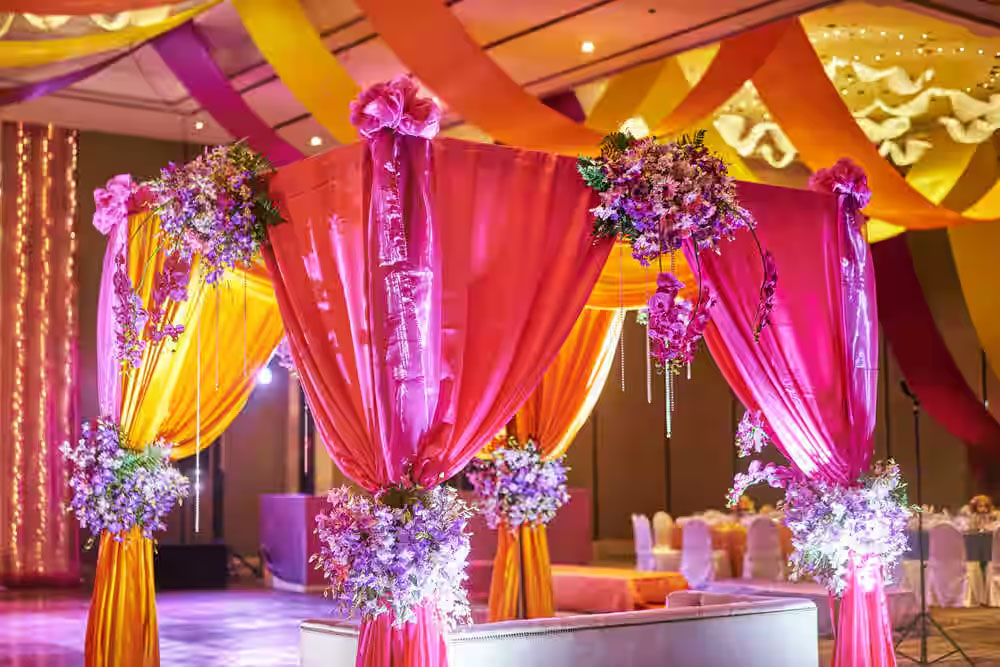
Pavilion Setups for Delhi Weddings
Infrastructure in Delhi
Traditional Ceremony Pavilion Setup in Delhi: Complete Guide
A Traditional Ceremony Pavilion Setup is the beating heart of every Indian wedding ritual, framing the sacred space where vows, pheras, and family traditions come alive. In Delhi — a city that hosts everything from intimate haveli gatherings in Mehrauli to grand banquet affairs in Aerocity — the right pavilion structure must balance religious authenticity with architectural grandeur. Whether you are planning a full wedding mandap structure draped in marigolds and silk, or a compact ritual ceremony canopy for an intimate roka, the infrastructure choices you make weeks in advance will define the entire visual and emotional experience of your celebration.
Quick Answer
A Traditional Ceremony Pavilion Setup is a structured, decorated shelter — typically a mandap or canopy — erected at an Indian wedding or ritual event to define the sacred ceremonial space. In Delhi, these setups range from simple four-pillar wooden frames to elaborate multi-tier shaadi pavilion decorations with floral canopy installations, customised lighting, and heritage motifs, typically costing between ₹40,000 and ₹5,00,000 depending on scale and materials.
What Does a Traditional Ceremony Pavilion Setup Actually Include?
A Traditional Ceremony Pavilion Setup goes well beyond four pillars and a roof. At its core it comprises a structural frame — wood, bamboo, steel, or fiberglass — draped with fabric, flowers, and decorative elements that signal sanctity and celebration. The wedding mandap structure typically includes a canopy ceiling (often mirrored or layered with marigold strings), decorated columns, a raised platform or chowki, and a defined entry path. In Delhi venues ranging from farm houses in Chattarpur to rooftop terraces in Connaught Place, the setup must also account for flooring (wooden parquet or floral rangoli tiles), seating arrangement for the immediate family, sacred fire pit (havan kund) placement, and pandit seating. Electrical integration for ceremonial lighting arrangement — including warm LED uplighting, string lights inside the canopy, and spotlights on the couple — is now considered a standard component rather than an optional extra.
Delhi's Venue Landscape and How It Shapes Your Pavilion Choice
Delhi's diversity of venues directly influences what kind of Traditional Ceremony Pavilion Setup is feasible. Banquet halls in Dwarka and Rohini impose ceiling height restrictions, making compact wedding mandap structures with collapsible frames the pragmatic choice. Farmhouses in Chattarpur and Ghitorni offer open lawns where a full heritage ceremony shelter with 20-foot pillars and cascading floral canopy installation can be executed without constraint. Hotels in Aerocity and Connaught Place often have pre-approved vendor lists that affect material choice. Heritage properties in Mehrauli and Lutyen's Delhi lend themselves to shaadi pavilion decoration using natural materials — unfinished wood, terracotta pots, and cotton drapes — that complement the architecture. Understanding your venue's ground surface (grass, marble, or concrete), load-bearing limits, and fire safety rules for the havan kund is non-negotiable before confirming any pavilion supplier.
How Much Does a Traditional Ceremony Pavilion Setup Cost in Delhi?
Budgeting for a Traditional Ceremony Pavilion Setup in Delhi requires separating the structural cost from the decorative cost. A basic four-pillar ritual ceremony canopy with fabric draping and minimal floral work starts around ₹40,000–₹70,000, suitable for a mehendi or roka for 50–100 guests. A mid-range wedding mandap structure with fresh flowers, mirror ceiling, and integrated ceremonial lighting arrangement typically runs ₹1,50,000–₹2,50,000 for events of 150–300 guests. Premium heritage ceremony shelters featuring carved wooden columns, imported silk drapes, bridal entrance walkway design, and full floral canopy installation can reach ₹4,00,000–₹5,00,000 or more for 400-plus guest events at premium Delhi venues. Labour for assembly and dismantling, generator backup, and transportation from supplier warehouses (many are in Kirti Nagar or Naraina) add 10–15% to quoted costs. Always request an itemised quote so structural, decorative, and labour components are clearly separated.
Comparing Pavilion Styles: Which Structure Fits Your Wedding?
Not every wedding calls for the same pavilion format. A shaadi pavilion decoration that works beautifully for a 500-guest Punjabi baraat reception in Pitampura may overwhelm an intimate South Indian wedding in Hauz Khas. The core decision is between open-frame mandaps (maximum airflow, photography-friendly, but weather-dependent), closed canopy structures (protective, dramatic lighting effects, better acoustics for mantras), and hybrid semi-covered setups that allow outdoor wedding infrastructure Delhi families often prefer — open sides, covered ceiling. A ritual ceremony canopy with floral canopy installation suits smaller guest lists and intimate rituals because the enclosure creates a sense of private sanctity. Meanwhile, multi-tier heritage ceremony shelters with elevated canopies are ideal for large baraats where visual impact from a distance matters. Always view a supplier's erected sample or portfolio from a comparable venue before signing.
What Are the Most Common Mistakes Families Make When Booking a Pavilion Setup?
The single most costly mistake when planning a Traditional Ceremony Pavilion Setup in Delhi is leaving the booking too late. Premium mandap suppliers with carved wooden inventory and fresh-flower teams book out 4–6 months in advance for peak season months — October through February and late April for summer weddings. A second frequent error is ignoring outdoor wedding infrastructure Delhi requirements such as power load calculations; a full ceremonial lighting arrangement with uplights, canopy LEDs, and a sound system can demand 10–15 KVA, which a venue's existing supply may not support. Families also often underestimate the importance of a bridal entrance walkway design that connects the main hall to the mandap — a poorly decorated or poorly lit walkway breaks the visual continuity that photographers depend on. Finally, verbal agreements without a written contract specifying setup and strike timings, flower freshness guarantees, and damage liability leave families vulnerable on the wedding day itself.
Pavilion Setup Types for Delhi Weddings: Side-by-Side Comparison
Expert Recommendation
Best for Intimate Celebrations (Under 75 Guests)
Best for Heritage and Haveli Venues
Best for Large Guest Counts (400+)
Best for Budget-Conscious Families
Best for Destination-Style Outdoor Weddings in Delhi
Best for Contemporary-Traditional Blend
How to Choose the Right Option
✅ Pre-booking Checklist
- Confirm venue ceiling height or outdoor clearance before choosing mandap pillar height
- Verify venue fire safety rules and obtain written NOC for havan kund
- Calculate total power load for ceremonial lighting arrangement and confirm venue supply or hire a generator
- Request an itemised quote separating structure, decoration, labour, and dismantling costs
- Review the supplier's portfolio from a venue similar to yours in size and type
- Confirm fresh flower sourcing and delivery timeline — flowers should arrive within 6 hours of setup
- Clarify setup start and strike-out end times in the written contract
- Discuss bridal entrance walkway design integration with your mandap supplier to ensure visual continuity
🎯 Selection Criteria
- Structural stability: frame must withstand 4–6 hours of ritual activity and guest movement
- Material authenticity: fabric, wood, and floral choices should align with your regional wedding tradition
- Supplier experience with your specific venue type — farmhouse, banquet hall, or heritage property
- Flexibility to accommodate last-minute decor changes or additional elements
- Post-event cleanup and waste disposal responsibility clearly assigned in the contract
💰 Cost / Quality Factors
- Material grade (fresh flowers versus artificial, carved wood versus MDF) is the single biggest cost variable
- Guest count determines pavilion footprint and therefore frame size, directly affecting price
- Kirti Nagar and Naraina warehouse proximity reduces transport charges for Delhi-based suppliers
- Multi-day packages spread structural costs across mehendi, wedding, and reception — more economical
- Off-season bookings (March–June, July–September) command 15–25% lower rates from most suppliers
- Integrated ceremonial lighting arrangement packages cost less than separately hiring a lighting vendor
⚠️ Common Mistakes to Avoid
- Booking the pavilion supplier after finalising the caterer and photographer — pavilion setup timing affects both
- Ignoring outdoor wedding infrastructure Delhi power requirements until the day before the event
- Choosing a pavilion style from a social media photo without verifying it fits your venue dimensions
- Accepting a verbal quote without a signed contract specifying material quality and replacement clauses
- Overlooking the bridal entrance walkway design as a secondary concern — it is a primary photography element
- Failing to confirm whether the supplier's rate includes post-wedding dismantling and debris removal
People Also Ask
How early should I book a traditional ceremony pavilion setup in Delhi?
What is the difference between a mandap and a pavilion in Indian weddings?
Can a traditional ceremony pavilion setup be done indoors at a Delhi banquet hall?
What materials are used for the canopy in a traditional ceremony pavilion?
Is a fire permit required for a havan kund inside a Delhi wedding venue?
How many pillars does a standard wedding mandap structure have?
What is a bridal entrance walkway and is it separate from the pavilion setup?
Can a pavilion setup be reused across a mehendi, wedding, and reception?
Related Experiences on Happiffie
Professional Wedding Infrastructure Solutions
Sacred Rituals, Expert Guidance
Sacred Unjal Ceremony in Jaipur
Kundan Bridal Jewellery, Delhi
Expert Floral Installations for Your Celebration
All Wedding & Event Services
Frequently Asked Questions
What is the ideal size for a traditional ceremony pavilion setup for a 200-guest Delhi wedding?
Are there Delhi suppliers who specialise in South Indian or Gujarati pavilion setups?
How long does it take to assemble a traditional ceremony pavilion setup at a Delhi venue?
What happens to the pavilion setup if it rains during an outdoor Delhi wedding?
Can I mix traditional and contemporary elements in a ceremonial pavilion setup in Delhi?
Does Happiffie help compare multiple pavilion setup vendors in Delhi?
Is a heritage ceremony shelter the same as a traditional ceremony pavilion setup?
Key Takeaways
- A Traditional Ceremony Pavilion Setup in Delhi ranges from ₹40,000 for compact ritual canopies to ₹5,00,000-plus for grand multi-tier heritage structures.
- Book pavilion suppliers 4–6 months ahead for peak season (October–February) to secure preferred materials and experienced teams.
- Venue type — banquet hall, farmhouse, or heritage haveli — determines which pavilion frame style and dimensions are practical.
- Always request an itemised quote separating structure, décor, ceremonial lighting arrangement, and labour to avoid hidden costs.
- The bridal entrance walkway design is an integral part of the pavilion setup, not an optional add-on.
- Multi-function packages that reuse the same frame across mehendi, wedding, and reception can reduce total décor spend by 20–30%.
- Written contracts must specify material quality, flower freshness guarantees, setup/strike timing, and liability for damage.
- Power load planning is essential — a full ceremonial lighting arrangement with sound can require 10–15 KVA beyond standard venue supply.
Find Your Perfect Pavilion Setup on Happiffie
Compare Delhi's top mandap and pavilion infrastructure vendors, get itemised quotes, and book with confidence — all in one place.
Explore Pavilion Vendors
Are you a Vendor? Grow Your Business with Happiffie!
- High intent verified leads
- Reverse auction opportunities
- AI business tools & insights
- Dedicated vendor dashboard
- Grow your business, your way
It's free & takes less than 2 minutes!