
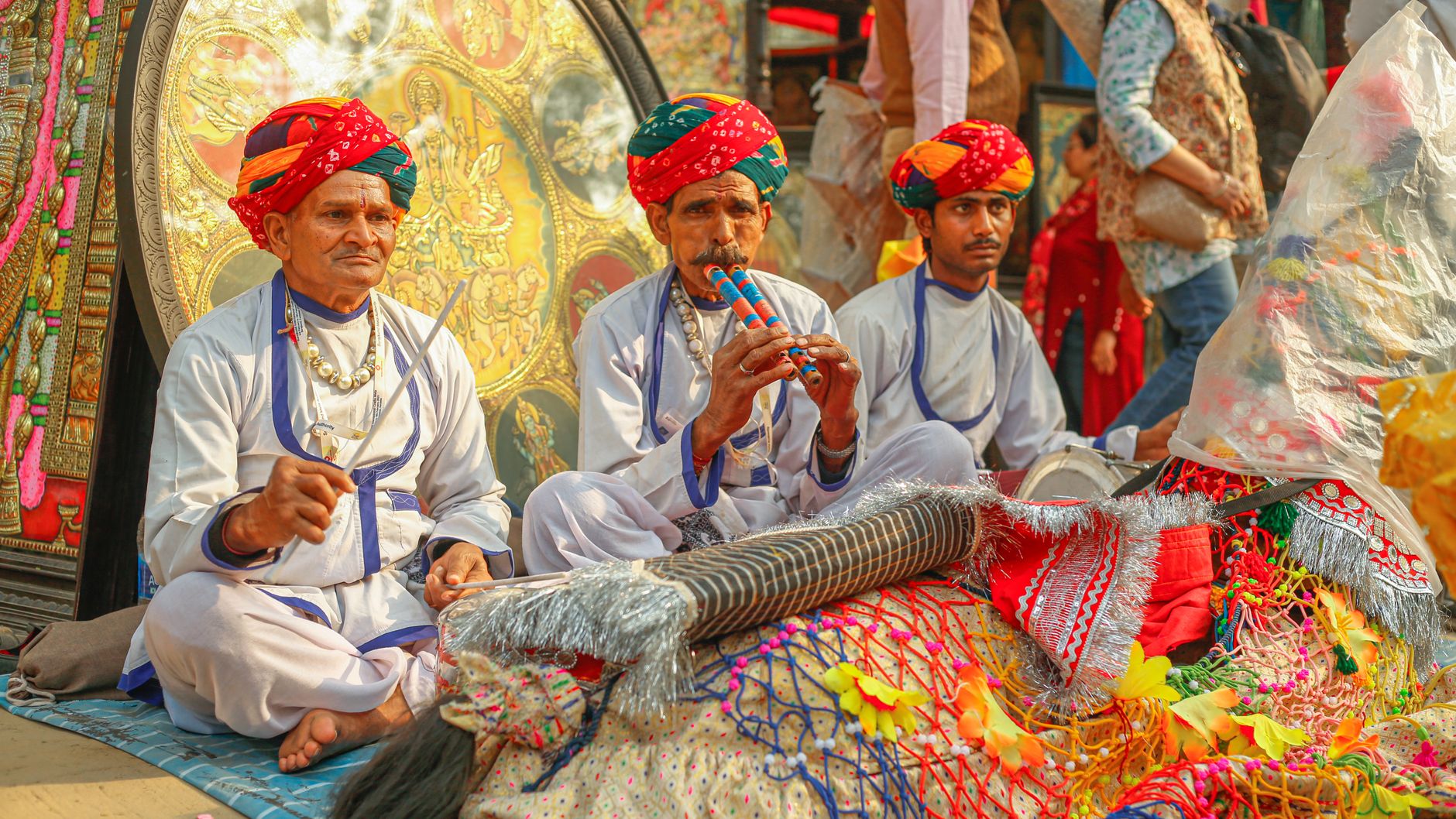
Celebrate India's Living Heritage
Entertainment in Delhi
Regional Heritage Showcase Entertainment in Delhi
A Regional Heritage Showcase transforms any Delhi celebration into a living, breathing tribute to India's extraordinary cultural diversity. Whether you are planning a grand wedding at a Lutyens bungalow or an intimate mehendi in South Delhi, weaving a cultural heritage performance into the evening turns a beautiful event into an unforgettable story. From Rajasthani ghoomar dancers and Punjabi bhangra troupes to Odissi ensembles and Kerala percussion artists, Delhi's event circuit has access to India's finest regional talent. Happiffie helps you discover, compare, and book curated event entertainment that reflects your family's roots or simply celebrates the richness of the subcontinent.
Quick Answer
A Regional Heritage Showcase is a curated entertainment format for Indian weddings and events that presents authentic folk, classical, or regional performing arts — such as ghoomar, bhangra, Lavani, Bihu, or Kuchipudi — in a structured stage or walkabout setting. In Delhi, such showcases typically run 45 to 90 minutes, involve 6 to 30 artists, and cost between INR 80,000 and INR 6,00,000 depending on art form, troupe size, and production requirements.
What Exactly Is a Regional Heritage Showcase and Why Is It Trending in Delhi?
A Regional Heritage Showcase is a professionally produced entertainment segment that presents one or more traditional Indian art forms — folk dance, classical music, puppetry, martial arts, or tribal craft demonstrations — as a cohesive experience for wedding and event guests. Delhi's cosmopolitan guest lists, which routinely include families from Punjab, Rajasthan, UP, Bengal, and the South, make this format particularly powerful. Instead of a generic DJ set, hosts are choosing heritage themed entertainment that sparks genuine emotional connection. The trend accelerated post-2022 as destination weddings brought regional performers to five-star Delhi venues like those in Aerocity and Vasant Kunj, and social media amplified the visual impact of folk performers in authentic costumes. A well-executed Regional Heritage Showcase also doubles as an icebreaker — guests who have never met before find themselves clapping, filming, and discussing shared cultural memory within minutes of the performance beginning.
Which Art Forms Are Most Popular for Delhi Wedding Entertainment?
Delhi's proximity to Rajasthan and Punjab means Rajasthani ghoomar, kalbeliya, and Punjabi bhangra top the booking charts for traditional folk entertainment. However, demand for South and East Indian forms is growing rapidly as more families seek to honour mixed-heritage unions. Odissi and Bharatanatyam ensembles are frequently booked for sangeet nights in Greater Kailash and Defence Colony, where hosts want a classical anchor before the Bollywood dance floor opens. Manipuri and Bihu troupes appeal to Northeast Indian families celebrating in Dilshad Garden and Rohini. Lavani from Maharashtra and Kolattam from Tamil Nadu are increasingly requested for thematic multicultural events. Chhau martial dance from Jharkhand and Kalbelia snake-charmer dance from Rajasthan generate the highest visual drama and work best for large open grounds or farmhouse venues on the Delhi-Gurgaon border. Each Indian regional art showcase carries its own spatial, lighting, and sound requirements, so confirming technical riders early is essential.
How Much Does a Regional Heritage Showcase Cost in Delhi?
Pricing for a Regional Heritage Showcase in Delhi follows a tiered structure based on troupe size, art form rarity, travel distance, and production complexity. A compact 6-to-10 artist folk dance set — such as a Rajasthani ghoomar troupe — typically starts at INR 80,000 to INR 1,50,000. Mid-scale cultural heritage performance packages, featuring 12 to 20 artists with live percussion, authentic costumes, and a 60-minute runtime, range from INR 1,80,000 to INR 3,50,000. Premium productions incorporating classical Bharatanatyam or Kathak ensembles with elaborate stage sets, LED backdrop integration, and a choreographed storyline can reach INR 4,00,000 to INR 6,00,000 or more. Additional costs to budget separately include artist travel and accommodation if the troupe originates outside Delhi, sound and lighting upgrades, a dedicated stage manager, and costume storage space at the venue. Happiffie's wedding entertainment booking platform provides itemised quotes so you can compare options transparently before committing.
Matching the Right Heritage Show to Your Venue and Guest Count
The success of heritage themed entertainment depends heavily on venue-performance alignment. Farmhouses in Chattarpur and Mehrauli offer the open ground, high ceilings, and sound flexibility that large percussion-driven acts like Dhol Tasha or Dappu require. Banquet halls in Karol Bagh or Janakpuri with fixed stage setups work well for proscenium-style classical recitals where guests remain seated. Rooftop venues in Hauz Khas or Connaught Place suit smaller, immersive cultural heritage performance formats such as Baul singer sessions or Manipuri storytelling acts that create intimacy for guest counts of 50 to 150. For weddings above 500 guests, a walkabout format — where costumed folk artists move through the crowd — ensures every guest encounters the Indian regional art showcase rather than straining to see a distant stage. Always check whether the venue has a no-live-percussion clause, which affects Dhol, Nagara, and Chenda performers significantly.
How Should You Plan the Programming Sequence for Maximum Impact?
A well-timed Regional Heritage Showcase builds emotion progressively. Most Delhi event planners open the cocktail or pre-dinner hour with a soft, atmospheric act — a sarangi player, a Baul vocalist, or a Puppet Theatre display from Rajasthan — which draws guests in without demanding full attention. The main heritage performance then anchors the first 30 minutes after dinner is served, when energy and focus are highest. If the event includes a sangeet, placing a traditional folk entertainment segment before the family dance performances creates a thematic bridge between heritage and modernity. Avoid scheduling high-energy dhol or bhangra acts immediately after a religious ceremony segment, as the tonal shift can feel jarring. A brief MC or cultural narrator introduction of three to five minutes significantly increases guest appreciation of lesser-known art forms, transforming passive viewing into a Delhi venue cultural experience that guests actively discuss. Always build in a 15-minute buffer before and after the segment for costume changes and artist setup.
Regional Heritage Showcase Setup Types: A Practical Comparison
Expert Recommendation
Best for Intimate Celebrations (50–150 Guests)
Best for Large Weddings (300+ Guests)
Best for Budget-Conscious Hosts
Best for Traditional Families
Best for Multi-Cultural Weddings
Best for Premium Destination-Style Events in Delhi
How to Choose the Right Option
✅ Pre-booking Checklist
- Confirm your venue's policies on live percussion and decibel limits before booking any Regional Heritage Showcase act.
- Define the event segment — cocktail hour, post-dinner, sangeet — where the performance will sit, and share the timeline with the troupe at least four weeks ahead.
- Request a full technical rider from the troupe covering stage dimensions, flooring type, lighting requirements, and sound system specifications.
- Verify whether the troupe's travel and accommodation costs are included in the quoted fee or billed separately.
- Watch at least two recent performance videos and confirm the troupe has experience performing at similar Delhi venues and guest counts.
- Book a cultural narrator or MC briefing for lesser-known art forms to maximise audience appreciation.
- Confirm costume storage and changing room availability at the venue with your banquet manager.
- Secure a signed contract with cancellation, rescheduling, and weather-contingency clauses before paying any advance.
🎯 Selection Criteria
- Art form authenticity: performers should be trained practitioners of the regional tradition, not generic Bollywood-folk hybrids.
- Troupe experience at comparable events: a troupe comfortable with 400-guest Delhi farmhouse weddings will manage crowd energy very differently from one used to theatre stages.
- Production self-sufficiency: the best troupes bring their own sound equipment, costumes, and a stage manager, reducing your coordination burden.
- Flexibility of format: confirm whether the troupe can adapt from proscenium stage to walkabout if the venue layout changes.
- Cultural sensitivity: for religious or family-specific art forms, confirm the troupe understands any thematic restrictions your family may have.
- Reputation and references: ask for at least two client references from Delhi events held in the past 12 months.
💰 Cost / Quality Factors
- Troupe size directly multiplies per-head artist fees, travel costs, and costume storage needs — every additional artist adds logistical complexity.
- Art form rarity increases cost: a Chhau or Sattriya troupe travelling from Odisha or Assam commands 40–60% higher fees than a Delhi-based Rajasthani troupe.
- Production values — LED backdrops, live tabla or sarangi accompaniment, elaborate costumes — can double the base performance fee.
- Peak season surcharges of 20–30% apply from October to February across Delhi-NCR entertainment bookings.
- Venue stage quality affects performance quality: a polished wooden floor is essential for classical footwork; uneven outdoor ground can limit certain dance forms.
- Last-minute bookings within three weeks of the event date often attract a 15–25% premium, especially for sought-after Rajasthani and Punjabi troupes.
⚠️ Common Mistakes to Avoid
- Booking a high-energy dhol or bhangra act immediately after a solemn religious ritual, creating a jarring tonal shift that alienates older guests.
- Assuming all folk troupes are interchangeable — a Rajasthani kalbeliya act and a ghoomar act have entirely different spatial and atmospheric requirements.
- Ignoring venue percussion restrictions and discovering the ban only on the event day, forcing last-minute programme changes.
- Underestimating setup and changeover time: most Regional Heritage Showcase acts need 20–30 minutes of uninterrupted setup before performing.
- Skipping a MC or cultural introduction, leaving guests unfamiliar with the art form disengaged within the first five minutes.
- Paying full fees upfront without a signed contract that specifies cancellation terms, exact runtime, and artist count guarantees.
People Also Ask
What is a Regional Heritage Showcase at a wedding?
How long does a heritage performance typically last at a Delhi wedding?
Which Delhi venues are best for hosting a Regional Heritage Showcase?
Can I combine multiple regional art forms in one event?
How far in advance should I book traditional folk entertainment for a Delhi event?
What technical requirements do Regional Heritage Showcase acts typically need?
Is a Regional Heritage Showcase suitable for corporate events or only weddings?
How does Happiffie help me compare heritage entertainment options in Delhi?
Related Experiences on Happiffie
Alappuzha's Finest Cultural Halls
Book Folk Entertainment in Mumbai
Celebrate Every Region on One Table
Book Folk Artists in Coimbatore
Bhubaneswar's Best Wedding Retail Bazaar
Light Up Indore's Most Memorable Events
Coimbatore's Finest Cultural Venues
Jaipur's Finest Entertainment Planning
Frequently Asked Questions
What is the difference between a Regional Heritage Showcase and a standard Bollywood dance performance?
Can a Regional Heritage Showcase work at a Delhi banquet hall that has a fixed indoor stage?
How many artists are typically included in a heritage entertainment package for a 200-guest Delhi wedding?
Are heritage themed entertainment acts available for corporate events in Delhi, not just weddings?
What is the typical duration of the booking process on Happiffie for a Regional Heritage Showcase in Delhi?
Do Regional Heritage Showcase performers provide their own costumes and music equipment?
Can a Regional Heritage Showcase be personalised to reflect my family's specific state or community?
What happens if a scheduled Regional Heritage Showcase act cancels close to the event date?
Key Takeaways
- A Regional Heritage Showcase is a curated entertainment format presenting authentic Indian folk or classical arts at weddings and events, running typically 45 to 90 minutes.
- Delhi pricing ranges from INR 80,000 for a compact folk troupe to INR 6,00,000-plus for a full-scale multi-region production with live orchestra and scenic design.
- Venue selection is critical: farmhouses in Chattarpur suit large percussion acts, while rooftop venues in Hauz Khas work best for intimate cultural heritage performances.
- Walkabout folk formats maximise engagement for guest counts above 300, while proscenium classical acts suit formal seated audiences at sangeet nights.
- Booking 3 to 4 months ahead is essential during Delhi's October-to-February peak wedding season, especially for rare or out-of-state art forms.
- A cultural narrator introduction significantly increases audience appreciation and is especially important for lesser-known Indian regional art showcases.
- Always secure a signed contract covering artist count, runtime, technical rider, and cancellation terms before paying any advance.
- Happiffie simplifies wedding entertainment booking by offering transparent quotes, verified troupes, and side-by-side comparison across Delhi-NCR options.
Book Your Regional Heritage Showcase in Delhi
Explore verified cultural troupes, compare quotes, and create an unforgettable heritage experience for your guests — all on Happiffie.
Get Free Quotes
Are you a Vendor? Grow Your Business with Happiffie!
- High intent verified leads
- Reverse auction opportunities
- AI business tools & insights
- Dedicated vendor dashboard
- Grow your business, your way
It's free & takes less than 2 minutes!