
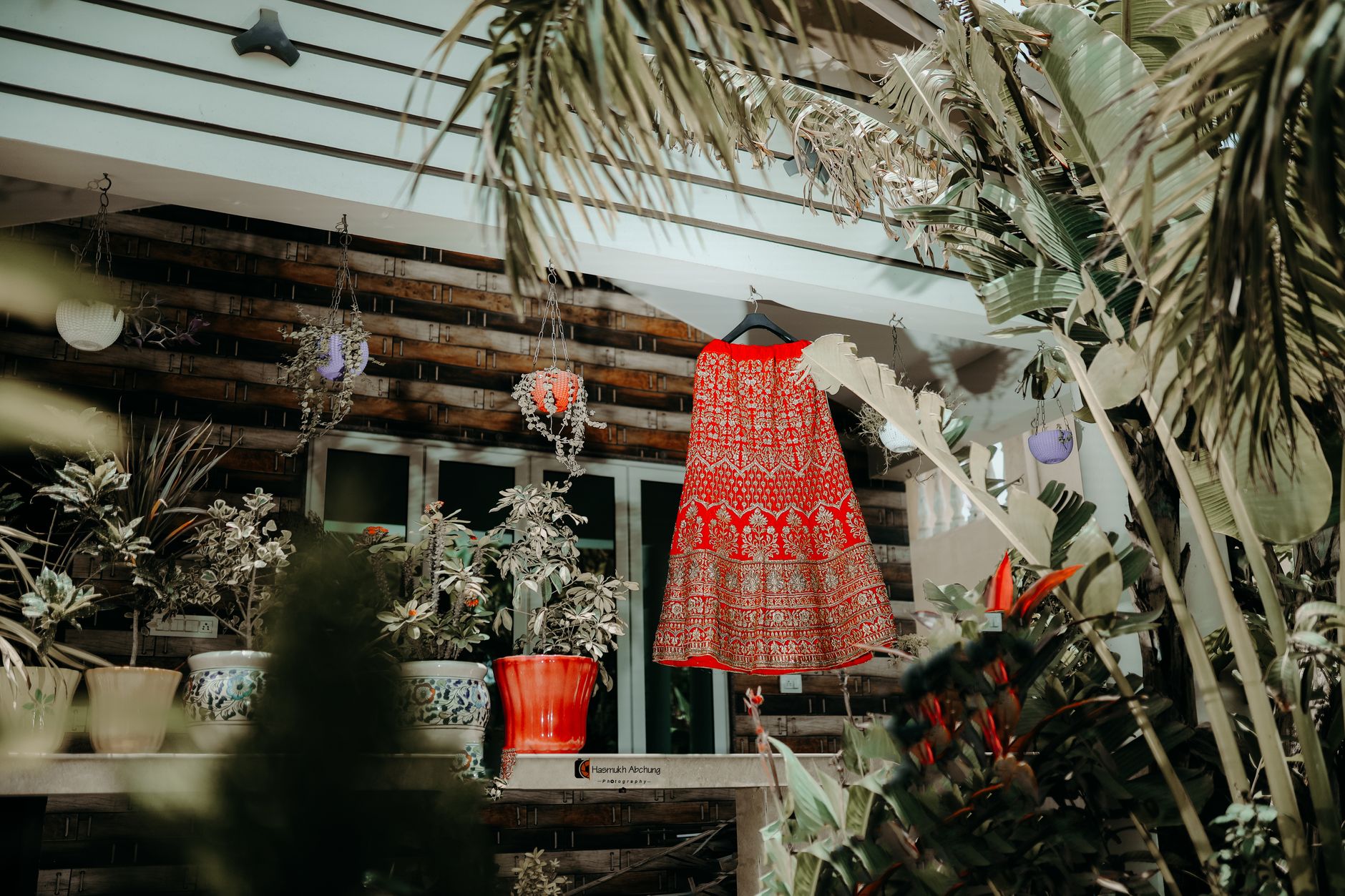
Crisp Outfits, Perfect Moments
Event Support in Delhi
Fabric Care & Pressing Services for Delhi Weddings
Your wedding outfit travels hundreds of kilometres, sits folded in a suitcase, and then meets the most photographed moment of your life — all in 24 hours. Professional Fabric Care & Pressing makes sure every pleat of your Banarasi saree, every layer of your bridal lehenga, and every crease of your sherwani arrives camera-ready. In Delhi, where weddings stretch across grand banquet halls in Aerocity, sprawling farmhouses in Chattarpur, and heritage havelis in Mehrauli, on-site clothes ironing and garment finishing service teams are a quiet but essential part of event day grooming support. Happiffie connects you with verified specialists who understand luxury fabric handling so your look is flawless from the baraat to the vidaai.
Quick Answer
Fabric Care & Pressing is a professional service that steams, irons, and finishes wedding and event outfits — including bridal lehengas, sherwanis, sarees, and suits — immediately before or during an event. Specialists use steam guns, dry irons, and fabric-safe tools to remove travel creases, restore drape, and protect delicate embroidery. In Delhi, these services are booked per outfit or as full-family packages, typically costing between INR 200 and INR 1,500 per garment depending on fabric weight and embellishment.
Why Does Fabric Care & Pressing Matter at a Delhi Wedding?
Delhi weddings are high-visibility affairs. A Punjabi big fat wedding in Dwarka or a South Delhi nikah in Hauz Khas can seat 500 to 2,000 guests, and every outfit is scrutinised — from the bride's heavily embroidered lehenga to the groom's mother's Kanjivaram silk saree. Outfits ordered from Chandni Chowk or couture ateliers in Greater Kailash are often delivered days in advance and packed tightly, causing stubborn fold lines that a domestic iron simply cannot fix. Professional Fabric Care & Pressing uses calibrated steam pressure matched to the GSM of each fabric, whether it is lightweight georgette, stiff raw silk, or velvet with zardozi work. This prevents sheen damage, preserves original drape, and ensures embellishments stay intact. It is not a luxury add-on — it is as essential as your makeup artist arriving on time.
What Types of Outfits Need Professional Garment Finishing Service?
Almost every outfit worn at an Indian wedding benefits from a garment finishing service, but some fabrics demand it as a non-negotiable. Bridal lehenga pressing is the most requested category in Delhi — a multi-layered lehenga with heavy gota patti or sequin work cannot be ironed at home without risking permanent damage. Raw silk sherwanis develop unwanted creases when folded and need firm steam on the reverse side. Chanderi and tissue sarees lose their lustre if touched with a direct hot iron. Velvet kurtas require directional steaming to lift the pile back to its original texture. Even bandhgala suits and Indo-western blazers benefit from professional pressing to maintain their structured silhouette. A competent garment finishing service in Delhi will assess each outfit individually, apply the right temperature and technique, and hand the garment back ready to wear — often within 30 to 60 minutes.
How Much Does Fabric Care & Pressing Cost in Delhi?
Pricing for Fabric Care & Pressing in Delhi varies by fabric complexity, embellishment density, and whether the service is on-site or at a studio. A plain cotton or linen kurta typically costs INR 150 to INR 300 to press. A silk saree or sherwani ranges from INR 400 to INR 700. Bridal lehenga pressing — which involves multiple skirt layers, a heavy dupatta, and a fitted blouse — can range from INR 800 to INR 1,500 per set. Full-family packages for a wedding of 20 to 30 outfits are often quoted at INR 8,000 to INR 18,000, inclusive of travel to the venue. On-site clothes ironing teams that are stationed at your farmhouse in Chattarpur or banquet hall in Rohini for the full day command a higher rate — typically INR 3,000 to INR 6,000 for a half-day deployment, plus per-garment charges. Booking through Happiffie lets you compare itemised quotes from multiple vendors transparently, so there are no last-minute surprises.
On-Site Clothes Ironing vs. Studio-Based Pressing: Which Should You Choose?
The choice between on-site clothes ironing and a studio-based service depends on your timeline and venue. Studio-based pressing is ideal when outfits are finalised two to three days before the event — you drop garments off, they are returned crisply finished, and you pack them carefully in a breathable garment bag. This option suits engagement ceremonies or mehndi functions where the schedule is relaxed. On-site clothes ironing is the smarter choice for destination weddings, multi-day celebrations, or when outfit changes happen between functions held at the same venue, such as a morning pheras followed by an evening reception. An on-site team stationed at your Aerocity hotel or Mehrauli farmhouse can re-press a lehenga between functions, handle last-minute guest requests, and manage 10 to 15 outfits per hour with professional-grade equipment. For large Delhi weddings with multiple costume changes, on-site pressing is a critical part of last-minute wedding prep that saves hours of stress.
What Should You Look for When Booking a Fabric Care & Pressing Vendor?
Selecting the right Fabric Care & Pressing specialist for your Delhi event requires checking a few non-negotiable criteria. First, confirm that the team has hands-on experience with luxury fabric handling — specifically silk, velvet, tissue, and heavily embellished Indian fabrics. Ask whether they use gravity-feed steam irons or industrial steam generators, as these are far safer for delicate embroidery than domestic irons. Second, verify their turnaround time: a credible vendor should be able to process a bridal lehenga pressing in under 45 minutes without rushing. Third, check whether they carry their own padded ironing boards and pressing cloths, as improvising on a hotel towel is a red flag. Finally, for destination wedding logistics or multi-venue Delhi events, confirm that the team is mobile and has transport for their equipment. Happiffie profiles include service scope, equipment details, and verified client feedback so you can shortlist with confidence.
Fabric Care & Pressing Options for Delhi Weddings: A Practical Comparison
Expert Recommendation
Best for intimate celebrations (under 50 guests)
Best for large Delhi weddings (300+ guests)
Best for destination wedding logistics
Best for budget-conscious families
Best for luxury fabric handling
Best for last-minute wedding prep
How to Choose the Right Option
✅ Pre-booking Checklist
- Confirm vendor has experience with your specific fabric types — silk, velvet, Chanderi, or embellished lehengas
- Ask whether they use industrial steam generators or domestic irons for on-site work
- Share a complete outfit list with fabric descriptions at least one week before the event
- Book on-site clothes ironing teams a minimum of three to four weeks ahead during peak shaadi season
- Clarify turnaround time per garment — especially for bridal lehenga pressing — before finalising
- Confirm travel charges, setup time, and any minimum garment requirement for on-site deployments
- Request a pressing cloth or protective barrier be used on all embellished surfaces
- Arrange a dedicated setup area at the venue with a power point and flat surface for the pressing team
🎯 Selection Criteria
- Proven experience with Indian wedding fabrics including silk, velvet, brocade, and embellished lehengas
- Access to professional steam generators rather than domestic travel irons
- Ability to deploy on-site at your specific Delhi venue or hotel
- Transparent per-garment or package pricing with no hidden travel surcharges
- Positive verified feedback from previous wedding clients, visible on the Happiffie profile
💰 Cost / Quality Factors
- Fabric type and embellishment density — heavier embroidery means longer processing time and higher cost
- Number of outfits — bulk packages reduce per-garment cost significantly
- On-site vs. studio service — on-site commands a 30 to 50 percent premium over studio rates
- Venue location — farmhouses in Chattarpur or hotels in Aerocity may attract additional travel charges
- Urgency — same-day or express slots cost 20 to 40 percent more than advance bookings
- Equipment quality — vendors with industrial steam generators deliver better results on luxury fabrics
⚠️ Common Mistakes to Avoid
- Trusting a hotel valet service with a heavily embellished bridal lehenga — this is a leading cause of embroidery damage
- Booking a pressing team without specifying Indian ethnic fabrics, leading to mismatched techniques
- Leaving pressing to the morning of the wedding with no buffer time for re-doing if needed
- Forgetting to book a second round of pressing for outfit changes between morning and evening functions
- Skipping a test press on a hidden seam before the full garment is processed
- Not confirming power supply availability at the venue for industrial steam equipment
People Also Ask
How early before a wedding should I book a Fabric Care & Pressing service in Delhi?
Is bridal lehenga pressing safe for heavily embroidered fabrics?
Can a garment finishing service handle sarees and dupattas on the same day as the event?
What is the difference between steaming and dry ironing for wedding outfits?
How many outfits can an on-site clothes ironing team handle per hour?
Does Happiffie offer Fabric Care & Pressing vendors across all Delhi neighbourhoods?
What fabrics require special care during wedding outfit pressing?
Can I get a combined makeup and Fabric Care & Pressing package in Delhi?
Related Experiences on Happiffie
Crisp Outfits, Perfect Moments
Effortless Bridal Elegance in Guwahati
Perfect Outfits, Perfect Moments
Crisp Outfits, Zero Stress
Vizag Wedding Party Beauty Made Easy
Smart Money Management for Your Delhi Wedding
Wed Amid the Mussoorie Clouds
Frequently Asked Questions
What is Fabric Care & Pressing and why is it needed for Delhi weddings?
How much does bridal lehenga pressing cost in Delhi?
Can a Fabric Care & Pressing team come to my wedding venue in Delhi?
How do I prevent damage to my silk or velvet sherwani during pressing?
Is garment finishing service available on the wedding day itself in Delhi?
What is the difference between a garment finishing service and regular dry cleaning?
How does Happiffie help me find a Fabric Care & Pressing vendor in Delhi?
How many outfits should I plan for one Fabric Care & Pressing booking?
Key Takeaways
- Fabric Care & Pressing is essential for Indian wedding outfits — especially bridal lehengas, silk sarees, and velvet sherwanis — to eliminate travel creases safely.
- Professional bridal lehenga pressing uses steam on the reverse side with a pressing cloth, protecting embroidery and sequin work from heat damage.
- On-site clothes ironing teams can process 8 to 12 standard outfits per hour and are the best option for large Delhi weddings with multiple functions.
- Delhi Fabric Care & Pressing costs range from INR 150 for plain kurtas to INR 1,500 for heavily embellished bridal sets; bulk family packages offer better value.
- Book on-site teams at least three to four weeks in advance during the October-to-February peak season in Delhi.
- Luxury fabric handling — particularly for velvet, tissue, and Chanderi — requires directional steaming and fabric-specific temperature settings unavailable on domestic irons.
- Happiffie lists verified Fabric Care & Pressing vendors across Delhi neighbourhoods including Chattarpur, Aerocity, Rohini, and Hauz Khas, with transparent pricing.
Find Trusted Fabric Care & Pressing Specialists in Delhi
Compare verified vendors, get transparent quotes, and book the right garment finishing team for your wedding — all on Happiffie.
Explore Vendors Now
Are you a Vendor? Grow Your Business with Happiffie!
- High intent verified leads
- Reverse auction opportunities
- AI business tools & insights
- Dedicated vendor dashboard
- Grow your business, your way
It's free & takes less than 2 minutes!