
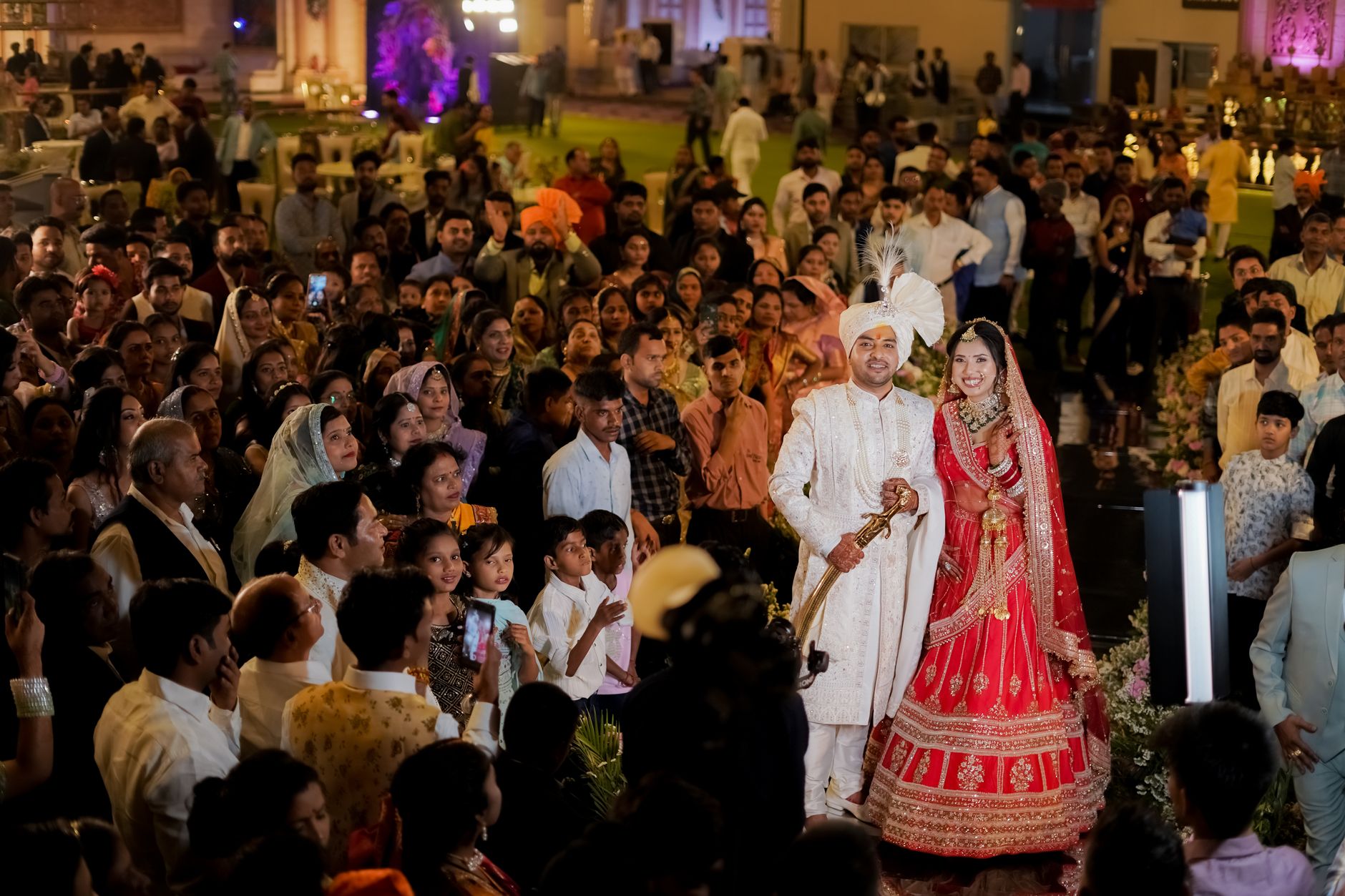
Track Every Wedding Promise, Delhi
Planning tools in Delhi
Event Deliverable Followthrough Tool for Delhi Weddings
Planning a wedding in Delhi — whether a 500-guest shaadi in Dwarka or an intimate nikah in Mehrauli — means juggling dozens of vendors, deposits, and deadlines simultaneously. An Event Deliverable Followthrough Tool brings every promise made by caterers, decorators, photographers, and mehendi artists onto one structured timeline, so nothing slips through the cracks between the engagement ceremony and the vidaai. With post-booking deliverable tracker capabilities built into Happiffie's planning suite, Delhi families can move from frantic WhatsApp chasing to calm, confirmed vendor accountability for weddings — well before the baraat arrives.
Quick Answer
An Event Deliverable Followthrough Tool is a digital planning system that records every commitment made by wedding vendors — payments due, items to be delivered, confirmations needed — and sends timely reminders to both the couple and the vendor. For Delhi weddings with multiple functions across 3-5 days, it prevents last-minute surprises by keeping caterers, decorators, and AV teams aligned to agreed milestones throughout the planning journey.
What Is an Event Deliverable Followthrough Tool and Why Does Every Delhi Wedding Need One?
An Event Deliverable Followthrough Tool is a structured digital system that converts every verbal promise and written contract clause into a trackable action item with an owner, a deadline, and a status flag. In Delhi's wedding market — where a single Punjabi wedding can involve a tent house from Lajpat Nagar, a halwai from Karol Bagh, a DJ from Rajouri Garden, and a photographer from South Extension — the gap between 'vendor agreed' and 'vendor delivered' is where most disasters happen. The tool assigns each deliverable — advance payment receipt, menu finalization, decor mood board approval, sound-check schedule — to a specific date and sends automated nudges when a milestone is approaching or overdue. Unlike a basic spreadsheet, a dedicated wedding task tracking software flags conflicts, such as when your makeup artist's arrival time clashes with the pandit's muhurat, before the wedding morning. Delhi families managing multi-day functions like sangeet, haldi, and pheras across different venues particularly benefit because every venue shift creates a fresh set of deliverables that must be re-confirmed independently.
How Does a Post-Booking Deliverable Tracker Work on Happiffie?
Once you book a vendor through Happiffie, the platform automatically populates a post-booking deliverable tracker with standard milestones — advance payment confirmation, contract signing, creative brief submission, rehearsal date, and final balance clearance. You can add custom deliverables specific to your wedding: for example, 'Baraat entry prop list confirmed' or 'Mehendi design reference sent to artist by 15 days prior.' Each task shows the responsible party — you, your planner, or the vendor — and a due date. The wedding milestone monitoring system sends WhatsApp and email nudges to all parties three days and one day before each deadline, creating a shared accountability loop. Status updates are visible on a single dashboard, so your mother in Pitampura and your wedding planner in Vasant Kunj can both see what is pending without a flurry of calls. For banquet hall confirmation checklists, the tool pre-fills items like parking arrangement sign-off, backup generator confirmation, and catering head-count lock-in — details that Delhi venues typically require 7-10 days before the event date.
Delhi Wedding Planning Timeline: What Milestones Must Be Tracked?
A robust Delhi wedding planning timeline typically spans 9-12 months for large gatherings and 3-4 months for intimate affairs. The Event Deliverable Followthrough Tool organises this into four phases: Discovery (comparing and shortlisting vendors), Booking (contracts, advances, and creative briefs), Pre-Event (final confirmations, rehearsals, and logistics lock-in), and Day-Of (arrival sequences, payment releases, and feedback triggers). In the Discovery phase, the event vendor checklist manager ensures you have collected quotes, portfolios, and availability confirmations from at least three vendors per category before committing. During the Booking phase, payment schedules for Delhi vendors — who typically ask for 30-50% advance, 30% a week before, and the balance on the day — are automatically loaded into the tracker. The Pre-Event phase is the most critical: tent-house measurements, electricity load approvals from BSES, and guest-count confirmations for the caterer are all time-sensitive in Delhi's densely scheduled wedding season running October through February. The Day-Of phase tracks vendor arrival times against planned schedules, flagging any delays in real time so your family coordinator can respond immediately.
Vendor Accountability for Weddings: Common Gaps the Tool Closes
Vendor accountability for weddings in Delhi most often breaks down in three areas: undocumented verbal commitments, overlooked payment tranches, and uncommunicated changes to guest count or venue layout. An Event Deliverable Followthrough Tool converts every verbal agreement into a written, time-stamped task that both the couple and vendor can see. When your decorator verbally agrees to include a floral phoolon ki chadar that was not itemised in the contract, logging it as a deliverable in the system creates a mutual record that protects both parties. The wedding task tracking software also tracks payment releases so you never accidentally withhold a tranche that is genuinely due, which damages vendor relationships mid-planning. Multi-day wedding coordination — managing logistics across sangeet at a farmhouse in Chattarpur, haldi at home in Rohini, and pheras at a five-star in Aerocity — becomes significantly less stressful when every venue's separate confirmations are nested under one master event view. Couples who use a structured tracking approach report fewer day-of surprises, faster vendor response times, and a calmer overall experience in the weeks leading up to the wedding.
How Much Does Using an Event Deliverable Followthrough Tool Cost in Delhi?
On Happiffie, the Event Deliverable Followthrough Tool is available as part of the platform's planning suite, which ranges from a free basic tier — suitable for smaller weddings with fewer than 10 vendors — to a premium coordination tier priced between INR 4,999 and INR 14,999 depending on the number of functions, vendors, and users you need to manage simultaneously. Standalone third-party wedding task tracking software typically charges INR 2,000-8,000 per month, but these tools lack vendor accountability for weddings because they do not integrate directly with the vendor's own calendar or payment systems. The cost of not using a deliverable tracker is harder to quantify but very real: a no-show DJ in Delhi's peak December season can cost you INR 40,000-80,000 in emergency replacements, and a miscommunicated guest count can lead to catering shortfalls that are impossible to fix on the day. For budget-conscious families, even the free tier of the banquet hall confirmation checklist feature alone can prevent the single most common complaint — the venue not knowing your final headcount — that derails otherwise well-planned Delhi weddings.
Event Deliverable Followthrough Tool: Comparing Your Tracking Options for Delhi Weddings
Expert Recommendation
Best for intimate celebrations (under 75 guests)
Best for large guest counts (300+ guests)
Best for destination-style Delhi weddings at farmhouses
Best for budget-conscious families
Best for traditional multi-function shaadis
Best for modern couples managing planning remotely
How to Choose the Right Option
✅ Pre-booking Checklist
- Log every vendor booking into the Event Deliverable Followthrough Tool within 24 hours of confirming, including all verbal promises made during the call.
- Upload signed contracts and advance payment receipts against each vendor profile so documents are retrievable in one place.
- Set reminder windows for each deliverable — typically 7 days, 3 days, and 1 day before each deadline.
- Assign every task to a named owner: yourself, a family member, your planner, or the vendor directly.
- Run a weekly dashboard review every Sunday during the 8 weeks before the wedding to catch any red-flagged or overdue items.
- Use the banquet hall confirmation checklist to formally confirm headcount, layout, and backup logistics no later than 10 days before the event.
- Archive all completed deliverables with timestamps — this record supports any post-event disputes over what was agreed and delivered.
- Share dashboard access with at least one trusted family member so the system is not dependent on a single point of contact.
🎯 Selection Criteria
- Choose a tool that integrates directly with your vendor booking records so deliverables are auto-populated rather than manually entered.
- Ensure the platform supports multi-function event structures — separate timelines for sangeet, haldi, and pheras under one master wedding.
- Prioritise tools that send reminders to both the couple and the vendor, not just internally, to create true vendor accountability for weddings.
- Verify that the tool supports INR payment tracking with tranche breakdowns matching Delhi vendor norms (30-50% advance structure).
- Look for a shared-access feature so parents, siblings, and hired coordinators can all view and update the same dashboard without version conflicts.
- Check that the tool offers a mobile-friendly interface, since most Delhi planning conversations happen on smartphones, not desktops.
💰 Cost / Quality Factors
- Number of functions: more functions means more vendor sets and more deliverables, requiring a premium tier with unlimited task creation.
- Vendor count: Delhi weddings with 15+ vendors need automated reminders; manual follow-up becomes unsustainable above 10 vendors.
- Planning horizon: a 12-month engagement requires phased milestone views; a 3-month rush wedding needs aggressive near-term deadline flagging.
- Remote vs. on-ground family: NRI couples or outstation families need cloud-based shared dashboards more urgently than locally present planners.
- Budget sensitivity: tracking payment tranches carefully prevents overpayment and ensures refund claims are made within vendor-stipulated windows.
- Vendor familiarity with digital tools: some traditional Delhi vendors (especially tent houses and halwais) may need WhatsApp reminders rather than email, so check notification channels.
⚠️ Common Mistakes to Avoid
- Logging deliverables only after something goes wrong — the tool's value is entirely in proactive tracking, not reactive damage control.
- Treating verbal vendor promises as confirmed without entering them into the post-booking deliverable tracker immediately.
- Giving dashboard access to too many people without assigning clear task ownership, which creates confusion about who is responsible for follow-up.
- Ignoring the banquet hall confirmation checklist for venue-specific logistics like parking, generator backup, and BSES electricity load approvals in Delhi.
- Setting all reminders to 1 day before the deadline — this leaves no recovery time if a vendor needs to be replaced or a deliverable needs revision.
- Not archiving completed deliverables, which removes your audit trail and weakens your position in any post-event payment disputes with vendors.
People Also Ask
What is an Event Deliverable Followthrough Tool in the context of Indian weddings?
How is a post-booking deliverable tracker different from a regular spreadsheet?
Which Delhi wedding vendors most benefit from a structured deliverable tracking system?
Can the event vendor checklist manager handle multiple functions like sangeet, haldi, and pheras?
How far in advance should I start using a wedding task tracking software for a Delhi wedding?
Does the tool help with vendor accountability for weddings if a vendor misses a deadline?
Is the Event Deliverable Followthrough Tool useful for smaller Delhi weddings under 100 guests?
What happens to my wedding data if a vendor is replaced mid-planning?
Related Experiences on Happiffie
Your Lucknow Wedding Task List
Plan Every Detail, Stress-Free
Smart Data Monitoring for Your Event
Jaipur Fusion Weddings Done Right
Two Cultures, One Perfect Wedding
Book Banquet Halls in Jodhpur
Frequently Asked Questions
Is the Event Deliverable Followthrough Tool on Happiffie specific to Delhi vendors?
How does the wedding milestone monitoring system handle last-minute vendor changes in Delhi?
Can I use the event vendor checklist manager for non-wedding events like corporate parties in Delhi?
What is a realistic Delhi wedding planning timeline when using a deliverable tracker from scratch?
Does the post-booking deliverable tracker send reminders to vendors directly, or only to the couple?
How does the banquet hall confirmation checklist differ from the general deliverable tracker?
What is the best way to use the Event Deliverable Followthrough Tool for a Chattarpur farmhouse wedding?
Can multiple family members access the wedding task tracking software simultaneously?
Key Takeaways
- An Event Deliverable Followthrough Tool converts every vendor commitment into a trackable, time-stamped task — essential for complex Delhi weddings with multiple functions and vendors.
- Happiffie's planning suite integrates the post-booking deliverable tracker directly with vendor bookings, auto-populating milestones and sending reminders to both couples and vendors.
- Delhi's peak wedding season (October-February) makes vendor accountability for weddings critical — demand is high and replacements are difficult, so documented deliverables are non-negotiable.
- The tool scales from free (up to 10 vendors) to premium (INR 4,999-14,999) tiers, making it accessible for intimate mehendi functions and large 500-guest receptions alike.
- Multi-day wedding coordination across Delhi's diverse venue landscape — Aerocity, Chattarpur farmhouses, Dwarka banquet halls — requires separate per-function timelines nested under one master dashboard.
- Common wedding disasters in Delhi — no-show DJs, incorrect headcount with caterers, missed payment tranches — are largely preventable with consistent use of a structured deliverable tracker.
- Shared dashboard access allows distributed teams (parents, hired planners, outstation couples) to stay aligned without relying on one person's memory or a single WhatsApp thread.
- The wedding task tracking software approach is most valuable when started 9-12 months before the wedding date, giving every deliverable sufficient lead time and recovery margin.
Stop Chasing Vendors. Start Tracking Deliverables.
Set up your Event Deliverable Followthrough Tool on Happiffie today and walk into your Delhi wedding knowing every promise is confirmed, every payment is tracked, and every vendor is ready.
Start Tracking Free
Are you a Vendor? Grow Your Business with Happiffie!
- High intent verified leads
- Reverse auction opportunities
- AI business tools & insights
- Dedicated vendor dashboard
- Grow your business, your way
It's free & takes less than 2 minutes!