
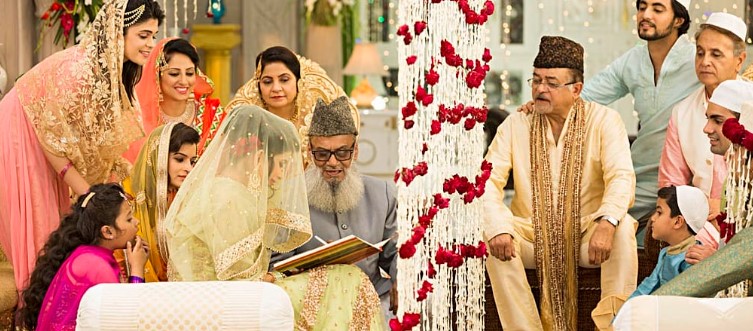
Sacred Nikah Ceremonies in Delhi
Religious cermony in Delhi
Authentic Islamic Wedding Rituals in Delhi: Complete Guide
Delhi, with its rich Mughal heritage and vibrant Muslim communities in areas like Shahjahanabad, Nizamuddin, and Zakir Nagar, is one of India's most cherished cities for planning authentic Islamic wedding rituals. From the sacred Muslim Nikah ceremony conducted by a learned Qazi to the joyful Walima feast, every step carries deep spiritual and cultural meaning. Whether your family follows traditional Muslim wedding customs rooted in centuries-old practice or wishes to blend heritage with contemporary elegance, Delhi offers the perfect setting. Happiffie helps you connect with experienced wedding Qazi services Delhi, halal wedding catering specialists, and venues that honour every sacred tradition.
Quick Answer
Authentic Islamic wedding rituals are a sequence of spiritually and legally mandated ceremonies in Islam. The core is the Nikah — a formal marriage contract signed in the presence of a Qazi, two witnesses, and the bride's Wali (guardian), accompanied by the Mahr (dower). Supporting rituals include the Mangni (engagement), Mehndi, Baraat procession, and the post-wedding Walima feast. Together, these ceremonies fulfil both religious obligation and cultural celebration within the framework of Islamic law.
What Are the Core Authentic Islamic Wedding Rituals Every Delhi Couple Must Know?
Authentic Islamic wedding rituals follow a clear, faith-grounded sequence that begins well before the wedding day. The Istikhara (prayer for guidance) is often the first step, where families seek divine blessing before fixing the match. The Mangni or engagement follows, where the families formally agree to the union. On the wedding day, the Muslim Nikah ceremony is the legal and religious cornerstone — a Qazi recites Quranic verses, the bride and groom offer their Ijab-o-Qubool (offer and acceptance) three times, and the Mahr amount is declared and agreed upon. Two adult Muslim male witnesses, or one man and two women per Hanafi tradition, must be present. The Nikah Nama (marriage certificate) is then signed by both parties. Following the Nikah, the Rukhsati marks the bride's departure from her parental home, an emotionally significant moment observed across Delhi's communities from Old Delhi havelis to South Delhi banquet halls. The Walima, a celebratory feast hosted by the groom's family within three days of the wedding, completes the religious cycle. Each of these stages of Islamic marriage traditions carries Quranic or Hadith backing, making their observance both a spiritual duty and a family celebration.
The Significance of the Muslim Nikah Ceremony in Delhi Weddings
The Muslim Nikah ceremony is far more than a formality — it is the moment a couple enters a sacred covenant before Allah and their community. In Delhi, Nikah ceremonies are held in a wide variety of settings: grand banquet halls in Karol Bagh, intimate mosque courtyards in Mehrauli, rooftop venues in Lajpat Nagar, or beautifully decorated family homes in Jamia Nagar. A qualified Qazi leads the proceedings, ensuring every step of Islamic marriage traditions is observed correctly. The Mahr, which can be gold jewellery, cash, property, or any agreed asset of value, is a mandatory gift from the groom to the bride and becomes her exclusive property. Delhi families typically set Mahr values between INR 50,000 and several lakhs depending on family custom and financial capacity. Wedding Qazi services Delhi are available through mosque committees, personal referrals, and platforms like Happiffie, and it is advisable to engage a Qazi at least four to six weeks before the ceremony to align on logistics, documentation, and recitation preferences. Nikah ceremony planning in Delhi also involves coordinating the seating of men and women, microphone arrangements so all guests can hear the proceedings, and ensuring a private space for the bride to give her consent through her Wali.
How Much Does Nikah Ceremony Planning Cost in Delhi?
Nikah ceremony planning costs in Delhi vary significantly based on scale, venue, and the services bundled together. A simple, home-based Nikah with a Qazi, basic floral decoration, and family-cooked food can be arranged for INR 50,000 to INR 1.5 lakh. A mid-range celebration at a community hall or hotel banquet in areas like Vasant Kunj or Greater Kailash, covering decor, halal wedding catering for 150-300 guests, professional photography, and a Qazi fee, typically costs between INR 3 lakh and INR 8 lakh. Premium weddings at five-star properties or Mughal-themed Islamic wedding venues in Delhi such as those near Humayun's Tomb or Qutub Minar can run from INR 15 lakh to INR 40 lakh or more, including elaborate Mehndi and Baraat arrangements and live ghazal or qawwali performances. Halal wedding catering alone — ensuring all meat is zabiha-certified and no alcohol is served — costs between INR 800 and INR 2,500 per plate depending on the menu complexity. Budgeting separately for the Walima feast is important; many Delhi families host the Walima at a different venue the day after the Nikah, adding INR 1 lakh to INR 5 lakh to total wedding expenditure.
Pre-Wedding Rituals: Mehndi, Baraat, and Traditional Muslim Wedding Customs
Traditional Muslim wedding customs in Delhi extend beautifully across the days preceding the Nikah. The Mehndi and Baraat arrangements are among the most visually spectacular elements of a Delhi Muslim wedding. The Mehndi ceremony, held one or two days before the Nikah, is a women-centric celebration where intricate henna patterns are applied to the bride's hands and feet, often featuring the groom's name hidden within the design. Professional Mehndi artists in Delhi charge between INR 5,000 and INR 35,000 depending on design complexity. The Baraat is the groom's procession to the venue — in Old Delhi neighbourhoods it may involve a horse-drawn carriage (ghodi) moving through narrow lanes, while in South Delhi a decorated car or vintage vehicle is more common. Traditional Muslim wedding customs also include the Ubtan (turmeric paste application) for the bride, the Sehra (flower or bead garland worn by the groom), and the exchange of gifts between families known as the Shagna or Zaroor. These rituals, while not all strictly Quranic, are deeply embedded in the Indo-Islamic cultural fabric and are enthusiastically observed by families across Delhi's communities, from Hauz Qazi in Old Delhi to the newer Muslim localities of Okhla and Abul Fazal Enclave.
Why Should You Choose Happiffie to Plan Authentic Islamic Wedding Rituals in Delhi?
Planning authentic Islamic wedding rituals requires vendors who understand both the religious requirements and the cultural nuances specific to Delhi's diverse Muslim communities — Sunni, Shia, Bohra, and others each maintain distinct traditions. Happiffie's curated marketplace connects couples with verified wedding Qazi services Delhi, halal wedding catering specialists who provide zabiha-certified menus, Islamic wedding venues in Delhi that offer gender-segregated spaces and prayer areas, and decor teams experienced with traditional Muslim wedding customs like Attar (perfume) stations and Quranic calligraphy installations. The platform allows side-by-side comparison of packages, transparent INR pricing, and genuine reviews from Delhi-based couples. Whether you are orchestrating a 50-guest intimate Nikah ceremony planning session in a Nizamuddin apartment or a 700-guest grand celebration at a Dwarka banquet, Happiffie provides decision-support tools, budget calculators, and a dedicated relationship manager to ensure every detail of your authentic Islamic wedding rituals is handled with care, respect, and cultural sensitivity. Start your journey today and let Delhi's finest Islamic wedding professionals make your Nikah a memory for generations.
Islamic Wedding Setup Options in Delhi: Comparison Guide
Expert Recommendation
Best for Intimate Family Nikah Ceremonies
Best for Large Community Celebrations
Best for Heritage and Mughal-Themed Weddings
Best for Budget-Conscious Couples
Best for Modern Muslim Couples
Best for Out-of-Town or Destination Nikah in Delhi
How to Choose the Right Option
✅ Pre-booking Checklist
- Fix your Nikah date and book the venue at least 3-4 months in advance, especially for peak season (October to February)
- Identify and confirm a qualified Qazi through wedding Qazi services Delhi at least 6 weeks before the ceremony
- Prepare all required documents: birth certificates, previous divorce deed (if applicable), and two male witnesses' identification
- Agree on and document the Mahr amount in writing before the Nikah day
- Confirm your caterer provides certified halal wedding catering with a zabiha meat sourcing certificate
- Arrange gender-segregated seating or separate rooms if required by family tradition
- Book professional photographers and videographers experienced with Islamic wedding ceremonies and indoor low-light settings
- Plan the Walima date and venue within three days of the Nikah and inform the groom's family to send invitations early
🎯 Selection Criteria
- Verify the Qazi's credentials, school of jurisprudence, and experience with your community's specific traditions
- Confirm the venue can accommodate your exact guest count with comfortable prayer space and wudu facilities
- Assess halal catering quality by requesting a tasting session and reviewing the caterer's zabiha certification
- Check whether the venue supports gender-segregated seating or has a separate Purdah enclosure for the bride's consent
- Ensure decor vendors understand Islamic aesthetics — avoiding imagery of living beings and incorporating Quranic calligraphy
- Review Nikah Nama format with your Qazi to ensure it meets both Islamic and Indian legal registration standards
💰 Cost / Quality Factors
- Guest count is the single biggest driver of cost — every 100 additional guests adds INR 80,000 to 2,00,000 to catering alone
- Venue location in Delhi significantly impacts pricing — Old Delhi and Jamia areas offer more affordable halls than South Delhi or hotel properties
- Qazi fees range from INR 5,000 to INR 25,000 depending on the scholar's seniority and distance of travel
- Decor complexity for Islamic marriage traditions like floral arches, Arabic calligraphy installations, and Attar stations adds INR 50,000 to INR 3 lakh
- Photography and videography packages for full-day Nikah coverage range from INR 40,000 to INR 2.5 lakh in Delhi
- Walima feast budgeting is often underestimated — allocate at least 25% of the Nikah-day food budget separately for the Walima
⚠️ Common Mistakes to Avoid
- Booking a venue before confirming it allows an external Qazi — some hotel properties restrict outside religious officiants
- Skipping Nikah Nama registration with the Waqf Board or Sub-Registrar, which can cause legal complications later
- Assuming all caterers in Delhi provide halal wedding catering without verifying zabiha certification and alcohol-free policy
- Ignoring the bride's formal consent process — her Ijab-o-Qubool must be obtained privately through her Wali and then communicated to the Qazi
- Underestimating time required for the Nikah ceremony itself — a properly conducted ceremony with du'a, recitation, and guest seating takes 45-90 minutes
- Neglecting Mehndi and Baraat arrangements timelines — vendors in peak season book 2-3 months in advance in Delhi
People Also Ask
What is the most important ritual in an authentic Islamic wedding?
Is a court marriage also required after a Muslim Nikah in Delhi?
What is Mahr and how is it decided for Delhi weddings?
How do I find a qualified Qazi for a Nikah in Delhi?
Can the Walima be held on the same day as the Nikah?
What halal catering considerations are essential for a Muslim wedding in Delhi?
Are there Islamic wedding venues in Delhi that offer gender-segregated spaces?
What is the typical guest count for Delhi Muslim weddings?
Related Experiences on Happiffie
Sacred Nikah Ceremonies in Pune
Sacred Nikah Ceremonies in Goa
Plan Your Perfect Nikah in Mumbai
Royal Groom Turbans for Delhi Weddings
Register Your Marriage Hassle-Free
Elevate Every Bite at Your Delhi Wedding
Transform Your Dream Wedding Venue
Make Your Baraat Unforgettable in Pune
Frequently Asked Questions
How far in advance should we start planning authentic Islamic wedding rituals in Delhi?
What documents are required for a Nikah ceremony in Delhi?
Is it necessary to host a Walima after the Nikah in Delhi?
Can non-Muslim guests attend a Muslim Nikah ceremony in Delhi?
What are the best Delhi neighbourhoods to find affordable Islamic wedding venues?
Do Islamic marriage traditions differ between Sunni and Shia families in Delhi?
How can Happiffie help with Nikah ceremony planning in Delhi?
What is the role of the Wali in authentic Islamic wedding rituals?
Key Takeaways
- Authentic Islamic wedding rituals in Delhi centre on the Nikah — a legally and spiritually binding contract requiring a Qazi, Wali, two witnesses, and declared Mahr.
- The full wedding sequence includes Istikhara, Mangni, Mehndi, Baraat, Nikah, Rukhsati, and Walima — each carrying distinct religious or cultural significance.
- Delhi offers diverse settings for Islamic marriage traditions, from Old Delhi mosque courtyards and heritage havelis to modern South Delhi banquet halls and five-star hotels.
- Halal wedding catering with zabiha-certified meat and zero alcohol is a non-negotiable requirement — always request written certification from your caterer.
- Nikah ceremony planning costs in Delhi range from INR 50,000 for intimate home ceremonies to INR 40 lakh or more for premium heritage venue weddings.
- Engaging verified wedding Qazi services Delhi at least six weeks in advance ensures proper documentation, smooth proceedings, and legally registered Nikah Nama.
- Happiffie connects Delhi couples with curated Islamic wedding vendors — Qazis, halal caterers, venues, and decor specialists — all in one transparent marketplace.
- Gender-segregated spaces, prayer facilities, and Attar stations are key venue considerations that reflect traditional Muslim wedding customs and should be confirmed at booking.
Begin Your Sacred Nikah Journey with Happiffie
Connect with Delhi's finest Qazis, halal caterers, and Islamic wedding venues — all in one trusted marketplace designed for authentic Islamic wedding rituals.
Explore Wedding Vendors
Are you a Vendor? Grow Your Business with Happiffie!
- High intent verified leads
- Reverse auction opportunities
- AI business tools & insights
- Dedicated vendor dashboard
- Grow your business, your way
It's free & takes less than 2 minutes!