
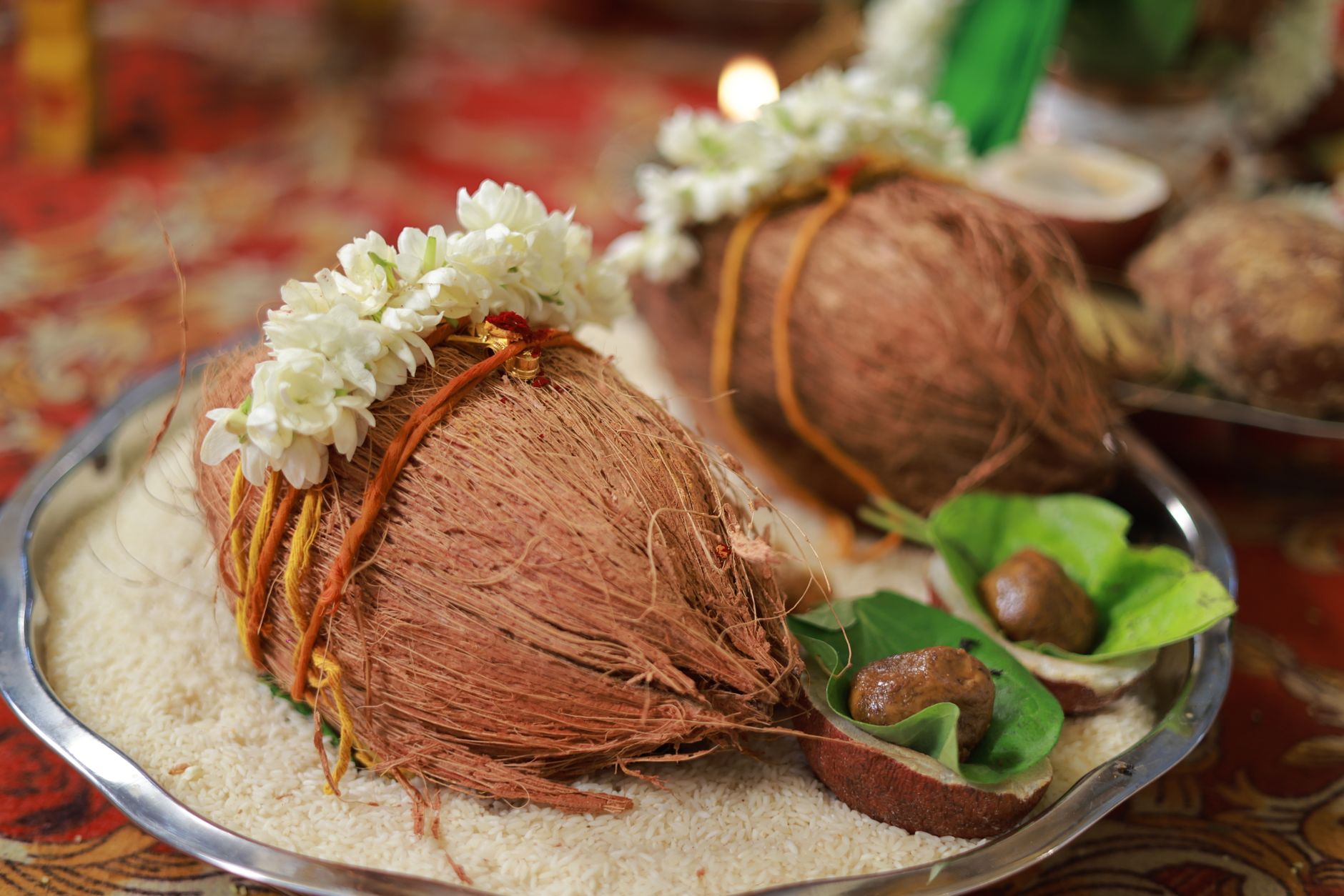
Sacred Kobbari Bunda Setup, Chennai
Religious cermony in Chennai
Sacred Kobbari Bunda Ceremony Setup in Chennai
The Sacred Kobbari Bunda Ceremony Setup is one of the most visually striking and spiritually significant moments in a Telugu wedding, marking the auspicious exchange of the sacred coconut between families. In Chennai, where Telugu communities are deeply rooted across localities like Mylapore, Anna Nagar, and Chromepet, this ritual demands meticulous planning — from Kobbari Bunda mandap styling draped in fresh marigolds and mango leaves to the precise placement of the pooja thali and sacred fire. A well-executed South Indian religious ceremony decor transforms the ritual into a memory that guests carry for decades. Happiffie connects you with experienced Chennai vendors who understand every nuance of this cherished tradition.
Quick Answer
A Sacred Kobbari Bunda Ceremony Setup refers to the complete ritual decor and logistical arrangement for the Telugu wedding tradition where a coconut (kobbari bunda) is exchanged between the bride and groom's families under a decorated mandap. It includes the mandap structure, floral arrangements, pooja items, sacred fire setup, and seating — typically costing between ₹15,000 and ₹80,000 in Chennai depending on scale and styling.
What Exactly Is a Sacred Kobbari Bunda Ceremony Setup?
The Sacred Kobbari Bunda Ceremony Setup is the end-to-end ritual environment created for the coconut-exchange custom central to Telugu Hindu weddings. The coconut, considered a symbol of fertility, prosperity, and divine blessing, is passed between the couple under the watchful eyes of a priest and both families. The setup encompasses the mandap frame (usually bamboo or steel draped with silk), traditional floral arrangements using jasmine, marigold, and banana leaves, a raised wooden platform for the priest, and the complete traditional Kobbari Bunda pooja setup including the sacred fire pit (homam kund), brass lamps, and all ritual vessels. In Chennai's Telugu households, this ceremony is often performed the morning of the wedding day or during the Pellikoduku or Nischitartham pre-wedding functions. Getting every element right — from vastu-compliant mandap orientation to the correct placement of the coconut on the thali — is non-negotiable for most families.
Key Elements That Make a Ceremony Setup Authentically Sacred
An authentic Sacred Kobbari Bunda Ceremony Setup goes well beyond aesthetic decoration — it is built around ritual precision. The Kobbari Bunda ritual decoration typically layers multiple symbolic elements: fresh turmeric-dipped coconuts, betel leaves and areca nuts arranged in specific counts, a brass kalash filled with water and topped with a coconut, and garlands exchanged between the families. In Chennai, vendors familiar with Chennai Telugu wedding rituals know that the mandap must face east or north, that the floor beneath it should be layered with raw rice or kolam, and that lighting must be warm and lamp-based rather than harsh LED. The priest's seating, the bride and groom's platforms, and the family seating arrangement are all dictated by tradition. Experienced decorators also incorporate a wedding ritual floral backdrop Chennai families recognise — typically a cascading jasmine-and-marigold wall that frames the ceremony for photographs without disrupting the sanctity of the ritual.
How Much Does a Sacred Kobbari Bunda Ceremony Setup Cost in Chennai?
Pricing for a Sacred Kobbari Bunda Ceremony Setup in Chennai varies significantly based on mandap size, floral choice, and the number of supplementary elements. A basic Kobbari Bunda mandap styling package using synthetic flowers, a standard steel frame, and minimal lighting starts around ₹15,000–₹25,000. A mid-range setup with fresh jasmine, marigold, and banana-leaf draping, a proper homam kund, and coordinated seating arrangements falls between ₹30,000 and ₹55,000. Premium packages — featuring customised bamboo or teakwood mandaps, elaborate auspicious pooja venue arrangements, professional lighting, and a dedicated decor coordinator — can reach ₹70,000–₹85,000. Venue hire is separate. Most Chennai decorators offer all-inclusive packages that bundle the traditional Kobbari Bunda pooja setup with transport, installation, and post-ceremony cleanup, making them more cost-effective than piecemeal sourcing.
Choosing the Right Venue for Your Ceremony in Chennai
The venue you choose directly shapes how well your Sacred Kobbari Bunda Ceremony Setup can be executed. Kalyana mandapams in localities such as Mylapore, T. Nagar, West Mambalam, and Chromepet are the traditional first choice — they are built to accommodate sacred fire setups, have ventilation for smoke from the homam, and include backstage areas for the priest and family. Smaller, more intimate ceremonies are increasingly held in community halls across Anna Nagar and Adyar, or in the open courtyards of ancestral homes in Old Washermenpet. Outdoor venues and hotel ballrooms require additional planning because smoke clearance systems and fire safety permissions must be arranged separately. The South Indian religious ceremony decor must also adapt to the ceiling height and flooring type of the venue — a low-ceiling hall limits tall mandap structures, while marble flooring needs protective underlays before a homam is lit.
Why Should You Book Early for a Sacred Kobbari Bunda Ceremony Setup?
In Chennai, wedding season peaks between November and February during the Tamil and Telugu muhurtham-heavy calendar period, and again during April-May around Akshaya Tritiya. Specialist vendors who understand the nuances of Kobbari Bunda ritual decoration — including priests who coordinate with decorators on timing and flower freshness — are typically booked six to eight weeks in advance during these months. Fresh jasmine and marigold sourced from Koyambedu market must be ordered 48 hours before installation for maximum bloom and fragrance, and Telugu coconut ceremony arrangements that rely on specific floral quantities can be disrupted by last-minute sourcing. Booking through Happiffie at least 4–6 weeks before your ceremony date ensures vendor availability, locks in quoted pricing, and gives your decorator time to do a venue walkthrough. Early booking also allows you to request customisations — such as a specific silk colour for the mandap drape or a particular lamp style — without additional rush charges.
Sacred Kobbari Bunda Ceremony Setup Options Compared
Expert Recommendation
Best for Intimate Home Celebrations
Best for Large Community Hall Ceremonies
Best for Budget-Conscious Families
Best for Traditional Purist Families
Best for Modern Aesthetic Preferences
Best for Destination or Hotel Venue Ceremonies
How to Choose the Right Option
✅ Pre-booking Checklist
- Confirm the mandap orientation is east- or north-facing per your family's vastu preference before the decorator finalises placement.
- Book your Sacred Kobbari Bunda Ceremony Setup vendor at least 4–6 weeks in advance, especially for peak wedding months (November–February).
- Verify whether fresh flowers are included and when they will be sourced — jasmine and marigold must arrive within 24–48 hours of the ceremony.
- Clarify whether the package includes the homam kund, fire-safety base, and all pooja vessels, or whether you need to source these separately.
- Check with the venue about open-flame permissions before confirming a live homam setup.
- Request a venue walkthrough with your decorator to assess ceiling height, flooring type, and electricity points before finalising the design.
- Confirm post-ceremony cleanup is included in the package, especially if the venue charges penalty fees for leftover decor.
- Ensure the vendor carries copies of any local permissions needed for flower sourcing from Koyambedu market during regulated festive periods.
🎯 Selection Criteria
- Demonstrated experience with Telugu wedding rituals and ritual-specific decor requirements — not just general event decoration.
- Ability to provide fresh, locally sourced flowers (jasmine, marigold) with confirmed delivery timelines from Koyambedu.
- Transparent itemised pricing that separates mandap, floral, homam kund, lighting, and labour components.
- References or portfolio images of actual Sacred Kobbari Bunda Ceremony Setups — not generic wedding decor.
- Clear communication about what is and is not included, especially regarding pandit coordination and pooja samagri.
- Flexibility to customise silk colours, mandap materials, and floral combinations within your budget.
💰 Cost / Quality Factors
- Mandap material (bamboo, steel, teakwood) is the single largest cost driver — upgrading from steel to teakwood can double the quote.
- Fresh flowers cost 30–50% more than synthetic alternatives but significantly enhance both sanctity and photography outcomes.
- Venue access hours affect labour charges — venues with short setup windows often require larger decorator teams, increasing cost.
- Add-ons like entrance torans, banana plant pillars, kolam artwork, and aisle runners each add ₹2,000–₹8,000 to the base quote.
- Last-minute bookings during peak season attract a 15–25% premium over standard quoted rates.
- All-inclusive packages typically offer 10–15% savings compared to sourcing decor, homam kund, and samagri separately.
⚠️ Common Mistakes to Avoid
- Booking a general event decorator unfamiliar with the ritual significance of item placement in a Kobbari Bunda setup.
- Ordering fresh jasmine too far in advance — blooms wilt within 12–18 hours in Chennai's heat, especially from March to June.
- Overlooking venue fire safety rules and discovering an open-flame homam is prohibited only on the wedding day.
- Ignoring mandap orientation requirements and allowing the decorator to place it based purely on aesthetics.
- Failing to confirm whether post-ceremony cleanup is included, resulting in unexpected charges from the venue.
- Underestimating installation time and scheduling the ceremony too soon after the decorator's arrival, causing a rushed setup.
People Also Ask
What items are included in a Sacred Kobbari Bunda Ceremony Setup?
How long does it take to install the ceremony setup?
Can the Kobbari Bunda ceremony setup be done at home?
What is the difference between Kobbari Bunda ritual decoration and regular wedding decor?
Which Chennai neighbourhoods have the most vendors for Telugu ceremony setups?
Is a pandit included in the Sacred Kobbari Bunda Ceremony Setup package?
How many guests can be accommodated around a standard Kobbari Bunda setup?
What is the best season to hold a Kobbari Bunda ceremony in Chennai?
Related Experiences on Happiffie
Authentic Kobbari Bunda Rituals
Seer Plates Done Right in Chennai
Kobbari Bunda Rituals, Done Right in Mumbai
Sacred Kobbari Bunda for Your Wedding
Authentic Kasi Yatra Accessories Chennai
Authentic South Indian Wedding Decor
Sacred Garlands for Your Big Day
Frequently Asked Questions
What is the Sacred Kobbari Bunda Ceremony Setup, and why is it important in Telugu weddings in Chennai?
How much does a Sacred Kobbari Bunda Ceremony Setup cost in Chennai?
Which venues in Chennai are best suited for a Sacred Kobbari Bunda Ceremony Setup?
Can I request a Kobbari Bunda mandap styling that is both traditional and modern-looking?
Do decorators provide the pooja samagri (ritual items) as part of the Sacred Kobbari Bunda Ceremony Setup?
How far in advance should I book a Sacred Kobbari Bunda Ceremony Setup in Chennai?
Are there eco-friendly options for a traditional Kobbari Bunda pooja setup in Chennai?
Does Happiffie list vendors who specialise in Sacred Kobbari Bunda Ceremony Setup in Chennai?
Key Takeaways
- A Sacred Kobbari Bunda Ceremony Setup covers the complete ritual environment — mandap, floral decor, homam kund, pooja vessels, and seating — for the Telugu coconut-exchange tradition.
- In Chennai, setup costs range from ₹15,000 for a basic package to ₹85,000 for a premium teakwood mandap with fresh flowers and full coordination.
- Vendors experienced in Chennai Telugu wedding rituals ensure ritual accuracy — mandap orientation, flower choices, and item placement are all tradition-compliant.
- Fresh jasmine and marigold from Koyambedu market are the preferred florals; they must be sourced 24–48 hours before installation for peak freshness.
- Book at least 4–6 weeks in advance during peak Telugu wedding months (November–February and April–May) to secure specialist vendors.
- Always verify open-flame permissions with your venue before confirming a live homam kund — hotel and indoor ballroom venues often require electric alternatives.
- All-inclusive packages that bundle Kobbari Bunda mandap styling with samagri, cleanup, and priest coordination offer the best value and least stress.
- Happiffie connects Chennai families with verified, ritual-specialist vendors — making it easy to plan every element of this sacred ceremony in one place.
Ready to Plan Your Sacred Kobbari Bunda Ceremony in Chennai?
Explore verified specialist vendors on Happiffie — compare packages, request custom quotes, and book with confidence for your most auspicious moment.
Find Chennai Vendors
Are you a Vendor? Grow Your Business with Happiffie!
- High intent verified leads
- Reverse auction opportunities
- AI business tools & insights
- Dedicated vendor dashboard
- Grow your business, your way
It's free & takes less than 2 minutes!