
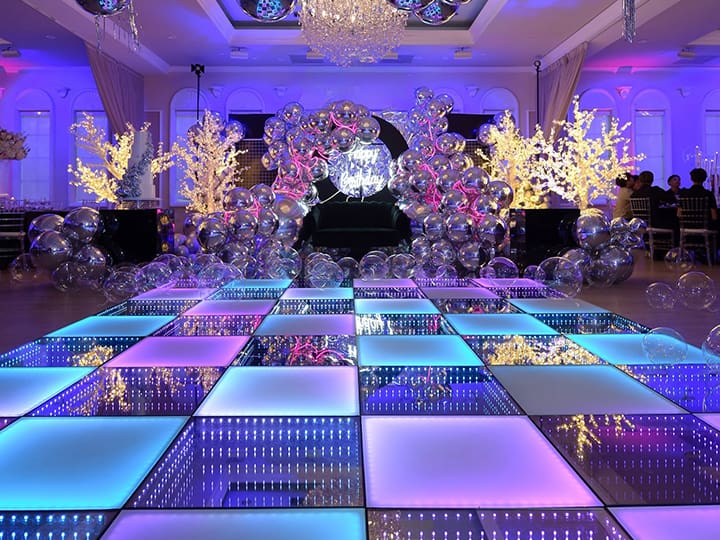
A great wedding dance floor in Chennai balances three things: structural safety, aesthetic harmony with the overall décor, and acoustic compatibility with the venue's sound system. Chennai's humidity — particularly from June to September — means wooden panel floors must be sealed or pre-treated to prevent warping. Most professional vendors supply panels that are tested to bear 150–200 kg per square metre, which is adequate for group choreography during a sangeet or a rain of confetti during the baraat entry.
The size of the dance floor is often underestimated. As a rule, allocate roughly 4.5–5 sq ft per dancing guest. For a 200-person guest list where about 40% join the floor at peak moments, you'll need approximately 360–450 sq ft — a 20×20 ft square is a practical starting point. Speak to your décor and flooring vendor early to confirm that the venue floor can support the installation without adhesives that might damage the property.
Lighting integration is the other critical factor. Wedding lighting and dance floor planning should happen simultaneously, not sequentially. Pin-spotting, up-lighting around the perimeter, and under-floor LED panels all require electrical load calculations that the venue's facility manager must approve. A well-lit, well-sized floor elevates every photograph — and in Chennai, wedding photography is taken very seriously by families.
Finally, consider traffic flow. The dance floor should not block access to the food stations or the exit corridors. We've observed that couples who involve their event planner in floor placement decisions at least three weeks before the event avoid day-of rearrangement costs, which can run between ₹3,000 and ₹8,000 in additional labour.