
Traditional vs Modern Wedding Invitations: Complete Comparison Guide
Navigate the choice between heritage charm and contemporary style for your perfect wedding invitation
A Mumbai couple recently spent ₹1.8 lakhs on handcrafted traditional invitations, only to discover 40% of their guests preferred receiving digital updates. Meanwhile, their friends chose sleek modern cards at ₹15,000 but faced criticism from elders who felt the wedding invitation lacked cultural reverence. This dilemma captures the essence of today's invitation decisions.
Indian couples navigate intense family expectations while balancing personal style preferences and practical budget constraints. Summer weddings in Chennai demand moisture-resistant cards, while destination celebrations in hill station venues require RSVP tracking systems. The invitation sets the tone for your entire celebration, yet most couples spend just two weeks making this crucial choice.
This comprehensive guide dissects traditional versus modern wedding invitations across design, cost, cultural significance, and guest experience factors. We'll reveal hidden costs, timing strategies, and practical decision frameworks while showing how Happiffie's vendor network simplifies your invitation journey from concept to delivery.
📋 Table of Contents
Understanding the Cultural Context
Traditional wedding invitations carry deeper meaning than mere event announcements in Indian culture. They represent family heritage, social standing, and respect for customs that span generations. The ornate designs, Sanskrit verses, and gold foil embossing communicate reverence for the sacred union while honoring ancestral traditions that guests immediately recognize and appreciate.
Modern couples face a unique generational divide that didn't exist two decades ago. A Bangalore tech executive's parents expect elaborate boxes with multiple cards for different ceremonies, while the couple's friends anticipate Instagram-worthy designs and QR codes for digital RSVPs. This tension creates decision paralysis, with 65% of couples changing their invitation style at least twice during planning.
The practical implications extend beyond aesthetics into guest psychology and event success. Traditional invitations signal formal dress codes and multiple-day celebrations, while modern designs suggest streamlined receptions and contemporary venues. Guests unconsciously adjust their expectations, gift amounts, and attendance commitment based on invitation style. Your invitation choice directly influences guest behavior and event atmosphere in ways most couples never consider.
Climate and logistics add another layer of complexity that forces practical decisions. Monsoon-season weddings in Kerala require waterproof packaging, while Delhi's dust storms demand protective sleeves. Modern digital components need backup systems when guests lack smartphone proficiency, particularly among older relatives who form the core of traditional wedding celebrations. These real-world factors often override aesthetic preferences when couples face delivery deadlines.
 Hiya
HiyaPro Tip: Order invitation samples in different seasons to test durability. Monsoon humidity can warp traditional cards, while summer heat affects adhesive quality in modern designs.
Key Decision Factors
Guest demographics determine invitation success more than personal preferences. Analyze your guest list composition: tech-savvy friends versus traditional relatives, urban versus rural addresses, age distribution, and cultural backgrounds. A Chennai couple discovered their 400-person guest list split evenly between smartphone users and feature phone users, forcing a hybrid approach that doubled their budget but eliminated RSVP confusion.
Timeline pressures create hidden costs that blindside unprepared couples. Traditional invitations require 6-8 weeks for design approval, printing, and distribution, while modern designs can be finalized in 2-3 weeks but need extra time for digital platform setup and guest education. Peak wedding season (October-February) extends these timelines by 40%, with quality printers booking out completely during Diwali-to-Valentine's Day rush.
Distribution logistics reveal the true complexity of invitation management beyond initial design decisions. Traditional cards require physical addressing, postage calculation, and delivery tracking across India's varied postal infrastructure. Modern invitations need digital contact collection, spam filter navigation, and technical support for older guests. The hybrid approach—traditional cards with digital RSVP systems—offers the best user experience but demands dual management systems.
Cultural sensitivities around religious symbols, language choices, and ceremonial representation can make or break family harmony. Sanskrit verses satisfy orthodox relatives but confuse non-Hindu guests at interfaith weddings. Regional language inclusion shows respect but creates translation challenges. Experienced invitation designers navigate these nuances skillfully, preventing last-minute family conflicts that derail wedding planning momentum and damage relationships permanently.
1. Guest Demographics
Analyze your guest list's age distribution, tech comfort, and cultural expectations. Urban millennials prefer digital elements while traditional relatives expect physical cards. A 60-40 split demands hybrid solutions.
2. Budget Allocation
Traditional invitations cost ₹150-800 per card while modern designs range ₹50-400. Factor in distribution, RSVP systems, and reprints. Hidden costs include packaging, postage, and guest support.
3. Timeline Constraints
Traditional designs need 6-8 weeks versus 2-3 weeks for modern styles. Peak season adds 40% more time. Digital components require guest education and technical support setup.
4. Cultural Significance
Religious symbols, language choices, and ceremonial representation affect family harmony. Sanskrit verses, regional languages, and deity imagery require careful balance between tradition and inclusivity.
5. Practical Logistics
Consider climate impact, delivery challenges, and RSVP management. Monsoon humidity affects traditional cards while digital invitations need internet access and smartphone compatibility across age groups.
Popular Invitation Styles
Traditional box invitations dominate luxury Indian weddings with elaborate packaging that creates an unboxing experience for recipients. These multi-piece sets include main invitation cards, ceremony-specific inserts, RSVP cards, and decorative elements like dried flowers or small gifts. The presentation signals wedding grandeur and family investment, with guests often displaying these keepsakes long after the celebration ends.
Modern minimalist designs appeal to urban couples seeking sophisticated elegance without ornate complexity. Clean typography, premium paper stocks, and strategic color palettes create impact through restraint rather than embellishment. These invitations photograph beautifully for social media sharing while maintaining professional appearance that works across cultural boundaries and venue types.
Hybrid digital-physical combinations offer the best of both worlds but require careful execution to avoid appearing disjointed. QR codes on traditional cards enable digital RSVP tracking while maintaining tactile appeal. Modern cards with traditional motifs respect heritage while embracing contemporary aesthetics. The key lies in consistent design language that unifies physical and digital elements seamlessly.
Eco-friendly alternatives gain traction among environmentally conscious couples, though they require guest education about recycled papers and plant-based inks. Seed paper invitations that grow into flowers appeal conceptually but need proper storage and handling instructions. Sustainable printing vendors on Happiffie's platform specialize in environmentally responsible options without compromising design quality or cultural authenticity requirements that Indian weddings demand.
 Most Popular
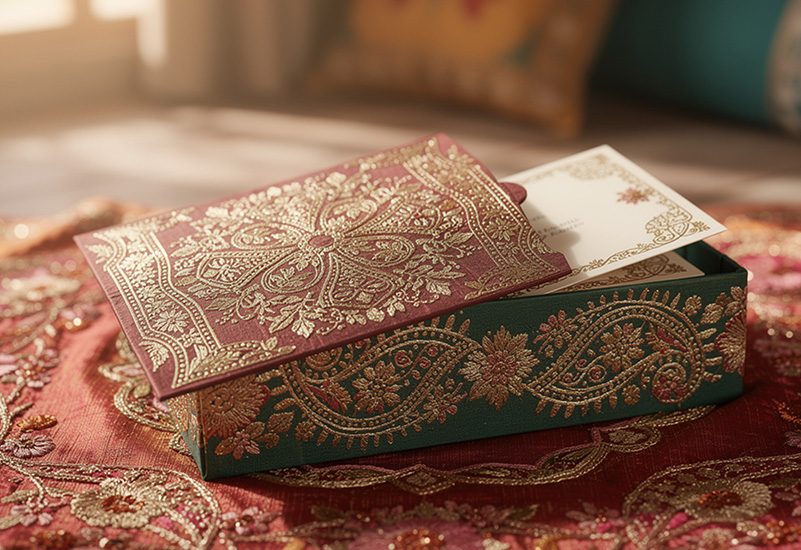
Traditional Box Invitations
Multi-piece sets with ceremonial cards, decorative elements, and gift items. Cost ₹300-800 per invitation. Best for grand celebrations with 200+ guests where family heritage takes priority.
 Trending
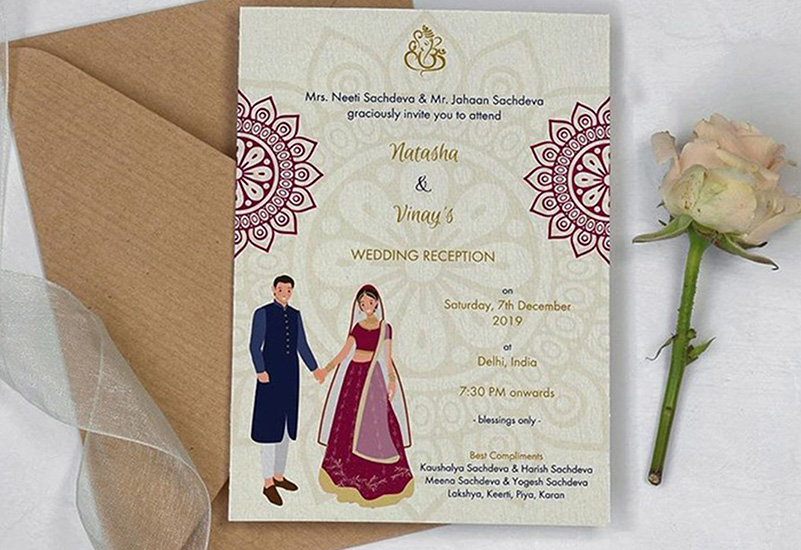
Modern Minimalist Cards
Clean design with premium paper and strategic color usage. Cost ₹80-300 per invitation. Perfect for urban couples wanting sophisticated elegance without traditional complexity.
Budget Planning and Cost Breakdown
Invitation budgets typically consume 2-4% of total wedding expenses, but hidden costs inflate this percentage quickly. Beyond printing charges, couples pay for design consultation, paper samples, proof revisions, packaging materials, and distribution logistics. A ₹50,000 invitation budget easily becomes ₹75,000 when factoring in rush charges, address verification, and reprint requirements for last-minute guest additions that Indian weddings inevitably include.
Traditional invitations carry premium pricing due to handcraft elements, specialty papers, and embellishment processes that require skilled artisans. Gold foil stamping adds ₹50-100 per card, while laser cutting and hand assembly increase costs further. Modern designs achieve savings through digital printing and standardized formats, but premium paper stocks and unique finishing techniques can match traditional pricing levels surprisingly quickly.
Smart couples leverage bulk discounts and off-season timing to reduce costs without compromising quality. Ordering 10% extra invitations costs only 5% more but eliminates expensive rush orders for forgotten guests. February-May bookings secure 15-25% discounts from vendors eager to fill pre-peak-season capacity, with quality remaining identical to premium-priced peak-season work that strains vendor resources unnecessarily.
Digital components add ongoing costs beyond initial setup fees, including domain hosting, RSVP platform subscriptions, and guest support. However, these expenses pale compared to postage savings and reprint elimination benefits. Happiffie's Reverse Auction system enables competitive bidding among verified invitation vendors, typically reducing final costs by 20-30% while maintaining quality standards through vetted provider networks and transparent pricing structures.
Budget-Friendly
Digital invitations with basic printing options for 200-300 guests
Best for intimate celebrationsMid-Range
Hybrid approach with quality printing and digital RSVP systems
Most popular choicePremium
Luxury traditional boxes with handcraft elements and premium materials
For grand celebrations💰 Money-Saving Tips
- Book during off-season (February-May) for 15-25% vendor discounts without quality compromise.
- Use Happiffie's Reverse Auction to secure competitive quotes from verified invitation specialists.
- Order 10% extra invitations during initial print run to avoid expensive rush charges for additional guests.
Frequently Asked Questions
These questions address real concerns couples face when choosing between traditional and modern wedding invitation approaches, with practical answers based on vendor experience and guest feedback patterns.
Final Thoughts
The traditional versus modern invitation decision ultimately reflects your wedding's core identity and guest experience priorities. Traditional designs honor cultural heritage and family expectations while modern approaches embrace contemporary aesthetics and practical efficiency. Neither choice is inherently superior—success depends on alignment with your specific guest demographics, budget constraints, and celebration style rather than following trends or family pressure alone.
Commit to your invitation style decision within two weeks of venue booking to avoid timeline pressure and rushed choices that compromise quality. The biggest mistake couples make is changing their approach multiple times during planning, which inflates costs and creates design inconsistencies. Your invitation sets irreversible expectations about formality, dress codes, and celebration grandeur that influence every subsequent guest interaction and wedding planning decision you'll make.
Happiffie's integrated platform eliminates the complexity of invitation planning through expert vendor matching, transparent pricing, and streamlined communication. Our comprehensive planning ecosystem ensures your invitation choice aligns with venue selection, catering style, and decoration themes for a cohesive celebration experience. Trust the process, make decisive choices, and focus on creating memories that last long after the invitations are forgotten.
Ready to Get Started?
Let Happiffie help you find the perfect invitation solution for your special day.
Are you a Vendor? Grow Your Business with Happiffie!
- High intent verified leads
- Reverse auction opportunities
- AI business tools & insights
- Dedicated vendor dashboard
- Grow your business, your way
It's free & takes less than 2 minutes!