
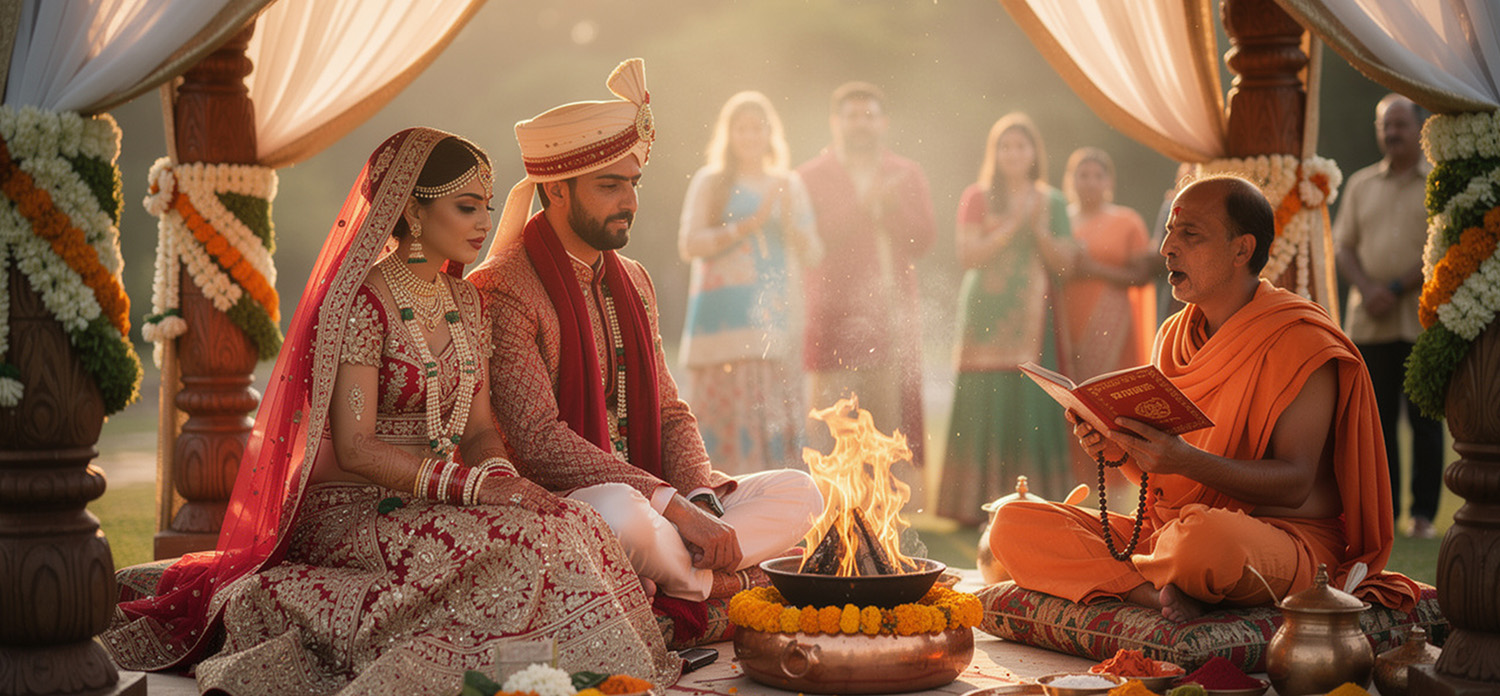
Role of Mantras in Indian Wedding Rituals: Complete Guide for Couples
Sacred verses, spiritual significance, and practical planning for meaningful ceremony moments
Picture this: a Chennai groom stumbles through the Saptapadi mantras while 200 relatives watch, because nobody explained what each Sanskrit verse actually means. Over 60% of urban Indian couples admit they don't understand the spiritual significance of their own wedding mantras, yet these sacred verses form the legal and religious foundation of Hindu marriage.
The challenge isn't just linguistic—it's logistical. Finding qualified priests who can explain mantras in your regional language, coordinating timing with venue acoustics, and ensuring elderly relatives can participate meaningfully requires careful planning that most couples discover too late.
This guide breaks down the role of mantras in Indian wedding rituals, from choosing the right priest to timing each ceremony perfectly. We'll also show how Happiffie's vetted network of traditional priests and modern venues can help create ceremonies that honor both spiritual significance and practical guest experience.
📋 Table of Contents
Understanding Sacred Wedding Mantras
Mantras aren't just ceremonial recitations—they're legally binding spiritual contracts in Hindu tradition. Each Sanskrit verse carries specific intentions: the Kanyadaan mantras transfer guardianship, while Saptapadi verses create karmic bonds that extend beyond this lifetime. Modern couples often focus on décor and photography while missing the profound spiritual architecture these mantras create.
Here's what catches couples off-guard: a Bangalore IT professional recently discovered her chosen venue's acoustics made it impossible for guests beyond the third row to hear the mantras clearly. The priest had to pause repeatedly, stretching a 45-minute ceremony to 90 minutes while elderly relatives struggled to follow along in 32°C heat.
The real complexity emerges when families blend regional traditions. A Tamil-Gujarati wedding in Mumbai might require mantras in three languages, with different priests for different rituals. Most couples assume any priest can handle any tradition, only to find that Vedic expertise varies dramatically between regions and families of priests.
Smart planning starts with understanding which mantras are non-negotiable for your families versus which can be adapted. This decision shapes everything from priest selection to ceremony duration, venue acoustics, and even seating arrangements for optimal spiritual participation.
 Hiya
HiyaPro Tip: Record a practice session with your priest beforehand—you'll catch pronunciation issues and timing problems before the actual ceremony!
Key Factors for Mantra-Centered Ceremonies
The most overlooked factor in mantra-heavy ceremonies? Audio logistics. Sanskrit pronunciation requires specific acoustics that most modern venues ignore. We've watched Mumbai priests struggle with echo-heavy hotel ballrooms where mantras become unintelligible beyond the mandap, leaving 80% of guests spiritually disconnected from the ceremony's most sacred moments.
Timing coordination becomes critical when multiple rituals require specific mantras. A Chennai couple learned this lesson when their morning Gauri Ganesh puja ran two hours behind schedule, pushing the main ceremony's Kanyadaan mantras into the afternoon's peak heat. Elderly relatives started leaving, missing the ceremony's spiritual climax because nobody factored in realistic mantra recitation times.
Priest qualifications matter more than couples realize. A certified Vedic scholar in Delhi charges ₹25,000 but can seamlessly blend three regional traditions with perfect pronunciation. A local temple priest might cost ₹8,000 but stumble through unfamiliar mantras, breaking the spiritual flow that these ceremonies depend upon.
The breakthrough insight: successful mantra-centered ceremonies require treating the priest as your ceremony's director, not just a ritual performer. When you book through Happiffie's vetted priest network, you're accessing professionals who understand both spiritual requirements and modern venue challenges.
1. Priest Expertise Level
Vedic scholars handle complex multi-regional ceremonies smoothly, while local priests may struggle with unfamiliar traditions. Check their experience with your specific family customs and language requirements before committing.
2. Venue Acoustics
Sanskrit mantras require clear audio for spiritual participation. Hotel ballrooms often echo badly, while open-air venues may need sound amplification. Test acoustics during your venue visit with actual mantra recitations.
3. Ceremony Duration
Full Vedic ceremonies with all mantras can run 2-4 hours. Factor this into guest comfort, catering timing, and venue booking slots. Most couples underestimate by 90 minutes.
4. Language Preferences
Families often expect mantras explained in regional languages alongside Sanskrit. Confirm your priest can provide meaningful translations, not just mechanical recitations that lose spiritual connection.
5. Ritual Customization
Some mantras can be shortened for modern ceremonies while others are spiritually non-negotiable. Discuss which traditions are flexible versus which would offend elder family members who expect full observance.
Popular Mantra Traditions and Options
The Saptapadi remains the most universal mantra tradition across Indian weddings, but regional variations create planning complexity. North Indian ceremonies emphasize the seven steps with detailed mantras for each promise, while South Indian traditions might combine these with additional Tamil or Telugu verses that extend ceremony time significantly.
Modern couples increasingly choose abbreviated mantra ceremonies that preserve spiritual significance while accommodating contemporary guest expectations. A Hyderabad couple recently opted for bilingual mantras—Sanskrit verses with immediate English explanations—allowing their international guests to participate meaningfully while honoring traditional requirements.
The Kanyadaan mantras present the biggest family negotiations because they carry deep cultural weight. Progressive families might modify the traditional "giving away" language while conservative relatives expect word-for-word adherence to centuries-old verses. These discussions need resolution months before the ceremony, not during it.
Specialty mantras for intercaste or interfaith ceremonies require experienced priests who understand legal and spiritual adaptations. Through Happiffie's specialized ceremony planning, couples access priests trained in modern adaptations that satisfy family traditions while respecting personal beliefs and legal requirements.
 Most Popular
Abbreviated Ceremony
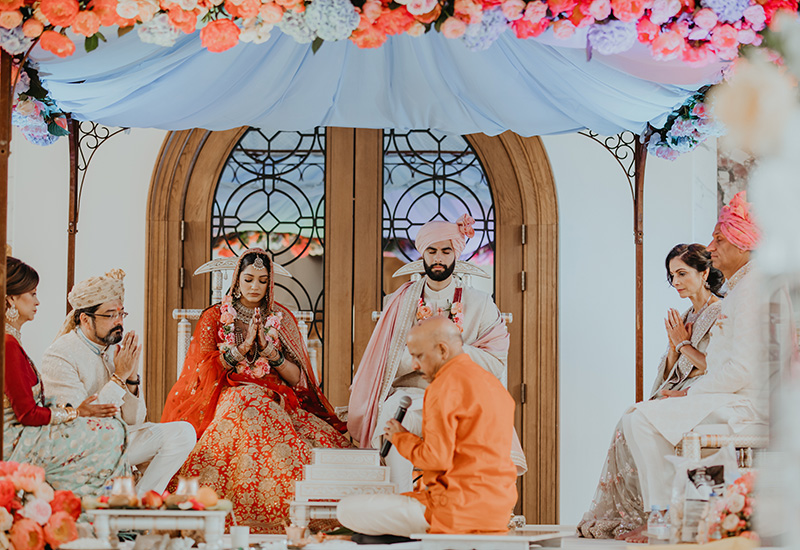
Essential mantras with streamlined rituals. Maintains spiritual significance in 90-120 minutes. Perfect balance of tradition and modern guest comfort expectations.
 Trending
Bilingual Format
Sanskrit mantras with immediate regional language explanations. Allows broader family participation while maintaining traditional spiritual structure and legal requirements.
Budget Planning for Traditional Ceremonies
Qualified priests command premium rates because mantra expertise takes decades to master. In tier-1 cities, expect ₹15,000-₹40,000 for experienced Vedic scholars who can handle complex multi-regional ceremonies. The price reflects not just ceremony day performance but also pre-ceremony consultations, family tradition research, and customized mantra selection.
Hidden costs catch couples unprepared: sound amplification for outdoor mantra ceremonies adds ₹8,000-₹15,000, while printed mantra booklets for guests run ₹50-₹100 per copy. A Chennai couple discovered their chosen temple required additional dakshina (donations) for elaborate mantras, pushing their ceremony budget up by ₹25,000.
The timing trap costs more than money—it costs spiritual authenticity. Rushing mantra recitations to fit venue time slots undermines the very spiritual significance couples want to preserve. Book venues that accommodate full ceremony duration rather than compromising sacred traditions for logistical convenience.
Smart budgeting leverages competition among qualified priests. Happiffie's Reverse Auction lets multiple experienced priests bid for your ceremony, ensuring competitive rates without sacrificing spiritual quality. This approach typically saves 15-25% compared to direct booking while maintaining access to verified, experienced practitioners.
Budget-Friendly
Local temple priests, basic mantra recitation, limited customization options
Best for simple ceremoniesMid-Range
Experienced priests, bilingual ceremonies, moderate customization, sound equipment included
Most popular choicePremium
Vedic scholars, multi-regional expertise, complete customization, family consultations, printed materials
For elaborate traditional ceremonies💰 Money-Saving Tips
- Book during off-season months for better priest availability and rates.
- Use Happiffie's Reverse Auction for competitive quotes from qualified priests.
- Combine multiple ceremony bookings for package deals on mantra services.
Frequently Asked Questions
These questions address the practical concerns couples face when planning mantra-centered ceremonies, from spiritual significance to logistics.
Final Thoughts
The role of mantras in Indian wedding rituals extends far beyond ceremonial tradition—they create the spiritual and legal foundation that transforms two individuals into a married couple. Understanding their significance allows couples to make informed decisions about ceremony length, priest selection, and venue requirements that honor both family expectations and personal values.
The one decision you should commit to today: invest in a qualified priest consultation at least three months before your ceremony. This single conversation clarifies which mantras are non-negotiable for your families, which can be adapted, and how long your ceremony will realistically take. The biggest mistake couples make is assuming any priest can handle any tradition—this leads to ceremony day confusion that diminishes the spiritual significance you're trying to preserve.
Why Happiffie simplifies this traditionally complex process: our platform connects you with priests who understand both ancient wisdom and modern logistics. From venue acoustics to family diplomacy, ceremony timing to spiritual authenticity, we've vetted practitioners who can navigate these challenges professionally. Your wedding mantras deserve the same careful planning as your venue and catering—they're the spiritual architecture that makes everything else meaningful.
Ready to Plan Your Sacred Ceremony?
Let Happiffie connect you with qualified priests and ceremony experts.
Are you a Vendor? Grow Your Business with Happiffie!
- High intent verified leads
- Reverse auction opportunities
- AI business tools & insights
- Dedicated vendor dashboard
- Grow your business, your way
It's free & takes less than 2 minutes!