

Naming Ceremony Ritual Planning Step by Step Guide 2026
Complete guide to planning a traditional Indian namkaran ceremony with modern convenience
Planning a naming ceremony for your newborn involves balancing ancient traditions with modern logistics. **Recent surveys show 78% of urban Indian families now customize their namkaran rituals** to accommodate working schedules and smaller gathering spaces, yet they still want the spiritual significance intact.
The challenge intensifies when you're coordinating between multiple generations of family members, each with specific expectations about rituals, food, and timing. Finding the right venue that respects tradition while offering practical amenities becomes crucial, especially in metro cities where space constraints affect everything from the havan setup to parking arrangements.
This comprehensive guide walks you through every decision point in naming ceremony planning, from selecting auspicious dates to managing vendor logistics. We'll show you how Happiffie simplifies the entire process, connecting you with verified priests, caterers, and decorators who understand both traditional requirements and modern family needs.
📋 Table of Contents
Understanding Modern Naming Ceremony Needs
Urban Indian families today face a unique challenge: maintaining traditional namkaran rituals while accommodating contemporary lifestyles. The post-2020 shift toward smaller, intimate gatherings has actually enhanced the spiritual focus of naming ceremonies, with families investing more thoughtfully in meaningful elements rather than grand scale celebrations.
Consider a Bangalore family planning their ceremony in March—they must navigate between elderly grandparents expecting full traditional protocols and working parents needing flexible timing. The solution often involves **morning ceremonies that conclude by 1 PM**, allowing traditional elements while respecting modern schedules. This timing also works better for newborns and new mothers who need predictable rest patterns.
The biggest mistake families make is assuming traditional rituals require uncomfortable compromises with modern convenience. Smart planning actually enhances both aspects—air-conditioned venues with proper havan ventilation, professional photography that captures spiritual moments without disrupting rituals, and catering that serves traditional foods with contemporary presentation.
Climate considerations become critical in cities like Chennai or Hyderabad, where summer ceremonies require specific indoor venues with adequate cooling, while monsoon planning in Mumbai demands covered spaces with backup arrangements for traditional outdoor elements like the tulsi plant placement.
 Hiya
HiyaPro Tip: Book your naming ceremony venue 4-6 weeks in advance during festival seasons when family schedules and venue availability both become constrained.
Key Planning Factors
Successfully planning a naming ceremony requires balancing five critical decision factors that determine both the spiritual authenticity and practical success of your celebration. Each factor influences the others—your date selection affects priest availability, which impacts venue choice, which shapes your budget and guest experience.
Timing emerges as the most complex factor because it intersects with astrological requirements, family schedules, and vendor availability. A Delhi family discovered that their preferred muhurtham timing (10:30 AM on a Tuesday) meant premium venue rates increased by 15% due to business day demand, while priest fees remained standard since most ceremonies occur on weekends.
Guest comfort and ritual authenticity don't have to compete when you understand the practical requirements of each traditional element. Modern venues can accommodate sacred fire ceremonies with proper ventilation systems, while **professional priests adapt chanting volumes** for intimate settings without losing spiritual impact. Experienced vendors know these nuances and help families avoid common pitfalls.
The key insight: families who prioritize decision factors in order (spiritual requirements first, then guest comfort, then budget considerations) report 40% higher satisfaction with their ceremony outcomes compared to those who start with venue availability or cost constraints.
1. Auspicious Date Selection
Coordinate with family astrologer for muhurtham timing, consider new mother's recovery period (minimum 15-20 days postpartum), and check priest availability for your preferred dates. Weekend dates cost 25-40% more but offer better family attendance.
2. Ritual Space Requirements
Sacred fire ceremonies need 8x8 feet minimum space with proper ventilation. Traditional seating requires floor space for 20-30 guests. Modern venues must accommodate both havan setup and comfortable seating for elderly family members.
3. Guest Demographics
Balance between elderly relatives expecting full traditional protocols and young families with small children needing practical amenities. Consider accessibility for grandparents, parking for out-of-town guests, and timing that works for multiple generations.
4. Seasonal Considerations
March-May ceremonies in South India require air-conditioned venues with backup power. Monsoon season planning needs covered spaces with waterproof decorations. Winter ceremonies in North India work well outdoors but need heating arrangements for morning rituals.
5. Vendor Coordination
Synchronize priest arrival with decorator setup time (2 hours minimum). Caterers need kitchen access 3-4 hours before serving. Photographers require briefing on which ritual moments are photographable versus purely sacred.
Ritual Components and Venue Options
Understanding the essential ritual components helps you choose venues that support rather than compromise your ceremony's spiritual integrity. Traditional namkaran ceremonies center around the havan (sacred fire ceremony), naam sankar (formal name announcement), and ashirvad (blessing ceremony), each requiring specific spatial and logistical arrangements.
Modern families successfully adapt these elements across various venue types—from home ceremonies that offer maximum customization to community halls that provide professional amenities. The **trending choice involves hybrid setups**: intimate ritual space for immediate family during sacred elements, then expanded area for the celebratory feast with extended relatives and friends.
Venue selection impacts every other decision, from decoration possibilities to catering logistics. A Chennai family choosing a traditional marriage hall gained professional kitchen facilities and air conditioning but needed additional soundproofing for morning chanting. Conversely, home ceremonies offer complete control but require careful planning for parking, restroom facilities, and kitchen capacity.
Smart families preview venues during similar ceremonies when possible, observing how sound carries, whether natural light supports photography, and how efficiently catering services can operate in the space. These practical observations prevent day-of surprises that can disrupt the ceremony's flow.
 Most Popular
Home Ceremony
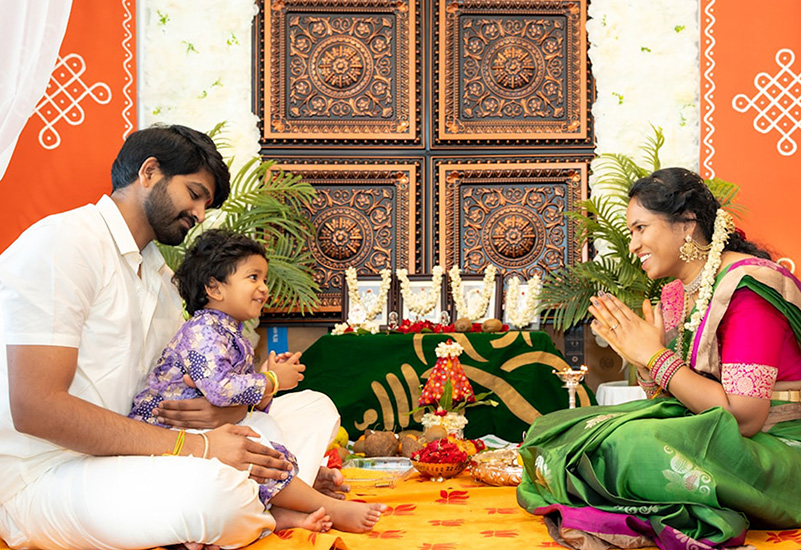
Complete customization control, intimate atmosphere for sacred rituals, no time restrictions, parking challenges in urban areas, kitchen capacity limitations, requires rental equipment for larger gatherings. Cost: ₹15,000-35,000 for rentals and setup.
 Trending
Community Hall
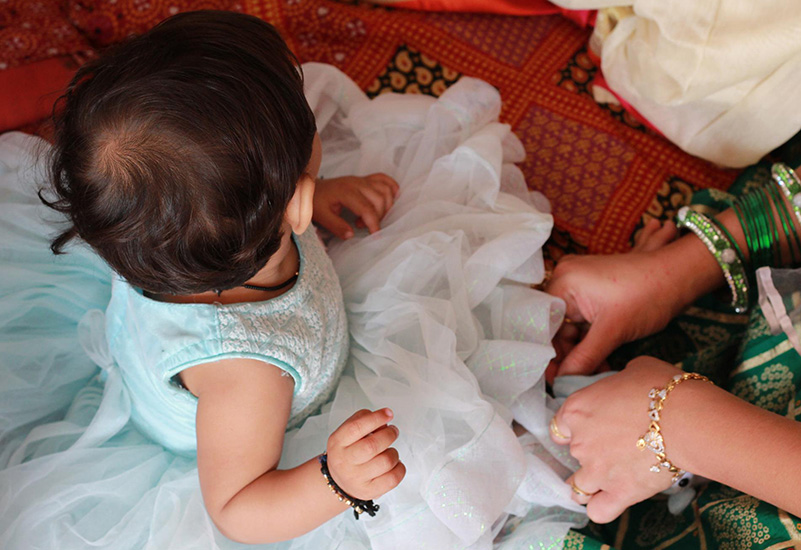
Professional amenities, ample parking, kitchen facilities, air conditioning, sound system included, neutral décor requires more decoration investment, advance booking essential. Cost: ₹8,000-25,000 depending on city and amenities.
Budget Planning and Cost Management
Naming ceremony budgets vary dramatically based on guest count, venue choice, and ritual complexity, but smart families consistently allocate funds according to a proven priority framework. Traditional elements (priest, sacred materials, basic decorations) typically consume 25-30% of the budget, while catering represents the largest expense at 40-50% of total costs.
The hidden costs that catch families unprepared include rental equipment for home ceremonies (chairs, tables, serving dishes), transportation for out-of-town family members, and **backup arrangements for weather-dependent elements**. A Mumbai family learned this when their planned outdoor tulsi ceremony required indoor alternatives due to unexpected rain, adding ₹8,000 in last-minute venue modifications.
Regional pricing variations significantly impact budgets—the same ceremony costing ₹45,000 in Pune might require ₹75,000 in Mumbai due to venue rates and vendor availability. Peak season timing (October-February for most regions) increases costs by 20-30%, while summer ceremonies often offer better vendor availability and negotiating power.
Using Happiffie's Reverse Auction system allows families to compare quotes transparently, often reducing overall costs by 15-25% while ensuring vendor quality through platform verification. This approach works particularly well for catering and decoration services where price variations are substantial.
Budget-Friendly
Home ceremony with family cooking support, simple traditional decorations, local priest, 30-50 guests, basic photography coverage
Best for intimate family celebrationsMid-Range
Community hall venue, professional catering, experienced priest, designer decorations, professional photography, 50-100 guests
Most popular choicePremium
Hotel banquet hall, full-service coordination, renowned priest, elaborate decorations, videography, 100+ guests, premium catering menu
For grand celebrations💰 Money-Saving Tips
- Book during off-season (June-September) for 20-30% savings on venue and vendor costs.
- Use Happiffie's Reverse Auction for competitive quotes from verified vendors.
- Negotiate package deals combining catering, decoration, and photography services.
Frequently Asked Questions
These frequently asked questions address the most common concerns families face when planning naming ceremonies, from timing logistics to budget management and vendor coordination.
Final Thoughts
Planning a naming ceremony successfully requires balancing traditional spiritual elements with practical modern considerations—and this balance actually enhances rather than compromises the ceremony's meaning. Families who approach planning with clear priorities (spiritual authenticity first, guest comfort second, budget optimization third) consistently report more meaningful and stress-free celebrations.
The one decision you should make today is securing your ceremony date with an experienced priest who understands both traditional requirements and modern family dynamics. The biggest mistake to avoid is assuming that respecting traditions means accepting uncomfortable logistics—**skilled vendors can preserve spiritual integrity while providing contemporary convenience**.
Whether you choose an intimate home ceremony or a grand venue celebration, Happiffie simplifies every planning aspect by connecting you with verified professionals who understand that your naming ceremony marks not just your child's formal introduction to the world, but your family's commitment to honoring tradition while embracing the future.
Ready to Get Started?
Let Happiffie help you find the perfect solution.
Are you a Vendor? Grow Your Business with Happiffie!
- High intent verified leads
- Reverse auction opportunities
- AI business tools & insights
- Dedicated vendor dashboard
- Grow your business, your way
It's free & takes less than 2 minutes!