

Invitation Planning Guide: From Save the Date to Final Card - 2026
Complete timeline, budget breakdown, and vendor selection for wedding and event invitations
A Mumbai bride recently discovered her invitation printer couldn't deliver 800 cards in time for her December wedding — just three weeks before the ceremony. This nightmare scenario affects 15% of Indian couples who underestimate invitation timelines, according to our vendor network data.
Invitation planning involves far more than choosing pretty designs. From managing multiple event cards (mehendi, sangeet, reception) to coordinating with venue logistics and guest list changes, couples face a complex web of decisions that can derail budgets and timelines.
This comprehensive guide walks you through every step from initial save-the-date cards to final delivery, with realistic timelines, budget breakdowns, and vendor selection strategies. Happiffie's network of verified designers ensures you avoid common pitfalls while achieving your vision.
📋 Table of Contents
Understanding the Invitation Timeline
Most couples drastically underestimate invitation production time. Quality wedding stationery requires 6-8 weeks minimum — not the 2-3 weeks couples typically allocate. This timeline includes design revisions, printing, quality checks, and addressing, which many overlook until it's too late.
A Bangalore couple planning a February wedding learned this harsh lesson when their chosen designer quoted a 45-day turnaround in November. Premium paper stocks, foil stamping, and letterpress techniques require specialized equipment that can't be rushed. Monsoon season adds another week for drying time in coastal cities.
The biggest mistake couples make is treating invitations as a final-month task. Professional designers book up 3-4 months in advance during peak wedding season (November-March). Couples who wait until January for April weddings often settle for subpar vendors or pay 40-50% rush premiums.
Smart couples start invitation planning immediately after booking their wedding venue. Save-the-date cards go out 4-6 months before the wedding, giving guests time to arrange travel and accommodations. This early timeline also allows for proper coordination with other wedding elements like decor themes and color schemes.
 Hiya
HiyaPro Tip: Order 10-15% extra invitations to account for damaged prints and last-minute guest additions. It costs more to reprint small quantities later.
Key Planning Factors
Guest count accuracy determines your entire invitation strategy. Many couples provide rough estimates to designers, only to realize they need 200 more cards when RSVPs start arriving. Plus-ones, children's invitations, and extended family additions can inflate your original count by 25-30%, significantly impacting both budget and timeline.
Paper quality and printing technique directly affect both cost and production time. Letterpress invitations for a Chennai wedding cost ₹450-800 per card but require 3-4 weeks production time. Digital printing delivers the same quantity in 10-12 days at ₹80-150 per card, but lacks the tactile luxury many couples desire.
Multi-event coordination proves challenging for Indian weddings with separate mehendi, sangeet, and reception functions. Each event needs distinct invitation designs or coordinated suites, multiplying design time and costs. Couples often underestimate the complexity of managing different guest lists for different events.
Language requirements add another layer of complexity. North Indian weddings typically need Hindi and English versions, while South Indian ceremonies often require regional languages plus English. Translation, font licensing, and layout adjustments for multiple scripts can add 2-3 weeks to production schedules.
1. Guest List Management
Finalize your guest count early and add 15% buffer. Consider plus-ones, children's invitations, and separate lists for different events. Accurate numbers prevent costly reprints and timeline delays during peak season.
2. Production Timeline
Quality invitations need 6-8 weeks minimum. Factor in design revisions (2 weeks), printing (2-3 weeks), quality checks (1 week), and addressing (1-2 weeks). Rush orders cost 40-50% more and compromise quality.
3. Design Coordination
Align invitation design with venue decor, color themes, and overall wedding aesthetic. Share mood boards with designers early to avoid last-minute changes that can delay production by weeks.
4. Multi-Language Requirements
Plan for regional language versions if needed. Translation, font licensing, and layout adjustments for Hindi, Tamil, Telugu, or other scripts add 2-3 weeks to production timeline and increase costs.
5. Quality vs Budget Balance
Letterpress and foil stamping cost 3-5x more than digital printing but create lasting impressions. Premium paper stocks justify higher costs for formal ceremonies, while casual events work well with quality digital prints.
Popular Invitation Styles
Traditional Indian wedding invitations remain the most requested style, featuring intricate borders, religious motifs, and rich color palettes. Gold foil stamping on deep red or royal blue cardstock creates the classic aesthetic families expect. These designs work beautifully for formal ceremonies but may feel overwhelming for contemporary couples or destination weddings.
Modern minimalist invitations have surged in popularity among urban couples, especially for destination weddings in Goa or Kerala. Clean typography, neutral color palettes, and quality paper stocks appeal to couples wanting elegance without traditional ornamentation. These designs photograph well for social media and appeal to younger guest demographics.
Fusion designs cleverly blend traditional elements with contemporary layouts. A couple might choose classic Indian motifs rendered in modern colors, or contemporary typography paired with traditional borders. This style works particularly well for couples from different cultural backgrounds or inter-faith ceremonies.
Digital invitations have gained acceptance post-pandemic, especially for save-the-dates and casual events. WhatsApp-friendly formats and animated designs engage tech-savvy guests while reducing paper costs by 70-80%. However, formal wedding ceremonies still require physical invitations for family honor and gifting traditions.
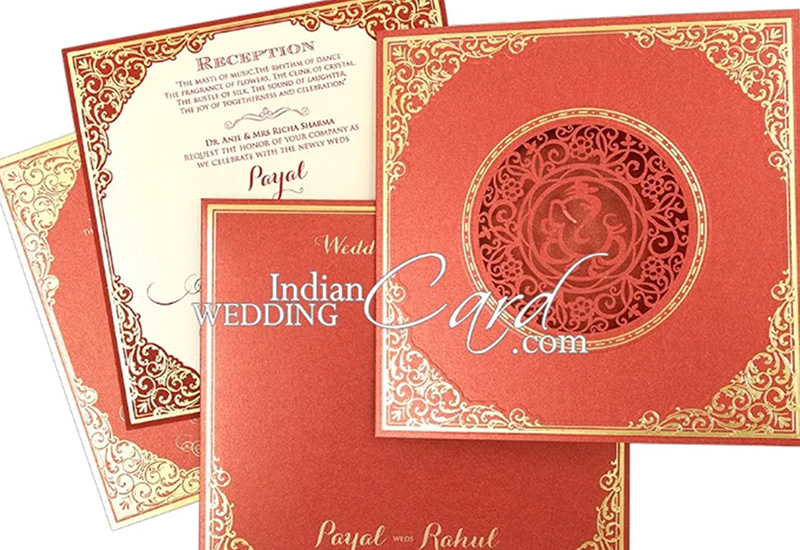 Most Popular
Traditional Indian Style
Rich colors, intricate borders, religious motifs, and gold foil details. Perfect for formal ceremonies and family expectations. Costs ₹200-600 per invitation depending on embellishments and paper quality.
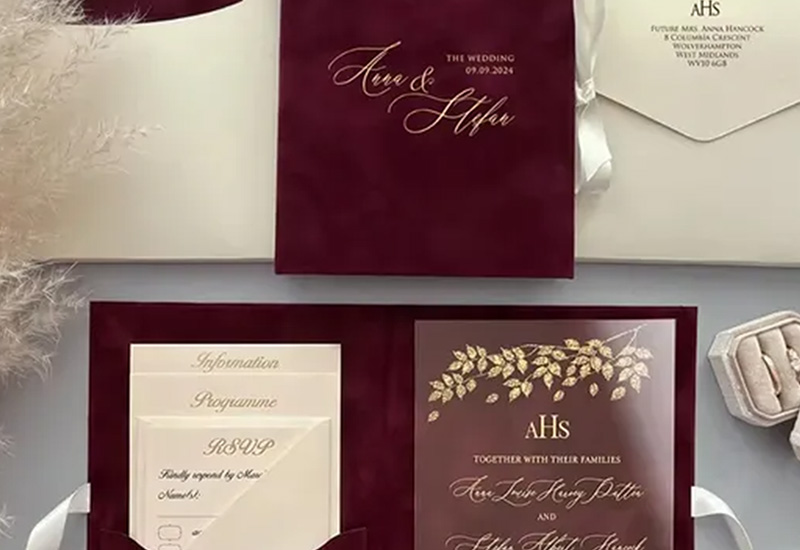 Trending
Modern Minimalist
Clean typography, neutral colors, quality paper stocks without heavy ornamentation. Ideal for destination weddings and contemporary couples. Budget-friendly at ₹80-250 per card with faster production times.
Budget Planning
Invitation budgets typically consume 3-5% of total wedding spending, but couples often overlook hidden costs that inflate final bills. Addressing, postage, and extra quantities can add 30-40% to initial quotes. A ₹50,000 invitation budget becomes ₹70,000 when including professional calligraphy, premium postage, and backup quantities.
Paper stock dramatically impacts pricing. Standard cardstock invitations cost ₹80-150 per piece, while handmade paper jumps to ₹200-350, and luxury cotton rag paper reaches ₹400-600. A Delhi couple switching from digital printing to letterpress saw their 500-invitation budget increase from ₹75,000 to ₹2,25,000 — a 300% jump they hadn't anticipated.
Multi-event invitations multiply costs quickly. Separate mehendi, sangeet, and reception cards each require design, printing, and materials. Couples planning three events often spend 60-70% more than single-ceremony budgets. Smart couples create coordinated suites with shared design elements to control costs while maintaining aesthetic consistency.
Timing your order strategically can save significant money. Peak season premiums (November-March) add 20-30% to standard pricing, while off-season orders often qualify for discounts. Using Happiffie's Reverse Auction platform lets multiple designers compete for your project, typically reducing costs by 15-25% regardless of season.
Budget-Friendly
Digital printing, standard cardstock, simple designs
Best for casual events, save-the-datesMid-Range
Quality paper, foil stamping, moderate embellishments
Most popular choice for Indian weddingsPremium
Letterpress, handmade paper, extensive customization
For luxury weddings and high-end events💰 Money-Saving Tips
- Book during off-season (April-October) for 20-30% savings on designer rates.
- Use Happiffie's Reverse Auction to compare quotes from multiple verified designers.
- Order coordinated suites instead of separate designs for multi-event weddings.
Frequently Asked Questions
These questions address the most common concerns couples have when planning their invitation timeline and budget, based on real experiences from our vendor network.
Final Thoughts
Successful invitation planning hinges on starting early and understanding the true production timeline. Quality wedding stationery cannot be rushed — the couples who achieve their vision are those who begin planning 4-5 months ahead, not 4-5 weeks. Paper choice, printing technique, and design complexity all impact both cost and timeline significantly.
The one decision you should make today is booking your invitation designer, especially if you're planning a peak-season wedding. The biggest mistake couples make is treating invitations as an afterthought, then panicking when premium designers are fully booked or rush charges double their budget. Lock in your designer first, then refine details over the coming weeks.
Happiffie's verified network of invitation designers takes the guesswork out of vendor selection, while our Reverse Auction system ensures competitive pricing without compromising quality. Your wedding invitations set the tone for your entire celebration — they deserve the same careful planning as your venue and catering choices.
Ready to Get Started?
Let Happiffie help you find the perfect invitation designer.
Are you a Vendor? Grow Your Business with Happiffie!
- High intent verified leads
- Reverse auction opportunities
- AI business tools & insights
- Dedicated vendor dashboard
- Grow your business, your way
It's free & takes less than 2 minutes!