
How Many Invitations Do You Need for Your Wedding? Complete Guide 2026
Master the art of invitation planning with expert insights on quantities, costs, and common mistakes Indian couples make
A Mumbai bride recently ordered 400 wedding invitations for her 350-guest celebration, confident she'd covered everyone. Three weeks before the wedding, she realized she'd forgotten cousins, office colleagues, and family friends who'd "obviously" be invited. She scrambled to order another 150 cards at rush rates, paying 60% extra for expedited printing and design changes.
This scenario repeats across Indian households because invitation planning goes beyond simple math. Between multi-generational guest lists, last-minute family politics, and the cultural expectation that "everyone" gets a physical card, couples consistently miscalculate. Add Mumbai's monsoon delays or Chennai's heat affecting card quality, and venue logistics become even trickier.
This guide reveals exactly how many invitations you actually need, when to order extras, and which mistakes drain your budget unnecessarily. We'll show you decision frameworks that account for Indian family dynamics and connect you with Happiffie's network of reliable card vendors who understand these unique challenges.
📋 Table of Contents
Why Most Couples Get the Numbers Wrong
Indian weddings operate on invisible guest mathematics that Western planning guides never address. Your mother's college roommate expects an invitation because she invited your family to her daughter's engagement fifteen years ago. Your father's business associate assumes inclusion because you've attended three of his family functions. These social debts create guest lists that expand by 40-60% beyond the couple's initial count, yet most invitation orders stick to the original estimate.
A Bangalore couple planning for 250 guests discovered this reality when aunties started asking about their cards two months before the wedding. They'd ordered 280 invitations thinking 30 extras provided safe buffer. Reality check: they needed 380 cards once family elders "remembered" distant relatives, childhood friends, and neighbors who'd feel slighted without physical invitations. The couple spent ₹18,000 on emergency reprints instead of ₹4,000 for adequate extras upfront.
Wedding invitation vendors report that 70% of Indian couples reorder cards, typically 20-50 additional pieces. The pattern holds across cities: Chennai families expand lists for temple communities, Delhi couples add office networks, Mumbai pairs include building societies. The mistake isn't underestimating guests—it's misunderstanding how Indian social fabric works. Every family connection carries invitation expectations that surface late in planning.
Smart couples build expansion buffers into initial orders rather than hoping family lists stay static. Professional invitation designers on Happiffie's platform routinely recommend 25-30% overages for Indian weddings, not the 10-15% suggested by generic planning resources. They've seen enough last-minute panics to know cultural realities trump mathematical precision.
 Hiya
HiyaPro Tip: Start your guest list 4 months early and add 10-15 names weekly. Family members always "remember" someone important closer to the date.
Key Factors That Determine Your Invitation Count
Invitation quantities depend on variables most couples overlook during initial planning. Single versus married guests change your math dramatically—married friends expect joint invitations while dating couples often prefer separate cards to avoid family complications. Business associates and colleagues present another layer: some expect individual recognition while others share office invitations. These distinctions matter because miscounting professional networks can damage relationships.
Geographic spread affects numbers differently than couples anticipate. A Hyderabad wedding drawing guests from Chennai, Bangalore, and local areas needs location-specific invitation strategies. Distant relatives might receive WhatsApp announcements while local families expect hand-delivered cards. However, never underestimate who expects physical invitations—we've seen office conflicts erupt over digital-only invites to seemingly casual work friends.
Timing creates additional variables that inflate final counts. Early bird guest lists capture immediate family and close friends. Six weeks before the wedding, parents remember extended networks. Two weeks out, last-minute additions emerge from social obligations, returned RSVPs, or family pressure. A professional event planner recently shared that couples typically add 15-25% more names between initial guest lists and final head counts.
Multi-function celebrations compound these challenges. Couples hosting engagement parties, mehendi ceremonies, and reception events might need separate invitation sets or unified cards covering multiple dates. Each additional event introduces new guest categories and invitation requirements that weren't obvious during initial planning phases.
1. Guest List Expansion Timeline
Indian families "remember" 20-30% more guests between initial planning and final counts. Parents recall distant relatives, neighbors, and family friends who attended other celebrations. Build this expansion into your original order rather than scrambling later.
2. Household vs Individual Invitations
Married couples typically receive one joint invitation while dating pairs often need separate cards. Extended families might need multiple cards per household if relationships are complex. Count actual invitation units, not just guest heads.
3. Professional Network Dynamics
Office colleagues, business associates, and professional connections have unspoken invitation expectations. Some expect individual recognition while others accept group invitations. Miscounting professional relationships can create lasting workplace awkwardness.
4. Geographic Distribution Strategy
Local guests expect hand-delivered invitations while distant relatives might accept digital announcements. However, important family members always expect physical cards regardless of distance. Map your guest locations to determine card delivery requirements.
5. Multi-Event Celebration Needs
Separate functions like mehendi, sangeet, and reception might require different invitation strategies. Some couples create unified cards covering all events while others send separate invitations. Each approach affects total quantities and design complexity.
Popular Invitation Approaches and What Works
Traditional paper invitations remain the gold standard for Indian weddings despite digital alternatives. Physical cards carry cultural weight that WhatsApp messages or email invites can't match. Elders view physical invitations as respect markers—digital-only approaches risk offending family members who equate invitation format with relationship importance. However, hybrid strategies work brilliantly when executed thoughtfully.
Tiered invitation strategies prove most successful for modern Indian couples managing diverse guest lists. Close family and VIP guests receive premium printed cards with personal delivery. Extended family gets standard printed invitations through postal service. Colleagues and casual friends receive well-designed digital invitations with clear RSVP mechanisms. This approach respects cultural expectations while controlling costs and logistics.
Save-the-date cards followed by formal invitations create two ordering opportunities that many couples find helpful. Initial save-the-dates go to definite guests six months early, helping couples gauge response rates and adjust final invitation quantities. Professional invitation designers report this two-phase approach reduces emergency reorders by 60% because couples learn their actual guest patterns before committing to large print runs.
Digital integration enhances rather than replaces traditional invitations for tech-savvy couples. Physical cards include QR codes linking to wedding websites with detailed information, RSVP forms, and gift registries. This hybrid approach satisfies traditional expectations while providing practical guest management tools. Older family members appreciate physical invitations while younger guests engage with digital features.
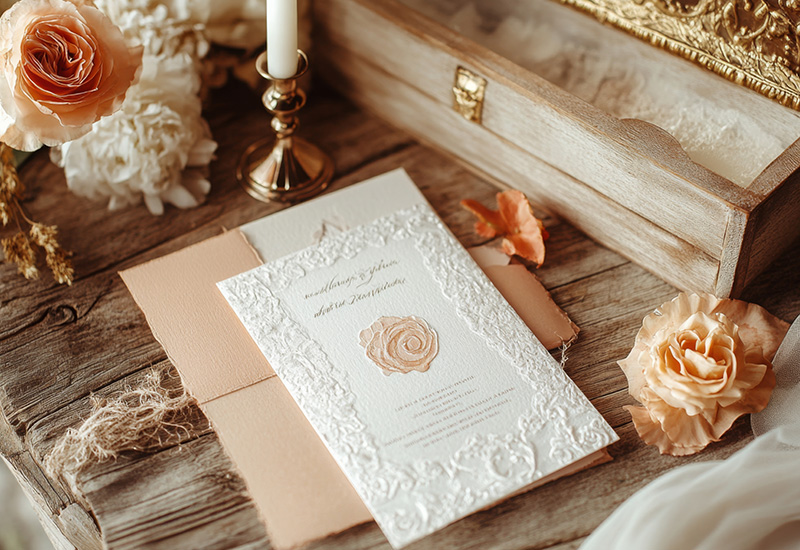 Most Popular
Premium Physical Invitations
Heavyweight paper with foil stamping, embossing, or laser cutting. Perfect for close family and VIP guests who expect premium presentation. Typically 15-20% of total guest list receives these special cards.
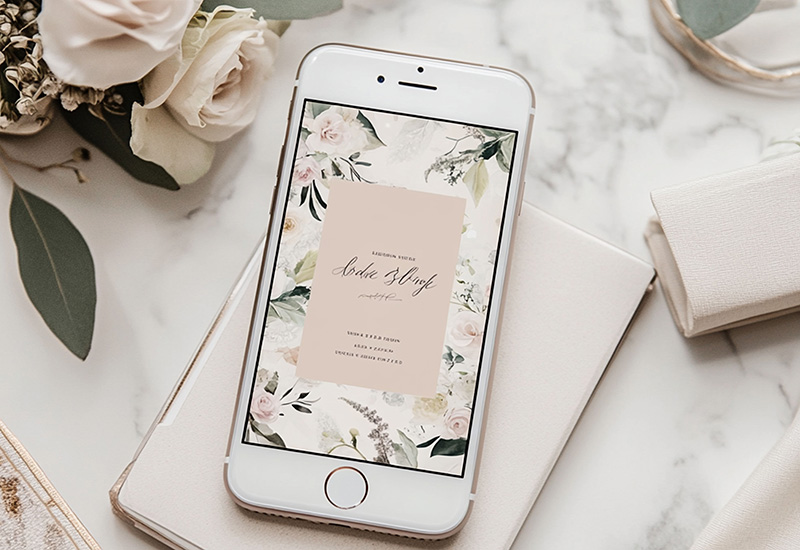 Trending
Hybrid Digital-Physical Strategy
Combines traditional printed invitations for family elders with beautifully designed digital versions for younger guests. Includes QR codes linking to wedding websites with RSVP functionality and event details.
Budget Planning and Cost Breakdown
Wedding invitation costs vary dramatically based on design complexity, paper quality, and printing techniques. Basic digital printing on standard paper runs ₹15-25 per card while premium options with foil stamping, embossing, or handmade paper reach ₹150-300 per invitation. Most couples underestimate total expenses because they focus on per-card costs rather than complete order requirements including design fees, rush charges, and delivery expenses.
Hidden costs accumulate quickly in invitation projects. Design consultations range ₹2,000-8,000 depending on customization complexity. Rush orders carry 20-60% premium charges when couples realize they need cards faster than standard timelines. Delivery expenses add up: hand-delivery services charge ₹50-100 per invitation in metro cities while postal services require proper addressing and packaging that takes time and effort.
Quantity breaks make larger orders surprisingly economical per unit, but higher total costs. Printing 200 invitations might cost ₹40 per card while 400 pieces drop to ₹28 per card—but the total jumps from ₹8,000 to ₹11,200. Smart couples balance per-unit savings against actual needs rather than ordering excess cards just for better pricing. Happiffie's Reverse Auction system helps couples compare quotes from multiple vendors simultaneously.
Timing affects pricing more than most couples realize. Orders placed 3-4 months ahead receive standard rates while 4-6 week timelines carry modest rush fees. Panic orders needing cards within 2 weeks face premium charges of 40-100% above normal rates. Early planning saves money and provides better vendor selection, but couples must balance early commitment against potential guest list changes.
Budget-Friendly
Digital printing on quality paper with elegant design but minimal special effects
Best for 300+ guest weddings needing cost controlMid-Range
Offset printing with selective foil stamping, textured paper, and custom design elements
Most popular choice balancing quality and costPremium
Handmade paper, extensive foiling, laser cutting, or unique formats with luxury presentation
For intimate weddings or VIP guest portions💰 Money-Saving Tips
- Book during off-season months (July-September) when printers offer better rates and availability.
- Use Happiffie's Reverse Auction to get competitive quotes from multiple verified invitation vendors.
- Order 4-6 weeks in advance to avoid rush charges and get better vendor attention.
Frequently Asked Questions
Here are the most common questions couples ask about wedding invitation quantities, based on real scenarios from thousands of Indian weddings planned through our platform.
Final Thoughts
Successful invitation planning requires understanding that Indian weddings operate on social mathematics that extends beyond simple guest counts. Your invitation quantity should reflect cultural expectations, family dynamics, and relationship obligations that Western planning guides completely miss. The couples who avoid last-minute stress build adequate buffers into initial orders rather than hoping family lists remain static.
The one decision you should make today is committing to order 25-30% more invitations than your current guest count suggests. The biggest mistake is assuming your guest list is final when family elders haven't weighed in yet. Every Indian couple faces guest list expansion—smart ones budget for reality instead of hoping for exceptions to cultural patterns that have persisted for generations.
Happiffie's network of invitation specialists understands these unique challenges and can guide you through quantity planning, design selection, and delivery logistics. Our platform connects you with vendors who've navigated thousands of Indian weddings and know exactly how to balance cultural expectations with practical budgets. Your perfect invitations exist—you just need the right partner to bring them to life.
Ready to Get Started?
Let Happiffie help you find the perfect invitation solution with verified vendors and competitive pricing.
Are you a Vendor? Grow Your Business with Happiffie!
- High intent verified leads
- Reverse auction opportunities
- AI business tools & insights
- Dedicated vendor dashboard
- Grow your business, your way
It's free & takes less than 2 minutes!