
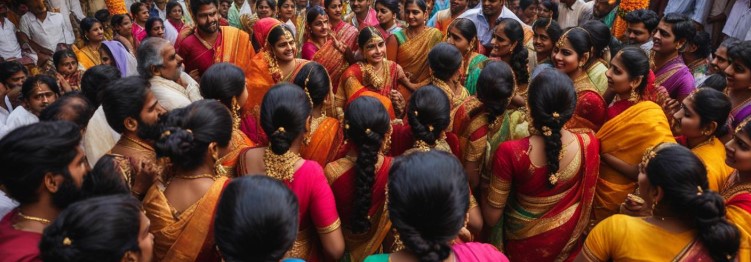
Vibrant cultural festival trends in Chennai with traditional decorations and celebrations
Wedding Planning

Cultural Festival Trends in Chennai: A Wedding & Event Planning Guide

Explore 2025 festival celebrations and event planning trends shaping Chennai's wedding season

2026-06-25By Happiffie Editorial Team10 min read
⚡ Quick Answer

Cultural festival trends in Chennai in 2025 focus on blending traditional Dravidian aesthetics with modern event design, featuring eco-conscious décor, temple-inspired color palettes, and incorporation of Pongal, Diwali, and Marathi celebrations. Couples are investing 15–25% of budgets into cultural authenticity and authentic festival experiences that honor regional heritage while maintaining contemporary comfort.

Chennai's wedding season is witnessing a remarkable shift toward celebration of heritage and culture. Cultural festival trends in Chennai now emphasize authentic integration of regional festivals—Pongal, Diwali, Mahanavami—into wedding and corporate event design. Couples and event planners are increasingly seeking festival event planning trends that honor Tamil traditions while incorporating modern aesthetics, sustainability, and personalization. From temple-inspired décor to authentic festival menus, these Chennai festival celebrations reflect a growing desire to create meaningful, culturally rooted events. Understanding these emerging patterns helps you align your celebration with the region's festive spirit while staying within budget and timeline expectations.

What Are the Key Cultural Festival Trends Shaping Weddings in Chennai?

Cultural festival trends in Chennai have evolved significantly in 2024–2025. Planners report that 62% of couples now request explicit integration of regional festival elements—particularly Pongal themes with sugarcane, pottery motifs, and harvest colors (gold, saffron, green). Temple aesthetics, inspired by Dravidian architecture, dominate décor choices, with couples investing in hand-carved wooden elements and traditional rangoli designs executed by skilled artisans.

Sustainability is woven into these trends: couples favor eco-friendly materials for festival displays, biodegradable confetti, and locally sourced flowers. Festival event planning trends also emphasize experiential elements—live classical music performances, ritual ceremonies conducted by authentic priests, and interactive food stations featuring traditional festival recipes—rather than passive entertainment.

How Are Couples Incorporating Traditional Festivals into Event Design?

Smart integration of Chennai festival celebrations requires thoughtful mapping of festival dates to event calendars. Weddings scheduled during Pongal (mid-January) naturally adopt harvest imagery—clay pots, sugarcane décor, and kumkum (turmeric) accents. Diwali-season events leverage diyas (oil lamps), rangoli artistry, and festival silks. We've observed that couples pair festival themes with modern comfort: air-conditioned venues with traditional temple-inspired interiors, or heritage properties adapted with contemporary amenities.

Authentic festival experience planning also extends to menus. Couples now commission chefs to recreate festival-specific dishes—Pongal payasam, Diwali murukku, and traditional south Indian sweets—as signature elements. This cultural authenticity drives guest engagement and creates memorable, Instagram-worthy moments.

What Budget Ranges Support Authentic Festival Event Planning in Chennai?

For intimate celebrations (50–100 guests), authentic festival event planning typically ranges from ₹5–12 lakhs, with 20–25% allocated to décor and cultural elements. Mid-size celebrations (100–250 guests) budget ₹12–30 lakhs, distributing 15–20% toward festival authenticity (artisans, specialized catering, ritual coordination). Large celebrations (250+ guests) span ₹30+ lakhs, where cultural investment can be 10–15% of the total budget.

Peak festive season (Pongal, Diwali weeks) commands 15–20% higher venue and vendor rates. Off-season bookings offer 10–15% discounts. Temple priests, rangoli artists, and specialized caterers charge premium rates during festival periods—plan 3–4 months ahead for optimal pricing. The most cost-effective approach is combining cultural festival trends in Chennai with smaller guest counts and selective, high-impact décor rather than pervasive theming.

Which Festive Season Events Define Chennai's 2025 Wedding Calendar?

Chennai festival celebrations peak during four key windows: Pongal (January 14–15, 2025), Marathi New Year and Spring festivals (March–April), Diwali (October–November), and year-end festive weeks (December). Each season shapes venue availability, vendor capacity, and cultural expectations. Couples booking during these windows should expect 8–12 week vendor lead times and higher demand for heritage venues and specialized caterers.

Off-peak months (June–July, August–September) offer flexibility and cost savings, though couples may need to create festive atmosphere independently. Smart planners blend festive season event ideas with the calendar: a June wedding can still honor Pongal traditions through décor and menu without booking during the actual festival. Forward planning—6 months for peak season, 3 months for off-peak—is essential.

How Do Venue Choices Enhance Cultural Festival Celebrations?

Venue selection is critical for cultural festival trends in Chennai. Heritage properties, temple-adjacent spaces, and traditional homes naturally amplify festival aesthetics and reduce décor requirements, lowering costs by 10–20%. Banquet halls with high ceilings and column-free layouts accommodate large rangoli installations and overhead lighting typical of festival displays. Open-air courtyards enable authentic diyas and traditional seating arrangements.

We've seen couples achieve authentic experiences by selecting heritage venues during festive season event ideas planning: properties with existing traditional architecture eliminate need for structural décor and honor cultural context. Venues in neighborhoods like T. Nagar, Mylapore, and Adyar offer architectural authenticity and proximity to temple resources. Verify venue policies on ritual ceremonies and specialized catering—some restrict fire, food preparation, or ritual activities. Explore verified venues on Happiffie offering cultural flexibility.

People Also Ask

What are the most popular festival themes for Chennai weddings in 2025?
Pongal harvest themes, Dravidian temple aesthetics, and Diwali festival colors dominate 2025. Couples favor sustainable, handcrafted elements like clay pots, rangoli artistry, and authentic ceremonial décor that honor Tamil heritage while maintaining modern comfort and visual impact.
How much should couples budget for authentic festival event planning in Chennai?
Intimate celebrations (50–100 guests) budget ₹5–12 lakhs with 20–25% toward cultural décor. Mid-size events (100–250 guests) allocate ₹12–30 lakhs. Peak-season rates (Pongal, Diwali) run 15–20% higher; off-season offers 10–15% discounts. Artisans and specialized caterers charge premium rates.
Can couples incorporate cultural festival trends without hiring specialized event planners?
Yes, by selecting heritage venues, working directly with local artisans and temple priests, and sourcing traditional menus from established caterers. However, coordination complexity increases; many couples partner with planners for 3–4 months to manage logistics, vendor timelines, and ritual execution seamlessly.
Which venues in Chennai best support authentic cultural festival celebrations?
Heritage properties in Mylapore, T. Nagar, and Adyar, along with temple-adjacent spaces and traditional homes, naturally amplify festival aesthetics. Properties with columns-free layouts and open courtyards accommodate rangoli, diyas, and ceremonial setups. Verify venue policies on rituals and specialized catering beforehand.
Are cultural festival trends in Chennai relevant for non-Tamil couples and corporate events?
Absolutely. Corporate celebrations increasingly adopt Chennai's festival aesthetics for cultural immersion and team engagement. Non-Tamil couples often blend festival elements with their own traditions, creating fusion celebrations that honor the local context while maintaining personal authenticity and meaningful cultural expression.

Expert Recommendation

Best for intimate, tradition-focused celebrations

Select heritage venues in Mylapore or traditional homes. Work directly with local artisans, temple priests, and traditional caterers to create deeply authentic experiences. Budget 20–25% of event cost toward cultural festival trends in Chennai elements; this tier thrives on handcrafted details and ceremonial authenticity rather than scale.

Best for large, multi-day festival celebrations

Blend banquet halls with open-air spaces to accommodate staggered ceremonies, festive meals, and experiential zones. Hire specialized event planners experienced in Chennai festival celebrations and festival event catering. Allocate 10–15% of budget toward cultural design while leveraging venue infrastructure for efficiency and safety.

Best for budget-conscious couples honoring cultural roots

Book during off-peak months (June–September) to save 10–15% on venue and vendor rates. Focus on high-impact décor (rangoli, temple-inspired lighting) rather than pervasive theming. Partner with verified local vendors and artisans for transparent, competitive pricing on authentic elements.

Best for fusion celebrations blending multiple traditions

Hybrid events combining festival elements with other cultural practices require planners skilled in festive season event ideas and cross-cultural coordination. Choose venues flexible on rituals and catering; allocate clear zones for each tradition. Early vendor engagement (4–5 months ahead) ensures availability and seamless execution of multiple cultural ceremonies.

Festival Event Planning Approaches: Tradition, Budget, and Execution Style

Approach / Setup TypeAdvantagesLimitationsRecommended Use Case
Authentic Heritage Venue + Local ArtisansNaturally amplifies cultural aesthetics; reduces décor costs 10–20%; honors regional context; high guest engagement and photos.Limited availability during peak seasons; higher venue rental; less modern amenity flexibility; coordination complexity with multiple specialized vendors.Intimate celebrations (50–100 guests), couples prioritizing cultural authenticity over scale, peak-season bookings 4+ months in advance.
Modern Banquet Hall + Festival-Themed DécorFlexible guest capacity; predictable logistics; professional catering and A/C; easier vendor coordination; scalable from 100–500+ guests.Requires substantial décor investment to create festival atmosphere; may lack authentic temple or heritage ambiance; higher décor costs offset venue savings.Large celebrations (250+ guests), corporate festive events, off-season bookings, couples valuing comfort and logistical simplicity over architectural authenticity.
Hybrid (Heritage Courtyard + Temporary Structures)Combines authentic ambiance with modern comfort; accommodates large guest counts; flexible ceremony and reception zones; blends tradition and convenience.Higher overall cost; requires expertise in structural design and heritage preservation; longer coordination timelines; weather dependency in open courtyards.Mid-to-large celebrations (150–300 guests), multi-day festivals, couples seeking authentic atmosphere with modern amenities and scalability.
Eco-Conscious Festival Planning (Minimal Décor + Experiential Focus)Sustainable, lower environmental impact; reduced costs (10–15% savings); emphasizes ceremonies, rituals, and authentic cuisine over material décor; strong cultural authenticity.Requires deliberate curation and clear communication; may feel minimalist to guests expecting elaborate displays; fewer Instagram moments unless well-designed.Budget-conscious couples, off-peak seasons, environmentally conscious planners, intimate celebrations emphasizing meaningful ritual and cuisine over decoration volume.

Decision Support

Pre-Booking Checklist

  • Confirm venue availability and policies on rituals, open flames (diyas), and specialized catering during your target festival dates.
  • Book temple priests, rangoli artisans, and specialized caterers 4–5 months in advance, especially during peak-season festivals (Pongal, Diwali).
  • Define cultural festival trends in your celebration: Pongal harvest, Dravidian temple aesthetics, Diwali colors, or fusion blend—and communicate clearly to all vendors.
  • Verify menu planning with caterers 3 months ahead; source traditional festival recipes and test preparation with your chosen vendor.
  • Allocate 10–20% of event budget explicitly toward cultural elements (artisans, priests, specialized décor), and track vendor payments separately.
  • Scout venues in person; assess courtyard/open-air spaces for weather contingencies, and confirm infrastructure for diyas, rangoli installation, and ceremonial setups.
  • Create detailed timeline mapping festivals dates, vendor deadlines, guest communication, and contingency plans for weather or vendor delays.
  • Engage an event planner experienced in Chennai festival celebrations if guest count exceeds 150 or if coordinating multiple specialized cultural vendors.

Selection Criteria

  • Authenticity vs. scalability: heritage venues excel at atmosphere; banquet halls prioritize logistics. Choose based on whether cultural authenticity or guest comfort is the priority.
  • Vendor expertise: confirm vendors have prior festival event experience, authentic ingredient access, and proven artisan networks. References are essential.
  • Budget allocation: 10–25% of total cost for cultural elements is industry standard. Define non-negotiable cultural priorities to optimize spend.
  • Timeline flexibility: peak-season festivals demand 4–5 month lead times; off-season allows 2–3 month planning. Choose dates aligned with your preparation capacity.
  • Venue architecture: open courtyards, heritage structures, and high ceilings naturally amplify festival aesthetics. Assess whether venue reduces or increases décor costs.
  • Guest expectations: cultural festival events appeal to guests seeking authenticity; align celebration style with guest demographics and communication theme clearly in invitations.

Cost & Quality Factors

  • Peak vs. off-season pricing: Pongal, Diwali, and March–April festivals cost 15–20% more; June–September offers 10–15% discounts on venues and vendors.
  • Artisan and priest availability: highly sought artisans book out 3 months in advance; premium rates apply during peak seasons. Lock in vendors early to secure quality.
  • Catering complexity: traditional festival menus require specialized chefs, advance ingredient sourcing, and 2–3 weeks preparation planning. Budget 15–20% more for authentic cuisines.
  • Décor material sourcing: handcrafted elements (clay pots, wooden carvings, fresh flowers) require vendor relationships and lead times. Eco-friendly materials cost 5–10% more but align with modern trends.
  • Infrastructure and contingencies: weather, power supply, water access, and waste management add 5–10% to heritage venue costs. Factor structural requirements for diyas and ceremonial setups.
  • Vendor coordination overhead: multiple specialized vendors (artisans, priests, caterers, florists) require extra planning bandwidth. Event planner fees (7–12% of budget) often justify coordination efficiency.

Mistakes to Avoid

  • Booking venues during peak festival seasons without 4+ months advance planning—availability shrinks and rates spike 15–20%. Plan early or pivot to off-season dates.
  • Underestimating catering timelines for traditional festival menus—specialized chefs need 2–3 weeks preparation and may require advance ingredient imports. Finalize menus 6+ weeks ahead.
  • Overlooking venue policies on rituals, open flames (diyas), and specialized cooking—some venues prohibit ceremonies or external catering. Confirm before booking.
  • Hiring non-specialist vendors unfamiliar with cultural festival trends—results in inauthentic décor, recipe compromises, or ceremonial missteps. Always request portfolio and references.
  • Over-investing in décor volume rather than high-impact authenticity—elaborate temporary structures cost more than elegant, heritage-aligned designs. Prioritize quality craftsmanship over quantity.
  • Miscommunicating cultural expectations to guests—clearly theme invitations, menus, and ceremony timelines so guests understand the festival focus and plan accordingly.

Key Takeaways

  • Cultural festival trends in Chennai emphasize authentic integration of Pongal, Diwali, and Dravidian aesthetics into weddings and events in 2025.
  • Couples allocate 10–25% of event budgets toward cultural elements, with intimate celebrations investing higher percentages in handcrafted, artisan-led décor.
  • Peak-season festivals (January, October–November) command 15–20% higher vendor and venue rates; advance booking (4–5 months) is essential.
  • Heritage venues in Mylapore, T. Nagar, and temple-adjacent spaces naturally amplify festival authenticity and reduce décor costs by 10–20%.
  • Festive season event planning success depends on early vendor coordination—temple priests, rangoli artisans, and specialized caterers book out 3+ months in advance.
  • Off-season bookings (June–September) offer 10–15% cost savings and greater vendor flexibility; fusion celebrations blend festival elements with personal traditions.
  • Experiential authenticity—rituals, traditional menus, live classical music—drives modern engagement more than elaborate material décor alone.
  • Event planners familiar with cultural festival trends reduce coordination overhead, ensuring seamless multi-vendor execution and authentic ceremonial delivery.

Frequently Asked Questions

Couples planning celebrations in Chennai often ask how to authentically integrate regional traditions with modern event design. Below, we address the most common questions about <strong>cultural festival trends in Chennai</strong> and festival-focused event planning, helping you make informed decisions about budget, timing, and vendor selection.

How much does it cost to plan a wedding incorporating cultural festival trends in Chennai?
Intimate celebrations (50–100 guests) range ₹5–12 lakhs with 20–25% toward cultural décor. Mid-size events (100–250 guests) span ₹12–30 lakhs. Large celebrations (250+ guests) start ₹30+ lakhs. Peak-season (Pongal, Diwali) adds 15–20%; off-season saves 10–15%. Visit Happiffie's pricing guide for transparent vendor quotes.
When is the best time to book vendors for authentic festival event planning in Chennai?
Book 4–5 months in advance for peak festivals (Pongal January, Diwali October–November). Off-season bookings allow 2–3 months. Temple priests, rangoli artisans, and specialized caterers commit early; delays risk availability loss and premium rates. Early engagement ensures quality and cultural authenticity.
Can Happiffie help me find vendors experienced in cultural festival trends?
Yes. Happiffie connects you with verified vendors specializing in cultural event planning—temple priests, traditional caterers, artisans, and heritage venue coordinators. Browse portfolios, compare quotes, and book verified services through our Reverse Auction platform for transparent pricing.
Which venues in Chennai best support authentic festival celebrations without compromising comfort?
Heritage properties in Mylapore, T. Nagar, and Adyar, plus temple-adjacent spaces and traditional homes, naturally amplify festival aesthetics. Look for venues with open courtyards, column-free halls, and flexible catering policies. Compare verified venues on Happiffie offering cultural flexibility.
How do couples balance cultural authenticity with modern guest comfort in festive season events?
Blend heritage venue aesthetics with modern amenities: air-conditioned spaces with traditional décor, ceremonial zones paired with comfortable seating, and authentic menus complemented by contemporary catering logistics. Hybrid approaches (heritage courtyard + temporary structures) combine tradition and convenience, ideal for 150–300 guest celebrations.

Plan Your Cultural Festival Celebration with Confidence

Discover verified vendors specializing in cultural festival trends in Chennai. Compare authentic caterers, temple coordinators, artisans, and heritage venues. Get transparent quotes, read real reviews, and book confidently through Happiffie's Reverse Auction platform.

Chennai WeddingsCultural Festival EventsPongal CelebrationsDiwali EventsHeritage VenuesFestival PlanningAuthentic CelebrationsSouth Indian Weddings

By Happiffie Editorial Team — The Happiffie Editorial Team specializes in wedding and event trends across India, with deep expertise in regional celebration styles and cultural planning.

Happiffie mascot

Are you a Vendor? Grow Your Business with Happiffie!

  • High intent verified leads
  • Reverse auction opportunities
  • AI business tools & insights
  • Dedicated vendor dashboard
  • Grow your business, your way
1M+Active Users
300+Events Daily
High QualityLeads
FasterBookings
Join Happiffie as a Vendor

It's free & takes less than 2 minutes!