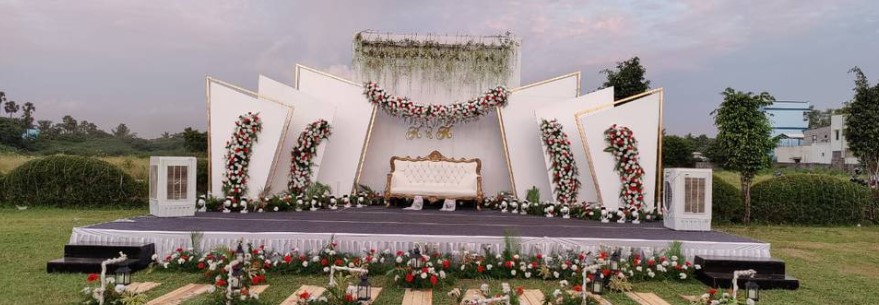
A venue that works beautifully for 500 guests can become chaotic at 2,000. The core difference lies in three infrastructure pillars: floor area, parking capacity, and catering throughput. For a seated meal at round tables, a 2,000-guest wedding typically requires a minimum of 30,000–35,000 square feet of usable floor space. If your ceremony includes a mandap stage, a live music zone, a dedicated kids' area, and multiple buffet lines, that number climbs closer to 40,000 square feet.
Parking is just as critical. Industry experience suggests providing one parking spot for every four guests — meaning a 2,000-person wedding needs roughly 500 car spaces on-site or within a 500-metre walk. Many kalyana mandapams for 2000 guests in Chennai are built with this ratio in mind, offering multi-level or compound parking. Hotels in central Chennai, however, often fall short here, relying on valet systems that slow guest flow during peak arrival windows.
Catering throughput is the third pillar that planners frequently underestimate. Wedding catering for large guest counts requires industrial-grade kitchen facilities — a minimum of 4–6 food counters running simultaneously, dedicated serving staff ratios of at least 1:25, and waste management systems compliant with Greater Chennai Corporation norms. Any venue that cannot demonstrate kitchen capacity for 2,000 covers in a two-hour service window should be reconsidered, regardless of how stunning its décor might be.
Finally, check the venue's power backup. South Chennai areas like Velachery and OMR can experience load-shedding during peak summer months (April–June). A reliable 100 KVA+ generator system is non-negotiable for an event of this scale, especially when air-conditioning, lighting rigs, and audio-visual equipment run simultaneously.