
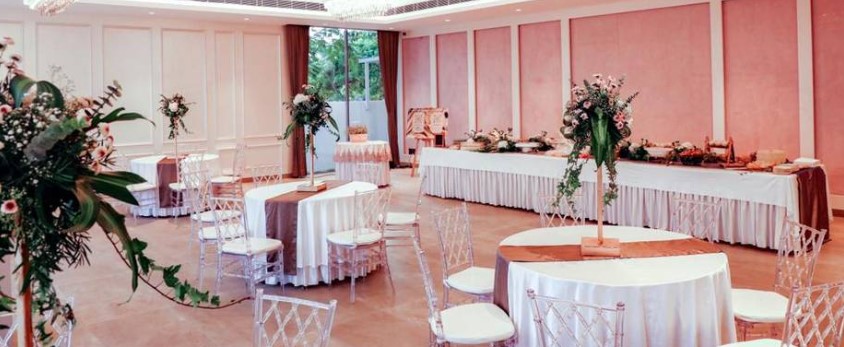
A venue's stated capacity and its practical capacity for a 1,500-person Indian wedding are rarely the same number. Indian weddings involve simultaneous activities — a mandap or altar, a dining hall that serves guests in rotations, a waiting foyer, a separate dressing suite for the bride, and often a dedicated space for the nadaswaram ensemble or live orchestra. The effective square footage needed is typically 6–8 sq ft per seated guest plus 15–20% buffer for movement. That means a venue listing 10,000 sq ft of total floor space may comfortably seat only 900–1,000 people in dining configuration.
When evaluating large wedding halls in Chennai, prioritise venues with a primary hall capacity of at least 1,200 in dining seating (round or long tables) and a separate pre-function area or foyer large enough to accommodate your reception queue. Parking is equally critical: a 1,500-guest wedding typically generates 300–450 vehicles. Venues along arterial roads in Guindy, OMR, and Velachery tend to offer dedicated multi-level parking, while older halls in central Chennai may rely on adjacent street parking or valet arrangements.
Power backup is non-negotiable. South Chennai occasionally faces load-shedding during peak summer months (April–June). Confirm that the venue runs a full 100% DG backup covering air-conditioning, lighting, sound, and kitchen equipment. We have seen couples lose critical hours of celebration to partial power failures at venues that claimed backup but did not test it. Ask for a written clause in the agreement. Catering kitchens should have a minimum of four to six burner stations and industrial exhaust, since serving 1,500 guests across two or three meal rotations demands professional throughput. Proper wedding venue capacity planning at the shortlisting stage saves significant renegotiation pain later.