
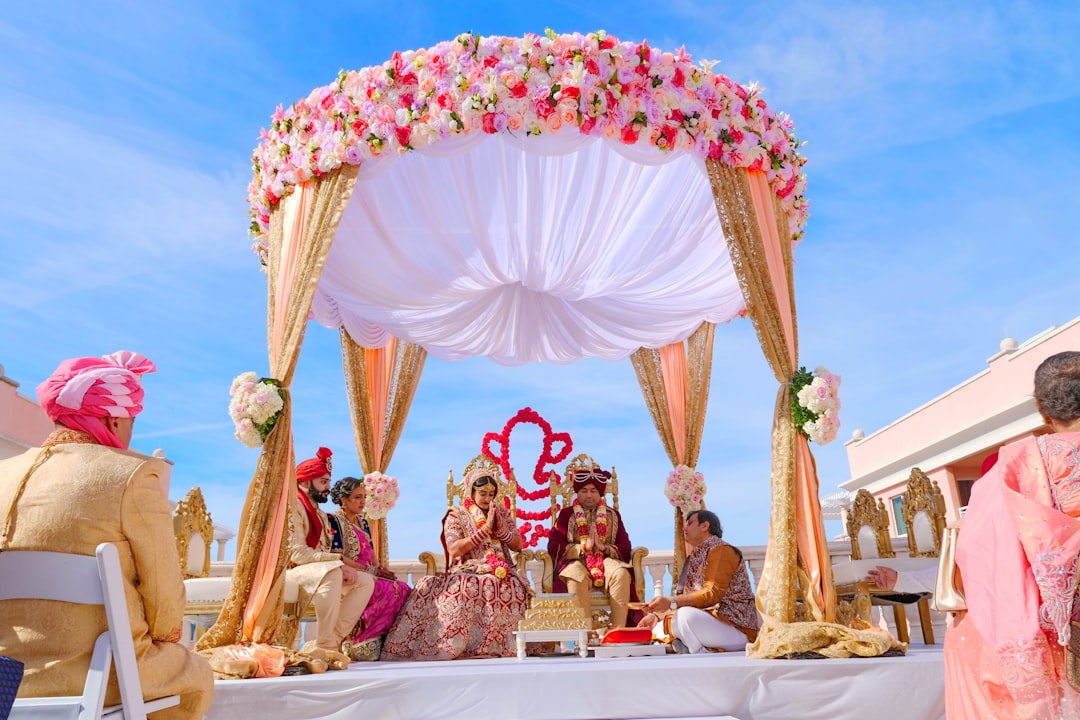
AI in Event Planning: Smarter Celebrations - intelligent automation for modern weddings and events
Wedding Planning

AI in Event Planning: Smarter Celebrations for Modern Couples

Discover how artificial intelligence transforms wedding and event planning with automation technology and intelligent guest management.

2026-07-02By Happiffie Editorial Team10 min read
⚡ Quick Answer

AI in Event Planning: Smarter Celebrations uses automation, data analysis, and intelligent algorithms to streamline vendor selection, guest management, timeline coordination, and budget tracking. For Indian couples, this means faster decision-making, fewer logistics errors, and personalized celebration design—saving time and often 10–15% on overall costs while improving experience quality.

Planning a wedding or large celebration in India involves juggling countless vendors, guest lists, timelines, and budgets. AI in Event Planning: Smarter Celebrations transforms this complexity by automating routine tasks, predicting guest preferences, and optimizing resource allocation in real time. Whether you're organizing an intimate Chennai gathering, a sprawling Mumbai wedding, or a Bangalore corporate event, intelligent guest management systems help couples and planners make faster, data-backed decisions. This guide explores how AI technologies reshape celebration planning—from vendor discovery to final execution—so you can focus on the moments that matter. Get personalized AI-powered quotes from verified vendors in seconds.

What Is AI in Event Planning, and Why Does It Matter?

AI in Event Planning: Smarter Celebrations leverages machine learning, data analytics, and automation to handle repetitive planning tasks—vendor matching, timeline coordination, guest preference mapping, and budget forecasting. Unlike traditional planning, which relies on manual spreadsheets and memory, intelligent event automation uses real-time data to predict what works best for your specific celebration.

For couples in Bangalore, Mumbai, Delhi, and Chennai, this means fewer missed deadlines, smarter vendor selection based on past performance, and personalized recommendations tailored to your vision and budget. Smart celebration optimization algorithms analyze thousands of past events to identify patterns that lead to successful outcomes, reducing stress and decision fatigue.

How Do Automated Wedding Planning Tools Streamline Your Timeline?

Automated wedding planning tools create dynamic timelines that adapt as your event evolves. Instead of manually updating a master calendar every time a vendor confirms a date or a guest changes their RSVP status, AI systems automatically adjust dependencies, send reminders 72 hours before key milestones, and flag scheduling conflicts in real time.

Event automation technology tracks task completion across all vendors—from the decorator's setup window to the caterer's kitchen prep timeline. Couples report saving 15–20 hours of coordination work per month using these systems. Real-time event coordination ensures nothing falls through the cracks, especially critical for large celebrations with 200–500+ guests common in Indian weddings.

What Role Does Event Automation Technology Play in Budget Management?

Intelligent event automation monitors every expense in real time, comparing your actual spend against forecasted budgets by category—venue, catering, decor, photography, and entertainment. AI systems flag overspends instantly, suggest cost-saving alternatives from verified vendors, and predict final totals weeks before the event, eliminating last-minute financial surprises.

For events budgeted at ₹5 lakhs to ₹50+ lakhs, data-driven vendor selection uses historical pricing, guest feedback, and performance metrics to recommend the best value option—not just the cheapest. Couples using smart celebration optimization report allocating budget more strategically, often recovering 10–15% by optimizing vendor selection without compromising quality.

How Can Intelligent Guest Management Systems Improve Your Celebration?

Intelligent guest management systems centralize RSVPs, dietary preferences, plus-one confirmations, and seating arrangements in one platform. AI algorithms suggest optimal seating layouts based on guest relationships, cultural preferences, and mobility needs—reducing awkward table moments and enhancing the celebration experience.

These systems also predict no-show rates based on guest type and send personalized reminders that boost attendance by 8–12%. For destination weddings across tier-1 cities or international guests, automated systems manage visa timelines, accommodation preferences, and arrival logistics. Professional event services now integrate these intelligence layers to deliver seamless guest experiences from invitation through post-event thank-yous.

What Are the Real Costs and Time Savings of AI-Driven Planning?

AI in Event Planning: Smarter Celebrations typically reduces planning time by 25–30% compared to manual methods, translating to 40–60 fewer hours of couple coordination. For professional planners, AI tools enable handling 15–20% more events annually without adding headcount. Time savings are most dramatic for large celebrations—500+ guests in Delhi, Mumbai, or Bangalore benefit most from automated guest coordination.

Upfront costs for AI-powered planning platforms range from ₹0 (free tiers for <100 guests) to ₹15,000–₹40,000 for full-featured systems managing 200+ guest celebrations. These costs are often offset by savings from smarter vendor negotiation and avoiding duplicate services. Efficient budget allocation ensures every rupee works harder, particularly critical in peak wedding season (October–December) when vendors increase rates 20–30%.

People Also Ask

Can AI in Event Planning really predict guest preferences and seating dynamics?
Yes. Intelligent guest management systems analyze dietary preferences, past event attendance, relationship networks, and cultural factors to suggest seating arrangements and menu personalization. AI learns from each event, improving accuracy by 8–12% with each use—especially valuable for multi-day celebrations.
How much money can AI-powered planning tools save on vendor costs?
Couples using data-driven vendor selection typically save 10–15% on aggregate service costs by matching spending to actual quality and past performance—not just lowest price. Savings are higher during peak season (₹50K–₹200K on large celebrations) when vendor rates fluctuate significantly.
Do automated wedding planning tools work for small, intimate celebrations?
Absolutely. Event automation technology scales from 20-guest intimate dinners to 1000+ weddings. For small celebrations, AI handles RSVPs, menu coordination, and timeline reminders—removing administrative friction. Free tiers support <100 guests; paid tiers unlock advanced features.
What happens if I need to change vendors last-minute using AI systems?
Is AI in Event Planning suitable for traditional Indian celebrations?
Yes. Smart celebration optimization learns regional preferences—from Rajasthani mehandi rituals to South Indian Brahmin wedding customs. AI systems adapt timelines, guest protocols, and vendor recommendations to honor tradition while streamlining logistics.

Expert Recommendation

Best for Intimate Celebrations (20–50 guests)

Use free or lite AI platforms to automate RSVP collection and timeline reminders. Focus on intelligent guest management systems to handle dietary preferences and seating for family gatherings or small destination celebrations.

Best for Mid-Size Weddings (100–300 guests)

Paid event automation technology with real-time budget tracking and automated vendor coordination becomes essential. Data-driven vendor selection ensures smart celebration optimization across catering, decor, and photography—typical spend ₹15–₹40 lakhs in tier-1 cities.

Best for Large, Multi-Day Celebrations (300–1000+ guests)

Enterprise-grade intelligent guest management systems managing seating, staggered meal logistics, and real-time coordination are non-negotiable. AI in Event Planning: Smarter Celebrations reduces 80+ hours of manual coordination for traditional wedding ceremonies + receptions in Mumbai, Delhi, or Bangalore.

Best for Budget-Conscious Planners

Lean on free or low-cost AI platforms for intelligent guest management and timeline coordination. Pair with reverse auction quotes to unlock competitive vendor pricing—saving 15–20% without sacrificing quality or celebration experience.

AI Event Planning Approaches: Comparing Automated vs. Traditional Methods

Planning MethodAdvantagesLimitationsRecommended Use Case
Full AI-Powered Planning (Event Automation Technology)Real-time budget tracking, automated vendor coordination, intelligent guest management, timeline optimization, 25–30% faster planning, data-driven decisionsUpfront cost ₹15K–₹40K; requires digital comfort; initial learning curve; AI cannot replace human creativity or cultural nuanceLarge celebrations 300+ guests; tight timelines; budget-sensitive; multiple vendors; tier-1 cities (Delhi, Mumbai, Bangalore, Chennai)
Hybrid Approach (AI + Professional Planner)AI handles logistics and coordination; planner focuses on design, vendor relationships, and creative vision; reduces planner workload; combines efficiency + personalizationCost ₹50K–₹150K (planner fees + tools); requires good planner-AI integration; slower than full automationMid-size celebrations 150–400 guests; couples valuing design expertise; traditional ceremonies requiring cultural knowledge; destination weddings
Manual Planning (Spreadsheets + Calls)Flexible; zero technology cost; no privacy concerns; works for small, simple celebrations; suits couples uncomfortable with digital tools250–400 hours manual coordination; high error rate; no real-time updates; vendor coordination is time-consuming; budget tracking prone to gaps; no data-driven insightsIntimate celebrations <50 guests; simple, single-venue events; couples with significant planning time; family-led coordination
Professional Planner Only (No AI)Personal relationships with vendors; cultural sensitivity; creative vision; human problem-solving; ideal for complex traditionsCost ₹100K–₹500K+ (fees typically 10–15% of budget); planner availability limited; slower response times; no real-time guest/budget trackingLuxury celebrations; intricate cultural ceremonies; destination multi-event formats; couples prioritizing relationship over efficiency

Decision Support

Pre-Booking Checklist

  • Define your celebration scope: guest count (50, 200, 500+), number of venues, duration (single day, multi-day ceremony + reception), and venue locations (same city, destination, multiple cities)
  • Assess your timeline: months until event (6+ = flexibility; <3 = urgency favors AI automation)
  • Identify your budget range (₹3 lakhs to ₹50+ lakhs) and budget-tracking tolerance (low tolerance favors AI systems)
  • List must-have vendors: catering, venue, decor, photography, entertainment—fewer vendors = less automation benefit
  • Evaluate digital comfort: if your family prefers WhatsApp/Excel over apps, manual planning may fit better than full AI systems
  • Check vendor ecosystem: AI systems are most useful if your vendors integrate or respond to digital coordination (common in tier-1 cities)
  • Trial platforms: use free tiers of 2–3 intelligent guest management systems for 2–4 weeks to assess usability before paid commitment
  • Define non-negotiables: cultural rituals, specific traditions, or design preferences that human expertise (planner or family) must handle

Selection Criteria

  • Guest Count: Celebrations with 300+ guests see 20–30% time savings from AI; <100 guests benefit less unless you value RSVP automation and timeline reminders
  • Planning Timeline: Events 6+ months away benefit most from data-driven vendor selection and budget forecasting; <3 months prioritize real-time coordination over analysis
  • Budget Size: Events budgeted ₹20 lakhs+ justify full event automation technology; smaller budgets leverage free/lite tiers for specific tasks (RSVPs, timelines)
  • Vendor Integration: AI effectiveness multiplies if decorators, caterers, and photographers accept digital briefs and real-time schedule updates (most common in Mumbai, Bangalore, Delhi)
  • Couple Tech Comfort: High digital comfort favors full automation; mixed comfort favors hybrid (AI + planner) approach; low comfort suits manual planning or planner-led approach
  • Celebration Complexity: Traditional multi-day ceremonies, specific rituals, or destination formats require human planner expertise; single-venue events suit full automation

Cost & Quality Factors

  • Platform Cost: Free tiers (RSVP management) to ₹15K–₹40K annually for full-featured AI systems; weigh against time and money savings (typically 10–15% cost recovery)
  • Implementation Time: AI systems require 2–4 weeks of data entry (guest list, vendor details, preferences); budget this upfront, then benefit from automation acceleration
  • Vendor Integration: Platforms that directly integrate with florists, caterers, photographers (common in Bangalore, Mumbai) reduce coordination friction; single-platform systems save 5–10 hours per month
  • Guest Data Quality: Accuracy of RSVP data, dietary preferences, and plus-one information directly impacts intelligent guest management system effectiveness—garbage in, garbage out
  • Customization Depth: Standard AI templates work for most celebrations; unique themes, cultural rituals, or bespoke experiences may require human planner augmentation (cost +₹30K–₹100K)
  • Real-Time Responsiveness: AI systems shine when vendors are responsive to automation; slow-responding local vendors (common in tier-2 cities) reduce automation ROI

Mistakes to Avoid

  • Choosing AI automation without evaluating if your vendors accept digital coordination—purchasing a smart system that integrates with manual, call-only vendors wastes platform value
  • Underestimating upfront data entry time; treating AI as 'set and forget'—successful automation requires 15–20 hours of initial setup and 2–3 hours monthly maintenance
  • Over-automating cultural rituals that demand human touch; AI can optimize logistics but cannot replace traditions, family input, or personal vendor relationships built for emotional ceremonies
  • Failing to involve all decision-makers (couple, parents, planner) early in AI setup; misalignment on preferences or approvals creates friction when AI system executes decisions not everyone endorsed
  • Ignoring data privacy when centralizing guest lists, dietary info, and budget details in third-party AI systems; ensure platform compliance with Indian data protection standards
  • Expecting AI to replace a human planner entirely for complex, multi-day traditional celebrations; hybrid approaches (AI + planner) typically deliver better outcomes than full automation alone

Key Takeaways

  • AI in Event Planning: Smarter Celebrations automates vendor coordination, guest management, and budget tracking—saving 25–30% of planning time and 10–15% of costs.
  • Intelligent guest management systems optimize seating, dietary preferences, and attendance; event automation technology flags scheduling conflicts and budget overruns in real time.
  • Best ROI for celebrations with 300+ guests, ₹20+ lakh budgets, or complex multi-day formats in tier-1 cities where vendor integration is strong.
  • Free or lite AI tiers handle RSVPs and timelines for <100 guests; paid systems (₹15K–₹40K) unlock real-time coordination, vendor analytics, and data-driven vendor selection.
  • Hybrid approach (AI + professional planner) balances automation efficiency with creative design and cultural expertise—ideal for traditional Indian celebrations.
  • Smart celebration optimization works best when vendors actively respond to digital coordination; slow-responding local vendors reduce automation ROI.
  • Key savings emerge from efficient budget allocation, fewer duplicate services, and smarter vendor negotiation—not just speed.
  • Data privacy and upfront setup time (15–20 hours) are critical; treat AI as a tool requiring active management, not a fully autonomous system.

Frequently Asked Questions

Planning a celebration involves dozens of decisions, vendor interactions, and logistical moving parts. Our couples frequently ask how AI in Event Planning: Smarter Celebrations simplifies this chaos. Below are answers to the most common questions about intelligent guest management, event automation technology, and smart celebration optimization.

How much does AI-powered event planning cost, and is it worth the investment?
Cost ranges from ₹0 for free platforms (RSVP management only) to ₹15,000–₹40,000 annually for full-featured systems. ROI emerges through time savings (25–30% fewer hours), cost recovery (10–15% vendor savings), and fewer errors. For events ₹20+ lakhs with 300+ guests, the investment typically breaks even within 2–3 months of active use.
Can Happiffie help me find AI-powered vendors or integrate AI into my planning?
Happiffie's professional event services platform connects you with tech-forward vendors who accept digital coordination and integrate with AI systems. Our reverse auction process includes data-driven vendor matching—ensuring smart celebration optimization from the start.
Does AI work for traditional Indian weddings and multi-day ceremonies?
Yes. Intelligent guest management systems and event automation technology adapt to regional customs—Rajasthani mehandi protocols, South Indian Brahmin rituals, Punjabi sangeet timings. AI optimizes logistics while respecting traditions; cultural design decisions still require human expertise or a professional planner's input.
What if my vendors don't use technology or prefer phone calls?
AI systems are less effective with non-digital vendors; you'll manually input their updates, losing real-time coordination benefits. For tier-2 cities or family-owned vendors, a hybrid approach (lite AI for guest management + human planner for vendor coordination) often yields better results than full automation.
How can intelligent guest management systems reduce my seating stress?
AI algorithms analyze guest relationships, dietary needs, mobility requirements, and cultural preferences—suggesting optimal seating that minimizes awkwardness and honors traditions. Systems also automate dietary tracking and send personalized reminders, boosting attendance by 8–12% and reducing no-shows, especially for destination celebrations.

Simplify Your Celebration with AI-Powered Planning

Happiffie integrates intelligent guest management, real-time vendor coordination, and smart celebration optimization into your planning journey. Discover verified vendors, compare quotes powered by data-driven selection, and manage every detail—from RSVPs to final timelines—in one platform.

AI Event PlanningSmart CelebrationsGuest ManagementWedding AutomationBudget OptimizationVendor CoordinationEvent Technology

By Happiffie Editorial Team — Happiffie Editorial Team specializes in wedding and event planning insights for Indian couples. We blend real-world vendor experience with planning innovation to help you celebrate smarter.

Happiffie mascot

Are you a Vendor? Grow Your Business with Happiffie!

  • High intent verified leads
  • Reverse auction opportunities
  • AI business tools & insights
  • Dedicated vendor dashboard
  • Grow your business, your way
1M+Active Users
300+Events Daily
High QualityLeads
FasterBookings
Join Happiffie as a Vendor

It's free & takes less than 2 minutes!