
Shhh…
Great celebrations
love a little mystery!♡ ♡
Blind Date
Same great venues.
Secretly better deals.
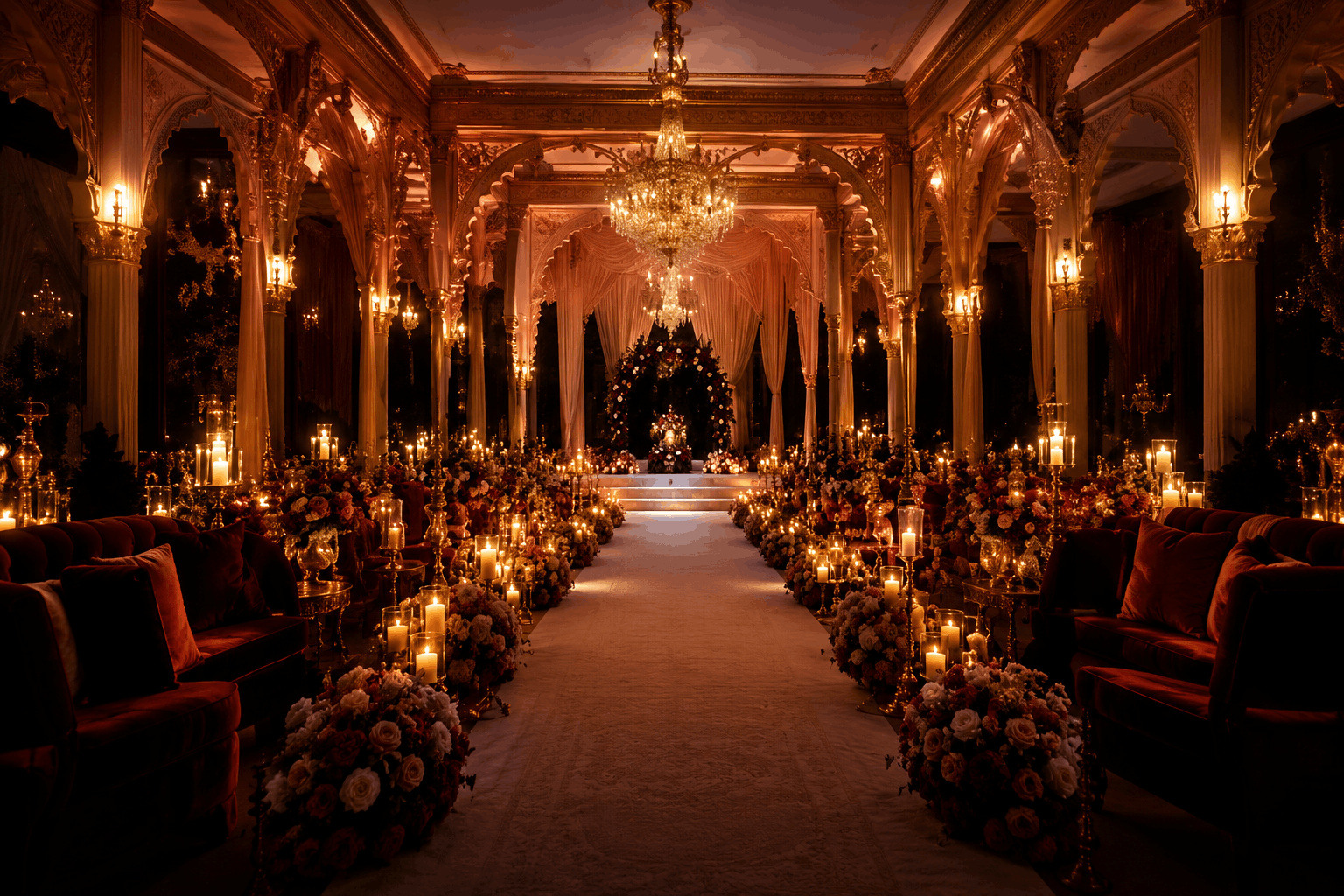
Traditional Mandapam for Sacred Beginnings
A premium celebration venue has opened a special private opportunity on 22 Dec 2026 – 23 Jan 2027.
Some places are
worth the mystery!
Your celebration.
Our little secret.
What We Can Tell You (For Now)
You Could Celebrate
This venue is suitable for:
How the Blind Date Works?
Share your basic details once.
Tell us about your celebration and we'll see if it's a match.
If it matches, we'll reveal more details and the private rate.
We'll connect you and help you plan your celebration.
Blind Date Available Venues
Where Generations Gather to Celebrate
◆A Venue Where Tradition Is Not a Theme, But the Foundation
Some venues borrow the language of tradition for decoration — a few motifs here, a cultural flourish there — while the underlying space remains fundamentally generic. This mandapam is built the opposite way. Tradition is not an aesthetic layered on top of the venue; it is the very reason the venue exists in its present form. Every element of this space, from its stage to its rooms to its dining arrangements, has been shaped around the specific, sacred rhythm of a traditional wedding — the rituals, the muhurtham, the blessings of elders, the presence of extended family across generations. Walking into this mandapam should feel less like entering a rented hall dressed up for the occasion, and more like arriving at a place that has always understood what a wedding, in its fullest cultural sense, actually requires.
A Scale Built for the Whole Extended Family
With capacity for between 500 and 900 guests, this mandapam is built for weddings in their most complete, most inclusive form — not the pared-down, guest-list-trimmed version that smaller venues force families into, but the full gathering of relatives, community elders, family friends and well-wishers that a traditional wedding is meant to bring together. In many traditions, a wedding is never simply a union between two individuals; it is an occasion that formally welcomes two entire families into each other's lives, witnessed and blessed by as wide a community as possible. A venue too small for that vision forces uncomfortable compromises — a guest list cut down not because fewer people matter, but because the hall simply cannot hold them. This mandapam removes that compromise entirely, giving families room to invite as broadly and as generously as their traditions and relationships call for, without having to apologise for the size of their own celebration.
The Muhurtham Stage: Where the Ceremony Itself Lives
At the heart of any traditional wedding is the muhurtham — the precisely timed, deeply auspicious moment around which the entire ceremony is built. This mandapam's traditional muhurtham stage has been designed specifically to hold that moment with the dignity it deserves, giving priests, family elders and the couple themselves a dedicated, elevated space from which the sacred rituals can be conducted and witnessed by the full gathering. This is not a generic stage repurposed for a wedding; it is a space built with the specific choreography of traditional ceremonies in mind — the seating arrangements for officiants, the visibility needed for family members performing their ritual roles, and the overall sense of occasion that a muhurtham demands. For many families, this stage is where the single most important moment of the entire event takes place, and its design reflects an understanding of just how much weight that moment carries.
A Spacious Hall That Holds Both Ceremony and Celebration
Surrounding the muhurtham stage, the spacious wedding hall itself has been designed to accommodate both the solemnity of ritual and the joy of celebration that follows it, often within the same few hours. A traditional wedding rarely stays in one emotional register for its entire duration — it moves from the hushed reverence of sacred vows to the loud, joyful energy of blessings, music and celebration almost seamlessly, and the hall needs to support that full emotional arc without feeling like two different spaces awkwardly stitched together. The scale and layout of this hall allow family members seated throughout to witness the ceremony clearly, while still leaving room for the celebratory elements — garlands, processions, music — that traditional weddings weave directly into their ceremonial structure rather than treating as a separate "reception" phase entirely.
A Dedicated Space for the Meal That Follows
In most traditions, the meal that follows a wedding ceremony is never an afterthought — it is itself a significant act of hospitality, often rooted in specific customs about how and what is served to guests. A separate dining hall recognises this by giving the meal its own dedicated space, distinct from the ceremonial hall itself, allowing the wedding's ritual proceedings and its communal dining to each receive the full attention they deserve without competing for the same physical space at the same time. This separation also solves a very practical problem that many venues struggle with: the logistics of feeding several hundred guests without disrupting an ongoing ceremony, or forcing an awkward pause in festivities while tables are cleared and reset in the same hall. With dining handled in its own space, the ceremonial hall can remain focused entirely on the wedding itself, while the dining hall handles the equally important task of feeding and hosting the community that has gathered to celebrate.
Private Rooms for the Bride and Groom
Weddings are, for all their public celebration, also deeply personal events, and the bride and groom need their own private space amid the hours of ceremony and celebration — somewhere to prepare, to rest briefly between rituals, to change attire for different ceremonial segments, and simply to have a moment of calm before stepping back into the celebration. Dedicated bride and groom rooms provide exactly this, giving the two people at the centre of the entire event a private retreat that belongs only to them throughout the day. This is a detail that matters far more than it might first appear: a wedding day is physically and emotionally demanding for the couple at its centre, and having genuine private space to breathe, prepare and gather themselves between rituals makes a meaningful difference to how they experience their own wedding, rather than simply enduring it as a long public performance from start to finish.
A Ritual Preparation Area for the Ceremonies Before the Ceremony
Traditional weddings are rarely a single event; they are often a sequence of rituals, each with its own preparation requirements — specific items that need to be arranged, specific family members who need to be ready at specific moments, specific customs that require quiet, focused space away from the main gathering. A dedicated ritual preparation area gives families exactly this kind of space, allowing the countless small but essential preparations that precede each ceremonial moment to happen in an organised, unhurried way, rather than being improvised in a corridor or a corner of the main hall. This is the kind of infrastructure that rarely gets noticed by guests, precisely because when it works well, every ritual simply appears to happen smoothly and on time — the real work of preparation having already taken place, out of sight, in a space built for exactly that purpose.
A Venue for Every Occasion That Calls for Tradition
While this mandapam is built first and foremost for traditional weddings, its relevance extends naturally to any occasion where family, culture and tradition come together — anniversaries and family functions that call for the same auspicious atmosphere, generational gatherings where elders and younger family members come together to mark a shared milestone, and festival celebrations where community and custom take centre stage. The same elements that serve a wedding so well — a stage built for ceremony, a hall that holds both ritual and celebration, dedicated dining, and space for careful preparation — serve these other traditional gatherings equally naturally, because they are all, at their core, occasions where custom and community matter as much as the event itself.
A Place Built to Honour What Came Before
Ultimately, this mandapam exists to serve something larger than any single event: the continuity of tradition itself, carried forward through every wedding, every family function and every festival held within its walls. The muhurtham stage exists so that sacred rituals are given the dignity they deserve. The spacious hall exists so that ceremony and celebration can unfold together, as they are meant to. The dining hall exists so that hospitality, central to so many traditions, is honoured properly. The bride and groom rooms exist so that the two people at the heart of the day are cared for amid its demands. The ritual preparation area exists so that every custom, however small, is given the careful attention it requires. Together, these choices reflect a simple belief — that a wedding rooted in tradition deserves a venue that was built, deliberately and thoughtfully, around tradition itself, rather than one that merely tolerates it.