
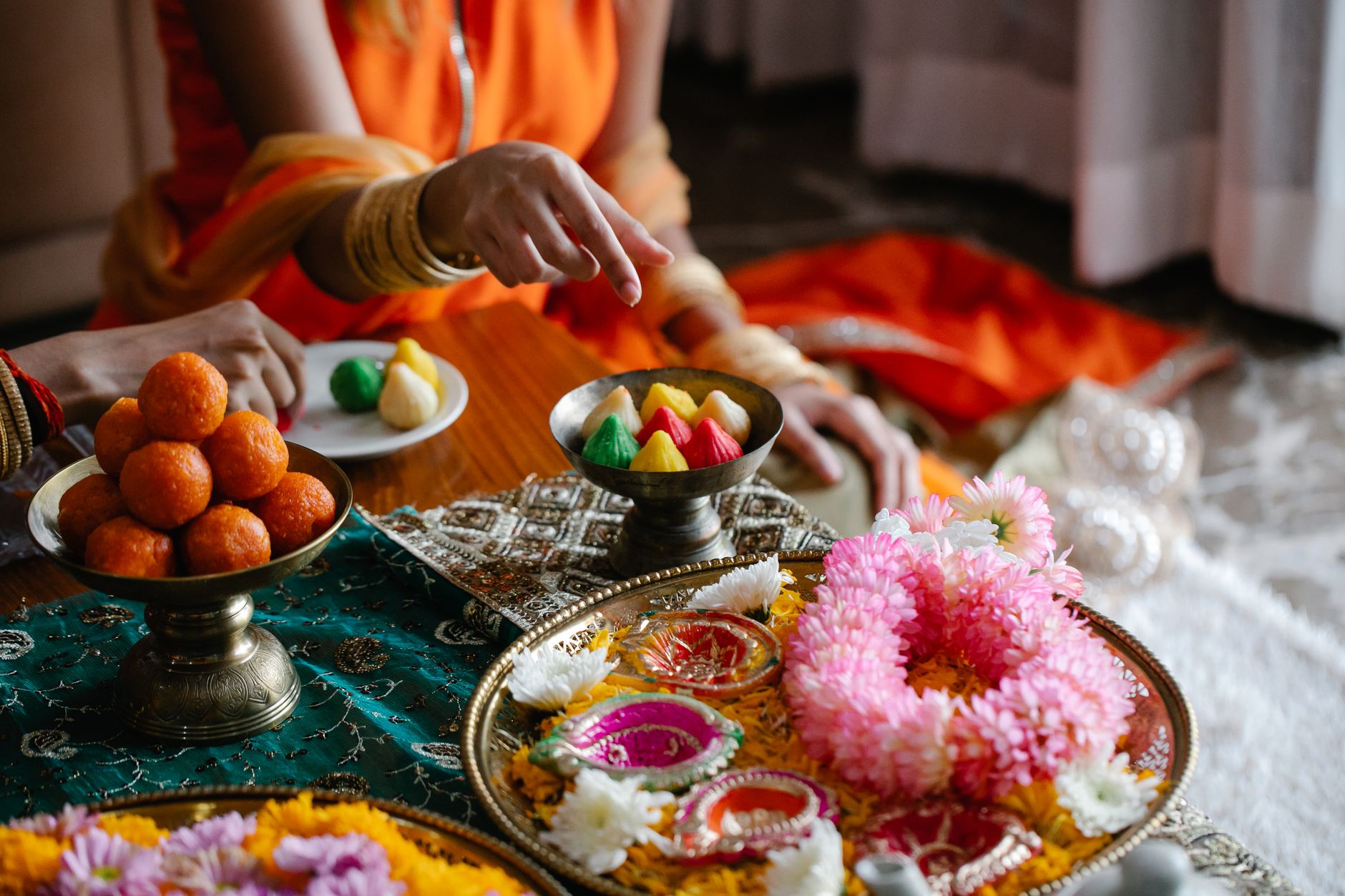
Sacred Blooms for Every Puja in Agra
Religious cermony in Agra
Traditional Flower Bouquets for Religious Ceremonies in Agra
In Agra, where centuries of devotion breathe life into every gali and mandir, Traditional Flower Bouquets are far more than decorative pieces — they are sacred offerings that carry the fragrance of faith. Whether you are organising a Satyanarayan Katha in a Dayal Bagh home, a Mundan ceremony near Taj Ganj, or a grand Ganesh Puja at a banquet hall in Sikandra, the right puja flower arrangements transform the ambience from ordinary to divine. With seasonal blooms for pooja sourced fresh from local mandis, and religious ceremony floral decor crafted with reverence, Happiffie connects you to verified florists who understand Agra's devotional traditions inside out.
Quick Answer
Traditional Flower Bouquets for religious ceremonies in Agra typically feature marigolds, roses, lotuses, and tuberose arranged to suit specific rituals like Puja, Havan, Mundan, or Griha Pravesh. Prices range from INR 300 for small devotional bunches to INR 5,000 or more for elaborate altar arrangements. Local florists in Agra source blooms fresh daily from wholesale mandis, ensuring fragrance and longevity throughout multi-hour ceremonies.
What Makes Traditional Flower Bouquets Essential for Agra's Religious Ceremonies?
Agra's religious calendar is dense and emotionally rich — from Navratri Jagrans in Civil Lines to Diwali Lakshmipuja in Kamla Nagar and Eid Milad gatherings across Lohamandi. In every one of these occasions, Traditional Flower Bouquets serve a purpose that goes beyond aesthetics: they signify purity, welcome the deity, and mark the sacred boundary of the ritual space. Marigold and rose garlands draped across deity frames, tuberose strings woven around the Kalash, and lotus blooms placed at the centre of the puja thali — each element follows a prescribed order rooted in Vedic and folk tradition. Florists familiar with Agra's religious communities know, for instance, that a Vaishnav household prefers tulsi sprigs alongside devotional flower bunches, while a Shiva temple ceremony calls for bel patta and white dhatura. Getting this right is not optional — it is a matter of religious correctness and family honour.
Popular Styles and Bloom Choices for Puja Flower Arrangements in Agra
Agra's proximity to the Mathura–Vrindavan belt means florists here have unmatched access to temple-grade blooms. Puja flower arrangements in the city span several styles. The Sheaf Style bundles marigold, genda, and champa into a hand-held bunch ideal for aarti. The Altar Cascade style uses tiered rose and lily arrangements on a mandap or mandir shelf. The Garland Loop — marigold and rose garlands — is the most ordered item for Griha Pravesh, Mundan, and Satyanarayan ceremonies. Handcrafted floral offerings such as lotus-topped Kalash arrangements carry deep ritual meaning and are crafted by experienced florists who respect the symbolism. Seasonal blooms for pooja shift with the calendar: marigolds peak October through March, mogra is available May through August, and rajnigandha (tuberose) is available almost year-round. Discussing your ceremony date with your florist ensures you get blooms at their most fragrant.
How Much Do Traditional Flower Bouquets Cost for Religious Events in Agra?
Pricing for Traditional Flower Bouquets in Agra varies by bloom type, arrangement size, and ceremony scale. A simple devotional flower bunch for a home puja starts around INR 300–600. Mid-range puja flower arrangements with mixed roses, marigolds, and tuberose run INR 1,200–2,500 per set. Elaborate religious ceremony floral decor for a community Havan or temple event — including altar cascades, garland loops, and thali arrangements — can total INR 8,000–25,000 depending on guest count and venue size. Sacred venue floral styling for a full banquet-hall ceremony in Sikandra or Fatehabad Road, including entrance arches and deity frames, typically ranges from INR 20,000 to INR 60,000. Wholesale mandi prices in Agra are competitive, so florists who source directly pass savings on to clients. Always request an itemised quote separating bloom cost, labour, and delivery.
Matching Floral Styles to Agra Wedding Rituals and Ceremony Types
Agra hosts a diverse mix of Hindu, Muslim, Jain, and Sikh communities, each with distinct floral customs. Agra wedding rituals such as Sagan, Haldi, and Phera ceremonies demand specific colour palettes — saffron and red for Hindu rites, white and green for Nikah settings, and pink and gold for Jain Vivah mandaps. Religious ceremony floral decor for a Hindu Griha Pravesh should incorporate marigold garlands at the threshold, a rose-petalled rangoli border, and a jasmine-decked Kalash. For a Nikah in Taj Ganj or Shah Market area, elegant white roses and green foliage bunches are preferred over heavily scented blooms. Jain Paryushana puja arrangements avoid root vegetables and use above-ground flowers only. Handcrafted floral offerings tailored to each tradition show guests that the host has invested care into every ritual detail. Discussing your specific ceremony type with your florist is the single most important step before placing any order.
How Do You Choose the Right Florist for Traditional Flower Bouquets in Agra?
Selecting a florist for Traditional Flower Bouquets in religious ceremonies is a decision that blends trust, ritual knowledge, and logistics. First, confirm the florist sources from Agra's main wholesale mandi or the Mathura flower market for guaranteed freshness. Second, check whether they have prior experience with your specific ceremony type — sacred venue floral styling for a temple differs greatly from a home puja setup. Third, ask for a sample arrangement before the event; even a small test piece reveals stem quality, water conditioning, and binding technique. Fourth, verify delivery timing: blooms for a 6 AM Havan must arrive by 5:30 AM, and marigold and rose garlands begin wilting within four hours in Agra's summer heat, so refrigerated transport matters. Fifth, get clarity on seasonal blooms for pooja availability around your event date, especially during the October–November festival rush when demand spikes sharply across the city.
Traditional Flower Bouquet Styles for Religious Ceremonies in Agra — Compared
Expert Recommendation
Best for Intimate Home Pujas
Best for Large Community Havans
Best for Budget-Conscious Families
Best for Wedding-Linked Religious Rituals
Best for Temple or Dharamshala Ceremonies
Best for Multi-Day Festival Celebrations
How to Choose the Right Option
✅ Pre-booking Checklist
- Confirm your ceremony date, start time, and venue address — including neighbourhood in Agra such as Dayal Bagh, Taj Ganj, or Sikandra — when contacting florists.
- List the specific deities being worshipped so the florist can select ritually correct bloom types.
- Ask for an itemised quote covering bloom cost, binding/labour, packaging, and delivery charges separately.
- Request refrigerated or early-morning delivery to preserve freshness, especially for mogra and lotus.
- Clarify who is responsible for placement — florist team or family — to avoid last-minute confusion at the venue.
- Confirm bloom availability for your exact event date, particularly during October–November festival rush in Agra.
- Obtain a written agreement covering quantity, delivery time, replacement policy for wilted blooms, and payment terms.
- Do a small sample order 1–2 weeks before the event to evaluate stem quality and arrangement skill.
🎯 Selection Criteria
- Florist's direct experience with religious ceremony floral decor for your specific faith tradition and ceremony type.
- Freshness guarantee — florists sourcing daily from Agra's mandi or Mathura market are preferred.
- Ability to customise Traditional Flower Bouquets for deity-specific requirements without additional charges.
- Delivery reliability, including early-morning slots for dawn ceremonies like Brahma Muhurta pujas.
- Transparent pricing with no hidden charges for seasonal bloom substitutions.
- Portfolio or references from similar past ceremonies in Agra to validate ritual knowledge.
💰 Cost / Quality Factors
- Bloom type and grade — temple-grade lotus and mogra cost significantly more than standard genda.
- Ceremony scale — guest counts above 100 drive up arrangement size and florist labour requirements.
- Season and festival timing — mandi prices for seasonal blooms for pooja rise 30–50% during Navratri and Diwali.
- Venue type — outdoor mandaps in Agra's summer heat require sturdier, heat-tolerant blooms like marigold over mogra.
- Arrangement complexity — handcrafted floral offerings with intricate weaving or pattern work carry premium labour costs.
- Travel distance — florists delivering to remote localities like Fatehabad Road or Bodla may add INR 200–500 in delivery fees.
⚠️ Common Mistakes to Avoid
- Ordering without specifying the deity or ceremony type, resulting in ritually incorrect bloom choices.
- Booking during festival peak — Navratri, Diwali, Janmashtami — without at least 10-day advance notice, leading to unavailability.
- Choosing imported flowers over local seasonal blooms for pooja purely for visual appeal, sacrificing fragrance and ritual authenticity.
- Ignoring Agra's heat when planning outdoor ceremonies — delicate flowers like mogra and orchids wilt within 2 hours in summer without misting.
- Failing to confirm delivery timing for early-morning ceremonies, causing fresh arrangements to be missing at the ritual start.
- Not discussing marigold and rose garlands length and loop count, leading to insufficient coverage for large deity frames or entrance arches.
People Also Ask
Which flowers are considered most auspicious for religious ceremonies in Agra?
How far in advance should I order Traditional Flower Bouquets for a puja in Agra?
Can florists in Agra customise Traditional Flower Bouquets for specific deities?
What is the difference between religious ceremony floral decor and regular event flowers?
Are Traditional Flower Bouquets available for same-day delivery in Agra?
How do I keep Traditional Flower Bouquets fresh during a long religious ceremony?
What is the average cost of Sacred Venue Floral Styling for a temple ceremony in Agra?
Do Agra florists offer packages that include both Traditional Flower Bouquets and venue decoration?
Related Experiences on Happiffie
Blooms That Tell Your Love Story
Sacred Blooms for Every Ritual
Artisan Floral Garlands, Nainital
Gifting Blooms, Beautifully Bound
Melodic Wedding Rituals in Indore
Marigold Garlands for Manali Weddings
Custom Venue Styling in Pushkar
Frequently Asked Questions
Which Agra neighbourhoods have florists experienced in religious ceremony floral decor?
Are Traditional Flower Bouquets for Jain ceremonies different from Hindu puja arrangements?
Can I get Traditional Flower Bouquets delivered to a venue near the Taj Mahal in Agra?
What is the minimum order value for puja flower arrangements from Agra florists?
Do Agra florists provide setup and placement of Traditional Flower Bouquets at the ceremony venue?
How do seasonal blooms for pooja availability change in Agra across the year?
Is it possible to combine Traditional Flower Bouquets with other decor elements for Agra wedding rituals?
What should I do if delivered flowers arrive wilted for a religious ceremony in Agra?
Key Takeaways
- Traditional Flower Bouquets for religious ceremonies in Agra should be chosen based on deity, ceremony type, and community tradition — not just visual preference.
- Marigold, rose, lotus, and tuberose are the most ritually significant and widely available blooms in Agra, sourced fresh from the city's mandi and Mathura market.
- Pricing ranges from INR 300 for simple devotional flower bunches to INR 60,000 for full sacred venue floral styling at large banquet-hall events.
- Book florists at least 10–15 days in advance during Agra's festival season — Navratri, Diwali, and Janmashtami — when mandi prices and demand both surge.
- Always request refrigerated or early-morning delivery to maintain bloom freshness, especially for ceremonies beginning at or before 7 AM.
- Marigold and rose garlands are the most versatile and cost-effective choice for entrance decoration, deity frames, and Griha Pravesh doorways.
- Florists with ritual knowledge of your specific faith tradition deliver far better results than generic event decorators — confirm experience before booking.
- Happiffie connects Agra families to verified florists who combine ritual expertise with reliable fresh-bloom sourcing for every type of religious ceremony.
Find Verified Florists for Traditional Flower Bouquets in Agra
Connect with ritual-aware florists who source fresh blooms daily and understand Agra's devotional traditions — all through Happiffie.
Explore Florists Now
Are you a Vendor? Grow Your Business with Happiffie!
- High intent verified leads
- Reverse auction opportunities
- AI business tools & insights
- Dedicated vendor dashboard
- Grow your business, your way
It's free & takes less than 2 minutes!